How to Catch Crappie in Reservoirs
It can feel like a real mystery sometimes, trying to pinpoint where those elusive crappie are hiding in Idaho's vast reservoirs. You know they're in there, but finding them can be like searching for a needle in a haystack, especially when the water levels are fluctuating or the weather changes on a dime. This guide is here to demystify crappie fishing in reservoirs, giving you the insights and techniques to consistently find and catch these delicious panfish.
Understanding Crappie Behavior in Reservoirs
Crappie are fascinating fish, but they’re also creatures of habit. If you can crack their code for how they move, where they hang out, and what they like to eat throughout the year, you’ll be putting more fish in the cooler. It’s all about thinking like a crappie, really.
Seasonal Movements and Depths
Crappie in Idaho reservoirs are highly influenced by water temperature and their spawning cycle. It's not a one-size-fits-all approach throughout the year.
- Spring (Pre-spawn and Spawn): This is often the most anticipated time for crappie anglers. As water temperatures begin to climb into the upper 40s and low 50s Fahrenheit, crappie start to move from deeper wintering holes into shallower areas. They're staging for the spawn, often congregating around points, submerged brush, and old creek channels near spawning flats. When the water hits that sweet spot of 58-68 degrees Fahrenheit, they'll move right into the shallows—think 2-5 feet of water—to lay their eggs. Reservoirs like C.J. Strike often see this action heating up by late April or early May, depending on the year's snowmelt and ambient temperatures. During the actual spawn, they might be tight to cover, focused on reproduction, and less aggressive feeders for a short window.
- Summer (Post-spawn and Deep Water): Once the spawn is over, crappie transition. Many will head back to slightly deeper water, often suspending over structure or around submerged timber and brush piles. They might be found anywhere from 10 to 25 feet deep, especially during the heat of the day. Early morning and late evening can still see them venturing shallower for feeding, but their midday haunts will be deeper and cooler. They're often chasing schools of baitfish, so understanding the movements of forage is key. If you're on a large reservoir like Cascade, you'll find them scattered more broadly, making search techniques crucial.
- Fall (Feeding Frenzy): As water temperatures start to cool down, crappie enter a "feeding frenzy" phase. They know winter is coming and they need to bulk up. This is a fantastic time to target them. They'll often move back into shallower areas during the day, much like spring, but they'll be more aggressive. You'll find them concentrating around creek channels, brush piles, and even submerged vegetation edges. They might be anywhere from 5 to 15 feet deep, and often school up tightly. This is prime time for filling your limits, and understanding your local Idaho Fishing Season Calendar can really help you plan your trips around this exciting period.
- Winter (Deep and Stable): When water temperatures plummet and ice forms on many Idaho reservoirs, crappie retreat to their deep wintering holes. They become less active, often holding tight to vertical structure like bluff walls, deep submerged timber, or channel bends. They'll still eat, but their metabolism slows, requiring more subtle presentations. If you're ice fishing, you'll be targeting them in 20-40 feet of water or even deeper, depending on the reservoir's depth and crappie population. Places like American Falls Reservoir offer good ice fishing opportunities for crappie in these deeper zones.
Preferred Habitat and Structure
Crappie are masters of cover. They love structure that offers protection from predators and ambush points for their prey. Understanding their preferred habitats is half the battle.
- Submerged Timber and Brush Piles: This is crappie heaven. Whether it's standing timber from a flooded forest or brush piles placed by anglers or nature, crappie will stack up in these areas. The branches offer protection and a myriad of nooks and crannies for baitfish to hide, which in turn attracts the crappie. Look for these areas on your fish finder, especially along old creek channels or points.
- Creek Channels and River Bends: In reservoirs formed by damming rivers, the old river and creek channels become highways for crappie. They use these deeper thoroughfares to move between shallow and deep water. The bends and drops along these channels often create eddies and slack water where crappie will hold, especially if there's timber or rocks nearby.
- Docks, Piers, and Bridges: Man-made structures are magnets for crappie. The pilings and shaded areas provide cover and attract algae and baitfish. During the spawn, crappie will often move right under docks in shallower water. At night, lights on docks can attract insects and baitfish, making these spots hotbeds for crappie feeding.
- Rock Piles and Riprap: Rocky areas, especially those with larger boulders or riprap along dam faces, can hold crappie. These rocks absorb heat, offer cover, and create current breaks, making them attractive to both crappie and their forage.
Feeding Habits and Time of Day
Crappie are primarily sight feeders, and their feeding habits are pretty consistent, though they can be influenced by light levels and competition.
- Low Light Conditions: Crappie have excellent vision in low light, which means dawn and dusk are often peak feeding times. They'll move into shallower areas or suspend higher in the water column to ambush baitfish. Cloudy days can extend this prime bite throughout the day, as the reduced light penetration makes crappie feel more comfortable being active.
- Midday Slowdown: During bright, sunny days, crappie tend to retreat to deeper, shadier cover. Their bite can slow down significantly as they become less active. However, this doesn't mean they won't bite; you just need to be more precise with your presentation, often fishing tight to cover or deeper structure.
- Diet: Crappie primarily feed on small baitfish like shad, minnows, and small sunfish. They'll also eat insects, insect larvae, and small crustaceans. Matching the hatch, so to speak, in terms of bait size and color, can make a huge difference.
Essential Gear for Reservoir Crappie Fishing
You don't need a boatload of expensive gear to catch crappie, but having the right tools for the job can dramatically improve your success rate. It’s about efficiency and effectiveness.
Rods, Reels, and Line Choices
Selecting the right setup ensures you can feel those subtle crappie bites and handle fish effectively.
- Rods: For crappie, you want a light to ultralight action rod, typically 5 to 7 feet long. A fast or moderate-fast action tip is ideal because it allows you to feel those soft takes and still have enough backbone to set the hook without tearing it out of their papery mouths. Telescopic crappie poles, sometimes called "spider rods," are popular for spider rigging techniques, allowing multiple lines to be fished at once. For more active jigging or casting, a good quality spinning rod from brands like Ugly Stik or St. Croix in the ultralight category will serve you well.
- Reels: A small, lightweight spinning reel (500 or 1000 size) is perfect. It should have a smooth drag system, which is crucial for fighting crappie, as they have delicate mouths. You don’t need a high retrieve ratio; consistency is more important.
- Line: This is where many anglers make mistakes. Crappie fishing demands light line for stealth and sensitivity.
- Monofilament: 4-6 pound test monofilament is a classic choice. It has good stretch, which can act as a shock absorber for those delicate hooksets, and it’s relatively inexpensive.
- Fluorocarbon: 4-6 pound fluorocarbon offers less stretch, excellent sensitivity, and is nearly invisible underwater. This can be a huge advantage in clear water or when crappie are finicky. It sinks faster than mono, which can be useful when jigging.
- Braided Line: While 6-10 pound braided line offers incredible sensitivity and no stretch, it can be too visible for crappie. If you use braid, always tie on a 3-4 foot fluorocarbon leader using a small swivel or a uni-to-uni knot. You can find a wide selection of all these lines on Amazon.
Baits and Lures That Crappie Can't Resist
Crappie aren't overly picky, but certain presentations definitely outperform others.
- Live Bait:
- Minnows: Small live minnows, usually 1 to 2 inches long, are universally effective. Hook them lightly through the lips or just behind the dorsal fin. They're hard to beat for finicky crappie, especially in colder water.
- Crappie Jigs: These are the bread and butter of crappie fishing. Small jigs, typically 1/32 to 1/8 ounce, dressed with soft plastic bodies, marabou, or bucktail, are incredibly versatile. Popular soft plastic styles include tube jigs, curly tail grubs, and tiny paddle tails. Colors vary wildly, but chartreuse, white, black/chartreuse, and pink are consistent producers. Experiment with color until you find what they prefer on a given day.
- Small Crankbaits: Tiny crankbaits, especially those designed for panfish like the Bandit 100 series or Rapala Countdown minnows, can be effective, particularly when trolling or casting for active crappie. Look for shallow-diving models that mimic small baitfish.
- Blade Baits and Spoons: Small blade baits (e.g., Johnson ThinFisher) or ice fishing spoons can work wonders when crappie are holding deep and you need to get down to them quickly. A jigging spoon like a Kastmaster or a Swedish Pimple can also entice strikes.
- Scent: Don't underestimate the power of scent. Adding a crappie-specific attractant to your jigs or using scented soft plastics can make a noticeable difference, especially when the bite is tough.
Electronics and Accessories for Success
Modern technology can give you a significant edge when targeting crappie in reservoirs.
- Fish Finder/Sonar: This is perhaps the single most important electronic tool. A good fish finder, especially one with down imaging and side imaging, allows you to locate submerged timber, brush piles, channel edges, and most importantly, schools of crappie and baitfish. Look for models from brands like Garmin, Lowrance, or Humminbird. Being able to mark fish arches or distinct blobs of crappie on your screen is a game changer for figuring out their depth and concentration. Learning How to Use a Fish Finder on an Idaho Reservoir is a skill worth investing time in.
- GPS/Chartplotter: Integrated with your fish finder, GPS lets you mark productive spots (waypoints) and navigate back to them with precision. If you find a brush pile loaded with crappie, mark it!
- Depth Finder (Portable): For bank anglers or those in smaller boats without a full-blown fish finder, a portable depth finder can still help you locate drops, humps, and structure you might not see otherwise.
- Rod Holders: When spider rigging or trolling, multiple rod holders are essential for managing several lines. Make sure they're sturdy and securely mounted.
- Net: A good landing net with rubberized mesh is important for safely landing crappie, especially larger ones, and preventing them from flopping off the hook at the last minute.
- Cooler: Crappie are delicious, so a reliable cooler to keep your catch fresh is a must.
Proven Techniques for Catching Reservoir Crappie
Knowing where they are and what gear to use is great, but how do you actually make them bite? These techniques are tried and true for reservoir crappie.
Vertical Jigging and Spider Rigging
These techniques are all about precision and covering water efficiently when crappie are concentrated.
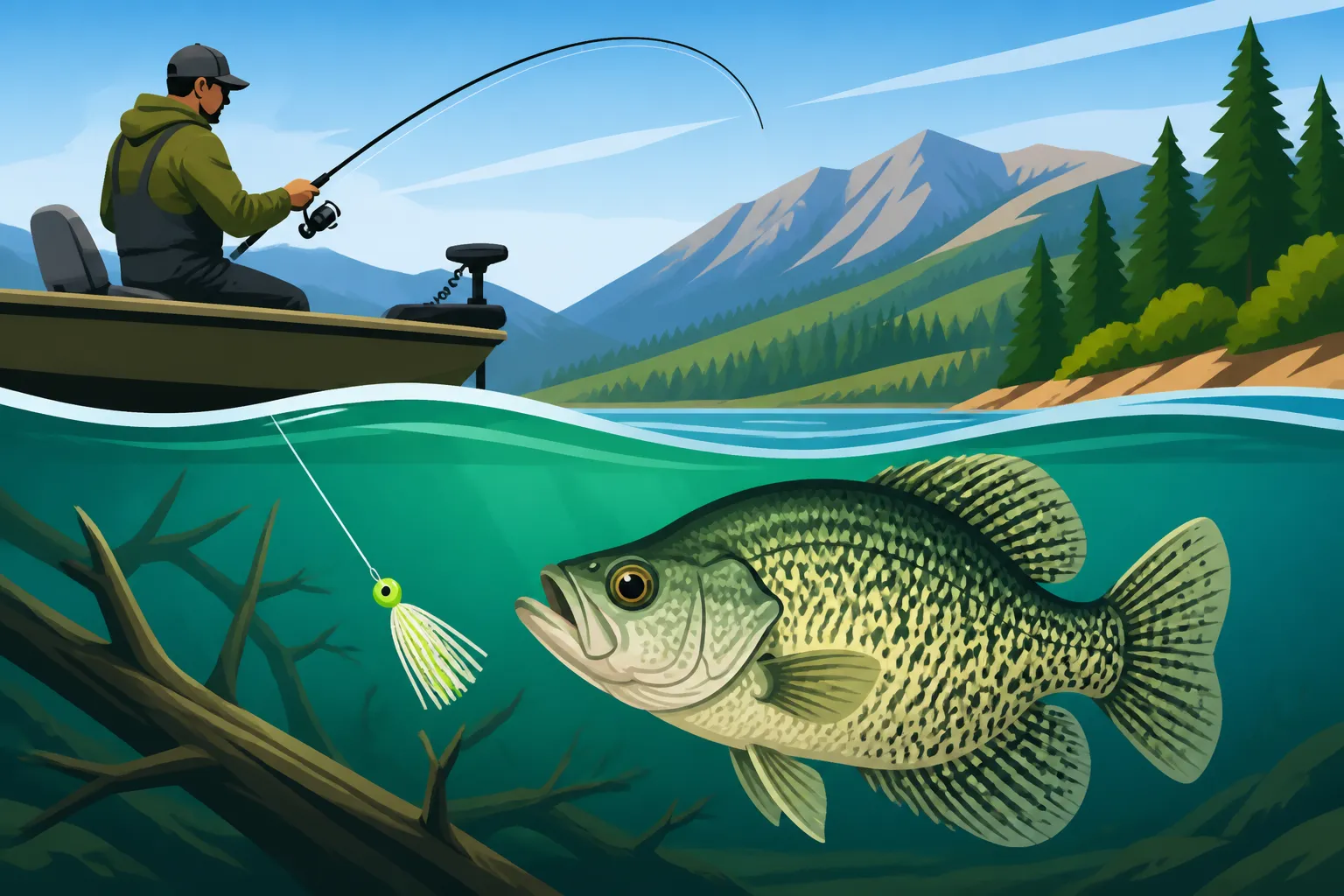
- Vertical Jigging: This is a fantastic technique when you've pinpointed a school of crappie on your fish finder, often relating to submerged timber or a brush pile. You essentially position your boat directly over the fish and drop your jig straight down.
- Presentation: Use a 1/32 to 1/8 ounce jig tipped with a soft plastic body or a live minnow. Let it sink to the depth where you're marking fish, then gently lift and drop the rod tip, imparting a subtle jigging motion. Sometimes a completely still presentation works best; just hold it at their eye level.
- Fine-tuning: Pay close attention to your electronics. If you see fish at 15 feet, drop your jig to 15 feet. Experiment with different colors and jigging actions until you find what triggers a bite. Often, the crappie bite will feel like a slight "tick" or just added weight on your line. You'll often find yourself using this method in spots where you've noticed a good return on your Idaho Fish Stocking Reports Explained if they included crappie.
- Spider Rigging: This technique is extremely popular for covering water slowly and presenting multiple baits at varying depths. It involves using several long rods (often 10-16 feet) extended from the front of the boat, resembling a spider's legs.
- Setup: Each rod is rigged with a different bait (jig, minnow, or a combination) and fished at a specific depth. You might use a double-jig rig on some lines, or a minnow on a hook with a small split shot on others.
- Movement: Slowly troll or drift over crappie hotspots like creek channels, brush piles, or flooded timber. Your boat speed should be just enough to keep your baits moving naturally, often 0.3 to 0.8 mph. This is especially effective when crappie are scattered or when you're trying to locate a school. Remember to check Idaho Rules on the Number of Rods Per Angler before setting up too many lines.
Trolling for Scattered Fish
When crappie are widely dispersed or suspending in open water, trolling can be the most effective way to locate them.
- Slow Trolling with Jigs: This involves dragging jigs or small crankbaits behind your boat at very slow speeds. Use a variety of colors and depths on different rods until you find the pattern. This works particularly well in large, open reservoirs like Lake Coeur d'Alene, even though Coeur d'Alene is more known for Kokanee, crappie are present and can be caught with similar slow trolling patterns.
- Depth Control: Use different weight jigs, small inline weights, or even small planer boards to control the depth of your lures. Pay attention to your fish finder to match the depth of the crappie or baitfish.
- Long-Lining: This is a specific type of trolling where you let out a very long length of line (sometimes 75-100 feet or more) with a lightweight jig or small crankbait. The long line allows the lure to reach deeper depths without added weight, and the distance from the boat can be less intimidating to skittish crappie. This is a subtle yet powerful method when fish are wary.
- Crankbait Trolling: For more aggressive crappie, especially in fall, small crappie-specific crankbaits can be trolled to cover large areas. These often dive to specific depths, making it easier to target different layers of the water column. You can find quality crankbaits for different depths on Amazon.
Slip Bobber and Live Bait Tactics
Sometimes, simplicity is key, and the classic bobber-and-minnow setup still reigns supreme, especially for bank anglers or when fishing precise spots.
- Slip Bobber Rig: This is far superior to a fixed bobber for crappie fishing. A slip bobber allows you to easily adjust your bait's depth by sliding a small bobber stop up and down your main line.
- Setup: Thread your line through the bobber, then tie on a bobber stop. Below the bobber, attach a small split shot or two (just enough to make the bobber stand upright) and then a small hook (size 4 to 8) for a minnow, or a small jig.
- Advantages: This rig is excellent for presenting live minnows or small jigs at a precise depth over structure like brush piles, docks, or submerged logs. You can cast it a good distance, and the bobber will indicate even the slightest bite, allowing you to react quickly. This technique is often discussed in broader guides like Idaho Fishing Techniques Guide.
- No-Bobber Live Bait Rig: When fishing tight to heavy cover or in areas where a bobber might get snagged, a simple bottom rig can be effective.
- Setup: Use a small split shot or a sliding egg sinker above a small swivel, then a short leader (12-18 inches) to a small hook with a minnow. This allows your minnow to swim naturally just above the cover or bottom.
- Application: Ideal for fishing around the base of submerged trees, deep rock piles, or along channel edges where crappie are holding close to the bottom.
By mastering these techniques and understanding the nuances of crappie behavior, you'll be well on your way to enjoying some fantastic crappie fishing in Idaho's abundant reservoirs. Remember, always consult the current Idaho Fishing Regulations Explained before heading out, as rules can change seasonally and by water body.
| Technique | Ideal Conditions | Preferred Gear | Key Benefit |
|---|---|---|---|
| Vertical Jigging | Crappie concentrated over structure | Light rod, small jig (1/32-1/8 oz), fish finder | Precision targeting, effective in tight spots |
| Spider Rigging | Scattered crappie, slow boat movement | Long rods (10-16 ft), multiple jig/minnow rigs | Covers wide area, multiple depth presentations |
| Slow Trolling | Crappie scattered or suspending | Light rods, small jigs/crankbaits, depth control | Locates fish, covers open water efficiently |
| Slip Bobber Rig | Precise depth over structure, bank fishing | Light rod, slip bobber, minnow/jig, small weight | Easy depth adjustment, visible bite indicator |
| No-Bobber Rig | Deep, heavy cover; bottom-oriented fish | Light rod, small sinker, minnow on small hook | Stealthy presentation in dense cover |
Disclaimer
Please remember that fishing conditions, regulations, and fish behavior can change. Always consult the latest Idaho Fish and Game regulations before any fishing trip. This guide is for informational purposes only and does not guarantee fishing success. Be safe, responsible, and practice ethical angling.