Reading Water on Idaho’s Rivers
Navigating Idaho's diverse rivers can often feel like trying to read a secret language etched in water. You arrive at a beautiful stretch, teeming with potential, but the sheer complexity of currents, riffles, and pools can be overwhelming, leaving you wondering where on earth the fish might be holding. This comprehensive guide will demystify the art of reading water on Idaho's rivers, equipping you with the knowledge to interpret the subtle clues and pinpoint productive fishing lies.
The Core Principles of River Dynamics
Before you can effectively read a river, it's crucial to grasp the fundamental ways water moves and interacts with its surroundings. Understanding these dynamics is like learning the alphabet before you can read a book – it provides the groundwork for everything else.
Understanding Current and Flow
The current is the lifeblood of a river, constantly moving water, oxygen, and food. Fish are highly attuned to it, using it to their advantage to feed and conserve energy. You'll notice that water doesn't flow uniformly; it has different speeds and patterns. Fast, turbulent water, often seen in rapids or cascades, carries a lot of oxygen and food but requires immense energy for a fish to hold its position. Slower, calmer water, on the other hand, might offer less food but demands less energy.
Experienced anglers understand that fish almost always seek out the "cushion" or "seam" where faster water meets slower water. This is where food delivery is optimal, and energy expenditure is minimized. Imagine a grocery conveyor belt – fish position themselves just off the main belt, picking off items as they pass by without having to swim constantly against the current. Learning to spot these subtle changes in surface tension and flow direction is the first step in successful water reading. It's not always obvious, especially to a beginner, but with practice, your eyes will start to pick up on these crucial differences.
Depth and Subsurface Structure
What lies beneath the surface dictates much of where fish will hold. The riverbed isn't a flat, uniform plane; it's a dynamic landscape of depressions, humps, ledges, and channels. These subsurface structures create crucial habitat, providing cover from predators, shelter from strong currents, and ambush points for feeding. Think about how a submerged log or a large rock creates a current break, offering a fish a prime resting spot.
From the surface, it can be tricky to gauge depth and identify these hidden structures. However, changes in water color, ripple patterns, and even the type of debris accumulating can offer clues. Darker patches often indicate deeper water, while lighter, shinier areas might suggest shallower gravel beds. Observing how the current flows over and around seemingly invisible obstacles can help you visualize the contours of the river bottom. Sometimes, the only way to truly understand the depth and structure of a specific section is by carefully wading it, if safe, or by using tools like a fish finder if you're in a boat. This intimate knowledge of the riverbed is what truly separates casual fishing from consistently successful angling.
Water Clarity and Temperature
Water clarity and temperature are often overlooked but incredibly influential factors in fish behavior and location. Clear water, while beautiful, can make fish skittish, as they can easily see you. In these conditions, fish might hold in deeper water, under cover, or become more active during low light hours. Conversely, cloudy or off-color water (within reason, not muddy runoff) can make fish feel bolder and less wary, sometimes drawing them into shallower areas.
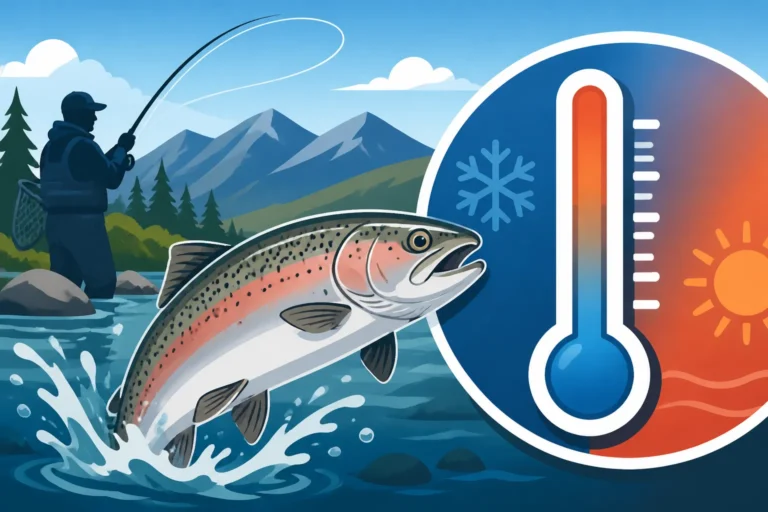
Temperature, particularly in Idaho's diverse waters, dictates everything from metabolic rates to spawning urges. Different species thrive in different temperature ranges. Trout, for example, prefer cooler, well-oxygenated water, often seeking out spring creeks or deeper pools during warm summer months. When you're fishing a cold river, understanding where warmer inflows or sunny stretches might exist can lead you to more active fish. You might find fish holding in slightly warmer, slower water during winter or darting into shaded, cooler sections during intense summer heat. Keeping a small thermometer in your tackle box, readily available from retailers like Amazon, can provide valuable insights into water conditions and help you adapt your fishing strategy.
Deciphering Surface Indicators
Once you understand the basic principles of river dynamics, you can start to interpret the more obvious (and subtle) clues that appear on the water's surface. These indicators are like the chapter titles of a book, giving you an immediate sense of what's happening beneath.
Seams and Current Breaks
The most important surface indicators for finding fish are seams and current breaks. These are the literal lines in the water where different current speeds meet. Imagine a fast, main current roaring down the middle of the river, and then a slower eddy or slack water along the bank. The visible line where these two currents collide is a seam, and it's gold. Fish will often sit just inside the slower water, facing upstream, letting the fast current deliver food directly to them.
These seams aren't always obvious; sometimes they're subtle changes in the texture of the water, a slight ripple or dimple where smooth water transitions to agitated. Other times, they're stark, like a clear boundary around a large boulder or log. You'll see insects or debris collect along these lines, which is another sign that a feeding lane is present. Mastering the art of casting directly into or along these seams, letting your lure or fly drift naturally, is a fundamental skill for any Idaho angler. It's often the difference between catching a limit and coming home empty-handed.
Eddies and Backcurrents
Eddies and backcurrents are like the quiet corners of a busy room – places where the water flow changes direction or slows significantly, often creating a circular movement. These are prime resting and feeding zones for fish. A large boulder, a downed tree, or a bend in the river can all create eddies. The backcurrent of an eddy often pushes food back towards the source, concentrating it for waiting fish.
While an eddy provides a sanctuary from the main current, the most productive part is usually the "head" of the eddy, where the main current first spills into the slower, swirling water. Fish will often sit right at this intersection, darting out to grab food that's swept in. Further into the eddy, fish may be resting, especially larger, more wary ones. Pay close attention to the size and depth of an eddy. A deep, large eddy can hold significant numbers of fish, while a small, shallow one might only offer temporary refuge. You can find excellent discussions on how to fish these features in our comprehensive Idaho Fishing Techniques Guide.
Riffles, Runs, and Pools
Idaho's rivers are typically characterized by a series of riffles, runs, and pools, each offering distinct fishing opportunities. Learning to identify these sections and what they generally hold is crucial for effectively reading the water.
-
Riffles: These are shallower sections where the water flows quickly over rocks and gravel, creating a turbulent, "riffled" surface. Riffles are highly oxygenated and often where aquatic insects hatch, making them prime feeding grounds. Trout, especially smaller ones and various panfish, will often hold just below the crest of a riffle or along its edges, darting into the main current to feed. While they might seem chaotic, don't overlook riffles.
-
Runs: Runs are typically deeper, smoother flowing sections downstream from riffles. The current is still pronounced, but less turbulent. These are classic trout waters, offering a good balance of current for food delivery and depth for cover. Fish will often line up in runs, facing upstream, holding in the deeper slots or behind subtle current breaks. This is where you might find larger trout or even migrating fish like steelhead. Our Idaho Steelhead Fishing Guide delves into how these magnificent fish utilize runs.
-
Pools: Pools are the deep, slow-moving sections of a river, often found at river bends, below waterfalls, or where the river widens. They offer fish significant cover, a place to rest, and escape from predators or harsh conditions. While they might seem still, pools are rarely completely stagnant. There are usually subtle currents, often deeper channels, where fish will congregate. Large fish, especially those wary of anglers, often reside in the deepest parts of pools. These can be challenging to fish, requiring careful presentation and often deeper-diving lures or weighted flies.
| River Feature | Typical Characteristics | Common Fish Species | Ideal Fishing Strategy |
|---|---|---|---|
| Riffles | Shallow, fast, turbulent, oxygenated | Smaller Trout, Whitefish, Panfish | Short drifts, dry flies, small nymphs, light spinners |
| Runs | Deeper, moderate current, smoother flow | Trout (Rainbow, Cutthroat), Steelhead, Smallmouth Bass | Nymphing, streamers, drift fishing, plugs, spoons |
| Pools | Deep, slow-moving, calm surface, large | Large Trout, Chinook Salmon, Sturgeon, Bass | Deep nymphing, heavy streamers, bait, jigs, deep plugs |
| Seams/Current Breaks | Intersection of fast & slow water | All species (feeding lanes) | Focus presentations on the transition line |
| Eddies | Swirling, slower water, often circular | Resting fish, opportunistic feeders | Cast to the "head" where current meets still water |
| Undercut Banks | Bank eroded under water, creating overhang | Trout, Bass, Catfish (cover, shade) | Drift offerings close to the bank, accurate casts |
Reading Subsurface Clues and Habitat
Beyond the surface, understanding the hidden structures and habitats below the water is paramount. These features provide critical shelter and feeding opportunities that fish depend on.
Boulders, Rocks, and Ledges
Every rock, boulder, or submerged ledge in a river is a potential fish magnet. These structures disrupt the current, creating pockets of slower water (cushions) directly upstream and downstream. Upstream, a large boulder creates a small pocket of reduced current where fish can hold, waiting for food to wash over the rock. Downstream, a more significant eddy or current break forms, providing a larger, more comfortable lie. Fish love these spots because they offer both protection from the main current and a conveyor belt of food.
When you're scanning a river, look for anomalies in the current. A sudden bulge in the water, a subtle ripple, or even a slight color change might indicate a submerged boulder or a rock pile. Casting your lure or fly to drift naturally past these current breaks, allowing it to swing into the calmer water behind the structure, is often incredibly effective. This technique is particularly vital when targeting species like rainbow trout, which are masters at using these features. Learning How to Approach Skittish Trout on Idaho Spring Creeks often involves pinpoint accuracy around these types of subsurface structures.
Wood Debris and Logjams
Logs, fallen trees, and extensive logjams are some of the most overlooked yet highly productive fish habitats in Idaho rivers. While they can be a pain for casting and often lead to snags, these woody structures provide exceptional cover, shade, and current breaks. They create complex environments with numerous pockets, eddies, and hiding spots that predatory fish adore. Larger fish, especially brown trout and various bass species, will often hold deep within logjams, ambushing prey that drifts too close.
Approaching wood debris requires caution and precision. It's not uncommon to lose a few flies or lures here, but the reward can be significant. If you can safely cast into the edges of a logjam, or into the seams of current flowing around it, you stand a good chance of hooking into a quality fish. Always be mindful of snags and have a plan for how you'll retrieve a snagged line. Tools like a good pair of sturdy pliers, easily found on Amazon, can be invaluable for bending hooks back into shape or cutting line when a snag is unavoidable. Remember, where there's good cover, there are often good fish.
Undercut Banks and Overhanging Vegetation
Undercut banks and overhanging vegetation are natural features that provide excellent refuge and feeding opportunities for river fish. An undercut bank is created when the current erodes the soil beneath the bank, forming a cave-like overhang beneath the water's surface. These provide superb protection from predators, strong currents, and direct sunlight, offering a cool, dark sanctuary. Fish will often position themselves deep within these undercuts, waiting to dart out and grab food that floats by.
Overhanging trees, bushes, and grasses along the river's edge provide similar benefits, casting shade on the water and dropping insects and terrestrial food items onto the surface. The combination of shade, cover, and a natural food source makes these areas highly attractive. When fishing these spots, accuracy is key. You want to present your lure or fly as close to the bank or directly under the overhanging cover as possible, without getting snagged. This often requires a delicate touch and a good understanding of your casting capabilities. Many of Idaho's best rivers, like the Clearwater and Salmon, feature abundant undercut banks and vegetation that hold trophy fish, particularly during the warmer months.
Environmental Factors Influencing Water Reading
The river is a living entity, constantly reacting to its environment. Factors like weather, water levels, and the changing seasons profoundly influence how fish behave and where they hold. Ignoring these elements means you're only reading half the story.
Effects of Weather and Light
Weather and light conditions play a significant role in how fish use river features. On bright, sunny days, fish often retreat to deeper water, under shaded banks, or into the cover of logjams to escape the intensity of the sun and avoid aerial predators. Their activity might slow down, or they might become more active during dawn and dusk. In these conditions, focusing on deeper pools, shaded runs, or areas with dense overhead cover is often most productive.
Conversely, overcast days, light rain, or even approaching storms can often trigger increased feeding activity. The reduced light penetration makes fish feel safer and less exposed, encouraging them to move into shallower water or more open feeding lanes. This is a fantastic time to target those seams and riffles that might be less productive in bright sun. Similarly, a sudden drop in barometric pressure before a storm can sometimes put fish into a feeding frenzy, while the immediate aftermath of a severe storm might make them hunker down. Paying attention to these subtle atmospheric shifts can significantly impact your success.
Impact of Runoff and Water Levels
Idaho's rivers are heavily influenced by snowpack and seasonal runoff. High water levels, often seen during spring runoff, dramatically change the river's character. The increased flow can make currents incredibly strong, reduce water clarity due to sediment, and force fish into slower, sheltered areas along the banks or in deep eddies. Fishing during runoff can be challenging, but if you know How to Fish Idaho Rivers During Spring Runoff, you can still find fish in less turbulent zones.
Low water levels, more common in late summer or during dry years, can also present challenges. Fish become concentrated in remaining pools and deep runs, making them more vulnerable and often warier. In these conditions, stealth and a delicate presentation are paramount. Low water also exposes more of the riverbed, allowing you to see and understand structures that might otherwise be hidden, which can be valuable for future trips. Always check current river flows and levels before heading out; resources from Idaho Fish and Game often provide real-time data that can inform your strategy.
Seasonal Changes in River Behavior
The river itself changes dramatically with the seasons, and so do the patterns of fish. What works in spring won't necessarily work in fall. The Idaho Fishing Season Calendar provides a great overview of these shifts.
- Spring: As water temperatures rise and insect hatches begin, fish become more active, moving out of deep winter holding areas into runs and riffles to feed. Runoff can impact this, as mentioned, pushing them back to the edges.
- Summer: With warm water, fish often seek cooler, deeper, and more oxygenated water. Early mornings and late evenings become prime feeding times, and focusing on shaded areas or high-elevation streams can be key.
- Fall: This is often a favorite season for many anglers. Water temperatures cool, fish become very active in preparation for winter, and many species, like salmon and steelhead, begin their spawning migrations. This is a fantastic time for species like those discussed in our Idaho Cutthroat Trout Fishing Guide, as they often become more aggressive.
- Winter: Fish activity slows down significantly. They conserve energy and seek deep, stable water. Ice fishing becomes popular on many lakes, but river fishing can still be productive in slow, deep pools on milder days.
Understanding these seasonal shifts helps you anticipate where fish will be and how they'll behave, allowing you to "read" the river with a greater sense of foresight.
Practical Application and Gear for Water Reading
Reading water isn't just about observation; it's also about having the right tools and continually honing your skills on the river.
Using Polarized Sunglasses and Waders
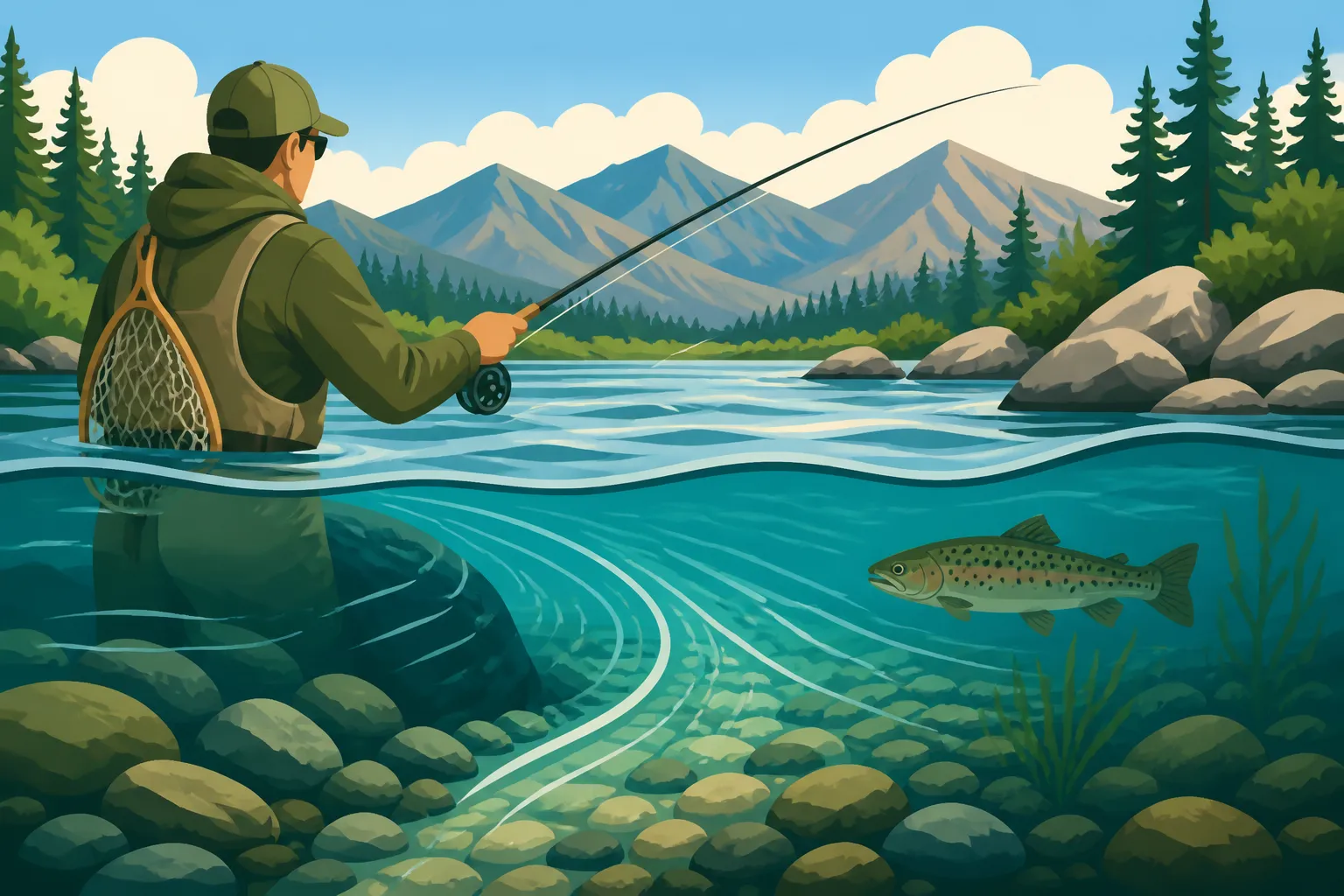
These aren't just comfort items; they are essential tools for reading water effectively. A quality pair of polarized sunglasses, like those you can find from various brands on Amazon, cuts glare from the water's surface, allowing you to see into the water. This is a game-changer. You can spot submerged rocks, logs, subtle depth changes, and even fish holding in clear water. Without them, you're essentially fishing blind to a significant portion of the river's secrets. Many experienced anglers won't even step into the river without their polarized shades.
Waders, especially chest waders, allow you to safely enter the river and gain different perspectives. Being able to wade upstream or downstream, or even across a shallow section, lets you get closer to the action, observe current patterns more intimately, and gain better casting angles. They also keep you warm and dry, allowing you to stay on the water longer and dedicate more time to observation. When paired with wading boots that offer good grip, you can confidently explore areas that would otherwise be inaccessible from the bank. Make sure to invest in good quality waders, as they are part of your Idaho Fishing Gear Guide by Season.
Mapping and Technology Aids
While traditional water reading relies on your eyes and experience, modern technology can be a valuable supplement. Topographical maps or satellite imagery (easily accessible on your smartphone or through dedicated fishing apps) can reveal significant river features like sharp bends, deep channels, or wide flats before you even get to the water. They can help you identify potential access points and plan your approach.
For boat anglers, a good fish finder is an invaluable tool for understanding subsurface structure and depth. It can show you precisely where drop-offs, submerged ledges, or schools of baitfish are holding. Even on foot, a simple depth sounder can help you map out a section of river. These technologies don't replace the art of reading water, but they complement it, providing data that confirms or challenges your visual observations and ultimately helps you make more informed decisions on the water.
Practice and Observation
The absolute best way to become proficient at reading water on Idaho's rivers is through consistent practice and keen observation. There's no substitute for time spent on the water. Start by choosing a specific section of a river, perhaps one mentioned in our guide on the Best Rivers for Fishing in Idaho, and spend time simply observing without even casting a line. Watch how the current behaves around different structures. Notice where debris collects. Look for insect hatches and rising fish.
Begin to mentally (or even physically, with a notebook) map out the productive lies. Cast to these spots and see if your predictions are correct. Don't be afraid to experiment with different approaches. Every river, and even every section of the same river, has its own nuances. Over time, your eyes will train themselves to spot the subtle cues, and your instincts will become sharper. Whether you're mastering How to Fly Fish in Idaho or simply enjoying a relaxing day, constant learning and adaptation are key to unlocking the river's secrets.
Disclaimer
Please note that fishing regulations, seasons, and access points can change. Always consult the latest Idaho Fish and Game regulations before heading out on any fishing trip. This guide is for informational purposes only and does not constitute legal advice regarding fishing practices.