How to Fish for Chinook Salmon in Idaho
Fishing for Chinook salmon in Idaho can feel like chasing a ghost for many anglers. These powerful, elusive fish demand specific knowledge, the right gear, and a whole lot of patience, often leaving even seasoned fishermen scratching their heads when the bites aren't coming. This comprehensive guide is designed to cut through the confusion, offering you the practical insights and detailed strategies you need to successfully target Chinook salmon in the Gem State's diverse waters, turning those frustrating days into memorable catches.
Understanding Idaho's Chinook Salmon Fisheries
Idaho's relationship with Chinook salmon is rich and complex, spanning both its anadromous (ocean-run) rivers and some of its landlocked lakes. Understanding these distinct fisheries is the first step toward successful angling. It’s not a one-size-fits-all approach, and what works on the Salmon River won't necessarily translate to Lake Coeur d'Alene.
The Unique Chinook in Idaho Waters
When we talk about Chinook salmon in Idaho, we're really talking about two different life histories. First, you have the incredible anadromous Chinook that migrate hundreds of miles from the Pacific Ocean, battling their way up the Columbia and Snake Rivers to spawn in tributaries like the Salmon River and the Clearwater. These are often referred to as "spring" or "fall" Chinook, depending on when they enter freshwater. They are true giants, known for their immense power and the incredible journey they undertake. This makes them a prized catch, but also subject to very strict regulations due to their wild populations being listed under the Endangered Species Act. Hatchery programs are vital for providing fishing opportunities for these magnificent fish.
Then, there are the landlocked Chinook, predominantly found in Lake Coeur d'Alene. These fish were introduced decades ago, creating a completely self-sustaining, non-migratory population that thrives on the lake's abundant kokanee salmon forage base. While they don't grow to the same colossal sizes as their ocean-run cousins, they are still formidable fighters and offer a fantastic freshwater angling experience. The genetic lineage is still Chinook, so they retain that aggressive, hard-fighting nature. It’s a fascinating adaptation, allowing Idaho anglers a unique opportunity far from the ocean.
Key Chinook Salmon Fisheries
Idaho boasts a few prime locations for targeting Chinook, each with its own character and fishing methods.
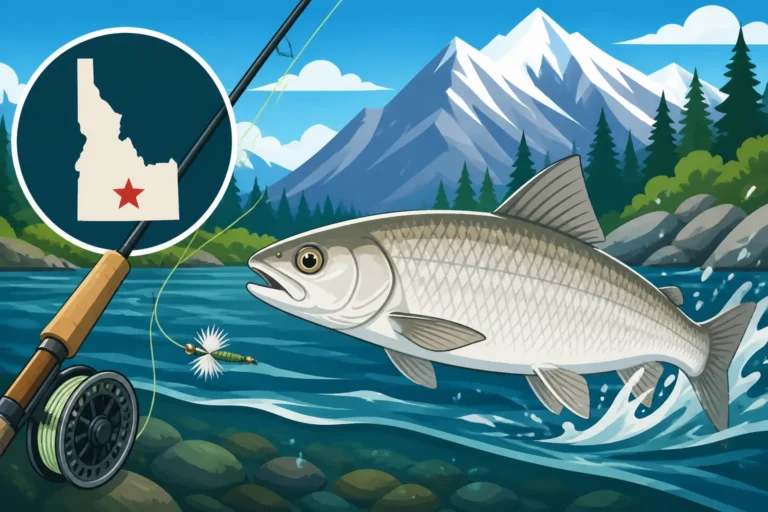
- The Salmon River: Often called "The River of No Return," the Salmon River is arguably Idaho's most iconic anadromous Chinook fishery. Anglers flock to its various sections, from the lower river near Riggins and White Bird all the way up to areas like Stanley, depending on the run timing. Spring Chinook tend to be targeted in the lower and middle sections, while fall Chinook runs can provide opportunities further upriver. The fishing here is steeped in tradition, often involving jet boats, drift boats, and specialized techniques to cover water and present baits effectively in strong currents. You'll find a deep connection to the history of salmon fishing here, and it’s a place where communities gather around the fishery. For those interested in the bigger picture of regulations on these famous rivers, our guide on Idaho Fishing Regulations for the Salmon River Explained offers fantastic detail.
- The Clearwater River: Another major tributary to the Snake, the Clearwater River and its forks (like the North Fork and Middle Fork) also host significant Chinook runs. This river is famous for both its spring and fall Chinook, attracting anglers seeking the challenge of these powerful fish. The fishing here often involves a mix of boat-based and bank-based strategies, similar to the Salmon River, but with its own unique stretches and hotspots. The river's character changes significantly from its lower, wider sections to the tighter, more intimate upper reaches, offering varied angling experiences.
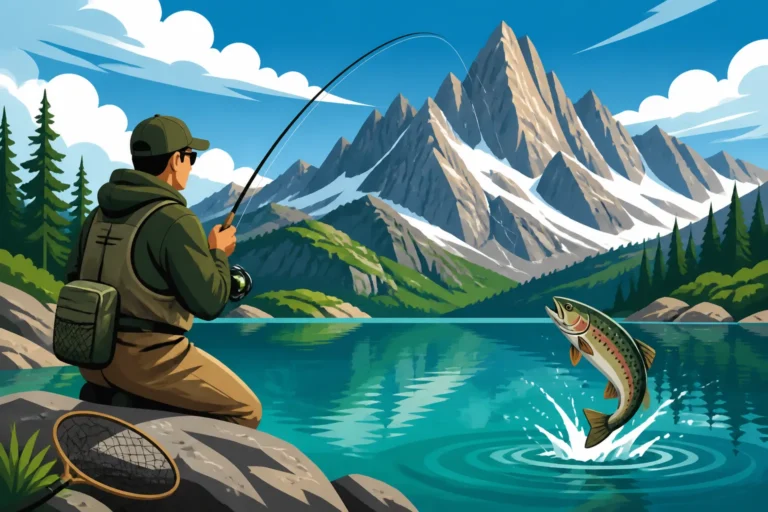
- Lake Coeur d'Alene: This expansive lake in North Idaho is the premier destination for landlocked Chinook. Here, the challenge is often less about battling strong currents and more about finding schools of these deep-water predators and presenting your offering at the right depth. Lake Coeur d'Alene's Chinook grow large by feeding on its abundant kokanee population, and catching one can be quite a fight. It's a completely different approach from river fishing, relying heavily on trolling and electronics to locate the fish. The beauty of the setting, with its surrounding mountains, makes it an incredible place to spend a day on the water. Check out our guide on Idaho Fishing Rules for Lake Coeur d'Alene Explained for specific insights into this fishery.
Idaho Chinook Regulations Overview
Navigating the regulations for Chinook salmon in Idaho can feel like reading a legal document, and for good reason—conservation is paramount. These rules are put in place to protect sensitive wild populations while allowing harvest opportunities for hatchery-reared fish. It’s absolutely critical to stay informed, as regulations can change frequently based on run forecasts and actual returns.
Generally, you'll need a valid Idaho fishing license, and often a separate Idaho Salmon and Steelhead Permit. Beyond that, pay very close attention to daily bag limits and possession limits, which are almost always tied to "hatchery-origin" fish. This means identifying whether a fish has an adipose fin clip – a small fin on its back, between the dorsal fin and the tail, that has been removed. Wild fish, which retain their adipose fin, must almost always be released unharmed. There might also be specific open seasons, legal fishing hours, gear restrictions (like barbless hooks for certain species), and even designated "open" and "closed" sections of rivers. Before every trip, I make sure to check the latest Idaho Fish and Game rules and regulations specific to the body of water I'm targeting. Seriously, don't just rely on last year's knowledge; rules can and do change. You can find comprehensive details in our Idaho Fishing Regulations Explained article.
The Best Seasons and Times to Target Chinook
Timing is everything when it comes to Chinook salmon fishing. These fish are on a mission, whether it's their epic migration from the ocean or their seasonal movements within a lake. Knowing when and where to find them can drastically improve your chances of success.
Seasonal Chinook Runs in Idaho
For anadromous Chinook in Idaho's rivers, the fishing opportunities are typically divided into "spring" and "fall" runs.
- Spring Chinook: These fish usually begin their journey into Idaho's rivers in late spring, with the peak fishing opportunities often occurring from late May through July, depending on the river section and the year's run timing. They are often sought after in the lower and middle sections of the Salmon and Clearwater Rivers as they make their way upstream. Water levels and temperatures play a huge role in their movement. A lot of anglers live for these spring runs, as the fish are incredibly fresh and aggressive.
- Fall Chinook: These larger, often darker fish, enter Idaho waters later in the year, with seasons typically opening in August and extending through September or even early October. They are often targeted further upstream than spring Chinook, as they've had more time to travel. These fish are focused on their spawning grounds, but can still be very aggressive towards offerings. Both spring and fall Chinook runs are highly regulated, so always check the current Idaho Fishing Season Dates and Limits for the specific river stretch you plan to fish.
For the landlocked Chinook in Lake Coeur d'Alene, the season is generally year-round, but specific times offer better success.
- Spring (April-June): As the ice recedes and water temperatures begin to rise, Chinook start moving into shallower areas, especially around points and mouths of feeder creeks, chasing kokanee. This can be an excellent time for trolling.
- Summer (July-August): The heat pushes Chinook deeper, often to the thermocline where cooler water and baitfish congregate. This is primarily a deep-water trolling game.
- Fall (September-November): This is arguably the prime time for Lake Coeur d'Alene Chinook. As kokanee begin their spawning migrations, Chinook follow them closer to the surface and into shallower bay areas. The fish are often more aggressive, putting on fat for the winter, and larger Chinook are frequently caught.
- Winter (December-March): While challenging, ice fishing for Chinook can occur on parts of the lake if conditions allow, but it's a less common pursuit. Open-water trolling for deep fish can still be effective, especially during mild winters.
Daily Activity Patterns
Just like humans, fish have their preferred times for activity. Chinook salmon are no different, though their behavior can vary based on light, water conditions, and the specific fishery.
- Dawn and Dusk: These "low light" periods are often the most productive for Chinook, especially in lakes. The reduced light gives them an advantage over their prey, and they tend to be more active near the surface or along edges. For river Chinook, these times can also see increased movement and feeding activity, especially in clear water. It's that magical time when the world wakes up or settles down, and the fish seem to get a burst of energy.
- Mid-day: In bright, clear conditions, especially in lakes, Chinook might move deeper to escape the light. However, they can still be caught throughout the day, particularly if you're targeting them at the right depth with trolling gear. In rivers, a cloudy day or periods of slightly stained water can extend good fishing throughout the mid-day. Don't pack up just because the sun is high, but be prepared to adjust your tactics.
- Tidal Influence (Rivers): While Idaho is far inland, some anglers believe that the distant tidal cycles of the ocean can still subtly influence the movement and bite of anadromous salmon in the lower river sections. It's a theory some swear by, but consistent presentation is usually more important.
Factors Affecting Salmon Activity
Understanding environmental factors can help you predict when Chinook will be most active and where they might be holding.
- Water Temperature: This is perhaps the most critical factor. Chinook salmon prefer cooler water, generally between 45-55°F (7-13°C). In rivers, rising temperatures can push them upstream or into cooler holding lies. In lakes, temperature dictates their depth, often congregating around the thermocline in summer. Too warm, and they get lethargic; too cold, and they slow down.
- Water Flow and Clarity (Rivers): High, murky water due to spring runoff or heavy rains can make fishing tough by dispersing fish and reducing visibility. Conversely, some color in the water (light stain) can actually be beneficial, as it provides cover for the fish and makes them less wary. Stable flows are generally preferred. Low, clear water can make them skittish, requiring lighter tackle and stealthier approaches.
- Weather and Barometric Pressure: While not as consistently predictable as temperature or flow, changes in weather fronts and barometric pressure can influence fish activity. A falling barometer (before a storm) is sometimes associated with increased feeding, while a rapidly rising barometer can slow things down. Overcast days are often preferred over bright, sunny ones, as they keep the fish more active throughout the day.
Essential Gear and Tackle for Idaho Chinook Salmon
Whether you're battling an ocean-run powerhouse in the Salmon River or a hefty landlocked torpedo in Lake Coeur d'Alene, Chinook salmon demand serious gear. Skimping on tackle is a sure way to end up with a heartbreaking break-off. We're talking about strong, determined fish that can spool a reel or snap a rod if you're not prepared.
Rod and Reel Setups for Power
For Chinook, durability and strength are non-negotiable.
- River Fishing (Anadromous Chinook): You'll want a medium-heavy to heavy power casting or spinning rod, typically 8 to 10 feet long. This length helps with line control, casting distance, and absorbing the shock of a powerful run. A rod with a moderate-fast action will give you both the backbone to fight big fish and enough flex in the tip to detect subtle bites. Pair this with a robust baitcasting reel (like a high-quality Ambassadeur or Penn Fathom) or a heavy-duty spinning reel (such as a Shimano Saragosa or Daiwa BG) that has a smooth, powerful drag system and ample line capacity. You will need that drag, believe me! When shopping for these crucial items, I often browse Amazon to compare models and read reviews before making a purchase, especially for specific gear.
- Lake Fishing (Landlocked Chinook): For trolling, you'll need specialized trolling rods that are typically 8 to 10.5 feet long with a moderate action. These rods are designed to load up under the pressure of downriggers or divers and handle the continuous pull of heavy weights, while still having enough give to cushion the fight once a fish hits. Reels for trolling should be level-wind baitcasters with line counters (like the Okuma Cold Water or Penn Warfare series). The line counter is absolutely invaluable for repeating successful depths and patterns. These reels need a smooth, consistent drag and good gear ratios for cranking in heavy gear.
Lines, Leaders, and Terminal Tackle
Your connection to the fish is only as strong as your weakest link.
- Main Line: Braided line (like PowerPro or Seaguar Smackdown) is the go-to for many Chinook anglers, especially in rivers, due to its incredible strength-to-diameter ratio, zero stretch for maximum sensitivity, and durability. Opt for 30-50 lb test. For lake trolling, some prefer monofilament (15-25 lb) for its stretch, which acts as a shock absorber, especially with softer rod tips. However, fluorocarbon or braided lines are gaining popularity for their low visibility and sensitivity.
- Leader Material: This is where stealth comes into play. Fluorocarbon leader is almost invisible underwater and highly abrasion-resistant. For river fishing, a 20-30 lb fluorocarbon leader of 3-6 feet is common, depending on water clarity and conditions. For lake trolling, similar strength fluorocarbon, sometimes up to 40 lbs for really big fish, is used, often in longer lengths (10-20 feet) between the main line and the lure, especially when using dodgers or flashers.
- Hooks and Swivels: For bait fishing, sharp, strong single hooks are essential. Many regulations now require barbless hooks for certain species or fisheries, so always check. Brands like Gamakatsu or Owner are popular. High-quality barrel or ball-bearing swivels (size 1/0 to 3/0) are vital to prevent line twist, especially when trolling with rotating lures or flashers. Don't skimp on these; a cheap swivel can ruin your day. You can easily stock up on a variety of hook sizes and swivel types on Amazon before your trip.
Proven Lures and Baits
Chinook are aggressive predators, and a variety of presentations can tempt them.
- Plugs: These diving lures are fantastic for both river trolling/back-trolling and lake trolling. Popular brands include Kwikfish, FlatFish, and Mag Lips. They create a strong wobbling action that triggers strikes. Experiment with different sizes and colors, often pairing them with scents.
- Spoons: Classic spoons like the Luhr Jensen J-Plugs, Silver Horde Coho Killers, and Needlefish are deadly for lake Chinook, especially when trolled behind flashers or dodgers. Their erratic flutter mimics injured baitfish. Silver, chartreuse, and iridescent colors are often very effective.
- Spinners: For river fishing, large inline spinners (like Blue Fox Vibrax or Mepps Giant Killer) can be incredibly effective, particularly when casting to holding lies or drifting. They create flash and vibration that Chinook can't resist.
- Bait (Roe/Cured Eggs): For river Chinook, fresh, properly cured salmon roe (eggs) is a legendary bait. It's incredibly effective when fished in clusters under a float or drifted on the bottom. The natural scent and appearance are hard for salmon to ignore. Shrimp and even chunks of sardine can also be effective in certain situations. Make sure to check regulations on bait use.
- Flashers and Dodgers: These are not lures themselves but attractors used predominantly for lake trolling. They create flash and vibration that draw Chinook to your presentation. Lures or bait are then trailed behind them on a short leader. Brands like Big Ed's Tackle, Pro-Troll, and Dick Nite make popular dodgers and flashers.
Effective Fishing Techniques for Idaho Chinook
Successfully landing a Chinook salmon requires more than just good gear; it demands an understanding of specific techniques tailored to their environment and behavior. Whether you're in a roaring river or a vast lake, adapting your approach is key.
Trolling for Lake Chinook
Trolling is the undisputed king for landlocked Chinook in lakes like Coeur d'Alene. This method involves covering large areas of water, presenting your lures or bait at specific depths and speeds.
- Downriggers are Essential: To consistently reach the deep water where Chinook often hold, especially in summer, downriggers are indispensable. These devices allow you to precisely control the depth of your lure. You attach your fishing line to a release clip on a heavy cannonball weight, which is then lowered to your desired depth. When a fish strikes, the line pops free from the clip, allowing you to fight the fish directly without the weight. Understanding how to set your release tension is crucial to avoid false releases and missed strikes.
- Diver and Flasher Setups: Many anglers will run multiple lines at different depths. While downriggers handle the deepest presentations, lead core line, diving planers (like Dipsy Divers or Jet Divers), or even just heavy snap weights can get lures down to intermediate depths. As mentioned earlier, flashers and dodgers are almost always used ahead of your main lure or bait to attract attention. A common setup might be a flasher, followed by an 18-36 inch leader to a spoon or plug. The action of the flasher imparts enticing movement to the trailing lure.
- Speed and Pattern: The ideal trolling speed can vary, but generally, 1.5 to 3.0 mph is a good starting point. Watch your rod tips; the lure should have a natural, enticing action. Varying your speed and making subtle turns can often trigger strikes as your lure speeds up, slows down, or changes depth slightly. Pay attention to what works, and try to replicate it. Using GPS and marking waypoints where you get bites helps immensely in establishing a pattern.
Drifting and Plunking in Rivers
River fishing for anadromous Chinook often involves presenting bait or lures in current, either by drifting or by holding your offering stationary.
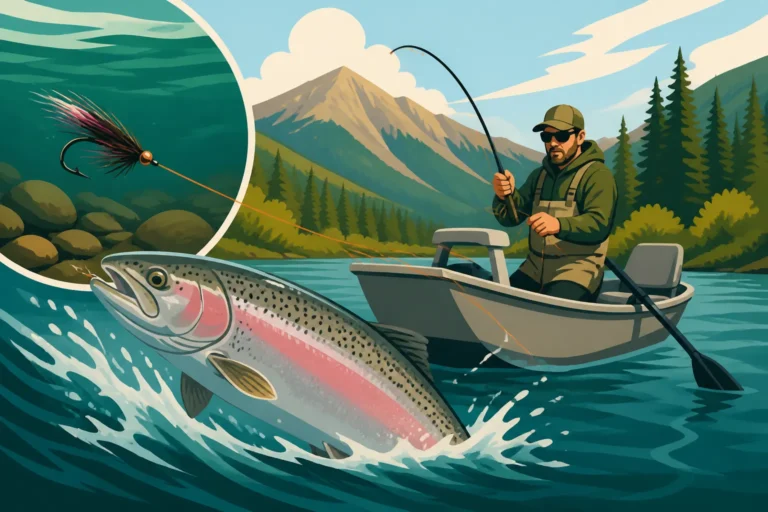
- Drift Fishing (Bobber Dogging/Side Drifting): This is a highly popular and effective method. From a boat, you use the current to drift your bait (often cured roe or shrimp) or a small lure (like a Jensen egg or Cheater) through known holding water. Anglers often "bobber dog" by setting a float to a specific depth, allowing the bait to tumble naturally just above the bottom, keeping the bait in the strike zone longer. Side drifting, where anglers control the drift of their boat to present baits to a specific seam or ledge, is another common tactic, often using minimal weight to allow for a natural presentation. The key is to keep your bait moving at the same speed as the current, making it look natural.
- Plunking (Bank Fishing): For bank anglers, especially when fish are holding in deeper pools or along current seams, plunking can be a productive technique. This involves casting a heavy weight (often a pyramid sinker or a round cannonball sinker) with a bait or lure attached to a short leader, allowing it to sit on the bottom in the current. The current causes the bait or lure (often a Kwikfish or Spin-N-Glo with bait) to wobble or spin in place, attracting passing Chinook. It's a waiting game, but one that can pay off big when fish are concentrated. It's not the most active method, but it allows you to cover water from shore without a boat.
Jigging and Casting
While less common than trolling or drifting, jigging and casting can also be effective in specific situations for Chinook.
- Jigging: Vertical jigging can be a deadly technique, particularly for landlocked Chinook in lakes when you mark schools of fish on your electronics. Using heavy metal jigs (like Gibbs Minnow or P-Line Laser Minnow) or even large soft plastic swimbaits, you drop the lure directly over the fish and impart an erratic, up-and-down motion. This can mimic injured baitfish and trigger aggressive reaction strikes. It requires precision and good boat control to stay on top of the fish.
- Casting: For river Chinook, casting spinners, spoons, or even weighted soft plastics to likely holding water (deep pools, current seams, below rapids) can be effective, especially from shore or while wading. The retrieve should be varied, with pauses and twitches, to entice a strike. This method allows you to cover smaller, more precise areas that might not be suitable for drifting. For lake Chinook, casting can be effective in spring or fall when fish are shallower, especially targeting areas around rocky points or submerged timber where baitfish might hide.
Locating Chinook Salmon in Idaho Waters
Finding Chinook salmon is half the battle, and these fish don't typically hang out in easy-to-reach places. Whether you're on a sprawling lake or a winding river, understanding their preferred habitats and using available tools is paramount to success. It's like a treasure hunt, and sometimes, the X is really, really hard to find.
Reading the Water on Rivers
For anadromous Chinook in rivers, they're constantly on the move, but they will hold in specific areas to rest, conserve energy, and ambush prey. Learning to "read the water" is an art form that takes time and practice.
- Current Seams and Edges: Look for changes in current speed, where fast water meets slower water. These "seams" are prime ambush points. Chinook will often sit in the slower current, just off the main flow, letting the river bring food to them. The transition zone where a riffle deepens into a pool is also a hot spot.
- Deep Pools and Runs: After navigating rapids or long stretches of current, Chinook will often seek out deeper, calmer pools to rest. These are prime targets for drifting or plunking. Long, deep "runs" (stretches of uniformly flowing water) can also hold fish, especially if there's structure.
- Submerged Structure: Undercut banks, log jams, large boulders, and shelves on the river bottom provide cover and current breaks. Chinook will often orient themselves behind or next to these features. While it can be challenging to fish these areas without snagging, that's often where the fish are hiding.
- Confluences: Where two rivers or a major creek meet, you often find a concentration of fish. The mixing of currents, temperatures, and potential new food sources can attract salmon.
Finding Structure in Lakes
Lake Chinook, especially the landlocked variety in Lake Coeur d'Alene, are pelagic much of the year, meaning they roam open water. However, they are still drawn to specific depths and underwater features.
- Points and Humps: Submerged points extending from shore or underwater humps and islands are classic fish magnets. Baitfish often congregate around these features, which in turn attracts Chinook. Trolling around these contours, especially where they drop off into deeper water, can be very productive.
- The Thermocline: In deeper lakes during summer, a thermocline develops—a layer where the water temperature changes rapidly. This layer often concentrates baitfish and oxygen, making it a prime holding depth for Chinook. Understanding your lake's thermocline depth, which varies by season, is a game-changer.
- Bait Balls: Chinook are predatory. Find the bait, and you'll find the salmon. Landlocked Chinook in Lake Coeur d'Alene primarily feed on kokanee salmon, so identifying schools of kokanee on your electronics is often the first step to finding Chinook. They will be actively chasing and feeding on these schools. Our guide on How to Find Kokanee on a Fish Finder has some crossover tips that might be useful here.
Using Electronics
Modern fish finders and GPS units are invaluable tools for locating Chinook, particularly in lake environments. They take a lot of the guesswork out of finding these deep-water cruisers.
- Fish Finders (Sonar): Your sonar unit is your eyes underwater. Learn to interpret what you see:
- Arches: These typically represent individual fish. Larger, stronger arches usually mean bigger fish.
- Bait Balls: Schools of baitfish (often kokanee) will appear as dense clouds or masses on your screen. Chinook won't be far away.
- Bottom Composition: Sonar can also help you identify structural changes on the bottom, like drop-offs, humps, and submerged timber.
- Thermocline: Many modern units can even show the thermocline as a distinct band on the screen.
- GPS and Chartplotters: Use your GPS to mark waypoints where you catch fish, see bait, or identify promising structure. This allows you to return to productive areas and establish trolling patterns. Chartplotters with detailed lake maps can show you contours, depths, and underwater features that might not be visible from the surface. Brands like Humminbird, Lowrance, and Garmin are popular choices. Investing in a good unit and learning how to use it will significantly increase your success rate. For these types of higher-end electronics, I often research extensively online, checking specialized forums and then looking for competitive pricing and detailed specifications on platforms like Amazon.
Regulations, Conservation, and Responsible Angling
Fishing for Chinook salmon in Idaho is a privilege, and with that privilege comes a great responsibility. Understanding and adhering to regulations, practicing ethical angling, and contributing to conservation efforts ensures that these magnificent fish remain a part of Idaho's heritage for generations to come. It’s not just about catching fish; it's about respecting the resource.
Understanding Catch and Size Limits
This is arguably the most critical aspect of Chinook salmon fishing regulations. As we touched on earlier, Idaho's rules are very specific, especially regarding the adipose fin.
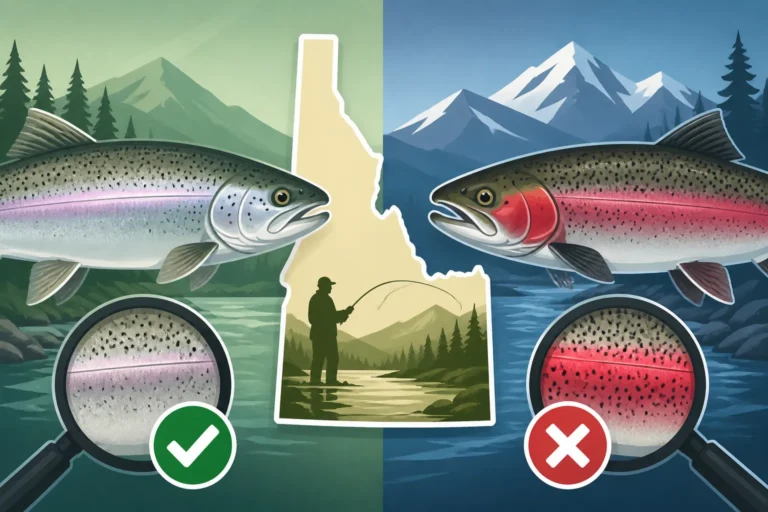
- Adipose Fin Clip: For anadromous Chinook, almost all harvest opportunities are for hatchery-origin fish. This means the fish must have a clipped adipose fin. If the adipose fin is present, it's a wild fish, and it must be immediately released unharmed. This distinction is crucial and rigorously enforced. Our guide on How to Identify a Hatchery Steelhead, while about steelhead, offers very similar identification techniques applicable to salmon.
- Daily Bag and Possession Limits: These limits are almost always expressed as "number of hatchery Chinook per day" and "number of hatchery Chinook in possession." For example, it might be 1 hatchery Chinook per day, 3 in possession. But these numbers can change rapidly depending on run sizes and in-season adjustments by Idaho Fish and Game. Always verify the current Idaho Catch Limits and Bag Limits Explained for your specific fishing area and target species before you hit the water.
- Size Restrictions: While less common for Chinook, some fisheries may have minimum or maximum size limits. It's essential to know these beforehand, so you don't accidentally keep an undersized or oversized fish.
Identifying Hatchery vs. Wild Chinook
The adipose fin is your primary indicator. It’s a small, fleshy fin located on the fish's back, between the dorsal fin and the tail.
- Hatchery Chinook: These fish have had their adipose fin surgically removed (clipped) as juveniles before being released. This mark clearly identifies them as hatchery-origin. Some hatchery fish may also have a coded wire tag in their snout, but the adipose clip is the visual cue for anglers.
- Wild Chinook: These fish have an intact adipose fin. If you catch a Chinook with its adipose fin still present, it is considered wild and must be released unharmed, often without removing it from the water if possible.
It's vital to be able to make this distinction quickly and accurately. If you're unsure, err on the side of caution and release the fish. The consequences of illegally retaining a wild Chinook can be severe, ranging from hefty fines to loss of fishing privileges.
Best Practices for Catch and Release
Even if you're targeting hatchery fish for harvest, practicing good catch and release is essential for those wild fish you encounter, or if you simply choose to release your catch.
- Minimize Fight Time: Use appropriate gear that allows you to land the fish quickly without exhausting it excessively. A prolonged fight greatly reduces a fish's chance of survival.
- Handle With Care: Avoid touching the fish with dry hands, as this can remove their protective slime layer. If possible, keep the fish in the water while unhooking it.
- Use Barbless Hooks: If regulations allow, crushing the barb on your hooks or using specific barbless hooks makes unhooking much faster and causes less damage to the fish. Many fisheries, especially those targeting anadromous species, mandate barbless hooks.
- Proper Unhooking Tools: Keep long-nosed pliers or a de-hooking tool handy. This allows you to quickly remove hooks without excessive handling of the fish.
- Revive Carefully: If a fish is lethargic after the fight, gently hold it upright in the water, facing into the current (or move it back and forth in still water) until it regains strength and can swim away on its own. Don't simply toss it back; make sure it's ready.
- Avoid Removing from Water: For wild fish, or if you're not planning to keep a hatchery fish, try to keep it in the water as much as possible, especially for photography. Even a few seconds out of the water can stress a fish, particularly in warm weather.
Comparing River and Lake Chinook Fishing Strategies
As we've explored, the world of Chinook fishing in Idaho really splits into two distinct paths: the powerful, migrating anadromous Chinook in our rivers, and the robust, landlocked Chinook in our big lakes. While both offer incredible angling opportunities and a serious fight, the approaches are quite different. Let's break down some of the key distinctions to help you decide which adventure calls to you, or how to prepare for both.
| Feature | River Chinook (Anadromous) | Lake Chinook (Landlocked) |
|---|---|---|
| Primary Location | Salmon River, Clearwater River, Snake River tributaries | Lake Coeur d'Alene |
| Fish Movement | Active migration upstream for spawning | Seasonal movements within the lake, often following baitfish |
| Peak Season | Spring (late May-July) & Fall (Aug-Oct) runs | Fall (Sep-Nov) often best, but spring and summer can be productive |
| Key Techniques | Drift fishing (bobber dogging), back-trolling, plunking | Deep-water trolling with downriggers, some jigging |
| Boat Type | Jet boats, drift boats, rafts (for specific river sections) | Larger power boats with ample deck space for trolling gear |
| Primary Gear | Medium-heavy casting rods, baitcasting reels, heavy mono/braid | Dedicated trolling rods (8-10.5 ft), line counter reels, braid/mono |
| Essential Lures/Bait | Cured roe, shrimp, Kwikfish, Mag Lips, large spinners | Plugs (Kwikfish, Flatfish), spoons (Coho Killer), flashers/dodgers |
| Identifying Keeper | Adipose fin clip REQUIRED (hatchery only) | Varies by lake, but typically no adipose clip requirement as all are stocked-origin |
| Skill Challenge | Reading currents, boat control, precise bait presentation | Mastering electronics, depth control, trolling patterns, long fights |
| Physical Effort | Can be active (casting/drifting), navigating currents | Can be more passive (trolling), but fighting fish is demanding |
| Atmosphere | Rugged, wilderness feel, river communities, seasonal urgency | Scenic, open water, often about patience and pattern fishing |
As you can see, the choice between river and lake Chinook fishing boils down to your preference for scenery, technique, and the type of challenge you seek. Both are quintessentially Idaho and incredibly rewarding.
Disclaimer
Fishing conditions and regulations in Idaho are subject to change without notice. Always consult the latest Idaho Fish and Game Fishing Seasons and Rules brochure or their official website before heading out. This guide is for informational purposes only and does not supersede official regulations.