Minimum Size to Weigh In a Chinook at the Coeur d’Alene Derby
There’s nothing quite like the thrill of a fishing derby, especially when you’re out on the sparkling waters of Lake Coeur d'Alene, specifically targeting those magnificent Chinook salmon. The anticipation builds with every tug on the line, every scream of the reel. But let's be honest, there's a unique kind of heartbreak that comes with landing a truly beautiful fish, only to discover it doesn't quite measure up to the derby's stringent rules. You want to make sure all that effort, time, and excitement don't go to waste. This guide is dedicated to helping you understand the crucial minimum size requirements for weighing in a Chinook at the Coeur d'Alene Derby, ensuring your prize counts when it matters most.
Understanding the Coeur d'Alene Chinook Derby Rules
Participating in the Coeur d'Alene Chinook Derby is an experience every angler should have, but like any competition, it comes with specific guidelines. These aren't just arbitrary rules; they're in place for good reasons, and knowing them inside and out is your first step toward success. Nothing is more frustrating than putting in a full day on the water, battling a strong fish, only to find out you missed a key detail about the weigh-in process.
Why Minimum Size Limits Exist for Derbies
You might wonder why derbies bother with minimum size limits. It's really about a few critical things. First and foremost, conservation plays a huge role. By setting a minimum size, the derby encourages anglers to target more mature fish that have had a chance to spawn, contributing to the health and sustainability of the Chinook population in Lake Coeur d'Alene. It also helps protect younger fish, allowing them to grow larger and stronger, benefiting the fishery in the long run.
Secondly, it's about fair play and encouraging a certain level of skill. Anyone can catch a small fish, but consistently landing larger, legal-sized Chinook requires patience, knowledge of the lake, and proper technique. It ensures that the winners truly earned their bragging rights by outsmarting the bigger fish. Lastly, it creates a more exciting competition. Imagine if everyone weighed in tiny fish – it wouldn't be nearly as thrilling as seeing those giant Chinook on the scales! These rules are designed to make the derby both sustainable and stimulating for all participants.
The Current Minimum Length Requirement
This is the big question, right? For the Coeur d'Alene Chinook Derby, there is always a minimum length requirement that your prized salmon must meet to be eligible for weigh-in. While specific figures can sometimes shift slightly from year to year based on fishery management and current fish populations, the derby organizers make sure these details are clearly communicated well in advance of the event. Typically, you'll be looking for a significant, robust fish – often measured in inches from the tip of the nose to the tip of the tail. It's a common practice for derbies to specify a length that ensures the fish is of a certain age and has reached a good, healthy size.
It's absolutely essential to check the official derby rules for the specific year you are participating. Don't rely on last year's information or what a buddy told you. The official derby brochure or website will have the precise length, usually stated in whole or half inches. Missing this by even a fraction can mean your catch is disqualified, no matter how heavy it might be. This minimum length helps manage the fishery and ensures the competition focuses on the larger, more mature fish that are the true trophies of Lake Coeur d'Alene.
How to Measure Your Chinook Accurately
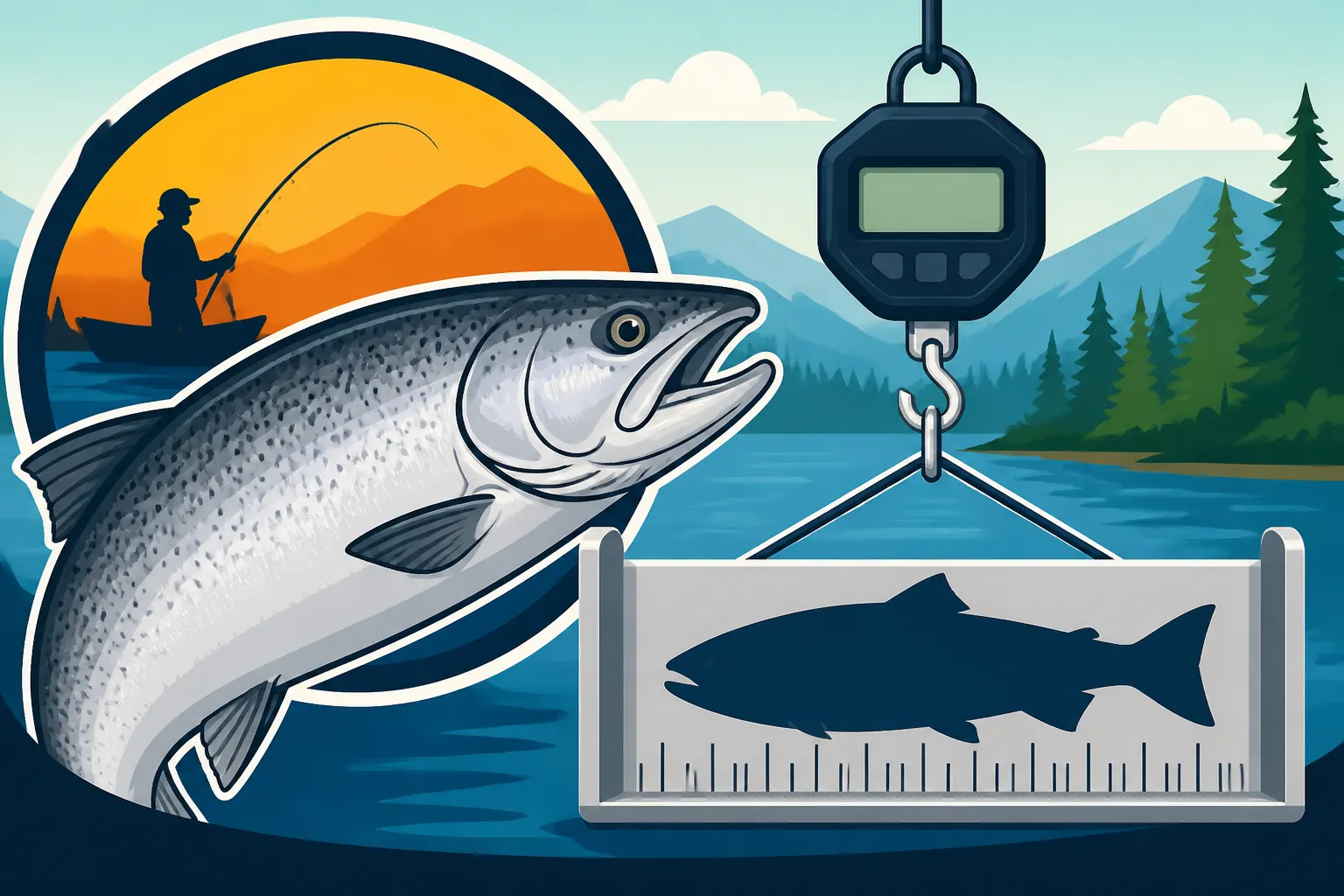
Okay, so you've landed a promising Chinook. Now comes the critical step: measuring it accurately. This isn't just a casual "eyeball it" situation; derby officials will be precise, and you need to be too. The standard method for measuring fish in Idaho, and almost universally in fishing derbies, is to measure the total length. This means you measure from the tip of the nose (snout) to the tip of the longest lobe of the tail, with the tail squeezed together (or "pinched") to get the maximum length.
Here’s a step-by-step approach:
- Lay the fish flat: Place your Chinook on a flat surface, like a measuring board or a boat deck with a tape measure. Make sure it's lying straight, not curled or bent.
- Nose to zero: Align the tip of the fish's nose with the zero mark of your measuring device.
- Pinch the tail: Gently but firmly squeeze the tail lobes together so they are parallel. This maximizes the length.
- Read the measurement: Note the mark where the tip of the longest tail lobe reaches.
Having a good, rigid measuring board in your boat is invaluable. Floppy tape measures can be difficult to use accurately, especially with a squirming fish. You can find excellent, durable measuring boards online, perhaps on Amazon, that are specifically designed for fish and often have large, easy-to-read markings. Practice measuring a few smaller fish before the derby to get the hang of it under less pressure. This precision is key to avoiding disappointment at the weigh-in station.
Beyond the Minimum: What Else You Need to Know for a Successful Derby Entry
Catching a legal-sized Chinook is a huge accomplishment, but getting it officially entered into the Coeur d'Alene Derby involves more than just the fish itself. There are procedural steps and important considerations that can make or break your derby experience. Knowing these details upfront can save you a lot of hassle and ensure your potential prize-winner gets its fair shot. It’s not just about the catch; it’s about the entire journey from the water to the weigh station.
The Importance of Derby Registration and Catch Cards
Before you even cast your first line, proper registration is non-negotiable. You can’t just show up with a fish and expect it to count! Every participant in the Coeur d'Alene Derby must be officially registered. This usually involves paying an entry fee, which goes towards prizes and derby operation costs, and receiving your official derby credentials. Often, as part of registration, you'll be given a catch card or similar documentation.
These catch cards are absolutely vital. They serve as your official record for any fish you intend to weigh in. You might need to record details like the time of catch, the location, and even initial measurements. Some derbies require you to activate your card before fishing or have it visibly displayed. Losing your catch card or failing to fill it out correctly could lead to disqualification, even if you’ve landed the biggest fish of the day. Think of it as your passport to the prize pool; without it, your journey won’t go anywhere. Always read the specific instructions provided at registration regarding these cards or tags. This is just as important as knowing your Idaho Fishing License Guide and making sure it's valid.
Handling and Transporting Your Chinook for Weigh-In
Once you’ve landed that magnificent Chinook and it comfortably exceeds the minimum length, your job isn't over. Proper handling and transportation are crucial to ensure your fish remains in weigh-in condition. Derbies typically judge fish based on weight, and a fresh, well-preserved fish will weigh more than one that has dried out or deteriorated.
Here are some tips:
- Bleed the fish immediately: This is a pro tip for both taste and preservation. Cutting the gill arch allows the fish to bleed out, keeping the meat firmer and preventing blood from tainting the flesh.
- Keep it cold: A cooler packed with plenty of ice is your best friend. Get the fish on ice as quickly as possible. The goal is to chill the fish rapidly and keep its core temperature low. This slows down decomposition and maintains its weight.
- Protect it from damage: Don't just toss it in with other gear. Place the fish carefully in the cooler to prevent bruising or scale loss, which could raise questions at the weigh station.
- Transport quickly: Head to the weigh station as soon as you're done fishing for the day, or as soon as you catch a potential contender. The fresher the fish, the better its condition for judging.
Some anglers even bring a fish bag or a specialized insulated cooler just for their derby entries. Keeping your fish in pristine condition not only helps with its weight but also shows respect for the catch and the competition.
Understanding Potential Changes to Derby Rules Year-to-Year
Fishing derbies are exciting, but they’re also subject to change, much like the fish populations themselves. It's a common misconception that derby rules remain static year after year. However, organizers, often in consultation with local fish and game agencies, might adjust guidelines to adapt to current conditions or improve the event.
These changes could include:
- Minimum size adjustments: If a particular year sees a strong run of smaller fish, or if conservation efforts dictate, the minimum length could be tweaked.
- Daily bag limits: While your Idaho Catch Limits and Bag Limits Explained will give you the general rules, derbies might have their own specific limits that differ slightly or are more restrictive to ensure fair competition.
- Weigh-in times and locations: Logistics can change, so never assume the weigh station will be in the same spot or open at the exact same hours as the previous year.
- Additional permits or requirements: Sometimes, special permits, such as an Idaho Chinook Salmon Season Permit, might become relevant, or new catch record card requirements could be introduced.
The best way to stay informed is to check the official Coeur d'Alene Derby website or pick up a current copy of their rules and regulations brochure well before the event. Don't rely on hearsay. A quick review of the official documentation will ensure you're always operating with the most current information, preventing any unwelcome surprises on derby day.
Maximizing Your Chances of Catching a Legal Chinook for the Derby
Now that we’ve covered the important rules, let’s talk about strategy. You want to catch a big Chinook, not just any Chinook. Landing a derby-winning fish requires more than just luck; it demands knowledge of the lake, understanding Chinook behavior, and using the right tools and techniques. After all, the goal is to celebrate at the weigh-in, not just participate!
Prime Times and Locations on Lake Coeur d'Alene for Chinook
Lake Coeur d'Alene is a fantastic fishery, but not every spot or every hour is equally productive for Chinook. Knowing where and when these powerful fish tend to be most active is crucial.
Times:
Chinook often feed most aggressively during periods of low light. This means early morning, right as the sun is coming up, and late evening, as it dips towards the horizon, are often prime times. They feel less exposed and their prey, often kokanee, are also more active during these periods. Overcast days can extend these feeding windows. You'll want to be on the water before dawn and stay through the dusk if you're serious about targeting large Chinook. For more general timing, you can look into Idaho Fishing Season Dates and Limits for Chinook specifically.
Locations:
Chinook in Lake Coeur d'Alene are pelagic, meaning they roam the open water, often following schools of kokanee, their primary food source. Focus on deeper sections of the lake, particularly areas where there are sudden drop-offs, underwater points, or submerged structures. These features can concentrate baitfish, and where the bait is, the Chinook will follow. Popular areas often include the main lake basin, especially towards the northern end and deeper parts of the southern arm. Specific coves or bays that hold kokanee can also be hotspots. Locals often have their favorite "honey holes," but generally, if you're marking schools of baitfish in deeper water, you're in the right zone for Where to Catch Chinook Salmon on Lake Coeur d'Al'Alene.
Recommended Gear and Techniques for Derby-Sized Fish
To consistently catch larger Chinook, you need gear that can handle their power and techniques that effectively present your lures at the right depth.
Gear:
- Rods and Reels: A medium-heavy to heavy trolling rod, around 8-10 feet, paired with a stout level-wind reel loaded with 20-30 lb monofilament or braided line is a good starting point. You need enough backbone to fight a large fish and enough line capacity for its powerful runs.
- Downriggers: These are almost indispensable for targeting Chinook. They allow you to precisely present your lures at the exact depth where the fish are holding, which can vary greatly throughout the day and season.
- Lures and Bait: Large spoons, plugs, and hootchies are popular choices. Colors vary, but natural baitfish patterns, silver, blue, green, and sometimes even fluorescent colors can be effective. Tipping lures with a small piece of marinated herring or anchovy can also add an irresistible scent. You can find a huge selection of these specific Chinook lures and scents online, for instance, on Amazon, making it easy to experiment with what the fish are hitting.
- Fish Finder: A good quality fish finder is critical. It helps you locate schools of kokanee (the Chinook's food) and even mark individual Chinook. Knowing the depth of the baitfish is key to setting your downriggers correctly.
Techniques:
- Trolling: This is the most effective method for covering water and finding active Chinook. Experiment with different trolling speeds (usually 1.5 to 3 mph) and depths. Use your fish finder to identify the depth where baitfish are concentrated and then set your downriggers to run your lures just above or through that zone. Varying your speed with subtle S-turns can also make your lure "dance" more enticingly, triggering strikes.
- Scouting: Don't just pick a spot and stay there. Continuously monitor your fish finder for baitfish and marks. If nothing is happening after a reasonable time, move to a new area.
- Patience: Chinook fishing, especially for big ones, can be a game of patience. There can be long periods between bites, but the reward is often worth the wait.
Focusing on these aspects will significantly increase your chances of landing a derby-qualifying Chinook. For a broader overview, you might find the Idaho Chinook Salmon Fishing Guide helpful.
Differentiating Chinook from Other Salmonids in Coeur d'Alene
Lake Coeur d'Alene is home to several species of salmonids, and while most anglers can easily spot a rainbow trout, distinguishing between Chinook salmon and other species like kokanee or even some large trout can sometimes be tricky for the inexperienced eye, especially when you're excited. However, knowing the key identification features is crucial, as the derby is specifically for Chinook.
Here’s a quick guide to help you tell them apart:
| Feature | Chinook Salmon (King Salmon) | Kokanee Salmon (Landlocked Sockeye) | Rainbow Trout |
|---|---|---|---|
| Mouth/Gums | Dark, often black gums along the base of the teeth in the lower jaw. | White gums. | White gums, sometimes with a dark spot or streak. |
| Spots on Tail | Heavy, dark spots on both upper and lower lobes of the tail. | No spots on the tail, or very faint spotting. | Small, distinct spots evenly distributed over the tail. |
| Tail Shape | Slightly forked or squared, broad. | Deeply forked. | Square or slightly forked. |
| Body Shape | Robust, deep body. | More slender, torpedo-shaped. | Streamlined, often with a prominent red stripe (Rainbow). |
| Average Size | Much larger (often 10-30+ lbs in derby context). | Smaller (typically 12-20 inches, 1-3 lbs). | Variable, but often smaller than large Chinook. |
The most definitive characteristic for a Chinook is usually those black gums along the lower jaw, combined with spots on both lobes of the tail. Kokanee, while a type of sockeye salmon, are much smaller and lack the distinctive black gums and heavy tail spotting of a Chinook. Rainbow trout also have spots but typically lack the entirely dark mouth of a Chinook. For a more detailed look at the specific characteristics, review an Idaho Chinook Salmon Identification Guide before your trip. Getting this identification right on the water ensures you're targeting the correct species for the derby and adhering to the specific rules.
Disclaimer
This article is for general informational purposes only and does not constitute professional advice. Laws, prices and regulations vary by location and change over time. Consult a qualified professional for guidance on your specific situation.