Difference Between Chinook Salmon and Steelhead
Many anglers hitting Idaho's pristine rivers and lakes find themselves wondering about the difference between a hard-fighting steelhead and a powerful Chinook salmon. These two iconic anadromous fish, while sharing similar waters, have distinct characteristics that are crucial for identification, not just for bragging rights, but for understanding regulations and ensuring a successful, legal trip. This guide will walk you through the key distinctions between these magnificent fish, helping you confidently identify your next catch.
The Elusive Steelhead: An Ocean-Going Rainbow
When we talk about steelhead in Idaho, we're essentially talking about rainbow trout that have decided to go on a grand adventure. They migrate from freshwater rivers, where they were born, all the way to the Pacific Ocean, where they grow large and strong before returning to their natal streams to spawn. This incredible journey changes them, physically and instinctually, turning a familiar rainbow trout into a truly formidable game fish.
What Makes a Steelhead, Well, a Steelhead?
The defining characteristic of a steelhead is its anadromous life cycle. Unlike resident rainbow trout who live their entire lives in freshwater, steelhead undertake a demanding saltwater migration. This journey is what transforms them. They develop a sleek, silver, and often iridescent coloration, replacing the vibrant hues of a resident rainbow. It's truly a marvel of nature. Upon returning to rivers like the Clearwater or Salmon, they regain some of those freshwater trout colors, but they retain their powerful build and distinct fighting spirit. They are literally rainbows that went to the ocean and came back tougher and bigger, sometimes making multiple spawning runs throughout their lives. You can learn more about these incredible fish in our Idaho Steelhead Fishing Guide.
Physical Traits to Spot a Steelhead
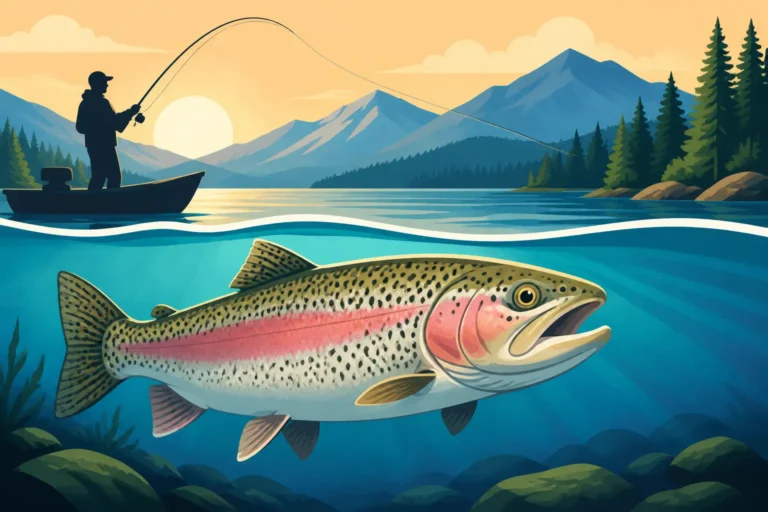
When you pull a fish out of the water, a steelhead will typically exhibit a torpedo-shaped body, designed for powerful swimming. Their coloration is predominantly silver with a dark back, often displaying a purple or pink band along their lateral line, especially noticeable as they spend more time in fresh water. Their spotting pattern is crucial: fine, black spots are typically found on their back, dorsal fin, and all over their tail fin. Another key feature is their mouth. Steelhead usually have a mouth that does not extend past the back of their eye. Their tail fin is typically broad and slightly forked, powerful enough to propel them through rapids and over incredible distances. For a detailed visual breakdown, check out our Idaho Steelhead Identification Guide.
The Regal Chinook Salmon: King of the Pacific
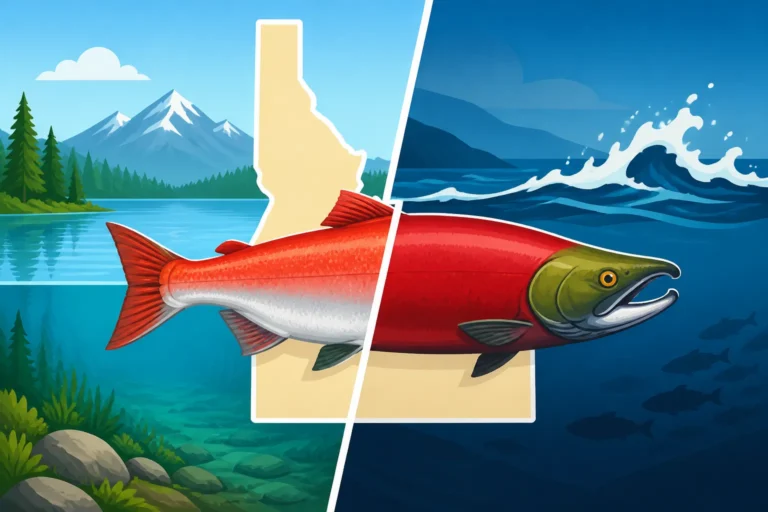
Chinook salmon, often reverently called "King Salmon" due to their impressive size and fighting prowess, are another highly sought-after anadromous species found in Idaho's waters. Like steelhead, they undertake an epic journey from the ocean back to their freshwater spawning grounds. However, their life cycle, physical attributes, and even their behavioral patterns are distinctly different from their steelhead counterparts.
The Life Cycle of Idaho's Chinook Salmon
Chinook salmon also begin their lives in freshwater, migrate to the ocean for several years to feed and grow, and then return to their birth rivers to spawn. What sets them apart is their semelparous nature: unlike steelhead, Chinook salmon typically spawn only once in their lifetime and then die. This single, monumental reproductive effort is why they exert so much energy during their upstream migration, often leading to their incredible size and strength. In Idaho, you'll find them returning to major river systems, primarily the Salmon and Clearwater, making for an unforgettable fishing experience. Understanding their journey is key to appreciating this magnificent species, and you can delve deeper into it with our Idaho Chinook Salmon Fishing Guide.
How to Identify a Chinook Salmon
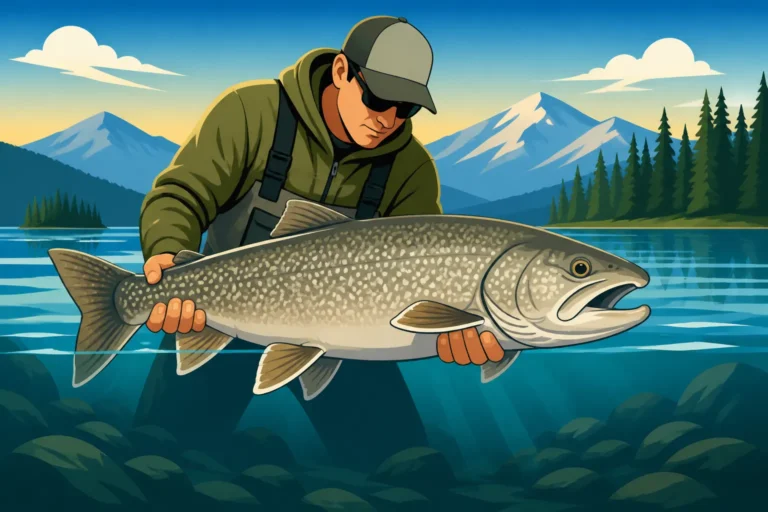
When you're trying to identify a Chinook, look for a few distinct characteristics. Their body color can range from a darker olive-brown to silvery-blue on their backs, often fading to white on their bellies. One of the most reliable identification markers is their mouth and gum line. Chinook salmon have black gums along both the upper and lower jaw, which is a key differentiator from steelhead and other salmon species. Their tail fin is also a significant clue: while it might have spots, they are usually much larger, sparser, and primarily concentrated on the upper lobe of the tail. The tail itself is often deeply forked, more so than a steelhead's. Their head is typically more pointed, and their overall body can appear bulkier, especially mature males. Need more visual help? Our Idaho Chinook Salmon Identification Guide is packed with tips.
Head-to-Head Comparison: Steelhead vs. Chinook Salmon
When both species are fresh from the ocean, they can look quite similar with their silvery sheen. However, as they spend more time in freshwater, their distinguishing features become more pronounced. Knowing these key differences is not just academic; it's essential for legal and responsible angling.
Key Visual Cues for Identification
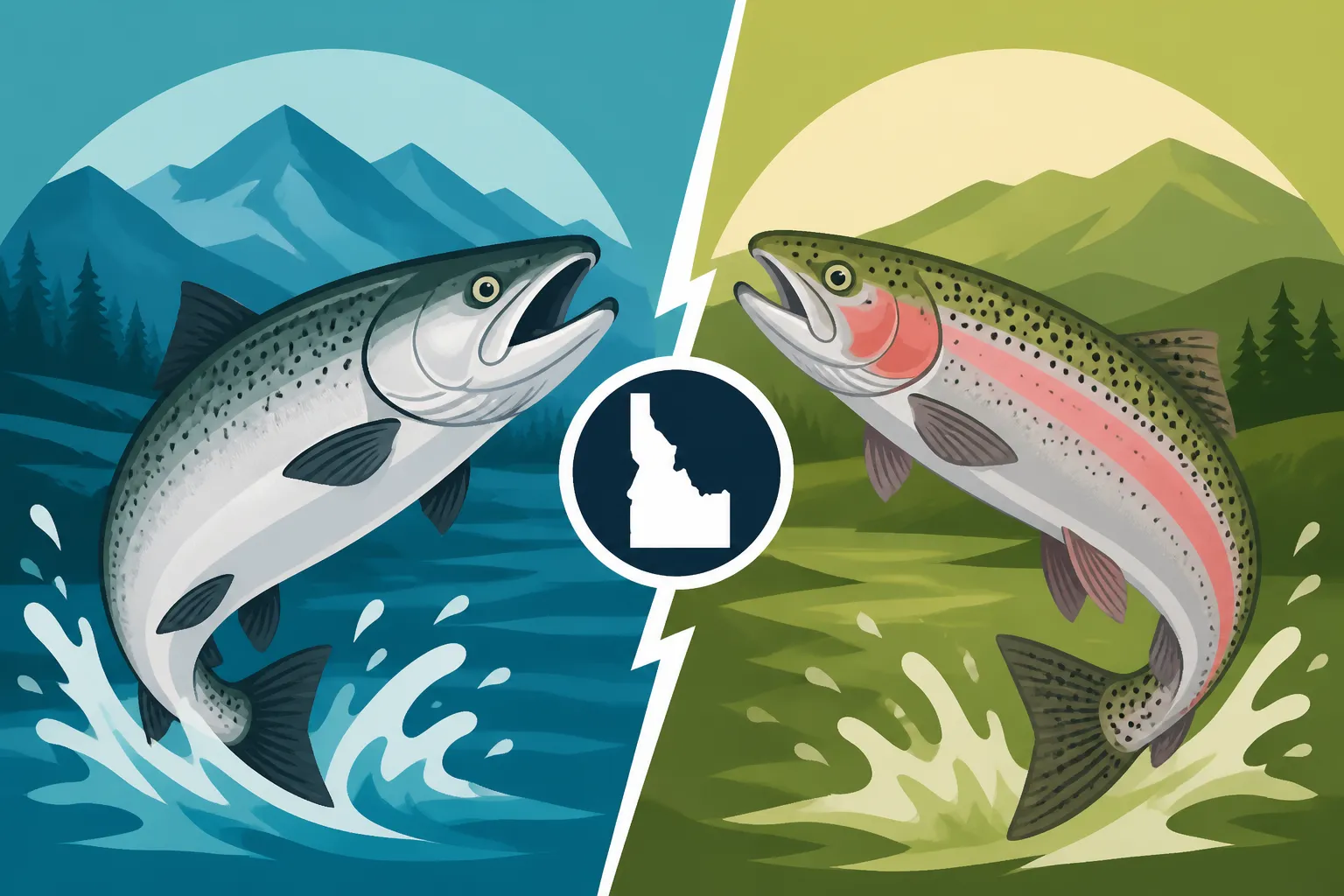
Let's lay out the most critical visual cues side-by-side. Pay close attention to these features, as they are often the most reliable for telling them apart. Sometimes, a quick glance isn't enough, and you'll need to observe a few characteristics together.
| Feature | Steelhead (Ocean-run Rainbow Trout) | Chinook Salmon (King Salmon) |
|---|---|---|
| Gum Line | White or light-colored gums (often pale). | Black gums on both upper and lower jaws. |
| Tail Fin | Spots typically cover the entire tail fin. Tail is slightly forked. | Spots mostly on the upper half of the tail. Tail is deeply forked. |
| Body Shape | More slender, torpedo-like. Often retains a pinkish lateral stripe. | Heavier, more robust body. Less pronounced lateral stripe. |
| Mouth/Jaw | Mouth typically does not extend past the back of the eye. | Mouth usually extends well past the back of the eye. |
| Spots | Small, numerous, and evenly distributed on back and fins. | Larger, more irregular spots, less uniformly distributed. |
| Head Shape | Generally rounder head, less pointed snout. | More pointed, conical head, especially in mature males (kypes). |
When you're out on the river, having a laminated identification card or even a quick reference on your phone can be super helpful. There are many great waterproof guides you can find on Amazon that detail these features clearly. Remember, sometimes you have to combine several visual cues to be certain.
Behavioral Differences and Habitat Preferences
Beyond their looks, steelhead and Chinook salmon often behave differently, which can also help with identification. These differences are largely tied to their distinct life cycles and spawning strategies.
Chinook salmon, especially those returning to spawn, tend to hold in deeper, slower pools during their upstream migration. They are focused on conserving energy for their single spawning event. Their bite can be more subtle, often a gentle "thunk" rather than an aggressive strike, as they are not actively feeding once they enter fresh water. They migrate earlier in the season, with spring and fall runs being distinct in Idaho. They are incredibly powerful, often making long, deep runs when hooked, giving the angler a true test of strength. You'll find specific details about their migration patterns in Idaho Fishing Season Dates and Limits.
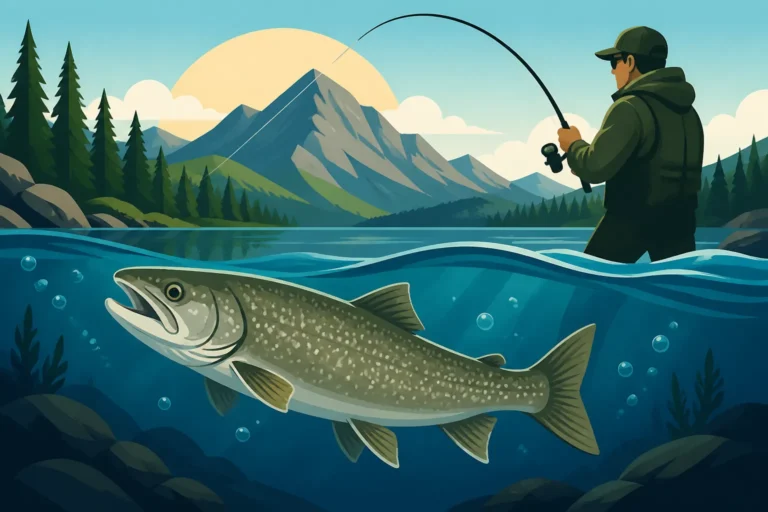
Steelhead, while also migrating, are built for endurance and often show a more aggressive feeding response, even in freshwater, as they may make multiple spawning runs over their lifetime. They are known for acrobatic jumps and headshakes when hooked, making them a thrilling catch. Steelhead often hold in faster, oxygenated water, such as riffles, runs, and the heads of pools, as they are often more actively moving and sometimes feeding. Their primary migration periods are typically fall and spring, with distinct "summer-run" and "winter-run" classifications based on when they enter freshwater. The season for steelhead can be quite extended, with various runs occurring. Check out Idaho Steelhead Season Starts Each Year for more specific timing.
Angling Implications and Regulations
The differences between these two species are not just fascinating from a biological standpoint; they have significant implications for anglers. Each species has its own set of regulations, limits, and even required permits. For instance, in Idaho, both Chinook salmon and steelhead require a specific Idaho Salmon and Steelhead Permit in addition to your general fishing license. However, the catch limits, seasons, and even gear restrictions can differ dramatically between the two.
For example, wild steelhead in Idaho are generally protected and must be released unharmed, while hatchery-origin steelhead (identified by a clipped adipose fin) may be retained depending on the specific regulations of the river section. This distinction is vital, and mistaking a wild steelhead for a hatchery fish can lead to serious consequences. Learning How to Tell a Hatchery Steelhead from a Wild One in Idaho is absolutely critical. Chinook salmon also have specific harvest guidelines that vary by run and location. Knowing your target is paramount to avoiding potential legal issues, as highlighted in What Happens If You Keep a Wild Steelhead in Idaho?. Always consult the current Idaho fishing regulations brochure before heading out.
Why Accurate Identification is Crucial for Idaho Anglers
Fishing in Idaho is not just a pastime; it's an experience rooted in respect for the environment and its precious resources. Correctly identifying your catch, especially between species as important as Chinook salmon and steelhead, is a cornerstone of responsible angling. It ensures you're complying with the law, contributing to conservation, and ultimately, making the most of your time on the water.
Navigating Idaho's Fishing Regulations
Idaho's fishing regulations are designed to manage fish populations sustainably, ensuring healthy fisheries for future generations. These regulations often differentiate between species based on their conservation status, population health, and life cycle. For instance, the bag limits, size restrictions, and even specific waters open for fishing can vary significantly between Chinook salmon and steelhead. Some river sections might be open for steelhead harvest but closed for Chinook, or vice versa.
Imagine being on the Clearwater River, catching a beautiful, chrome-bright fish. If you mistakenly identify it as a hatchery steelhead when it's actually a wild Chinook (or vice-versa), you could be in violation of the law. Penalties for violating fishing regulations can range from hefty fines to license suspension, so it's not something to take lightly. Always carry the current Idaho Fish and Game regulations with you, either a physical copy or the digital version on your phone, and double-check before you keep any fish. Understanding Idaho Fishing Regulations Explained and Idaho Catch Limits and Bag Limits Explained is part of being a good angler.
Tailoring Your Approach
Beyond the legal aspect, knowing the difference between a Chinook salmon and a steelhead profoundly impacts your fishing strategy. Different species require different approaches in terms of tackle, lures, bait, and even the time of year you target them.
- Tackle & Lures: While both are powerful, Chinook often demand heavier gear to handle their brute strength. Think stronger mainlines, heavier leaders, and larger hooks. Their typical feeding patterns in freshwater mean different presentations might be more effective. For example, large plugs, cured roe, or substantial spoons might entice a Chinook, whereas steelhead might respond better to jigs, drift gear, or smaller flies. You might find a wide selection of these specialized lures and baits available on Amazon, tailored for specific species.
- Techniques: The way you fish also changes. For Chinook, back-trolling plugs or heavy bait rigs in deep pools might be the ticket. For steelhead, often it's about covering water with drift gear, bobber-dogging, or swinging flies through prime holding water. Idaho Fishing Techniques Guide delves into these in more detail.
- Timing: Their migration patterns differ, so the "best time" to target one might not be the best for the other. Chinook runs typically occur in distinct spring and fall windows, while steelhead runs can extend much longer through fall, winter, and spring. Knowing these timings, perhaps by consulting Best Time of Year to Fish in Idaho, helps you plan your trip for maximum success.
Conservation and Stewardship
Ultimately, accurate identification is a critical component of conservation. Both Chinook salmon and steelhead face various challenges, including habitat loss, hydropower impacts, and ocean conditions. By correctly identifying and handling these fish, anglers directly contribute to their sustainability. Releasing wild steelhead unharmed, for example, allows them to spawn and contribute to the next generation, a vital practice for maintaining healthy populations. Choosing the right fishing line and hooks, like those from reputable brands found on Amazon, can minimize harm during catch and release. This mindful approach ensures that these incredible fish continue to thrive in Idaho's waters for years to come.
Remember, every angler plays a role in the health of our fisheries. By taking the time to learn the nuances between species like the Chinook salmon and the steelhead, you're not just improving your chances of a great day on the water; you're becoming a more informed and responsible steward of Idaho's natural heritage.
Disclaimer
This article is for general informational purposes only and does not constitute professional advice. Laws, prices and regulations vary by location and change over time. Consult a qualified professional for guidance on your specific situation.