What Counts as Foul-Hooking a Fish Under Idaho Rules
Oh, the dreaded foul-hook! It's happened to the best of us, hasn't it? You're out on a beautiful Idaho river, maybe drifting a juicy worm or bouncing a jig, and you feel that tell-tale thump. You set the hook, fight the fish, bring it in… only to realize it's hooked somewhere it shouldn't be. Immediately, that knot of anxiety forms in your stomach: Did I just foul-hook it? Is this legal? What am I supposed to do now? This guide is here to untangle that confusion, clearly defining what Idaho's fishing rules consider "foul-hooking" and, more importantly, what actions you need to take to stay on the right side of the law and protect our precious fisheries.
Understanding the Idaho Foul-Hooking Rule: More Than Just a "Snag"
It's easy to dismiss a fish hooked anywhere other than the mouth as just an "accidental snag." But Idaho's rules are quite specific, and they're designed to maintain ethical angling practices and ensure the long-term health of our fish populations. It's not about blaming you for an honest mistake; it's about how you react to it.
The Core Definition from Idaho Fish and Game
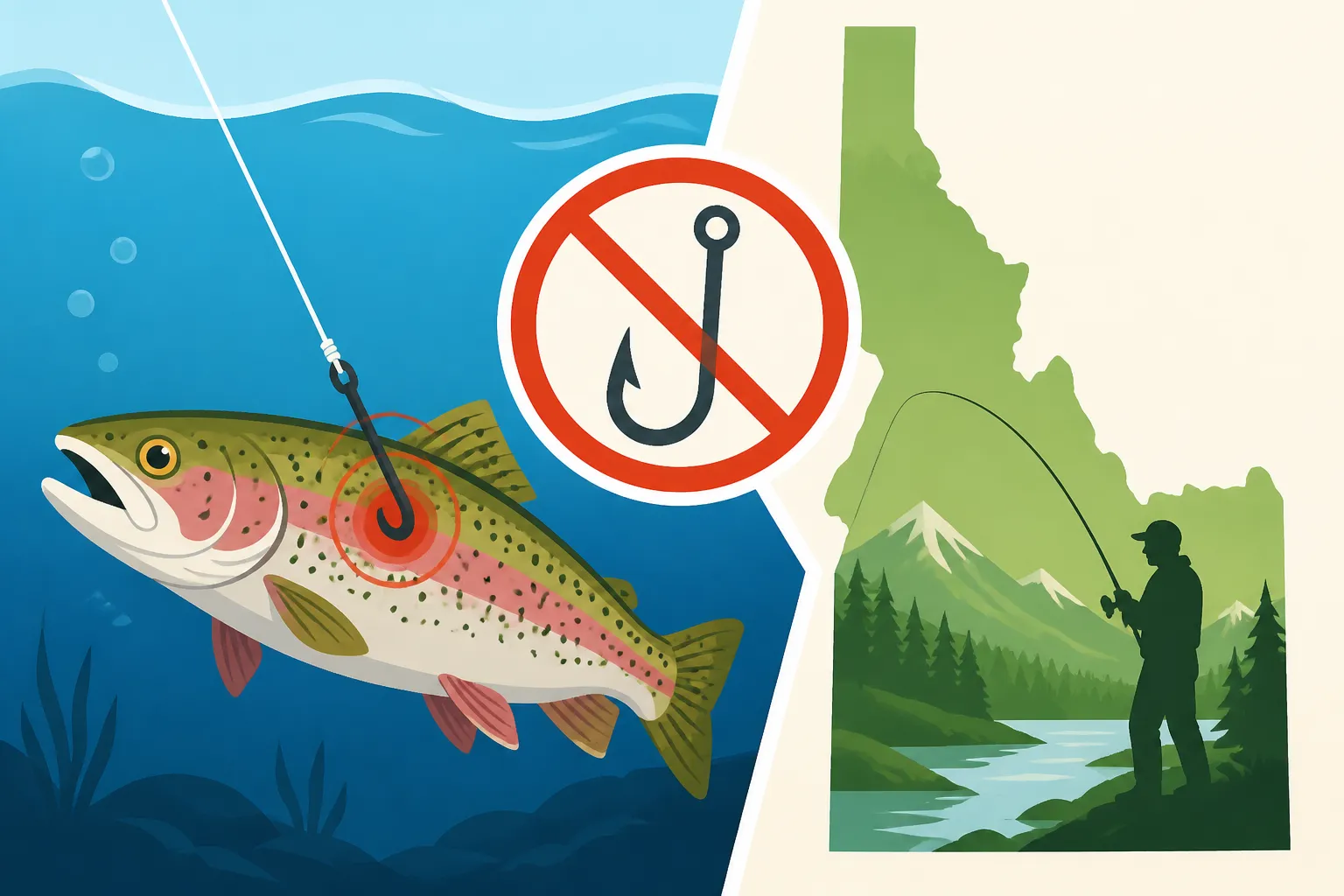
At its heart, "foul-hooking" in Idaho means a fish has been hooked anywhere other than the mouth. The legal text is pretty clear on this. While you might accidentally "snag" a fish by its fin or tail when casting near a schooling group, the outcome is still considered foul-hooking under the regulations. It's less about your intent to snag and more about the result – where that hook ends up.
Think about it: you're aiming for the fish's mouth, right? That's where they feed. When a hook lodges in the side of a fish, its tail, or even its eye, it hasn't bitten your offering in the traditional sense. It's a critical distinction because it separates true sport fishing from methods that can harm fish or exploit them unfairly. This rule is clearly laid out in the official Idaho Fishing Regulations Explained, which is always worth a read before hitting the water.
Why This Rule Exists: Protecting the Resource
Idaho Fish and Game doesn't create these rules just to make our lives harder. There's always a solid biological and ethical reason behind them. The foul-hooking rule is primarily about conservation and ensuring fair chase.
Consider sensitive species like our beloved steelhead and Chinook salmon. These fish are often returning to spawn, their energy reserves are critical, and they are already under immense stress from their long migration. Being hooked outside the mouth can cause significant physical trauma, making them more vulnerable to disease, injury, or even death, especially if they are released after a prolonged fight. Even if you release them, the damage might be done. This is particularly true for wild steelhead, which are especially protected. When we talk about how to Tell a Hatchery Steelhead from a Wild One in Idaho, the implications for careful handling become even clearer.
Beyond conservation, there's the element of "fair chase." Sport fishing is about enticing a fish to bite, using skill and knowledge to present a lure or bait in a way that mimics its natural food. Foul-hooking bypasses this entirely, essentially "catching" a fish without it making the conscious decision to strike your offering. It ensures that the fish have a sporting chance and that our angling traditions remain ethical.
Common Misconceptions About Foul-Hooking
This is where a lot of anglers get tripped up, and honestly, it's understandable. We've all heard the common refrains out on the water:
- "It was an accident, so it doesn't count." While your intent might have been pure, the rule focuses on the outcome. If the hook is outside the mouth, it's foul-hooked, regardless of how it happened. The accident only dictates how you react to it.
- "I was just jigging, they hit the hook on the way down!" Yes, this happens. When fish are stacked up or aggressive, they might swipe at a lure or get caught in the chaos. But if the hook isn't in their mouth, it's still considered foul-hooking. This is especially relevant in scenarios like jigging for Kokanee in tightly packed schools.
- "It's a trash fish, who cares where it's hooked?" Idaho's rules apply to all fish, even those we might not traditionally target. The ethical treatment and legal handling are consistent across species.
- "I brought it in and then saw it was foul-hooked, so now I have to keep it, right?" Absolutely not. This is a crucial point we'll dive into, but the answer is always immediate release when foul-hooked.
The key takeaway here is that Idaho's definition of foul-hooking is fairly black and white when it comes to where the hook is. Your actions after you realize a fish is foul-hooked are what truly matter.
Recognizing Foul-Hooked Fish: Real-World Scenarios
Sometimes it's glaringly obvious, other times it's a head-scratcher. Let's explore the various ways a fish might be foul-hooked and how to identify them quickly, often even during the fight.
Obvious Cases: Hook Outside the Mouth
These are the easiest to spot and leave no room for doubt. If you bring a fish to the boat or shore and the hook is clearly embedded anywhere on its body except inside its mouth, it's foul-hooked.
- In the side: The hook might be in its flank, belly, or even its back. This often occurs when you're casting into a dense school of fish, or if a fish makes a sudden, erratic movement near your lure. You might feel a heavy weight, like you've hooked a log, rather than a distinct strike.
- In a fin or tail: This is very common, especially when fish are tightly grouped or you're using a technique where your lure sweeps through the water quickly. You might see a flash, feel a bump, and then the fight begins. The hook could be in the pectoral, dorsal, or caudal (tail) fin.
- In the eye or gill plate: This is particularly unfortunate and usually happens when a fish tries to strike but misses, or aggressively swats at the lure. The hook can end up lodged painfully.
In all these clear instances, the fish hasn't ingested your bait or lure. The fight might feel different too – a "side-hooked" fish often just pulls heavily, while a "mouth-hooked" fish tends to shake its head, make runs, and fight more dynamically. When you're fishing for species like trout, mastering techniques like "Reading Water on Idaho's Rivers" can help you anticipate strikes and avoid these situations.
Tricky Situations: The Gill Plate or Jawline
This is where the confusion really sets in. What about a fish hooked just on the outside of its lip, or right on the edge of its gill plate, almost as if it tried to eat the hook but failed? This gray area causes many arguments on the water.
Idaho's regulations typically interpret "in the mouth" as the hook being inside the bony structure of the mouth, not just near it. If the hook is external to the oral cavity, it usually falls under foul-hooking.
- Outside the lip/jaw: Imagine a bass or trout lunging at a fly or lure. It might turn at the last second, and the hook could catch the skin just outside its mouth. While it was clearly an attempted strike, the result is that the hook isn't where it should be.
- Edge of the gill plate: Sometimes, during an aggressive strike, a hook can glance off the jaw and lodge in the hard plate covering the gills. This is certainly not ideal for the fish.
The rule exists to avoid situations where anglers might intentionally try to hook fish in these "almost mouth" areas to gain an advantage. The best practice, if there's any doubt at all, is to err on the side of caution.
The Role of Intent (or Lack Thereof)
It's vital to grasp this: while intentional foul-hooking (often called snagging) is absolutely illegal and carries severe penalties, accidental foul-hooking is still foul-hooking in terms of the initial hooking. The difference lies in what you do next.
If you intentionally try to snag fish, you're looking at serious trouble under Idaho law, with hefty fines and potential license suspension. This could involve using snagging hooks, raking lures through dense schools, or other unethical practices.
However, if you're fishing legitimately with appropriate gear and a fish accidentally gets hooked outside the mouth, you are generally not in violation unless you try to keep that fish. The critical part is that you must immediately release any fish that is foul-hooked. Your intent at the moment of the hook-set might have been pure, but the physical outcome dictates your immediate next step. This is a core tenet of ethical angling that applies across the board, and especially in waters with strict Idaho Catch Limits and Bag Limits Explained.
What to Do When You Foul-Hook a Fish in Idaho
So, you've identified a foul-hooked fish. Now what? This is the most crucial part of understanding the rule, as your actions here dictate whether you're complying with Idaho law or risking a citation.
The Immediate Action: Release, Release, Release
There is absolutely no ambiguity here. If you foul-hook a fish, you must immediately release it back to the water. This needs to happen gently, with as little harm to the fish as possible, and without bringing it into your boat, onto the bank, or into a net for an extended period.
- Do not net it if possible: If the fish is small enough, try to shake it off the hook while it's still in the water.
- Minimize handling: If you must handle it, do so with wet hands and support its body, especially if it's a larger fish. Avoid squeezing or touching the gills.
- Remove the hook quickly: Use pliers or a de-hooker to remove the hook as gently and quickly as possible.
- Release immediately: Once the hook is out, let the fish go. Don't take photos, don't show it off, just release it. The priority is the fish's survival.
This rule applies to all fish, regardless of species, size, or whether it's an edible fish or a trophy you've dreamed of catching. Your fishing license allows you to harvest legally caught fish, but a foul-hooked fish is not legally caught.
Specifics for Salmon and Steelhead
When it comes to anadromous species like salmon and steelhead, the stakes are even higher. These fish are often on their spawning migration, and their survival is paramount to future generations. Even if you legally hook a hatchery steelhead in the mouth and have a valid Idaho Steelhead Fishing Guide and the required permit, if it somehow ends up foul-hooked, it must be released.
For wild steelhead (which are identified by an intact adipose fin—no clip), the rules are even stricter: they must always be released, regardless of how they are hooked. The same goes for wild Chinook salmon. Handling these fish with extreme care is not just good practice, it's legally mandated to support their recovery efforts. You can usually find information on identifying hatchery versus wild fish and specific release rules in the annual Idaho Fishing Regulation Brochure and Proclamation.
Consequences of Not Following the Rules
Ignoring the foul-hooking rule or attempting to keep a foul-hooked fish can lead to significant penalties. Idaho Fish and Game officers are out on the water, and they take these regulations seriously for good reason.
Possible consequences include:
- Fines: These can range from moderate to substantial, depending on the severity of the offense and the species involved.
- License suspension: Your fishing privileges could be revoked for a period, meaning you can't fish at all.
- Equipment confiscation: Your fishing gear, and even your boat, could be seized.
- Criminal charges: In severe cases of intentional snagging or repeated violations, criminal charges might be pursued.
It's simply not worth the risk. A few moments of excitement over a foul-hooked fish can lead to a world of regret. Always consult the official Idaho Fishing Regulations Explained for the most current information, as rules can change annually.
Preventing Foul-Hooking: Tips for Ethical Angling
While accidents happen, there are definitely steps you can take to minimize the chances of foul-hooking a fish. Being a responsible angler means understanding these preventative measures.
Choosing the Right Gear and Technique
The equipment you use and how you use it can play a big role in preventing foul-hooking.
- Match your lure/bait size to the target fish: Using an overly large lure for small-mouthed fish increases the chance of a hook lodging externally. Conversely, tiny hooks on large lures might not get a good purchase inside a big fish's mouth.
- Appropriate hook size: Make sure your hook size is proportional to the bait or lure. If you're using live bait, ensure the hook is exposed enough for a solid mouth hook-set. For artificials, consider if treble hooks are necessary or if a single hook might be more effective and less prone to foul-hooking, especially with smaller fish.
- Minimize slack line: A tight line allows you to feel subtle bites and set the hook properly when a fish actually takes your offering. Excessive slack can delay your reaction, leading to a fish mouthing the bait and the hook swinging into an unintended spot when you finally set.
- Avoid "blind" casting into dense schools: While tempting, casting into a boil of fish that aren't actively feeding but rather schooling up (perhaps for spawning or migration) is a prime scenario for foul-hooking. Techniques like jigging through these schools can lead to accidental snags. Be mindful of why the fish are there.
- "Feeling" the bite: With practice, you'll learn to distinguish a genuine bite from a brush or bump. Resist the urge to aggressively set the hook on every little twitch or tap. Wait for a solid take or the weight of the fish.
Sometimes, especially when fishing for species like trout in clear waters, specific presentations are key. Understanding different Idaho Fishing Techniques Guide can help refine your approach to minimize foul-hooking.
Reading the Water and Fish Behavior
Being observant of fish behavior and water conditions is an often-overlooked aspect of preventing foul-hooking.
- Spawning areas: During spawning seasons, fish often congregate in very shallow water, focused solely on reproduction, not feeding. Casting into these areas almost guarantees foul-hooking. Respect spawning grounds and avoid disturbing fish when they are most vulnerable. For example, during certain times, you might find concentrations of Sockeye Salmon and the Redfish Lake Run where they are highly vulnerable.
- Schooling patterns: Fish might school tightly for various reasons—protection, migration, or staging before feeding. If they're not actively striking, casting through them repeatedly increases the risk of snagging. Look for signs of active feeding, like rises, chasing bait, or aggressive strikes.
- Water clarity and depth: In clear, shallow water, you can often see fish reacting to your lure. If they're shying away or swatting at it without truly biting, adjust your presentation or move to a different spot.
- Best Time of Year to Fish in Idaho: Understanding seasonal patterns helps you know when fish are actively feeding versus when they might be less inclined to bite and more susceptible to accidental foul-hooking due to their lethargy or preoccupation.
Continuous Education and Staying Updated
The best defense against unintentional violations is knowledge. Regulations can, and sometimes do, change.
- Review the annual regulations: Make it a habit to read the official Idaho Fishing Regulations Explained brochure or visit the Idaho Fish and Game website at the start of each new fishing season. This is the ultimate authority on what is and isn't allowed. Pay close attention to any special regulations for specific waters.
- Ask questions: If you're genuinely unsure about a specific rule or scenario, don't hesitate to ask a conservation officer, an experienced local angler, or call Idaho Fish and Game directly. It's much better to ask than to unknowingly break a rule.
- Learn species identification: Understanding how to identify various fish, especially between wild and hatchery-raised populations, is critical. For example, knowing your Idaho Steelhead Identification Guide is crucial for compliance.
- Consider a guided trip: If you're new to Idaho fishing or want to learn specific techniques, a reputable guide can offer invaluable insights into local rules, ethics, and best practices. While a guide can show you the ropes, remember that you are ultimately responsible for understanding and adhering to the Idaho Fishing License Guide and all regulations yourself.
By taking these steps, you not only enhance your chances of a successful and rewarding fishing trip but also contribute to the conservation efforts that keep Idaho's fisheries healthy and vibrant for everyone.
Foul-Hooking in Idaho: Quick Reference Guide
| Action/Scenario | Idaho Rule | Recommended Angler Action |
|---|---|---|
| Hook in the mouth (inside bony structure) | Legal hook-set. | Land, assess if within bag limits, consider keeping/releasing. |
| Hook in side, fin, tail, eye | Foul-hooked. | Immediately release without removing from water if possible. |
| Hook on outside of lip/jaw/gill plate | Foul-hooked (generally considered external). | Immediately release with minimal handling. |
| Intentional snagging (e.g., snagging hooks) | Illegal and serious violation. | Never engage in intentional snagging. |
| Accidental foul-hooking (no intent to snag) | Still considered foul-hooked. | Immediately release. |
| Keeping a foul-hooked fish | Illegal. | Do not keep. Immediately release. |
| Foul-hooking a wild steelhead/salmon | Illegal to keep. Must be released regardless of hooking location. | Immediately release with extreme care. |
Disclaimer
The information provided in this guide is intended for general informational purposes only and does not constitute legal advice. Fishing regulations in Idaho are subject to change, and specific rules may vary by water body, season, and fish species. It is the responsibility of every angler to consult the most current official Idaho Fish and Game regulations and proclamations before fishing. Failure to do so may result in fines or penalties. Always prioritize ethical angling practices and the conservation of our fisheries.