Yellowstone Cutthroat Trout in Idaho
One of the most rewarding, yet sometimes confusing, experiences for an angler in Idaho is trying to understand and appreciate our native trout species. Many folks struggle to differentiate between the various cutthroat strains or know where to find them. This guide is here to shed light specifically on the magnificent Yellowstone Cutthroat Trout, helping you identify them, understand their crucial role in our ecosystem, and learn how to respectfully pursue them in the Gem State.
Unpacking the Distinctive Traits of Yellowstone Cutthroat Trout
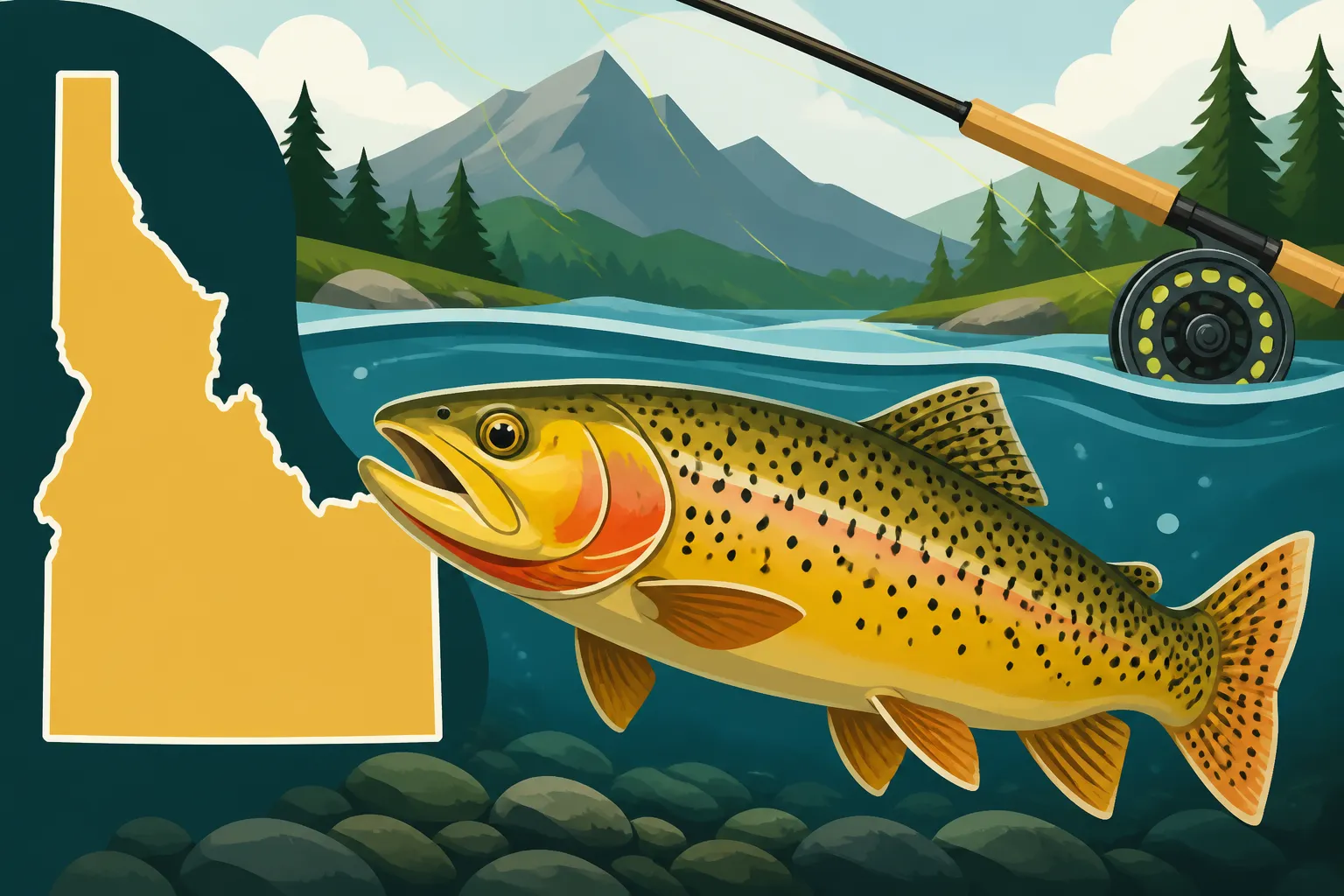
The Yellowstone Cutthroat Trout (Oncorhynchus clarkii bouvieri) isn't just another fish in the river; it's a living piece of Idaho's natural heritage. Understanding what makes them unique, both in appearance and behavior, is key to truly appreciating these incredible native fish. They are a subspecies of cutthroat trout, named for the distinctive red or orange slash marks under their lower jaw, which truly sets them apart.
Physical Characteristics That Stand Out
When you pull a Yellowstone Cutthroat from the water, you'll immediately notice a few things. First, that famous "cutthroat" slash—it's usually a vibrant red, orange, or even a deep pink. This isn't just a faint mark; it's often quite pronounced. Their body coloration typically ranges from a brassy yellow to olive-green on the back, fading to lighter yellow or white on their belly. What often surprises people is the sheer number of spots they have. Unlike some other trout, Yellowstone Cutthroats are usually heavily spotted, particularly towards their tail and rear half of their body. These spots are often small, dark, and irregularly shaped, extending down to the lateral line and sometimes even onto their belly.
You'll also notice their scales are relatively small compared to some other trout. Their head is generally broad, and their mouth is fairly large, extending back past the eye. If you happen to catch one in a stream with a lot of natural forage, you might also see a reddish or pinkish band along their lateral line, similar to a rainbow trout, but their spots and that distinctive "cut" are the real giveaways. For those looking to ensure they have the right gear for identifying and handling fish, a good pair of polarized sunglasses and a camera can be found on sites like Amazon, which makes spotting and documenting features much easier, especially for catch and release.
Behavioral Tendencies in Their Natural Habitat
Yellowstone Cutthroat Trout are fascinating creatures with behaviors often dictated by their environment and evolutionary history. They are well-adapted to cold, clear, oxygen-rich waters, often found in high-elevation streams, rivers, and even some large lakes. One of their most notable behavioral traits is their strong migratory instinct. Many populations will migrate considerable distances upstream from lakes or larger rivers into smaller tributaries to spawn, often in spring and early summer as water temperatures rise. This makes them particularly vulnerable during these times, which is why understanding Idaho Fishing Regulations Explained is so crucial.
They are generally opportunistic feeders, preying on a wide variety of aquatic insects like mayflies, caddisflies, and stoneflies, as well as terrestrial insects that fall into the water. In larger lake environments, they might also feed on smaller baitfish. Yellowstone Cutthroat are known to be quite "rise-friendly" in many fly-fishing circles, meaning they are often willing to come to the surface for dry flies, especially during prolific insect hatches. However, they can also be surprisingly skittish, particularly in heavily fished or very clear waters. Approaching their preferred holding lies quietly and carefully is often key to success, a lesson many learn when trying to How to Approach Skittish Trout on Idaho Spring Creeks. They are a truly wild fish, and their instincts reflect thousands of years of survival in challenging, pristine environments.
Where Yellowstone Cutthroat Trout Call Home in Idaho
Idaho is a state blessed with incredible natural diversity, and for the Yellowstone Cutthroat Trout, this means specific, pristine habitats where they thrive. While their historical range was vast, human impacts and habitat changes have led to a more fragmented, yet still significant, presence within the state. Understanding their native range helps us protect them and gives us clues as to where we might encounter them.
Tracing Their Historic and Current Distribution
Historically, Yellowstone Cutthroat Trout were the dominant native trout species in the Snake River drainage upstream from Shoshone Falls, which acted as a natural barrier to upstream fish migration. This meant their historical Idaho stronghold included vast areas of eastern and central Idaho, encompassing tributaries of the Snake River flowing from the Yellowstone ecosystem and surrounding mountain ranges. Think of waters like the Henry's Fork of the Snake River, the South Fork of the Snake, and countless high-mountain lakes and streams within the Caribou-Targhee and Bridger-Teton National Forests.
Today, while their range is somewhat reduced and often fragmented due to hybridization with non-native rainbow trout and habitat degradation, significant strongholds of genetically pure Yellowstone Cutthroat Trout still exist. The upper Snake River basin remains their primary home in Idaho. You'll find them in healthy populations in the South Fork of the Snake River, particularly the stretches flowing through eastern Idaho, and many of its pristine tributaries. Similarly, the Henry's Fork and its feeder streams hold robust numbers, though some areas face challenges from non-native species. High mountain lakes in the Centennial Mountains and the Caribou Range often provide isolated, pure populations, acting as crucial refuges for the species. These areas are often part of Idaho Special Regulation Waters to ensure the protection of these valuable fish.
Key River Systems and Mountain Lakes
When you think of fishing for Yellowstone Cutthroat Trout in Idaho, a few key areas immediately spring to mind. The South Fork of the Snake River is arguably the crown jewel for these fish. Its large, wild populations are famous, and the river offers incredible fly fishing opportunities for both wade and float anglers. Its many tributaries, often smaller, colder streams winding through national forest lands, are also vital spawning and rearing grounds, harboring many pure-strain populations.
Another iconic location is the Henry's Fork of the Snake River. While known globally for its challenging, large rainbow and hybrid trout, the upper reaches and many feeder streams, particularly those in the Island Park area, still contain good numbers of Yellowstone Cutthroat. These populations are cherished by local anglers and conservationists.
Beyond these well-known rivers, countless high-mountain lakes and streams across eastern and central Idaho provide critical habitat. These often require a hike or even a pack trip to access, offering a truly wild and remote fishing experience. Lakes like Heart Lake or other unnamed jewels hidden in the Caribou or Teton mountain ranges can hold thriving populations of pure Yellowstone Cutthroat, often smaller in size but vibrant and eager to bite. These remote waters underscore the importance of understanding the unique ecological niches these trout inhabit. For anglers venturing into these backcountry areas, carrying a good multi-tool and emergency supplies, readily available on Amazon, is always a smart move.
Conservation: Protecting Idaho's Native Yellowstone Cutthroat
The story of the Yellowstone Cutthroat Trout in Idaho isn't just about fishing; it's deeply intertwined with conservation. These native fish face a myriad of challenges, and their continued survival relies on dedicated efforts from state agencies, conservation groups, and responsible anglers. Understanding these challenges and the efforts to combat them is vital for anyone who cares about Idaho's natural resources.
The Threats Lurking in the Waters
The primary threat to Yellowstone Cutthroat Trout populations across their range, including Idaho, is hybridization with non-native rainbow trout. When rainbows are introduced into waters where cutthroat reside, they often interbreed, leading to hybrid offspring that dilute the genetic purity of the native cutthroat strain. This is a massive problem because it can lead to a loss of unique adaptations that pure Yellowstone Cutthroat have evolved over millennia, like specific spawning behaviors or disease resistance.
Habitat degradation and loss also pose significant risks. This can stem from various sources: dam construction altering river flows and blocking migration routes, agricultural runoff impacting water quality, sedimentation from logging or grazing reducing spawning success, and even climate change leading to warmer water temperatures and reduced stream flows. These changes directly impact the ability of Yellowstone Cutthroat to thrive and reproduce.
Finally, competition with and predation by introduced non-native species can further stress populations. For example, brown trout or lake trout, introduced into some systems, can outcompete cutthroat for food and habitat, or even prey on them, especially on smaller, younger fish. It's a complex web of environmental pressures that truly highlights why discussions about Native vs Introduced Fish Species in Idaho are so important.
Dedicated Efforts for Restoration and Preservation
Idaho Fish and Game, in collaboration with federal agencies and numerous conservation organizations, is actively engaged in restoring and preserving Yellowstone Cutthroat Trout. One of the most critical strategies is genetic testing and management. Scientists collect genetic samples to identify pure-strain populations and prioritize those for protection. In some areas, efforts are made to remove or suppress non-native rainbow trout to reduce hybridization pressure, often through electrofishing or barrier construction to prevent upstream migration of rainbows.
Habitat restoration is another cornerstone. This involves projects like improving riparian areas by planting vegetation to stabilize banks and provide shade, removing outdated culverts that block fish passage, and improving water quality through best management practices in surrounding land uses. These projects directly enhance spawning, rearing, and adult habitat.
Public education and angler awareness also play a crucial role. Campaigns emphasize proper catch-and-release techniques, particularly for wild, native fish, and the importance of respecting Idaho Catch Limits and Bag Limits Explained, which are often more restrictive for native species. Anglers are encouraged to clean their gear to prevent the spread of invasive species and to report any unusual observations. Ultimately, the goal is to ensure these vibrant, ecologically important fish continue to grace Idaho's waters for generations to come, as outlined in the broader Idaho Fish Species Guide.
Mastering the Art of Angling for Yellowstone Cutthroat
Catching a Yellowstone Cutthroat Trout is a truly special experience, a tangible connection to Idaho's wild heritage. They are often willing biters, but their native instincts and sensitive habitats mean a thoughtful approach to angling is usually the most rewarding. Fly fishing, in particular, is often considered the quintessential method for pursuing these beautiful fish.
Fly Fishing: The Quintessential Method
For many, fly fishing is the only way to genuinely experience Yellowstone Cutthroat Trout. These fish are incredibly responsive to fly presentations, often rising readily to dry flies during a hatch or eagerly chasing nymphs and streamers. When you're fishing for YCT, it's less about brute force and more about finesse and understanding the water.
Dry Fly Fishing: This is perhaps the most exciting way to target them. During a good hatch of mayflies, caddis, or stoneflies, Yellowstone Cutthroats will often key in on surface insects. Using patterns that match the natural insects in size and profile is crucial. Think about classic patterns like Parachute Adams, Elk Hair Caddis, or large Stimulators. Presenting your fly with a gentle, accurate cast, allowing for a drag-free drift, will often elicit a strike. Early mornings and evenings, especially in summer, can be prime dry fly times.
Nymphing and Streamers: When fish aren't rising, nymphing can be incredibly effective. Small to medium-sized nymphs like Prince Nymphs, Hare's Ears, and Pheasant Tails, fished with a strike indicator or using a tight-line technique, can tempt cutthroat holding in deeper runs or pools. For aggressive fish, especially in larger river sections or targeting bigger individuals, streamers like Woolly Buggers or articulated patterns can be very productive. Stripping these patterns with erratic movements often mimics baitfish or larger aquatic insects, provoking a chase. If you're looking for new fly patterns or need to stock up on essentials, checking out options on Amazon can save you a trip to a specialty shop.
Ethical Angling and Catch-and-Release Practices
Because Yellowstone Cutthroat Trout are often native and sometimes face conservation challenges, practicing ethical angling, especially catch-and-release, is paramount. These fish are too valuable to treat carelessly.
Minimize Stress: When you hook a fish, try to land it quickly and efficiently. Prolonged fights, especially on light tackle or in warm water, can exhaust a fish and reduce its chances of survival. Keep the fish in the water as much as possible. If you need a photo, get it done quickly, with wet hands, and support the fish horizontally. A common misconception is that all fish caught can be kept, but for species like these, release is often required or strongly encouraged. Remember, when you're thinking about the specifics of the season and local regulations, the Idaho Fishing Season Calendar is your best friend.
Gear Choices: Using barbless hooks is highly recommended, as they cause less damage and are much easier to remove. If your hooks aren't barbless, simply crimp down the barb with a pair of pliers. A knotless rubber or silicone landing net is also much gentler on a fish's delicate slime coat, fins, and scales than a traditional knotted net.
Safe Release: Once you've admired your catch, gently revive the fish by holding it upright in the water, facing upstream into the current. Allow water to flow over its gills until it swims away under its own power. Never throw a fish back into the water. The goal is to leave the fish just as healthy as you found it, ensuring it can spawn and contribute to future generations. These practices are essential for preserving the species for all anglers. Learning How to Release a Sturgeon Safely in Idaho (even though it's a different species) highlights the universal importance of careful handling.
Distinguishing Yellowstone Cutthroat from Their Idaho Cousins
Idaho is home to several trout species, and it's not uncommon for anglers to confuse them, especially the various subspecies of cutthroat or even rainbow trout. Being able to correctly identify a Yellowstone Cutthroat isn't just a point of pride; it's often critical for adhering to specific regulations designed to protect native fish.
Yellowstone vs. Westslope Cutthroat Trout
This is perhaps the most common identification challenge for anglers in Idaho, as both Westslope and Yellowstone Cutthroat are native to the state. While they share the "cutthroat" slash, there are distinct differences:
| Feature | Yellowstone Cutthroat Trout | Westslope Cutthroat Trout |
|---|---|---|
| "Cutthroat" Mark | Often a prominent, vibrant red-orange or pink. | Typically a less intense, lighter orange or yellow. |
| Body Color | Brassy yellow to olive-green on back, lighter belly; often with a pinkish lateral band. | More golden-brown or copper on back, silvery sides and belly. |
| Spots | Usually numerous, small, dark spots concentrated heavily towards the tail and rear half of the body. | Fewer, larger, more irregularly shaped spots, typically more evenly distributed over the body. |
| Location | Predominantly eastern Idaho (upper Snake River drainage, Henry's Fork, South Fork). | Primarily northern and central Idaho (Clearwater, Salmon, St. Joe, Coeur d'Alene River drainages). |
| Mouth | Generally a larger mouth, extending past the eye. | Slightly smaller mouth, often not extending past the eye. |
While a perfect identification can sometimes require genetic testing, these visual cues are usually sufficient for anglers in the field. Knowing the specific drainage you are fishing in is often the most significant clue. For more details on the other native cutthroat, check out Westslope Cutthroat Trout in Idaho.
Separating Them from Rainbow Trout and Hybrids
The distinction between a Yellowstone Cutthroat and a pure Rainbow Trout is usually more straightforward than distinguishing between cutthroat subspecies. Rainbow Trout (Oncorhynchus mykiss) typically lack the distinctive cutthroat slash under the jaw, though some heavily marked rainbow trout can occasionally have faint red markings. Rainbows are named for the iridescent pink or red band along their lateral line, which is usually more pronounced than any similar band on a Yellowstone Cutthroat. Their spots are also generally smaller, more numerous, and evenly distributed over their entire body, including the head and dorsal fin, compared to the heavier tail-end spotting of a Yellowstone Cutthroat.
The real challenge comes with cutthroat-rainbow hybrids, sometimes referred to as "cutbows." These fish possess characteristics of both parents, making identification tricky. They might have a faint cutthroat slash but also a strong rainbow lateral band. Their spotting pattern might be intermediate, or they might exhibit a mix of head shapes. In waters where both species coexist, hybridization is a significant concern for native cutthroat conservation. If you catch a fish with ambiguous features in a known cutthroat stronghold, it's always safest to assume it's a hybrid or a native cutthroat and practice careful catch-and-release, especially if specific Idaho Fishing Regulations Explained dictate special handling for native trout. When in doubt, always err on the side of caution and treat the fish as if it were a pure native cutthroat.
The Future of Yellowstone Cutthroat Trout in Idaho
The journey of the Yellowstone Cutthroat Trout in Idaho is ongoing, marked by both historical challenges and promising conservation efforts. The future of these magnificent native fish largely depends on a continued commitment to habitat protection, careful management, and responsible angling practices.
The Role of Hatchery Support and Stocking
While the ultimate goal for native fish conservation is self-sustaining wild populations, hatcheries sometimes play a strategic role in Yellowstone Cutthroat Trout recovery and preservation efforts. In certain areas, particularly where wild populations have been extirpated or are severely depressed, carefully managed stocking of genetically pure Yellowstone Cutthroat can help re-establish a foothold. This isn't done haphazardly; it's part of a scientific strategy to boost numbers, expand their range, or create broodstock populations to support future efforts.
However, stocking decisions for native cutthroat are approached with extreme caution. The risks of introducing disease, genetic mixing with non-native species, or negatively impacting existing wild populations are always considered. Therefore, any stocking of Yellowstone Cutthroat Trout is typically focused on restoring populations in isolated, historical habitats free of non-native trout, or in carefully managed waters where genetic purity can be maintained. This differs significantly from the general stocking of rainbow trout for recreational purposes in easily accessible ponds and lakes.
The Angler's Part in Perpetuating the Species
As anglers, we hold a significant responsibility and opportunity to contribute to the long-term health of Yellowstone Cutthroat Trout populations. Our actions, both on and off the water, can make a tangible difference.
Firstly, adherence to regulations is paramount. Regulations regarding bag limits, size restrictions, and gear restrictions (like Idaho Rules on Using Live Bait being prohibited in some areas) are often specifically designed to protect vulnerable native species. Taking the time to understand the current Idaho fishing regulations brochure for the specific waters you intend to fish is non-negotiable.
Secondly, practicing impeccable catch-and-release techniques, as discussed earlier, dramatically increases the survival rate of released fish, ensuring that those magnificent, mature spawners can continue their genetic legacy.
Beyond fishing, supporting conservation efforts is crucial. This can involve volunteering for habitat restoration projects, purchasing conservation stamps or licenses that fund these initiatives, or contributing to organizations dedicated to native trout protection. Educating fellow anglers, respectfully sharing knowledge about identification and conservation, also helps spread awareness.
Ultimately, the Yellowstone Cutthroat Trout is more than just a prize at the end of a line. It's an indicator of healthy, pristine Idaho waters and a symbol of our natural heritage. By understanding, respecting, and actively protecting them, we ensure that the thrill of encountering these beautiful native fish will continue for generations of Idaho anglers.
Disclaimer
This article is for general informational purposes only and does not constitute professional advice. Laws, prices and regulations vary by location and change over time. Consult a qualified professional for guidance on your specific situation.