How to Fish a Streamer for Trout
There's nothing quite like the electrifying jolt of a big trout slamming a streamer. Many anglers spend years perfecting delicate dry fly presentations or subtle nymph drifts, only to wonder why they aren't consistently hooking into those truly trophy-sized fish they know are lurking in Idaho's waters. The truth is, sometimes you need to get aggressive and appeal to a trout's inner predator. This guide will walk you through everything you need to know about streamer fishing for trout, transforming your approach to target those magnificent, meat-eating monsters that often ignore smaller offerings.
Understanding Streamer Fishing for Trout in Idaho
Streamer fishing isn't just another technique; it's a mindset shift. Instead of imitating insects, you're mimicking larger prey, and that changes everything about your approach, from your gear to your presentation. If you're tired of catching smaller fish and want to feel the brute force of a real hog, then streamers are your ticket to the big leagues.
Why Streamers Are So Effective for Big Trout
The magic of streamer fishing lies in its ability to tap into the primal instincts of larger trout. As trout grow, their dietary preferences often shift. While smaller fish might be perfectly content sipping tiny mayflies or picking off drifting nymphs, the biggest trout become opportunistic predators, focusing their energy on more substantial meals. Think about it: a big brown trout isn't going to expend much energy chasing a tiny size 20 midge when it could easily ambush a 4-inch sculpin or a juicy minnow.
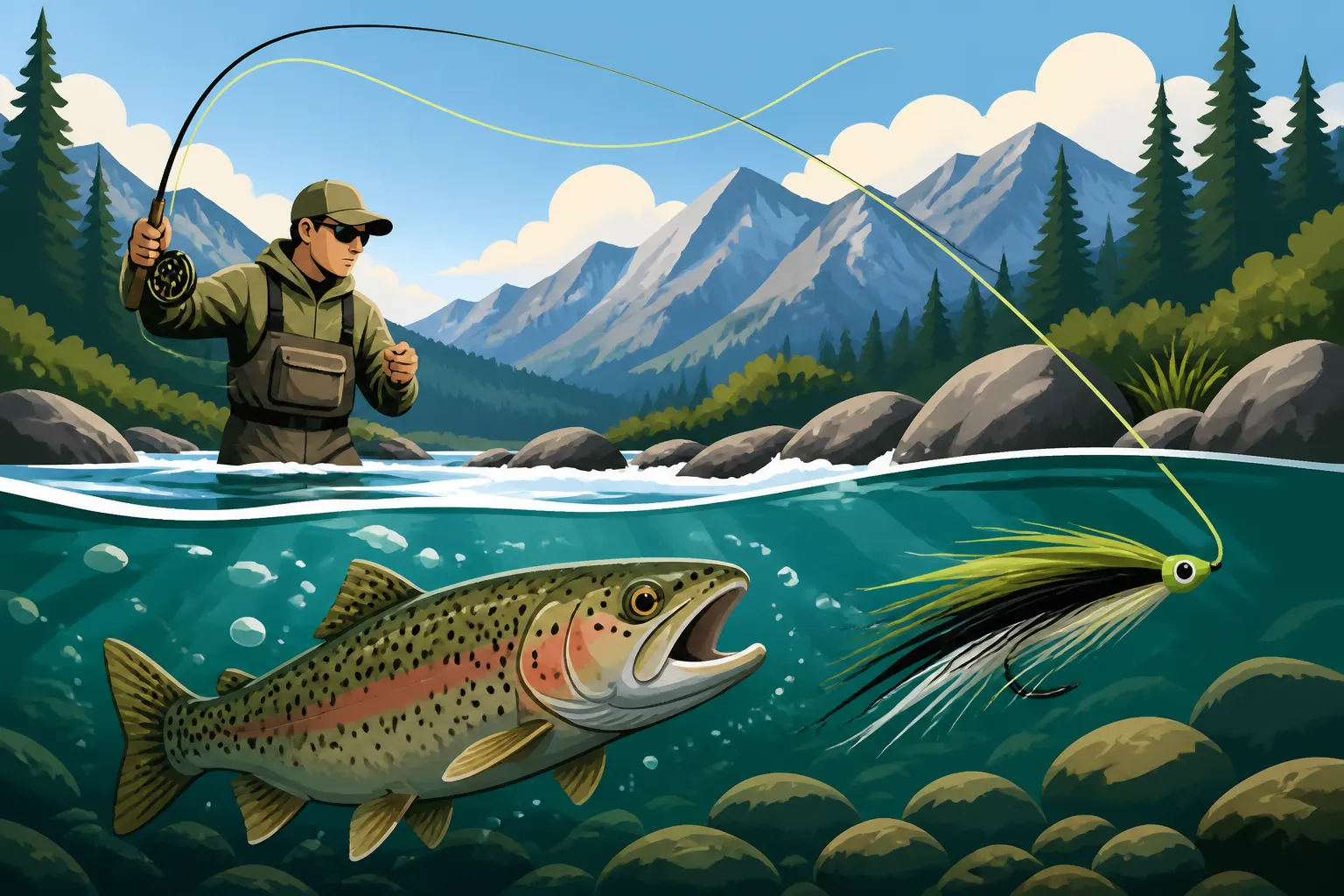
Streamers are designed to imitate these larger prey items – things like baitfish (rainbow trout parr, dace, shiners), sculpins (those bottom-dwelling, camouflaged fish that big trout absolutely adore), leeches, and even crayfish. When you strip a streamer through the water, it moves with an erratic, fleeing motion that screams "easy meal" to a hungry, territorial trout. The thrill isn't just in the catch; it's in the aggressive, often violent strike that defines streamer fishing. Unlike the subtle take of a nymph or the gentle sip of a dry fly, a streamer take is usually a jarring, rod-bending experience that will make your heart pound. It's a testament to the predatory nature of these fish, and understanding this shift in their behavior is the first step to consistently hooking into larger specimens.
What Makes a Good Trout Streamer?
Just like there are endless patterns for dry flies, the world of streamers is vast and varied. However, they all share a common goal: to imitate larger forage and entice an aggressive strike. The effectiveness of a streamer largely comes down to its action in the water, its profile, and sometimes, a bit of flash.
Materials play a huge role. Marabou, for instance, is incredibly popular because its soft, wispy fibers pulsate and breathe in the water, mimicking natural movement even with minimal stripping. Rabbit fur, often used in Zonkers or other strip-style patterns, also has fantastic movement and creates a substantial profile. Synthetic fibers can add flash and durability, making them great for patterns meant to imitate quick, fleeing baitfish. Streamers come in all sizes, from modest 2-inch patterns to formidable 6-inch monsters, and the size you choose will often depend on the size of the prey in the water you're fishing and the size of the trout you're targeting.
Color is another key consideration. Natural colors like olive, black, brown, and white are always good choices, especially when trying to imitate sculpins or typical baitfish. Brighter colors like chartreuse, pink, or even bright orange can be effective in off-color water or when trying to trigger an aggressive "reaction strike" rather than a purely imitative one. Patterns like the trusty Woolly Bugger, which comes in countless color variations, or more realistic imitations like the SculpZilla or articulated patterns like the Sex Dungeon, all aim to replicate the look and feel of a vulnerable prey item. Don't be afraid to experiment! Sometimes, a subtle change in color or profile is all it takes to unlock the bite.
Essential Gear for Streamer Fishing
Successfully casting and fishing streamers, especially larger ones, requires a slightly different gear setup than what you might use for delicate dry fly presentations. Trying to throw a heavy, water-logged streamer with your ultra-light 3-weight rod is a recipe for frustration, not fun.
For streamer fishing, you'll generally want to step up your rod weight. A 6-weight or 7-weight rod is often ideal. These rods have more backbone, allowing you to cast heavier flies more efficiently and handle the powerful strikes and fights of larger trout. While a 5-weight can certainly work for smaller streamers, you'll quickly appreciate the extra power when you're trying to punch a large, articulated pattern into a strong headwind. Rod length usually falls in the 9 to 10-foot range, offering good line control and leverage.
Your reel needs to be a good match for your rod, with a smooth drag system that can handle hard-running fish. You'll want one with enough backing capacity, too, because when a big trout takes off, it can really rip line off the spool. The line itself is crucial. While a floating line can work for shallower presentations, many streamer anglers opt for sink-tip or even full-sinking lines. A sink-tip line has the front portion of the line designed to sink, getting your streamer down to where the fish are holding without dragging your fly line down too much. Full-sinking lines are great for deeper water or when you need to get the fly down quickly and keep it there. This extra weight in the line helps with casting those heavier streamers as well.
For leaders, simplicity is key. A shorter, stronger leader is typically preferred. You might start with a 7.5-foot leader that tapers down to a stout tippet of 0X or 1X (around 12-15 lb test). Fluorocarbon tippet is an excellent choice for streamer fishing because it's nearly invisible underwater and has excellent abrasion resistance, which is vital when you're probing rocky structure where big trout often hide. You can find a wide selection of quality leaders and fluorocarbon tippet on Amazon to stock up for your next trip. To learn more about seasonal gear considerations, check out our guide on Idaho Fishing Gear Guide by Season.
Where and When to Fish Streamers in Idaho
Knowing what streamers to use is only half the battle; knowing where and when to present them is equally, if not more, important. Idaho boasts an incredible diversity of trout water, and understanding the best spots and conditions for streamer fishing will significantly increase your success.
Top Idaho Waters for Streamer Success
Idaho is a treasure trove for trout anglers, and many of its rivers and larger streams hold populations of big trout that are highly susceptible to streamers. When thinking about where to throw streamers, you want to consider waters that have a healthy population of larger trout and, crucially, a good supply of baitfish or other large prey items.
The South Fork of the Snake River is almost legendary for its robust trout populations, including some truly monstrous brown trout. Its rich ecosystem, with plenty of sculpins and other forage, makes it prime streamer territory. Anglers often target its many deep pools, undercut banks, and current seams where big fish can lie in ambush. Another fantastic option is the Clearwater River, particularly if you're targeting some of the larger resident rainbow trout or even the occasional bull trout (remembering strict catch-and-release rules for bull trout). While primarily known for steelhead, the Clearwater's sheer size and diverse habitat provide ample opportunities for streamer fishing. You might also find surprising success on the Boise River within the city limits, especially during colder months or after a good flush, when larger browns and rainbows become more aggressive. Even sections of the Henry's Fork can be good, particularly if you're exploring the deeper runs and outside bends where larger, more predatory fish hold. For a broader look at Idaho's incredible fishing opportunities, dive into our Best Rivers for Fishing in Idaho guide.
Best Seasons and Conditions for Streamer Fishing
Streamer fishing can be effective year-round in certain conditions, but some seasons and water conditions undeniably stand out. Generally, periods when trout are most active and predatory offer the best streamer fishing.
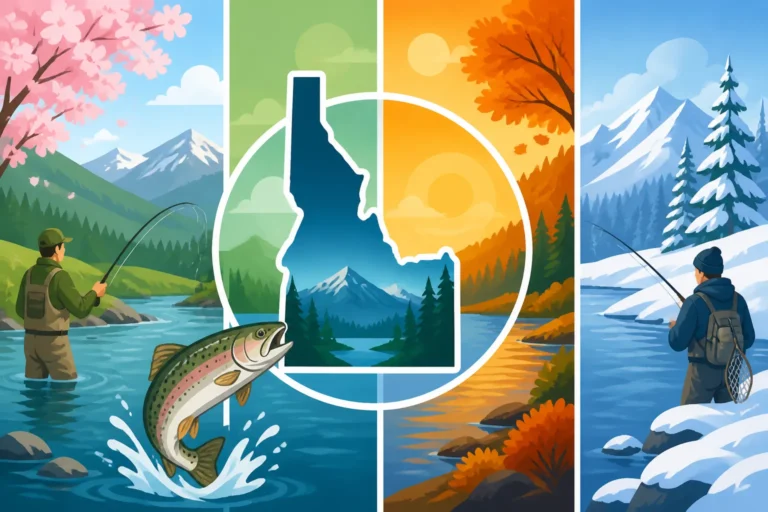
Fall is arguably the king of streamer seasons, especially for brown trout. As water temperatures cool and brown trout begin their pre-spawn feeding frenzy, they become incredibly aggressive and territorial. This is when they're bulking up for the rigors of spawning and will readily attack anything that looks like an encroaching meal or a threat. You'll often find them lurking in deeper pools, under cut banks, and near structure.
Spring, particularly after the initial high flows of runoff have begun to subside but the water is still slightly off-color, can also be fantastic. As rivers drop and clear, the water is still high enough to move larger baitfish around, and trout are actively feeding to regain energy lost over winter. This is also when "Idaho's Spring Runoff and How It Affects Fishing" can create prime streamer opportunities, as dislodged forage becomes easy pickings.
Even summer can be productive, especially during low-light conditions like early mornings, late evenings, or even after dark. During the bright midday sun, large trout often retreat to deeper, cooler lies, but they'll venture out to hunt when the light dims. Winter streamer fishing can also be surprisingly effective on certain rivers, especially during warmer spells. Trout metabolism slows, but they still need to eat, and a slowly presented streamer can be an irresistible, energy-efficient meal.
Reading the Water for Streamer Opportunities
The biggest mistake many anglers make when streamer fishing is simply casting blindly. Just like any other fishing technique, success hinges on reading the water and identifying prime holding lies for large trout. These predatory fish often hold in places where they can ambush prey without expending too much energy.
Look for submerged structure: logs, boulders, and rock gardens create current breaks and hiding spots. Big trout will often tuck themselves just out of the main current, waiting for an unsuspecting baitfish to drift by. Undercut banks are absolute magnets for large trout. These offer deep, dark protection from predators above and strong current breaks below, making them ideal ambush points. Casting your streamer right into the seam of an undercut bank and stripping it out can be deadly.
Deep pools are obvious holding areas, especially in faster rivers. Pay attention to the deepest parts, but also the transition areas where the pool drops off or narrows. Current seams where fast water meets slow water are also crucial. These are highways for baitfish and prime hunting grounds for trout. Cast your streamer into the faster current and let it swing into the slower water, or strip it along the seam. Lastly, don't overlook eddies and back-eddies. While smaller fish often congregate here, larger trout will often sit on the edge of the eddy, darting out into the main current to intercept food. Remember, you're looking for places where a big, territorial trout would feel safe and have easy access to food.
| Streamer Type | Primary Imitation | Retrieve Style | Water Depth | Notes |
|---|---|---|---|---|
| Woolly Bugger | Sculpin, Leech, Baitfish | Short, erratic strips; Dead drift | All depths | Highly versatile, good for beginners |
| Sculpin Patterns | Sculpins | Bounced along bottom; Short strips | Bottom | Great for deep pools and rocky areas |
| Baitfish Patterns | Minnows, Parr | Quick, jerky strips; Steady retrieve | Mid-column | Effective in clear water, mimic fleeing prey |
| Articulated Streamers | Large Baitfish, Leeches | Long, flowing strips; Erratic jerks | Mid-column to bottom | Max action, targets trophy fish |
Mastering Streamer Techniques and Presentations
Once you've got the right gear and you're in the right place, it's time to learn the art of the presentation. Streamer fishing isn't just about casting and reeling; it's about making your fly come alive and triggering that predatory response.
The Basic Strip and Retrieve
The bread and butter of streamer fishing is the "strip and retrieve," but there's more to it than just pulling in your line. It starts with your cast. Often, you'll want to cast across or slightly downstream, allowing your streamer to swing through prime holding water. Let your fly sink to the desired depth. This is where sink-tip or full-sinking lines really shine, getting your offering down quickly to where the big trout often lurk.
Once your fly is at depth, the retrieve begins. The most common retrieve involves a series of short, erratic strips, usually 6 to 12 inches long, followed by a slight pause. This stop-and-go motion mimics a fleeing baitfish or a struggling sculpin. Vary your strip length and speed. Sometimes a rapid, continuous strip triggers a chase, while other times a slow, methodical strip with longer pauses is what it takes. Pay close attention to how the current is affecting your fly's movement and adjust your retrieve to make it look as natural yet enticing as possible.
Detecting a strike with a streamer is a bit different than nymphing. Often, it's a very aggressive pull, almost like snagging on the bottom, but sometimes it can be a subtle tap. The key is to keep your rod tip pointed low towards the water and use a "strip set" rather than lifting your rod. When you feel a strike, continue stripping hard with your line hand while simultaneously sweeping the rod horizontally. This ensures a solid hook set, especially with the larger, heavier hooks often used on streamers. Trying to lift the rod like a typical trout set can pull the fly out of the fish's mouth without a good hookup.
Advanced Streamer Presentations
While the basic strip and retrieve will catch fish, exploring more advanced techniques can give you an edge, especially on pressured waters or with finicky trout.
Dead-Drifting Streamers: This might sound counterintuitive for a fly designed to be stripped, but it can be incredibly effective when trout are lethargic or in very clear water. The idea is to cast your streamer upstream and allow it to drift naturally downstream, just like a dead or injured baitfish. You might add a very subtle, almost imperceptible twitch with your rod tip to give it a little life. This technique is excellent for probing deep pools or slow runs where trout might be unwilling to chase a fast-moving meal.
Swinging Streamers: This technique is often borrowed from steelhead and salmon fishing, but it works wonderfully for trout. Cast across the current, let your fly sink, and then allow the current to "swing" your streamer downstream in an arc. As the fly swings, it presents a broadside profile to any fish holding in the current. You can add small strips during the swing to vary the action, making it appear to dart and pause. This is a great way to cover a lot of water and can provoke aggressive strikes from territorial fish.
Stripping Across Current: Instead of casting upstream or across, try casting directly across or slightly downstream and stripping your streamer aggressively back across the current. This presentation mimics a baitfish trying to escape across a channel or move from one side of the river to another. It's a highly aggressive presentation that can elicit chase-and-eat responses from active trout, especially in faster runs or tailouts of pools. Remember that the current will add resistance to your retrieve, so adjust your stripping speed accordingly. Mastering these different presentations will allow you to adapt to varying water conditions and trout moods. If you're looking to refine your fly fishing skills, consider exploring How to Fly Fish in Idaho for more foundational knowledge.
Hook Set, Fighting, and Landing Big Trout
Connecting with a big trout on a streamer is exhilarating, but the battle isn't over when the fish strikes. Improper hook sets or fighting techniques can quickly lead to heartbreak.
As mentioned, the strip set is paramount. When you feel that grab, don't lift your rod! Continue to strip-strike firmly with your line hand until you feel solid resistance. Only then should you begin to lift your rod and fight the fish. This ensures the hook penetrates deeply into the often-bony mouth of a large trout.
Once hooked, large trout are powerful adversaries. They will often make strong runs, head shakes, and even aerial acrobatics. Your rod acts as a shock absorber; keep a bend in the rod at all times, but avoid high-sticking (lifting the rod straight up, creating a sharp angle with the line) as this can easily break your tippet or even your rod. Let the reel's drag do its job. Don't try to winch the fish in, especially if it's making a strong run. Be patient, apply steady pressure, and regain line when the fish pauses or changes direction. Remember, you've likely used a stronger tippet for streamer fishing, which gives you a bit more leeway, but still, respect the fish's power. Quality fluorocarbon tippet, like those available on Amazon, can make a huge difference here.
When it comes to landing, a large net with a rubberized basket is highly recommended. These nets are much gentler on the fish's slime coat and fins, and the rubber doesn't tangle hooks as easily. Once netted, keep the fish in the water as much as possible. If you must remove it for a quick photo, wet your hands thoroughly first. Support the fish horizontally, never vertically by the jaw or gills, which can cause internal damage. Get your photo quickly and release the fish gently, allowing it to recover in the current until it swims away strongly. For insights into fighting other strong fish, our How to Set the Hook on a Steelhead guide offers relevant tips. And always be mindful of regulations regarding catch and release, which are detailed in Idaho Catch Limits and Bag Limits Explained.
Tips for Streamer Fishing Success and Troubleshooting
Streamer fishing, like all angling, is a journey of continuous learning. Even experienced anglers face challenges, but with a few extra tips and troubleshooting strategies, you can improve your odds of success.
Experimentation and Adaptation
The most successful streamer anglers are those who are willing to experiment and adapt. What worked yesterday, or even an hour ago, might not work now. Trout can be incredibly finicky, and conditions are constantly changing.
Don't be afraid to change flies. If you've been throwing a large olive streamer for a while without success, try a smaller black leech pattern, or a flashy white baitfish imitation. Vary the size, color, and profile until you find something that triggers a response. Often, fish that have seen many flies will respond to something completely different.
Vary your retrieve. If fast, erratic strips aren't working, slow down to a crawl. Try long, sweeping strips, or a combination of quick strips and long pauses. Sometimes, a trout needs a brief moment to decide whether to commit to the chase. Pay attention to the water. If the water is clear, a more natural presentation might be better. If it's a bit turbid, a brighter, more aggressive pattern might stand out. The fish will tell you what they want if you're willing to listen through experimentation.
Overcoming Common Streamer Challenges
Every angler encounters frustrations, and streamer fishing has its own unique set of challenges.
Snags are inevitable when you're fishing streamers, especially since you're often probing deep, snaggy structure where big fish hide. To minimize snags, try to maintain good line control and feel for the bottom. If you feel your fly bumping rocks, slow your retrieve or try to lift your rod tip slightly. If you do get snagged, a steady, strong pull directly in line with the snag often helps free the fly. Sometimes, even walking upstream or downstream of the snag can change the angle and free it. Using weed guards on your streamers can also help, though they can sometimes impede hook sets.
Missing strikes can be infuriating. This often happens because anglers lift their rod too soon or too late, or they don't use a strong enough strip set. If you're consistently feeling bumps but not hooking up, try sharpening your hooks. A super-sharp hook is critical for penetration, especially into the tough mouths of large trout. You might also try a slightly heavier fly line or tippet if you suspect your setup isn't generating enough force during the strip set. Practice the strip set until it becomes second nature.
Spooking fish is another common issue. Large trout are wary and sensitive to vibrations and shadows. Approach your fishing spots carefully, staying low and out of sight. Avoid heavy footfalls on the bank. Cast accurately and avoid "lining" fish (casting your fly line directly over them). If you're wading, move slowly and deliberately. Stealth is always an advantage, especially when targeting educated, trophy-sized trout.
Safety and Ethics on the Water
While the focus is on catching fish, being a responsible angler means prioritizing safety and ethical practices.
Wading safety is paramount, especially when fishing larger rivers or in colder weather. The water where big trout hide can be deep and swift. Always use a wading staff for stability, and be aware of slippery rocks. If fishing in cold conditions, consider proper layering and even wearing an inflatable PFD, especially if you're in a drift boat. The guide on Winter Fishing Spots in Idaho or What to Wear Fishing Idaho Rivers in Early Spring can offer useful tips here.
Proper fish handling is crucial for the health of Idaho's trout populations. Even if you plan to keep a fish within legal limits, handling it carefully minimizes stress and injury. For catch-and-release, keep the fish in the water as much as possible. Use barbless hooks, or crimp down the barbs on your hooks; this makes removal much easier and less damaging. Never hold a fish by the gills or by the jaw vertically, and release it gently, allowing it to swim away on its own terms. Respect for the resource ensures that these incredible fishing opportunities will continue for generations to come. For specifics on regulations and handling, consult the Idaho Fishing Regulations Explained or consider purchasing your Idaho Fishing License Guide and any necessary permits like the Idaho Salmon and Steelhead Permit if you're expanding your fishing horizons. Understanding the Idaho Fishing License Cost Guide is also a good idea.
Remember, streamer fishing is an active, engaging way to pursue Idaho's biggest trout. It demands attention, effort, and a willingness to adapt, but the rewards are truly unforgettable. So gear up, head out, and get ready for some electrifying strikes!
Disclaimer
This article is for general informational purposes only and does not constitute professional advice. Laws, prices and regulations vary by location and change over time. Consult a qualified professional for guidance on your specific situation.