Best Drift Boat Techniques for Fast Water
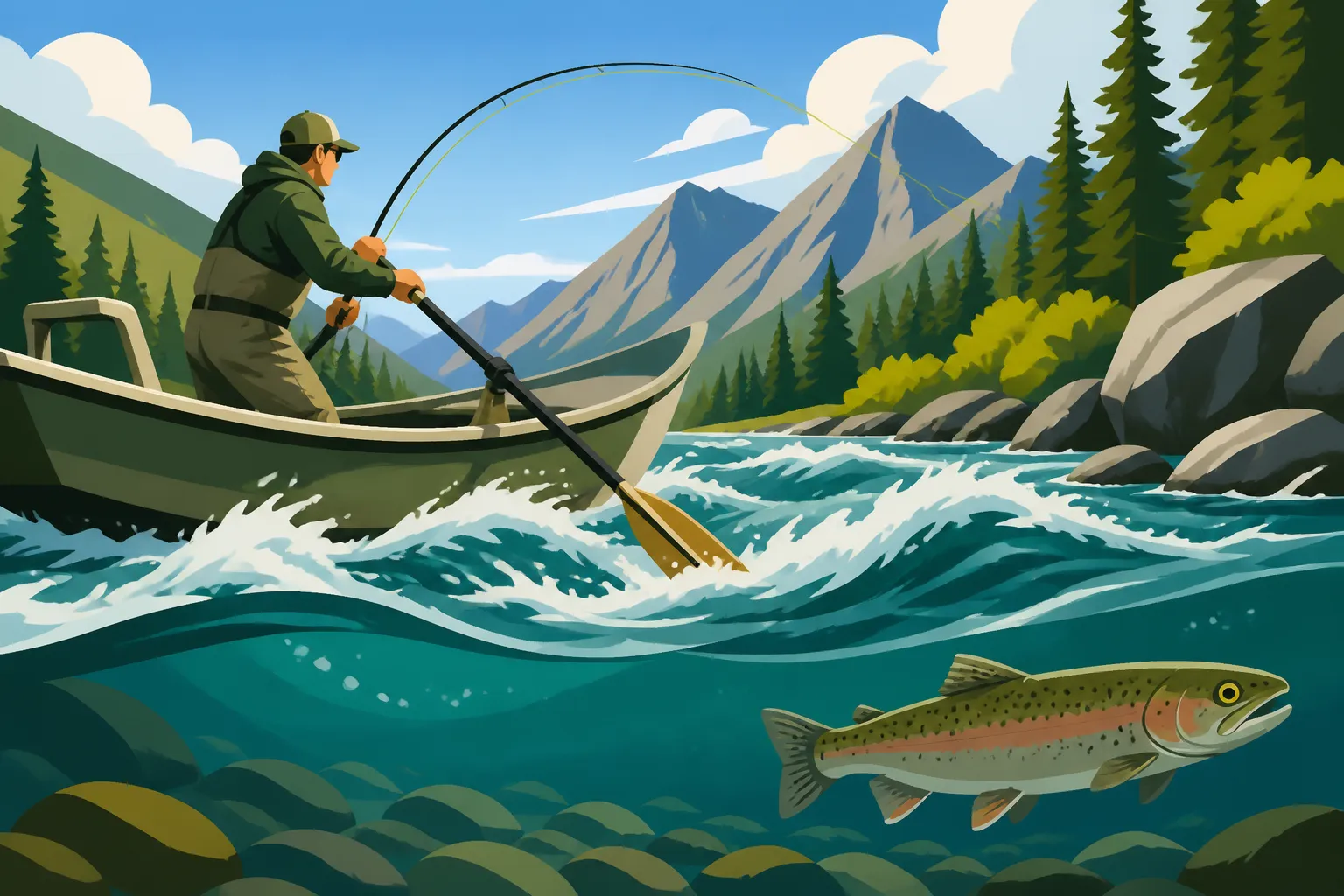
Floating Idaho's powerful rivers in a drift boat is an experience unlike any other, offering access to breathtaking scenery and incredible fishing opportunities. However, the sheer force of fast water can be daunting, making it tough to maintain control, stay safe, and effectively present your offerings to fish. This guide is all about equipping you with the essential drift boat techniques for fast water, turning those challenging currents into your playground and boosting your success on some of the state's most iconic waterways.
Understanding the Dynamics of Fast-Moving Rivers
Before you even dip an oar, truly understanding the language of fast water is paramount. Idaho's rivers, like the Salmon, Clearwater, and Snake, are dynamic beasts, constantly shifting and presenting new challenges. It’s not just about speed; it's about currents, eddies, and seams that dictate where fish hold and how you need to approach them. Neglecting this foundational knowledge is like trying to navigate a bustling city without a map—you'll get lost, or worse, get into trouble.
Reading the Current: Eddies, Seams, and Riffles
The river's surface tells a story, and learning to read it is your first and most crucial skill. Fast water isn't uniform; it's a complex tapestry of varying speeds and directions.
- Main Current/Thalweg: This is the deepest and fastest part of the river. While it can move your boat quickly, it often isn't where fish actively feed or hold, especially larger, more wary ones. Understanding its path helps you plan your drifts.
- Eddies: These are pockets of slower, often reverse-flowing water, typically found downstream of obstacles like large rocks, fallen trees, or bends in the river. Fish absolutely love eddies because they offer a break from the main current, bringing food right to them without expending much energy. Drifting into an eddy mouth or along its edge can be incredibly productive, but getting caught too deep in a swirling eddy can also make boat control tricky.
- Seams: A seam is the visible line where two different currents meet—often the fast main current and a slower eddy, or two currents with different speeds merging. These are prime feeding lanes. Think of it as a conveyor belt of food for fish. Learning to precisely drift along these seams is a game-changer for presenting your bait or fly naturally.
- Riffles and Runs: Riffles are shallow, turbulent sections where the water flows quickly over rocks, creating oxygenated water. Downstream of a riffle, the water often smooths out into a "run," a deeper, consistent flow where trout and steelhead often hold. Drifting through these sections requires careful boat positioning to keep your lines in the strike zone without snagging. Our guide on Reading Water on Idaho's Rivers can offer even more in-depth insights into these features.
Identifying Holding Water for Fish
Once you can read the currents, the next step is to translate that into where fish are likely to be. Fast water doesn't mean fish are constantly fighting the current; they're conserving energy.
- Current Breaks: Any object that breaks the main current—large boulders, submerged logs, ledges, or even subtle changes in bottom contour—creates a "current break" that fish use. Position your boat to allow your offering to drift naturally into these calmer pockets.
- Depth Changes: The transition from shallow riffles to deeper runs, or pools created by sudden drops, are magnets for fish. They offer security, cover, and a chance to ambush passing food. Your drift needs to account for these depth changes, often requiring different weights or leader lengths to keep your presentation effective. For specific species, understanding these holding patterns is key, as highlighted in our Idaho Steelhead Fishing Guide.
- Structure: Submerged trees (snags), rock gardens, and undercut banks provide crucial cover and ambush points. While they can pose a snagging risk, carefully drifting alongside or slightly above these structures can yield big rewards. It’s a fine line between getting close enough to fish the structure and getting too close to get hung up or damage your boat. Always be looking ahead for potential hazards and opportunities.
Essential Gear and Setup for Fast Water Drifting
Successfully navigating and fishing Idaho's fast rivers from a drift boat isn't just about technique; it's also about having the right tools for the job and ensuring your setup is optimized for safety and efficiency. Cutting corners on gear in fast water can lead to a less enjoyable, or even dangerous, experience.
Boat and Oar Selection
The drift boat itself is your vessel, and its design matters. Most drift boats for river fishing are designed to be highly maneuverable, with a wide, flat bottom for stability in choppy water and rockered ends to glide over obstacles.
- Boat Size: Larger boats offer more stability and carrying capacity, which is great for multiple anglers or longer trips, but they can be harder to maneuver in tight spots. Smaller boats are nimble but can feel less secure in big water. Consider the typical rivers you'll fish—a big, wide boat might be overkill for smaller, technical creeks but perfect for the Salmon River.
- Oar Type and Length: Your oars are your primary means of control. Look for strong, lightweight oars made of wood, fiberglass, or carbon fiber. The length should be appropriate for your boat's width and your height—too short, and you'll be straining; too long, and you'll hit your knees. Counterbalanced oars, often with lead weights in the handles, reduce fatigue over long days of rowing. Many anglers find spare oarlocks and even a spare oar (or at least a spare blade) to be essential, especially when on multi-day trips. You can find a wide selection of quality oars and oarlocks on Amazon, making it easy to outfit your boat.
- Rigging: Ensure all your gear is properly secured. Rod holders keep expensive setups safe, and dry bags are crucial for electronics, extra clothing, and your lunch. A well-organized boat allows you to focus on fishing and rowing, not searching for gear.
Anchor Systems and Their Importance
An anchor system is a non-negotiable safety and fishing tool in fast water. It allows you to slow your drift, hold position, and even recover from tricky situations.
- Anchor Type: A pyramid anchor or a "rocker" anchor (designed to grab rocks) is generally preferred over a traditional claw or grapnel anchor for river fishing. They grip the bottom well but can usually be retrieved from snags.
- Anchor Weight: The weight of your anchor is critical. In fast, powerful currents, you'll need a heavier anchor than you might think to effectively slow your boat or hold it in place. Many anglers carry multiple anchors of different weights, or at least a large enough anchor to handle the strongest currents they anticipate. On a big river like the Snake, a 40-50 pound anchor might be standard.
- Anchor Release System: This is paramount for safety. Your anchor line should run through a sturdy pulley system, usually at the bow, and be controlled by a jam cleat or quick-release system within easy reach of the rower. In an emergency, or if the anchor snags badly in fast current, you need to be able to release it instantly. Never tie off an anchor line directly to the boat in fast water; it can instantly flip your boat. You can find robust anchor systems, including lines and pulleys, readily available on Amazon.
- Chains and Rope: Use a good length of anchor chain (usually 6-10 feet) between your anchor and rope to help the anchor dig in better. Your anchor rope should be strong, durable, and long enough to reach the bottom in the deepest water you'll encounter, plus extra length for scope (the angle of the rope to the bottom).
Fishing Gear Considerations for Fast Water
Your fishing setup also needs to stand up to the rigors of fast water.
- Rods and Reels: For targeting larger fish like steelhead or powerful trout, you'll want stout rods with good backbone that can handle strong currents and heavy fish. A longer rod can also help with line control from the boat. Reels should have a smooth, reliable drag system. For recommendations, check out our guide on the Best Rod Setup for Idaho Steelhead Fishing.
- Line: Strong mainlines and leader material are a must. Fast water creates drag, and fish often hit hard. You'll want abrasion-resistant line to stand up to rocks and submerged timber.
- Terminal Tackle: A variety of weights (split shot, slinky weights, pencil lead) will be necessary to get your bait or lure down to the fish in different current speeds and depths. Barbless hooks are often required or recommended in many Idaho waters for certain species, so always check the local Idaho Fishing Regulations Explained.
Mastering the Art of Drift Boat Control
This is where the rubber meets the road, or more accurately, where the oars meet the water. Effective drift boat control in fast currents is a nuanced skill that combines anticipation, precision, and continuous adjustment. It's less about brute strength and more about finesse and understanding hydrodynamics.
The Art of the Controlled Drift
The core principle of drift boat fishing is to match the speed of your boat to the speed of the current where your lure or fly is drifting. This creates a natural presentation, convincing fish your offering is just another piece of food floating by.
- Anticipation is Key: You're always looking ahead, anticipating changes in current, upcoming obstacles, and where you want your boat to be in relation to the fishing lanes. Don't wait until you're on top of a seam or a rock garden to react.
- Feathering the Oars: This involves making small, continuous adjustments with your oars to maintain your desired speed and angle. If the boat is moving faster than your lure, you'll want to gently "back-row" (row against the current) to slow down. If a seam requires a slight angle, feather one oar more than the other. It's a constant, subtle dance.
- Angle of Attack: Your boat's angle to the current greatly influences its speed and maneuverability. A boat broadside to the current will get pushed faster and be harder to control. Generally, a slight angle, either bow or stern first, allows for better control and faster reactions. For instance, sometimes you want to angle the bow slightly upstream to give you more time to react and slow your drift.
Back-Rowing and Ferrying
These are two of the most fundamental and critical maneuvers for managing fast water.
- Back-Rowing: This is rowing upstream to slow your downstream progress. It's essential for matching the speed of your fly or lure, allowing you to thoroughly fish a section of water. Imagine a section of prime holding water; you want your lure to spend as much time there as possible. By back-rowing, you can effectively "hold" your boat over that spot, giving your anglers multiple casts and extended drifts. It also gives you more time to react to obstacles or adjust your fishing strategy.
- Ferrying: Ferrying is moving your boat laterally across the current without losing significant downstream distance. You achieve this by angling your boat relative to the current and rowing downstream with the upstream oar, or upstream with the downstream oar, depending on which way you want to move. For example, to move left (river right), you'd angle the boat slightly with the bow pointing upstream and to the right, then back-row, allowing the current to push the boat sideways. This is crucial for getting into position for seams, avoiding hazards, or changing fishing lanes. Mastery of ferrying means you can move across a wide river to fish both banks effectively, or reposition quickly when a fish shows itself.
Holding Position and Working a Seam
Sometimes you want to hold your boat in a specific spot, or precisely on a seam, to allow anglers to make repeated casts into a productive zone.
- Using the Anchor: As discussed earlier, deploying your anchor is the easiest way to hold position. However, it's not always feasible or safe in extremely fast or shallow water.
- Dynamic Positioning: In some situations, you can use subtle current breaks or eddies to "park" your boat dynamically. By understanding how the water flows around an obstacle, you can often find a sweet spot where you can hold with minimal rowing, allowing anglers to focus on fishing.
- Precise Seam Drifts: To effectively work a seam, you need to maintain your boat's position so that your anglers can consistently cast into or along that seam. This often means constant micro-adjustments with the oars, always anticipating the boat's movement relative to the current. If the seam is long, you'll be back-rowing to extend your drift, then repositioning to hit the next section. Techniques for How to Fish for Steelhead in the Clearwater River often heavily rely on these precise boat control skills.
Effective Fishing Strategies from a Moving Boat
Fishing from a drift boat is fundamentally different from bank fishing. You're covering water, often at a significant pace, which means your casting, presentation, and strike detection need to be adapted for a dynamic platform. This adds an exciting layer of challenge and opportunity to your Idaho fishing experience.
Targeting Steelhead and Trout
Idaho's rivers are famous for their anadromous fish like steelhead and Chinook salmon, as well as robust populations of various trout species. Each requires specific strategies from a drift boat.
- Steelhead: Often found in faster, deeper runs, steelhead require presentations that get down quickly and stay in the strike zone. From a drift boat, this often means "side-drifting" or "boondogging," where the boat and your weighted offering drift at the same speed down a run. Anglers cast slightly upstream and out, allowing the lure or bait to sink and tumble naturally. Another common technique is "back-trolling plugs," where the boat is rowed slowly upstream (back-rowing), keeping diving plugs working in place or moving slightly upstream through prime holding water. Our detailed guide on How to Fish for Steelhead in Idaho dives deep into these techniques.
- Trout: For resident trout, especially in popular waters like Henry's Fork or the South Fork of the Snake River, dry fly fishing, nymphing, and streamer fishing are all highly effective. The drift boat allows you to systematically cover prime trout water, hitting eddies, current seams, and undercut banks. Fly anglers often use the boat to get into position for perfect casts to rising fish or to allow for long, drag-free nymphing drifts. For example, on a long, slow current seam, the rower back-rows to keep the boat moving at the same pace as the fly, maximizing the drift.
- Bass and Sturgeon: For species like smallmouth bass in the Snake River or sturgeon, you might target specific structure or deeper holes. From a drift boat, you can position above prime bass habitat and cast jigs or crankbaits, or anchor upriver from a known sturgeon hole to present heavy baits. Remember that for sturgeon, catch-and-release is mandatory, and special rules apply, as detailed in Idaho Sturgeon Fishing Rules.
Bait, Lure, and Fly Presentation
Getting your offering in front of the fish naturally is the goal, regardless of what you're using.
- Maintaining a Drag-Free Drift: This is paramount, especially for fly fishing and bait fishing. From a moving boat, currents can pull your line, creating "drag" that makes your fly or bait look unnatural. The rower's job is to keep the boat's speed matched to the current where the offering is. Anglers also need to mend their line (flip extra line upstream) to counteract current drag.
- Depth Control: In fast water, getting your offering down to the fish can be challenging. For spin fishing, this means using enough weight, whether it's slinky weights for drift fishing or heavily weighted jigs. For fly fishing, it often means adding split shot, using heavier flies, or incorporating sink-tip lines. The drift boat allows you to adjust your drift speed to give your offering maximum time to sink into the strike zone.
- Swinging Flies and Lures: For steelhead and trout, swinging flies (like spey flies) or lures (like spinners or spoons) through a run can be incredibly effective. The boat allows you to position yourself upstream and across from the target zone, cast, and then let the current swing your offering through the holding water. The rower controls the speed of the swing by adjusting the boat's drift.
Efficient Casting from a Moving Platform
Casting from a moving drift boat adds another layer of complexity.
- Accuracy is Paramount: You're often targeting specific current seams, structure, or eddies. Practice casting accurately, often at different angles, to hit those sweet spots. The rower should try to position the boat to give anglers the best possible angle, but anglers also need to be versatile.
- Line Management: With limited space in a boat, especially when multiple anglers are fishing, line management is critical. Avoid tangled lines and ensure you have enough slack for a good cast, but not so much that it's a hazard. Stripping baskets can be useful for fly anglers to manage loose line.
- Adjusting for Boat Movement: Every cast will be slightly different due to the boat's constant movement. Anglers need to adapt their timing and trajectory. For example, if the boat is swinging slightly, you might need to lead your target more or cast with a slightly open stance to maintain balance. It's a skill that comes with practice, but understanding the boat's momentum helps immensely. When considering what to pack for a day, remember that a good pair of polarized sunglasses (available on Amazon) can greatly aid in spotting fish and reading subtle currents from a moving boat.
Prioritizing Safety on Idaho's Rapid Waters
No discussion of drift boat techniques for fast water would be complete without a serious focus on safety. Idaho's rivers can be unforgiving, and even experienced anglers can find themselves in precarious situations if they're not prepared. Your safety, and the safety of everyone in your boat, must always be the top priority.
Personal Flotation Devices (PFDs) and River Hazards
Wearing a PFD is not just a suggestion; it's a fundamental requirement in fast-moving water, and often legally mandated.
- Wear Your PFD: Always wear a properly fitted, Coast Guard-approved Personal Flotation Device. Don't just have it in the boat; wear it. Accidents happen fast, and there's no time to put on a PFD when you're unexpectedly in the water. For kids, ensure they have a PFD designed for their weight. Even inflatable PFDs can be a great option for comfort, though always check their rating for fast-water use.
- Identify River Hazards: Be constantly vigilant for hazards such as:
- Rapids and Whitewater: Understand the class of rapids you'll encounter and know your boat's and your crew's capabilities. Never attempt water beyond your skill level.
- Strainers: These are obstructions (like fallen trees or log jams) that allow water to pass through but catch solid objects (like boats and people). They are incredibly dangerous because the force of the current can pin you against them. Avoid them at all costs.
- Sweepers: These are branches or trees hanging low over the water. They can knock people out of the boat or snag gear.
- Undercut Rocks: These are rocks where the current flows underneath, creating a trap. Never get caught broadside against an undercut rock.
- Dams and Diversions: Always know the location of any dams or irrigation diversions and portage well upstream if necessary.
- Cold Water: Idaho rivers are often fed by snowmelt, making the water dangerously cold even in summer. Hypothermia is a real risk. Dress in layers, preferably non-cotton, and carry extra dry clothing in a dry bag. Check our guide on What to Wear Fishing Idaho Rivers in Early Spring for more specific advice.
Emergency Procedures
Having a plan for emergencies can make all the difference.
- Man Overboard: If someone goes overboard, the immediate priorities are to get them back into the boat (or to shore) and ensure the boat is safe. The rower should try to point the bow downstream, use the current to slow the boat, and ideally move towards the person. Practice retrieving a person from the water in a controlled environment.
- Flipping or Swamping: If the boat flips or swamps, stay with the boat if possible. It provides buoyancy and is easier for rescuers to spot. Hold onto ropes or grab lines. Try to stay on the upstream side of the boat to avoid being pinned.
- Anchor Snag: If your anchor snags in fast current and you can't free it, you must be able to release it quickly from its quick-release system. Never try to power through it or hold on, as the current can quickly swamp or flip your boat. Losing an anchor is always preferable to losing a boat or, worse, a life.
- First Aid and Communication: Always carry a well-stocked first-aid kit. A waterproof VHF radio or satellite communication device is vital in remote areas where cell service is nonexistent. Let someone on shore know your float plan, including your put-in, take-out, and estimated times.
Remember, every river is different, and conditions can change rapidly. Always scout unfamiliar water if possible, especially during high flows. Consider taking a certified swiftwater rescue course or going with an experienced Idaho Fishing Guide for your first few fast-water trips. Their expertise can be invaluable in teaching you the ropes and keeping you safe.
Disclaimer
This article is for general informational purposes only and does not constitute professional advice. Laws, prices and regulations vary by location and change over time. Consult a qualified professional for guidance on your specific situation.