Best Downrigger Setup for Kokanee on Lake Coeur d’Alene
There's nothing quite like the thrill of a kokanee strike, especially when you're out on the vast, beautiful waters of Lake Coeur d'Alene. But let's be honest, these landlocked sockeye can be incredibly frustrating to target. They're often suspended in deep water, picky about presentation, and constantly on the move. That's where a dialed-in downrigger setup becomes less of a luxury and more of an absolute necessity, helping you put your lure right in front of those finicky fish. This guide is all about helping you nail down the perfect downrigger strategy to consistently entice those shimmering silver bullets.
Understanding Kokanee Behavior on Lake Coeur d'Alene
Before you even think about dropping a line, understanding the habits of kokanee in a big, deep lake like Coeur d'Alene is absolutely crucial. These aren't your typical shallow-water dwellers; they're pelagic, meaning they live in the open water column, constantly searching for their ideal comfort zone.
Seasonal Depth Preferences
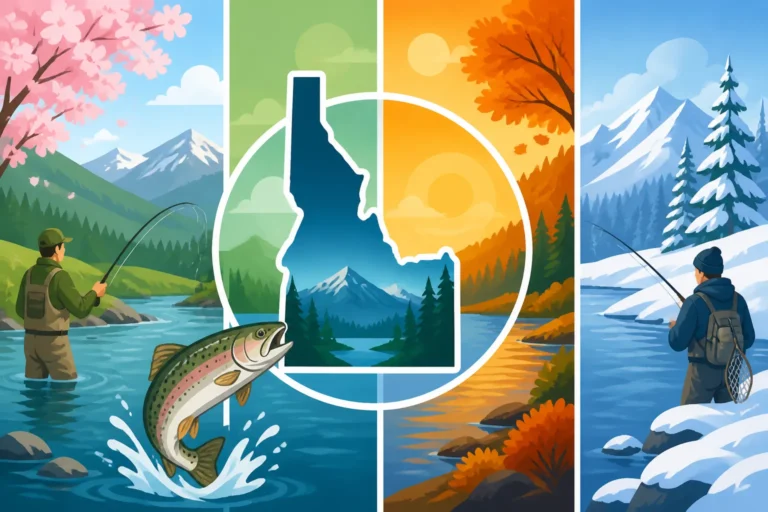
Kokanee are highly sensitive to water temperature and light conditions, which means their preferred depth can change dramatically throughout the year, sometimes even throughout the day. In the cooler months of spring, particularly just after ice-out, you might find them shallower, sometimes as little as 10 to 30 feet, especially near areas where creeks and rivers bring in warmer water or nutrients. They're often feeding aggressively as the water warms, getting ready for their summer routine.
As summer progresses and the surface waters of Lake Coeur d'Alene heat up, kokanee descend to cooler, deeper reaches. They typically congregate around the thermocline – that invisible boundary layer where warm surface water meets cooler, deeper water. This is usually where you'll find the most abundant food sources, like zooplankton, which is their primary diet. During peak summer, it's not uncommon to find them suspended anywhere from 40 to 80 feet, or even deeper on bright, sunny days. This depth preference can be really tricky to pinpoint, but knowing What Depth Kokanee Hold at in Summer on Idaho Lakes is a game-changer for successful trolling. As fall approaches, they'll start to stage for their spawning runs, often moving into shallower bays or near river mouths, but can still be found deep in the main lake basin.
Identifying Prime Kokanee Habitat
Kokanee aren't "structure-oriented" in the same way bass are, but they definitely relate to features within the water column. When you're cruising Lake Coeur d'Alene, keep an eye out for submerged points, deep channels, and significant drop-offs. These underwater topographical features can act as highways or congregating areas for baitfish and, consequently, kokanee. They also like areas where currents or thermoclines create nutrient upwellings, concentrating their food source.
The most important "habitat" indicator for kokanee is the presence of baitfish and zooplankton. This is where your electronics come in. You're looking for dense clouds of smaller fish or even just "fuzz" on your fish finder, which can indicate zooplankton. If you mark these bait balls, the kokanee usually aren't far behind. Lake Coeur d'Alene has plenty of areas known for strong kokanee populations, such as the open waters of the main lake, as well as several of the larger bays like Powderhorn or Wolf Lodge, depending on the season and year-to-year patterns. Pay attention to changes in water temperature and clarity, too. Clearer, cooler water often holds the most active fish.
Essential Components of a Kokanee Downrigger Setup
So, you're ready to get serious about kokanee. That means investing in the right tools. A downrigger isn't just a fancy toy; it's the core of your presentation, allowing you to precisely control the depth of your lure and get it right into the kokanee's strike zone.
The Downrigger Unit Itself
When it comes to downriggers, you generally have two main choices: manual or electric. Manual downriggers are more budget-friendly and perfectly functional for most anglers, especially if you're running just one or two lines. You crank them up and down by hand, which can be a bit of a workout when you're repeatedly checking depths or bringing up a heavy ball. Brands like Scotty and Cannon offer reliable manual options that you can often find readily available on Amazon or at local tackle shops. They're great for smaller boats or those new to downrigger fishing.
Electric downriggers, on the other hand, offer push-button convenience. With a flick of a switch, your downrigger ball plunges or ascends, saving you energy and allowing for quicker depth adjustments. This is a huge advantage when you're actively searching for fish, or when you get a double header and need to retrieve one ball quickly. For serious kokanee anglers, especially those running multiple downriggers or fishing frequently, electric models like the Scotty 1106 Depthpower or Cannon Uni-Troll are a fantastic investment. They typically come with longer boom lengths (24-60 inches), which helps spread your lines away from the boat, reducing tangles and increasing your fishing spread. Make sure your boat has sufficient battery power to handle electric downriggers. When mounting, swivel bases are highly recommended as they allow you to rotate the downrigger out of the way when not in use or during netting, making your life a lot easier on the water.
Downrigger Balls and Releases
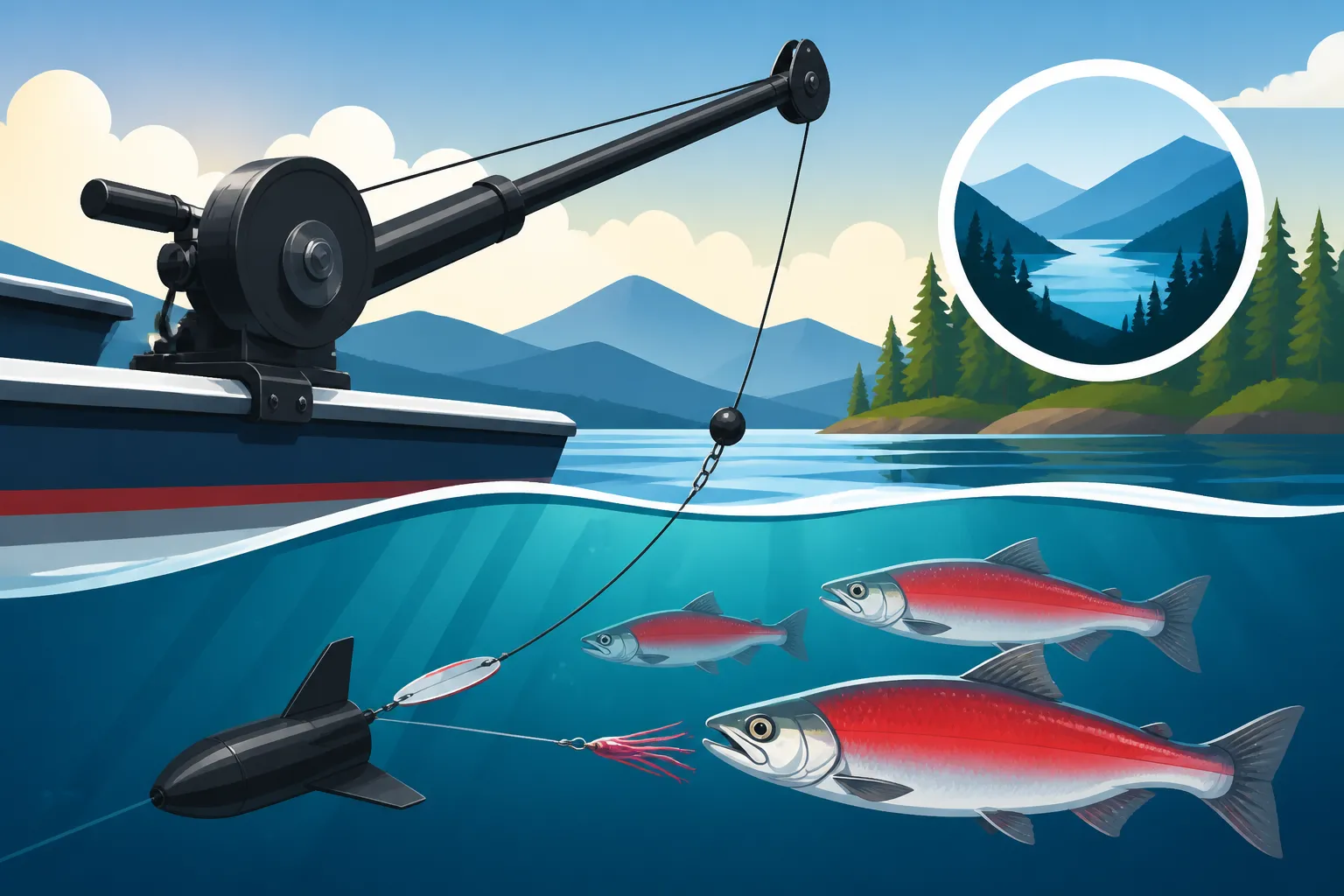
The downrigger ball is what pulls your line down to the desired depth. For kokanee on Lake Coeur d'Alene, you'll typically be using 8- to 12-pound weights. If you're fishing very deep, fighting strong currents, or trolling at slightly higher speeds, you might even consider 15-pound balls to minimize "blowback" – the angle at which your downrigger cable trails behind the boat. Pancake-shaped or finned torpedo balls are popular because their hydrodynamic design helps them track straight and reduces blowback compared to spherical balls.
The release clip is arguably the most critical component, as it holds your fishing line to the downrigger cable until a fish strikes. There are several types, but for kokanee, sensitive releases are key. You want a clip that will reliably hold your line yet release with the subtle tug of a small kokanee. Brands like Scotty, Cannon, and Offshore Tackle offer excellent releases. Basic snap releases are common, but many kokanee anglers prefer "stacker releases" or "line release stackers." These allow you to run multiple lines off a single downrigger cable, placing one lure deeper and another shallower above it. For instance, you could run one lure at 60 feet and another at 45 feet off the same downrigger, effectively doubling your chances and helping you pinpoint the fish's exact depth. Roemer releases are another popular, very sensitive option.
Rods, Reels, and Line for Trolling Kokanee
Your rod and reel setup needs to be specifically chosen for kokanee, which have soft mouths and tend to fight with head shakes. You'll want a light to medium-light action rod, typically 7 to 9 feet in length. The extra length provides a good shock absorber, helping to prevent hooks from tearing out of their delicate mouths. A fast or moderate-fast action tip is ideal for detecting those subtle kokanee bites and for working dodgers effectively, while still having enough backbone to handle the fish. Kokanee-specific rods, often called "Koke rods," are designed with this in mind, offering a forgiving parabolic bend.
For reels, a small, level-wind line counter reel is practically non-negotiable. Knowing precisely how much line you have out is vital for replicating successful depths and ensuring your lure is tracking correctly behind the downrigger ball. Brands like the Shimano Tekota or Daiwa Lexa series are very popular choices and are readily available on Amazon. Spool your reel with 8- to 10-pound monofilament or 10- to 15-pound braided line. If you go with braid, which offers superior sensitivity, always tie on a monofilament or fluorocarbon leader (6-8 feet of 6-8 lb test) to provide the necessary stretch and invisibility that can make all the difference in convincing wary kokanee to bite. This also serves as a shock absorber.
Rigging for Success: Lures, Baits, and Presentation
Once your downrigger system is in place, the real art of kokanee fishing begins with your terminal tackle and presentation. These fish are notorious for being finicky, so getting the details right here is absolutely paramount.
Selecting the Right Lures and Baits
Kokanee are primarily plankton feeders, so they're attracted to small, flashy, and often scented presentations that mimic their food source or simply grab their attention. Dodgers and flashers are the heart of many kokanee setups. These are not lures themselves, but attractors that create vibration and flash, drawing kokanee in from a distance. Dodgers have an oscillating action, imparting a side-to-side dart to your trailing lure, while flashers rotate rapidly. You'll want a variety of sizes (from 3.5 to 5.5 inches) and colors. Pink, orange, green, and chartreuse are classic kokanee colors, with UV finishes often making a huge difference, especially in deeper, darker water. Brands like Shasta Tackle, Sep's, and Mack's Lures produce excellent dodgers and flashers.
Trailing behind your dodger or flasher, you'll attach your actual lure. Small hoochies (miniature squid skirts), wedding rings, squirts, and small spoons are incredibly effective. The "Kokanee Killer" spoon and various small Apex Tackle spoons are very popular. The key here is small. These lures are typically only 1 to 2 inches long. The final, essential touch for kokanee is scent. Tipping your hook with a kernel or two of Shoepeg corn, soaked in a potent scent like Pro-Cure or Pautzke's Bait Fuel, is a widely accepted secret weapon. Gulp! maggots are another great option. The corn not only provides visual appeal and texture but acts as a carrier for the scent, leaving a scent trail that kokanee can't resist. For more detailed insights, definitely check out Best Lures for Idaho Kokanee Fishing.
Leader Length and Presentation
The length of your leader, the line connecting your lure to your dodger or flasher, is incredibly critical and often determines success. There's no single magic number, as it can vary based on the kokanee's mood and the specific action of your dodger. Generally, you'll start with leaders between 8 and 24 inches. A shorter leader will make your lure dance more erratically behind a dodger, while a longer leader will give it a more subtle, gliding action. Experimentation is key here.
You'll often find that on aggressive days, kokanee might hit a lure on a shorter leader, while on finicky days, a longer leader producing a more natural swimming motion is preferred. Always use a high-quality, transparent fluorocarbon line for your leader, as it's nearly invisible underwater. Your hooks should be small (size 4 or 6), very sharp, and often a tandem hook setup is used, particularly with hoochies or squirts, to increase hook-up ratios. When baiting with corn, thread one or two kernels directly onto the hook, ensuring they don't impede the hook point.
Mastering Depth and Trolling Speed
This is where the downrigger setup really shines. Using your fish finder to locate kokanee and bait balls is your first step. Once you mark fish, deploy your downrigger ball to that exact depth. The beauty of a downrigger is its precision – you can put your lure exactly where the fish are holding. Remember to constantly monitor your electronics and adjust your downrigger depth as needed, because kokanee rarely stay at one depth for long. Learning How to Find Kokanee on a Fish Finder effectively will make a significant difference.
Trolling speed is another critical factor for kokanee, and they generally prefer it slow. A speed of 0.8 to 1.5 miles per hour is often the sweet spot. Too fast, and your lures might not have the enticing action, and kokanee might shy away. Too slow, and your dodger might not be imparting enough action. Use your boat's GPS to maintain a consistent speed. Minor adjustments in speed can also change the action of your dodger and lure, so experiment until you find what triggers bites. For a deep dive into this, read up on Best Trolling Speed for Kokanee. If you're wondering about alternatives, exploring Trolling vs Jigging for Idaho Kokanee, Which Works Better might offer additional insights, though trolling is typically the go-to for downrigger setups.
Advanced Tips for Lake Coeur d'Alene Kokanee
Even with a perfect downrigger setup, there are always ways to refine your technique and increase your success rate on a lake as dynamic as Lake Coeur d'Alene. These advanced tips focus on maximizing your understanding of the water and fine-tuning your approach.
Reading Your Electronics
Your fish finder is your best friend when chasing kokanee. It's not just for seeing fish; it's for understanding the entire underwater environment. Learn to interpret those fish arches – typically, kokanee will show up as smaller, denser arches compared to larger trout or pike. More importantly, look for bait balls. If you see clouds of bait, you're in the right zone, and the kokanee are likely nearby, feeding on them.
Pay close attention to the thermocline, which usually shows up as a distinct band on your sonar. This is often where kokanee will congregate in summer. Mark successful passes as waypoints on your GPS. If you get a bite at 60 feet over a submerged point, mark it. Then, you can make repeated passes over that exact spot and depth, increasing your chances of finding more fish. Spend time learning your specific unit and its features; many modern fish finders have specific settings to enhance fish arches or detect bait. Understanding How to Find Kokanee on a Fish Finder goes beyond just seeing a blip; it's about interpreting patterns.
Adjusting to Conditions
Lake Coeur d'Alene can throw a lot of different conditions at you, and successful kokanee anglers are always adapting. Wind and current are common challenges. Strong winds can make maintaining a precise trolling speed difficult, and currents can create more blowback on your downrigger cable, making your 8-pound ball act like a 6-pound ball. To compensate, you might need to increase your downrigger ball weight or adjust your boat's speed more aggressively to maintain that ideal lure presentation.
Light conditions are another big factor. On bright, sunny days, kokanee tend to go deeper and may prefer more subtle, natural lure colors. On overcast days or in low light conditions (early morning, late evening), they might move shallower and be more attracted to brighter, more fluorescent colors. Water clarity also plays a role; in very clear water, longer leaders and more subdued lures might be necessary to avoid spooking fish, while in slightly stained water, more flash and vibration can be beneficial. It's often helpful to refer to a comprehensive Idaho Fishing Techniques Guide to understand how various elements interact.
Maintaining Your Gear
Your downrigger setup is an investment, and proper maintenance will ensure it performs flawlessly and lasts for years. Before and after every trip, give your downrigger cables a thorough inspection for any frays or damage. A snapped cable means a lost downrigger ball and potentially a lost fish. Check your release clips for wear and tear; a faulty clip can lead to missed strikes or premature releases. Ensure your rod guides are free of cracks or damage that could fray your line.
Always replace your leaders and hooks frequently, especially after catching a few fish. Kokanee have soft mouths, and hooks can dull quickly. A sharp hook is absolutely non-negotiable for consistent hook-ups. Keep your reels clean and lubricated, and occasionally service your downrigger units according to the manufacturer's recommendations. Taking these small steps will save you big headaches on the water and keep you focused on catching fish. Beyond gear, make sure you're always up-to-date on Idaho Fishing Regulations Explained and grab your Idaho Fishing License Guide before hitting the water.
| Feature | Manual Downrigger | Electric Downrigger |
|---|---|---|
| Cost | More affordable (e.g., $100-$300 on Amazon) | Higher investment (e.g., $400-$1000+ on Amazon) |
| Operation | Hand-cranked retrieve/deploy | Push-button motor control |
| Speed | Slower retrieve/deploy speed | Faster retrieve/deploy speed |
| Effort | Requires physical effort, especially with heavy balls | Minimal physical effort |
| Features | Basic depth control | Often includes auto-up, preset depths, cycle modes |
| Power Needs | None | Requires 12V DC power from boat battery |
| Ideal For | Budget-conscious anglers, smaller boats, occasional use | Frequent anglers, larger boats, competitive fishing |
| Precision | Excellent depth control | Excellent depth control with added convenience |
Disclaimer
Please be aware that fishing regulations, including catch limits and seasons, can change. Always consult the latest Idaho Fish and Game regulations before heading out on the water. This guide provides general information and recommendations, but it is your responsibility to know and follow all current local and state fishing laws.