Why Barbless Hooks Work Better for Sturgeon Fishing
Anyone who's ever wrestled with a massive sturgeon on Idaho's mighty Snake River knows the sheer power and awe these ancient fish command. But beyond the thrill of the fight, there's a vital responsibility that comes with targeting such a vulnerable species: ensuring their safe release. One of the most common questions, and sometimes a point of contention among anglers, is why those tiny barbs on our hooks can make such a huge difference. This guide delves deep into why barbless hooks are not just a good idea, but a superior and often legally mandated choice for sturgeon fishing, benefitting both the fish and the angler.
The Critical Role of Barbless Hooks in Sturgeon Conservation
When you're dealing with a fish that can live for over 100 years and grow to incredible sizes, every encounter, especially catch-and-release, needs to be handled with the utmost care. The difference a barbless hook makes is profound, directly impacting the survival rates and long-term health of these magnificent creatures. It's a fundamental aspect of sustainable fishing practices that Idaho is serious about.
Minimizing Harm and Maximizing Survival Rates
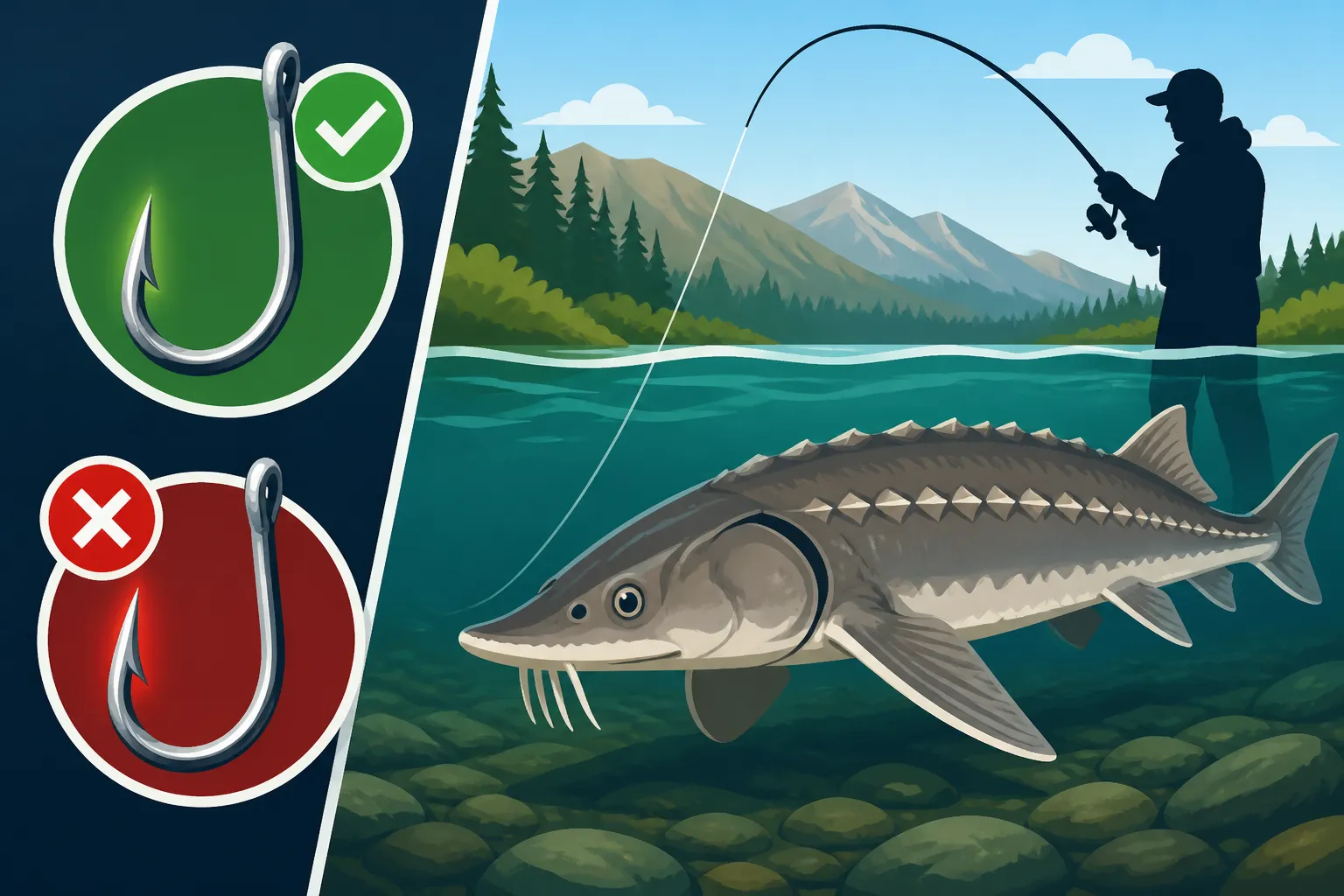
Imagine a fish with a barbed hook tearing through its delicate mouth tissue or worse, deeper into its throat or gills. That barb acts like an anchor, designed to hold on tight, and while that's great for landing dinner, it's terrible for a fish you intend to release. A barbless hook, by contrast, slides out with significantly less resistance, leaving behind minimal damage.
The mouths of sturgeon, while tough, are still susceptible to injury. A barbed hook can rip and tear, creating larger wounds that are prone to infection, interfere with feeding, or simply prolong the recovery time post-release. For a fish like the White Sturgeon, which faces numerous environmental challenges, maximizing every individual's chance of survival is paramount. This isn't just about a single fish; it's about the health of the entire population, especially since Idaho's White Sturgeon are considered a species of concern and are actively managed for recovery. When you consider the sheer size of these fish, from a juvenile just a few feet long to a behemoth exceeding ten feet, the potential for harm from a barb is magnified. Even a small tear can become a major issue.
Ease of Hook Removal for Angler and Fish
Beyond the biological impact on the fish, barbless hooks offer tangible benefits to the angler. Ever tried to remove a deeply set barbed hook from a thrashing fish? It's often a struggle, requiring pliers, force, and time – all of which increase stress on the fish and danger to the angler. With a barbless hook, the removal process is almost always quicker, smoother, and less invasive.
Think about it: less time spent wrestling with the hook means less time the sturgeon is out of the water or fighting vigorously. This reduced handling time is crucial for minimizing stress and exhaustion, allowing the fish to recover more quickly and swim away stronger. It's a win-win scenario where you, the angler, get to practice proper catch and release techniques efficiently, and the fish has a much better chance of thriving. Many experienced guides on the Snake River, when fishing for these giants, will tell you that a swift, clean release is just as important as the catch itself. When you're dealing with a fish that can potentially weigh hundreds of pounds, any advantage in handling and release is welcome.
Adherence to Idaho Fishing Regulations
For sturgeon fishing in Idaho, using barbless hooks isn't just a suggestion—it's a non-negotiable rule. The Idaho Fish and Game Department has implemented specific regulations to protect these long-lived and vulnerable fish. If you're venturing out to target sturgeon, you absolutely must be using barbless hooks. Failing to do so can result in fines and penalties, and frankly, it undermines the collective conservation efforts that anglers and wildlife agencies work so hard to maintain.
These regulations are clearly outlined in the annual Idaho Fishing Regulations Explained brochure and are strictly enforced, especially in known sturgeon waters like the Snake River. The law often specifies that all hooks must be single-pointed and barbless. This is one of the foundational tenets of the Idaho Catch-and-Release Sturgeon Rules Explained. The reason is simple: without such rules, the cumulative damage from barbed hooks could severely hinder recovery efforts for these majestic fish. It’s a small change in tackle but has a massive impact on the species’ future. Always double-check the latest regulations before heading out, as rules can occasionally change.
The Art of Fishing with Barbless Hooks
Many anglers, especially those new to barbless fishing, worry that they'll lose more fish. While there's a slight learning curve, the adjustments needed are minimal, and the reward of knowing you're truly practicing responsible angling is immense. With the right technique and tackle, you'll still land plenty of fish.
Hooking and Fighting Sturgeon Effectively
The key to successfully fishing with barbless hooks is maintaining constant tension on your line. Once a sturgeon bites and you set the hook, do not give it any slack. A slight lull in tension, and that barbless hook can simply slip right out. This means keeping your rod tip up, anticipating runs, and adjusting your drag smoothly.
Sturgeon are powerful fighters, known for their long, surging runs. Your rod becomes an extension of your arm, absorbing shocks and keeping that line tight. It’s a bit like playing a delicate tug-of-war where you never let the rope go slack. Use a rod with a good backbone and a sensitive tip, paired with a reliable reel that has a smooth, consistent drag system. This will allow you to apply steady pressure without overpowering the fish or snapping your line. Many experienced anglers find that a softer, parabolic action rod actually helps keep constant pressure, especially during head shakes. Mastering the balance of fighting a powerful fish while keeping constant pressure is a skill that translates across many forms of fishing, and it’s especially rewarding when you know you’re minimizing harm. For more insights on the battle, check out our guide on How Long It Takes to Land a Sturgeon in Idaho.
Selecting the Right Barbless Hooks
Not all hooks are created equal, even when they're barbless. For sturgeon, you need hooks that are incredibly strong and sharp, capable of penetrating their tough, cartilaginous mouths. Many anglers prefer circle hooks when targeting sturgeon, as they are designed to naturally hook in the corner of the fish's mouth, making deep-hooking less likely and removal even easier.
When choosing hooks, look for heavy-gauge steel that won't straighten out under the immense pressure a large sturgeon can exert. Brands like Gamakatsu, Owner, and Mustad offer excellent barbless or easily de-barbed hooks suitable for these giants. You can often find a great selection of these specialized hooks online. A quick search on Amazon will show you numerous options for robust, sharp, and appropriately sized barbless hooks for sturgeon. Don’t skimp on quality here; a cheap hook can mean a lost fish and unnecessary stress. Ensure the hook size matches your bait and the potential size of the sturgeon you're targeting. Our What Size Tackle to Use for Idaho Sturgeon, offers more detailed advice on selecting appropriate gear.
Here’s a quick comparison of barbed vs. barbless hooks for sturgeon:
| Feature | Barbed Hooks | Barbless Hooks |
|---|---|---|
| Fish Harm | High risk of tissue tearing, deep hooking, gill/eye damage | Significantly reduced tissue damage, minimal trauma |
| Hook Removal Ease | Difficult, often requires tools and force, prolongs handling | Easy and quick, often slides out with light pressure |
| Fish Stress | High, due to prolonged fight and aggressive removal | Low, due to quick release and minimal injury |
| Fish Survival Rate | Lower, increased risk of post-release mortality | Higher, greatly improves post-release survival |
| Angler Safety | Higher risk of accidental jabs to hands or fingers | Lower risk of accidental jabs to hands or fingers |
| Legal Status in Idaho | Illegal for sturgeon fishing | Mandatory for sturgeon fishing |
| Retention | Potentially better hook retention if tension is lost | Requires constant tension to prevent hook-outs |
Beyond Barbless Hooks: Comprehensive Sturgeon Conservation
Using barbless hooks is a crucial first step, but responsible sturgeon fishing encompasses a broader set of practices. These fish are a testament to nature's resilience, and it's our duty to protect them through every aspect of our angling adventure. This includes knowing the rules, understanding the species, and executing proper handling techniques.
Proper Handling and Release Techniques
Once you've landed a sturgeon (or brought it boat-side), the care you take in handling it is just as important as using a barbless hook. Remember the strict Idaho rule against removing sturgeon from the water. These fish are heavy, and their internal organs are not designed to support their massive weight out of water. Removing them, even briefly for a photo, can cause severe internal damage.
Instead, keep the sturgeon in the water. If you're fishing from the bank, try to slide it into a shallow, calm area. From a boat, keep the fish submerged next to the vessel. Use a good pair of jaw spreaders if needed to access the hook, and ensure your hands are wet before touching the fish to protect its slime coat. Take a quick measurement if necessary, and then gently guide the fish until it swims away under its own power. Never simply toss or drop a sturgeon back into the current. This thoughtful approach, covered extensively in our guide on How to Release a Sturgeon Safely in Idaho, is vital for their survival and demonstrates true respect for the species.
Understanding Idaho's Sturgeon Fishery
Idaho is home to the White Sturgeon, one of the largest and longest-lived freshwater fish in North America. These incredible fish have a fascinating life history and play a vital ecological role. Historically, their populations faced significant declines due to overfishing, dam construction, and habitat loss. Today, thanks to strict regulations, habitat restoration, and active management by the Idaho Fish and Game, their numbers are slowly recovering in certain areas, particularly in the Snake River.
The entire sturgeon fishery in Idaho is designated as catch-and-release only. This means that every single sturgeon caught, regardless of size, must be immediately and safely returned to the water. This is why you need a Do You Need a License to Fish for Sturgeon in Idaho? and, importantly, why the rules around tackle like barbless hooks are so critical. Anglers are essential partners in this conservation effort. By understanding the challenges these fish face and committing to best practices, we contribute to their long-term survival, ensuring that future generations can also experience the thrill of encountering these living dinosaurs. For more detailed information on their protection, our article, Why Snake River Sturgeon Fishing Is Catch and Release Only, provides a comprehensive overview.
Final Thoughts on Responsible Sturgeon Angling
Fishing for sturgeon in Idaho is an unforgettable experience, a true privilege to encounter such ancient and powerful creatures. By wholeheartedly embracing barbless hooks, practicing careful handling, and respecting all of Idaho's specific regulations, you’re doing more than just fishing—you’re actively participating in the conservation of a truly special species. It's about preserving the legacy of these magnificent fish for everyone, for generations to come. So, next time you're heading out, double-check your tackle, de-barb those hooks if they aren't already, and get ready for a responsible and exhilarating adventure on Idaho's waters.
Disclaimer
The information provided in this guide is for general informational purposes only and is subject to change. Always consult the official Idaho Fish and Game regulations for the most current and accurate rules and laws regarding fishing in Idaho, as regulations can vary by water body and species.