Can You Keep a Bull Trout in Idaho?
There's a question that echoes through many an angler's mind when they hook into a striking, colorful fish in Idaho's clear waters: "Is this a bull trout? And if it is, can I actually keep it?" This isn't just curiosity; it's a critical legal and ethical dilemma that every responsible Idaho angler needs to understand. This guide will meticulously break down the rules and provide you with clear, actionable information about bull trout, their protected status, and exactly what you need to do if one finds its way onto your line.
Understanding Bull Trout Protection in Idaho
It's a common misconception that all trout are fair game, but that's simply not true when it comes to bull trout in Idaho. These magnificent fish hold a very special, and very protected, status. They're not just another species; they are a vital native fish that has faced significant challenges over the decades.
Why Bull Trout Are Protected
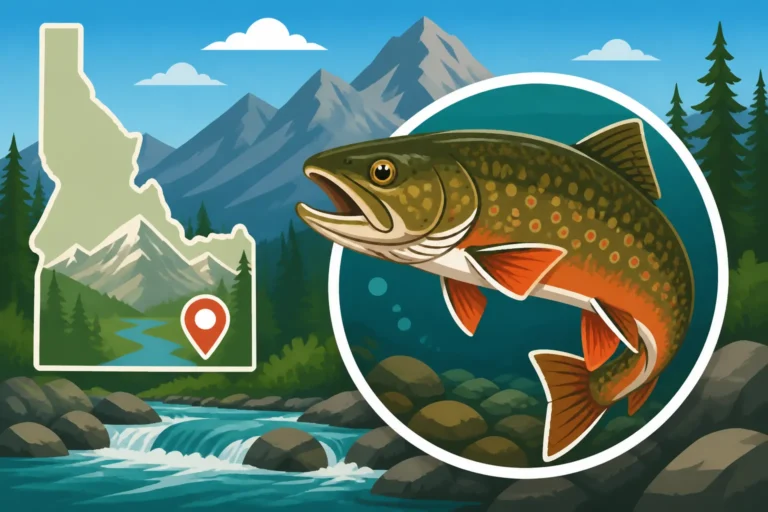
Bull trout, unlike many other trout species you'll find in Idaho, are an indigenous species, meaning they've been here long before non-native species were introduced. Historically, they thrived in the cold, clean waters of the Pacific Northwest, including much of Idaho. However, their populations have seen a dramatic decline due to a combination of factors, including habitat loss, fragmentation, and competition with non-native species like brook trout, which were often introduced into the same waters.
The state and federal governments recognized this critical decline. The U.S. Fish and Wildlife Service listed bull trout as a "threatened" species under the Endangered Species Act. This designation means that their survival is at risk, and as such, strict protections are in place to help their populations recover. For anglers, this translates into a zero-retention policy in most areas. It's not about being difficult; it's about giving these fish every chance to reproduce and rebuild their numbers so future generations can continue to appreciate them.
What Idaho's Bull Trout Protections Mean for Anglers
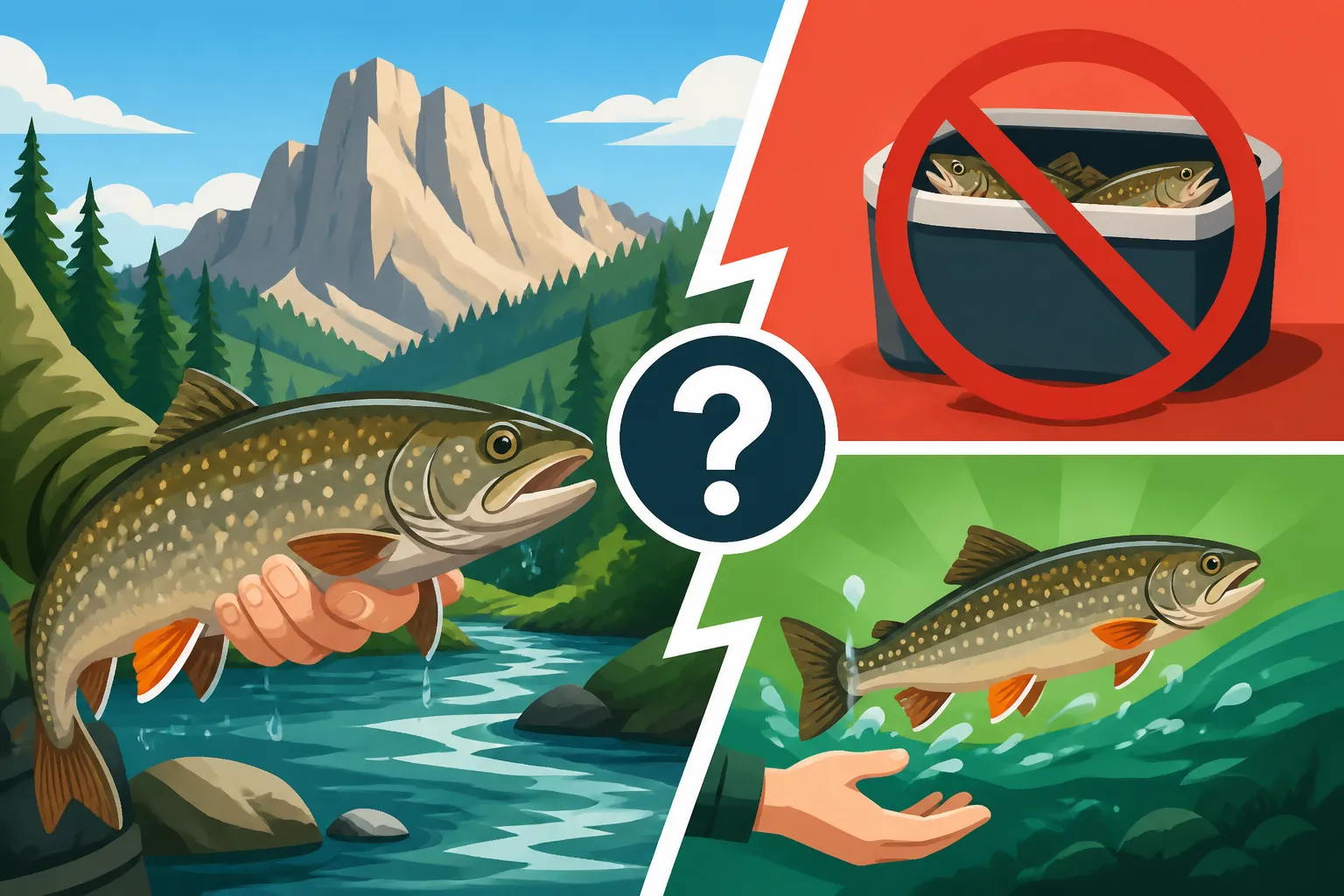
For you, the angler, this protected status simplifies things in one crucial way: you generally cannot keep a bull trout in Idaho. Period. While there might be highly localized, extremely rare exceptions in specific fisheries under very tight management, the overarching rule across the vast majority of Idaho's waters is catch-and-release only for bull trout. This rule is absolute, regardless of the fish's size, the time of year, or your fishing license type.
Understanding this rule is paramount, not just to avoid legal trouble, but to contribute to the conservation efforts that are slowly but surely helping bull trout rebound. It means every encounter with a bull trout is a moment to appreciate a truly wild, native species, and then gently return it to its home. Thinking of them as a "trophy" to be photographed and released, rather than kept, is the right mindset. You can learn more about general regulations in Idaho Fishing Regulations Explained.
Identifying a Bull Trout: What to Look For
Okay, so you know you can't keep them, but how do you actually tell if the fish on the end of your line is a bull trout? This is where it gets tricky for many, as bull trout can sometimes be confused with other species, particularly brook trout. But don't worry, there are clear distinguishing features once you know what to look for.
Distinguishing Features of Bull Trout
Bull trout (scientific name Salvelinus confluentus) are a type of char, not a true trout, which is an important distinction in scientific terms, but for anglers, the key is identification. Here's a breakdown of their main characteristics:
- Coloration: Bull trout typically have olive-green to brown bodies with sparse, light-colored spots (yellow, orange, or reddish) on their sides. These spots are not surrounded by halos. Their bellies can be white to pale yellow, and during spawning, males can develop brilliant orange to red flanks.
- Head: This is a big one! Bull trout have a noticeably large, broad, and flattened head, often described as "bulldog-like." Their mouth extends well past the rear of the eye.
- Dorsal Fin: The dorsal fin (the one on its back) lacks spots, or if there are any, they are very faint.
- Adipose Fin: Like other char and salmonids, they have an adipose fin (a small fleshy fin between the dorsal and tail fins).
- Lower Fins: The leading edge of their lower fins (pelvic and anal fins) often has a distinct white or cream-colored strip.
- Tail: Their tail fin is typically broad and slightly forked.
You might want to invest in a good waterproof fish identification guide or even a laminated field card, easily found on platforms like Amazon, to keep handy in your tackle box. This visual aid can be incredibly helpful when you're out on the water.
Bull Trout vs. Similar Species
The most common confusion arises between bull trout and brook trout (Salvelinus fontinalis). Both are char, and both can inhabit similar waters, leading to misidentification. Here’s a quick comparison:
| Feature | Bull Trout | Brook Trout |
|---|---|---|
| Body Color | Olive-green to brown | Dark green to brown, often marbled |
| Spots | Light (yellow, orange, red), no halos | Light (yellow, red with blue halos) |
| Head Shape | Large, broad, flattened, bulldog-like | Smaller, more pointed, less exaggerated |
| Mouth Extends | Well past eye | To or slightly past eye |
| Dorsal Fin | Unspotted or very faintly spotted | Distinctive worm-like markings (vermiculation) |
| Lower Fins | Leading edge often has white/cream strip | Leading edge typically has white/cream strip |
| Tail Shape | Slightly forked | Square or very slightly forked |
Another species that can sometimes cause momentary confusion, though less often, is the rainbow trout. Rainbows typically have a red or pink band along their sides, a smaller head, and black spots all over their body and fins, including the dorsal and tail. Knowing these differences is critical for proper handling and adherence to Idaho Catch Limits and Bag Limits Explained. For more on identification of other protected fish, consider our guide on How to Tell a Hatchery Steelhead from a Wild One in Idaho.
What to Do if You Catch a Bull Trout
So, you've positively identified that beautiful fish on your line as a bull trout. Now what? The answer is quick, gentle, and respectful release. Your actions in these critical moments can significantly impact the fish's survival rate.
Best Practices for Catch-and-Release
Releasing a protected species like a bull trout successfully requires a few key techniques. These aren't just suggestions; they're essential for minimizing stress and injury to the fish:
- Minimize Fight Time: The longer a fish fights, the more exhausted it becomes, making recovery harder. Use appropriate tackle for the size of fish you might encounter in bull trout waters to bring them in quickly but gently.
- Keep the Fish in the Water: This is perhaps the most crucial rule. Bull trout are very sensitive to air exposure. Their gills can be damaged, and their slime coat, which protects them from disease, can be compromised when they're out of water. Try to unhook them while they are still submerged.
- Use Barbless Hooks: Barbless hooks greatly facilitate quick and easy removal. If you don't have barbless hooks, gently crimp down the barb on your barbed hooks with a pair of pliers. This simple step can save a fish's life. You can find quality pliers for this purpose on Amazon.
- Handle with Wet Hands: If you must touch the fish, wet your hands thoroughly first. Dry hands can remove the protective slime coat, leaving the fish vulnerable to infection.
- Avoid Squeezing: Never squeeze the fish's body, especially around the belly or gills. This can cause internal damage.
- Use Proper Unhooking Tools: Long-nose pliers or hemostats are invaluable for quickly and safely removing hooks, especially if the hook is deep. A dedicated de-hooker can also be a great addition to your kit.
- Revive the Fish: Once unhooked, hold the fish gently in the water, facing upstream into the current. Allow water to flow over its gills. It will start to revive and might even try to swim away. Don't force it; wait until it can swim strongly on its own. Often, they will wiggle and try to leave your hands. Once they can maintain their balance and swim away under their own power, release them.
Following these practices is not just good sportsmanship; it's a direct contribution to conservation and respecting the fragile existence of Idaho's State Fish Explained and other native species.
Avoiding Accidental Catch and Misidentification
While you can't always avoid catching a bull trout if they're present in the water, you can certainly reduce the likelihood of harming them through diligent preparation.
Firstly, know your waters. Research the specific river or lake you plan to fish. Many waters known for bull trout are often clearly marked with special regulations, which you'll find in the annual Idaho fishing proclamation. Being aware of where bull trout reside can influence your choice of lures and techniques. For example, some anglers targeting non-native species in bull trout habitat might adjust their lure size to reduce bycatch.
Secondly, hone your identification skills. Before heading out, review images and descriptions of bull trout and look-alike species. Practice identifying key features. The better you are at quick, accurate identification, the faster and safer your release will be if you do hook into a bull trout. Consider a waterproof laminated card from Amazon for quick reference.
Finally, remember the "when in doubt, let it out" rule. If you're unsure whether a fish is a bull trout or another species, err on the side of caution and release it immediately and carefully. It's far better to release a legal fish than to accidentally keep a protected one. This proactive approach helps to ensure you are always compliant with What Idaho's Bull Trout Protections Mean for Anglers. You can also find more preventative strategies in How to Avoid Accidentally Catching Bull Trout.
Consequences of Illegally Keeping a Bull Trout
While the intention is usually not malicious, accidentally or intentionally keeping a bull trout can lead to serious consequences. Idaho takes the protection of its threatened species very seriously, and the penalties reflect that commitment.
Legal Penalties and Fines
Let's be clear: keeping a bull trout in Idaho is against the law. Because they are a federally protected threatened species, the penalties can be substantial, ranging from significant fines to potential jail time, especially for repeat offenses or multiple fish. These aren't just minor citations; they are wildlife violations that can have lasting impacts.
Fines can vary depending on the specific circumstances, such as the number of fish kept, whether it was a first offense, and the severity of the violation. However, you can expect fines to be in the hundreds, if not thousands, of dollars. Beyond monetary penalties, you could face the forfeiture of your fishing gear, your vehicle, or even your boat if it was used in the commission of the crime. Additionally, your fishing privileges in Idaho (and potentially other states through interstate compacts) could be suspended or revoked for an extended period. Imagine losing the ability to fish in Idaho for years—it's a high price to pay.
Wildlife conservation officers are well-trained and dedicated to protecting these resources. They are vigilant, especially in known bull trout habitats. Their job is not to ruin your day, but to enforce laws that are crucial for the long-term health of Idaho's fisheries. If you're ever approached by an officer, be cooperative, honest, and respectful.
Broader Impact on Conservation Efforts
Beyond the personal legal ramifications, illegally keeping a bull trout has a much larger, detrimental impact on the species' recovery. Every single bull trout is valuable to the population, especially mature breeding adults. Removing even one fish can interrupt spawning cycles, reduce genetic diversity, and slow down the arduous process of rebuilding healthy populations.
Conservation efforts for bull trout involve extensive habitat restoration, research, and careful management. These efforts are expensive and rely on the cooperation of the public. When individuals break these rules, it undermines all that hard work and the collective goal of ensuring these unique native fish thrive once again. It sends a message that the rules don't matter, when in fact, they matter profoundly. This is why adherence to the regulations discussed in Idaho Fishing Regulations Explained is so crucial.
Responsible angling is about more than just catching fish; it's about being a steward of the environment and contributing to the health and future of our wild places and the species within them. By understanding the rules, learning proper identification, and practicing diligent catch-and-release, you play a vital role in protecting Idaho's bull trout for generations to come.
Disclaimer
This article is for general informational purposes only and does not constitute professional advice. Laws, prices and regulations vary by location and change over time. Consult a qualified professional for guidance on your specific situation.