Best Technique for Catching Idaho Trout in Clear Water
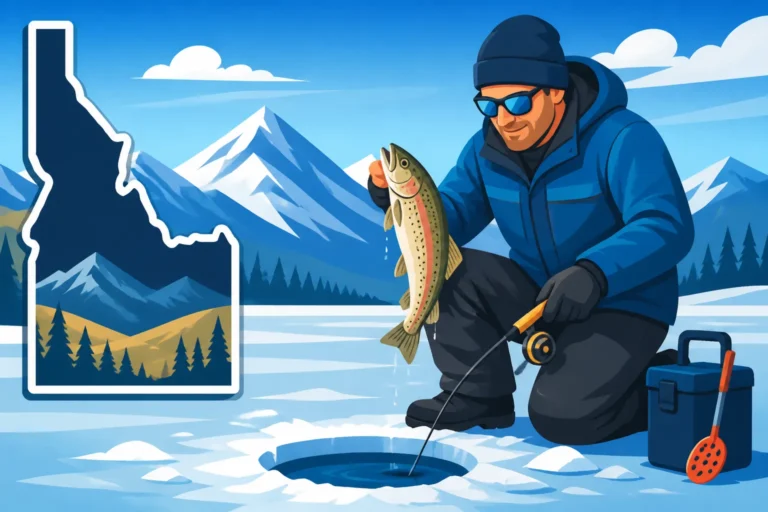
There's nothing quite like the crystal-clear waters of an Idaho stream or lake – until you're trying to fool a trout in them. Those pristine conditions, while beautiful, often mean the fish can see you, your line, and every tiny detail of your presentation from a mile away, making them incredibly spooky and hard to catch. If you've ever felt like the trout are laughing at your offerings in water so clear you can count the pebbles on the bottom, you're not alone. This guide is all about equipping you with the best techniques and strategies to confidently target and catch Idaho trout, even when the water is gin-clear.
Understanding Why Clear Water is Different
When you're facing clear water, it's easy to get frustrated. The fish seem to vanish, or worse, they dart away as soon as your shadow crosses the bank. This isn't just bad luck; it's a fundamental shift in how trout perceive their world and, consequently, how you need to approach your fishing. Ignoring these differences is a surefire way to go home empty-handed.
The Trout's Perspective: Why They're Spookier
Imagine living in a house with glass walls. You'd be pretty aware of every movement outside, right? That's essentially what a trout experiences in clear water. Their world is suddenly transparent, offering little in the way of cover from above or from the banks. This heightened visibility triggers their natural predator avoidance instincts. They are constantly on alert for eagles, ospreys, bears, and, yes, anglers. Any unnatural movement, a flash of light off your rod, or even the subtle glint of a heavy leader can send them bolting for cover.
It’s not just about seeing predators; it’s also about seeing what they’re eating. In clear water, trout have an easier time discerning natural food items from artificial ones. That means your fly or lure needs to be incredibly convincing, mimicking the real thing in size, shape, color, and movement with precision. They have ample time to inspect your offering, and any imperfection can lead to a refusal. This is why techniques that work in murkier water often fail spectacularly when the water turns clear.
The Impact of Light and Visibility
The amount of light hitting the water plays a huge role in clear water fishing. On bright, sunny days, light penetrates deeply, making everything even more visible. This is when trout are at their most wary and often seek deeper, shadier pockets or lie under heavy cover. Your shadow cast over the water can be a huge deterrent. Even reflections from your clothing or gear can be enough to put them down. Think about it: a sudden flash might signal a bird diving or a large animal approaching the water's edge.
Conversely, in low light conditions – dawn, dusk, or heavily overcast days – the trout might be slightly less skittish, as the reduced light offers them a bit more perceived safety. However, the water is still clear, meaning they still have excellent visibility. The key is that they might be more willing to move out from under cover to feed. Understanding these light conditions helps you not only choose your fishing times but also adapt your approach and presentation to maximize your chances. For a broader overview, check out our guide on the Best Time of Year to Fish in Idaho.
Essential Gear Adjustments for Clear Water
You can have the best casting arm in Idaho, but if your gear isn't dialed in for clear water, you're fighting an uphill battle. It’s all about stealth, subtlety, and making your offering as natural as possible. This often means scaling down and refining your tackle.
Leader and Tippet: Going Finer and Longer
This is perhaps the most critical adjustment for clear water. Heavy, thick leader material is a giant red flag to a cautious trout. They can see it, and it often creates an unnatural drag on your fly or lure. The solution? Go lighter and longer.
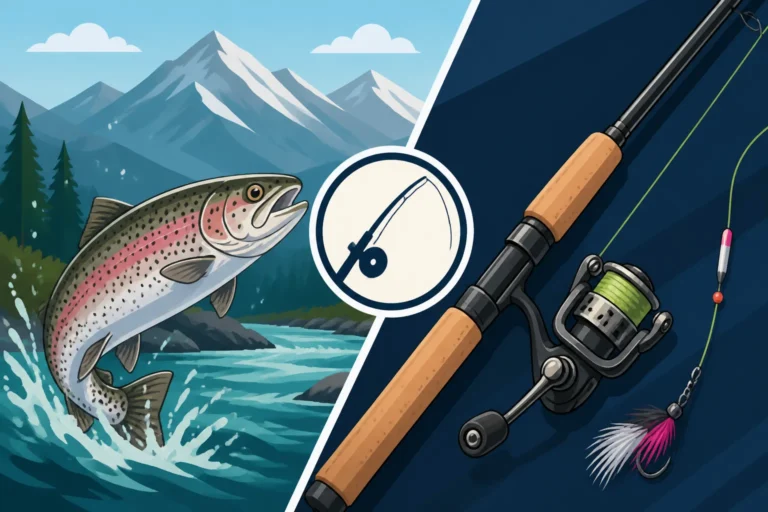
Fluorocarbon leader and tippet are your best friends here. Unlike monofilament, fluorocarbon has a refractive index very close to water, making it virtually invisible underwater. This is a game-changer. For trout, dropping down to 4x, 5x, or even 6x fluorocarbon tippet is often necessary. The "X" rating refers to the diameter, with higher numbers meaning finer line. While finer line means less breaking strength, it dramatically increases your chances of getting a bite. You might sacrifice a little fighting power, but a fish on fine tippet is better than no fish at all. You can easily find various strengths of fluorocarbon tippet and leader material on platforms like Amazon, making it simple to stock up before your next trip.
Lengthening your leader also helps. A longer leader separates your main fishing line (which is typically more visible) from your bait or fly, creating a greater buffer zone. For fly anglers, leaders of 9 to 12 feet, often with an added section of tippet, are standard. For spin fishing, consider using a high-quality fluorocarbon leader of 3-6 feet tied to your mainline, especially if your mainline is braided or colored monofilament. This extra length allows your presentation to drift more naturally and gives the fish more time to decide without seeing your main line.
Downsizing Your Presentation: Lures, Flies, and Bait
In clear water, bigger is rarely better. Trout in these conditions are often feeding on smaller, more delicate insects or baitfish. Your goal is to match that natural forage precisely.
For fly anglers, this means often switching to smaller flies – think size 18, 20, or even 22 dry flies, nymphs, or midges. Your patterns need to be incredibly realistic, both in profile and color. Even your retrieve needs to be more subtle; jerky, unnatural movements can be a dead giveaway. If you're nymphing, use tiny split shot or tungsten-beaded flies to get down quickly without a lot of flashy weight. Our Best Flies for Idaho Steelhead article discusses some specific patterns, though the principles of presentation apply to trout as well.
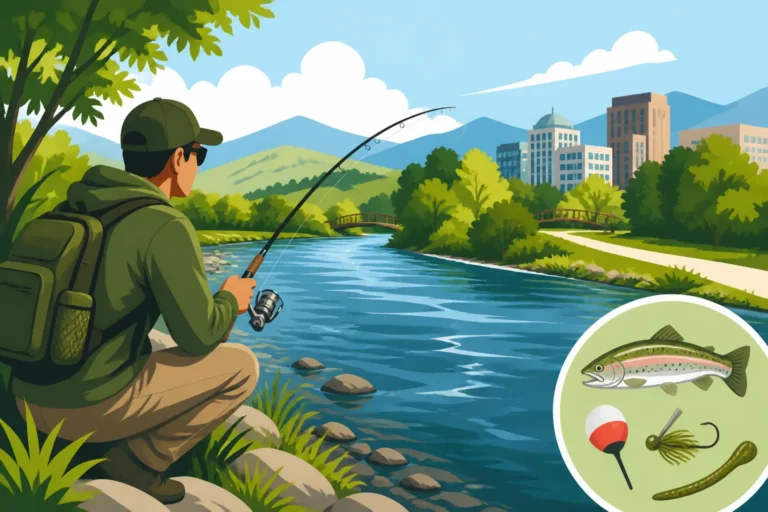
Spin anglers should opt for micro-jigs, small spinners (sizes 0-2), tiny spoons, or soft plastics that imitate small baitfish or worms. Colors should be natural and muted – olive, brown, black, white, or very subtle metallics. Avoid anything too flashy or bright, as it can appear artificial and alarming in clear water. Even bait fishing requires a lighter touch; a single kernel of corn, a small piece of worm, or a tiny salmon egg on a small hook (size 10-14) will outperform a large gob of bait every time.
Table: Clear Water Gear Adjustments
| Gear Component | Standard Water Recommendation | Clear Water Recommendation | Why It Changes |
|---|---|---|---|
| Leader/Tippet | 6-8 lb Mono (Spin), 3X-4X Mono (Fly) | 2-4 lb Fluorocarbon (Spin), 4X-6X Fluorocarbon (Fly) | Reduced visibility, natural drift, less spooking |
| Leader Length | 4-6 ft (Spin), 7.5-9 ft (Fly) | 6-10 ft (Spin), 9-12+ ft (Fly) | Creates distance from main line, improves stealth |
| Lures/Flies Size | Standard #10-14 flies, #2-4 spinners | Small #16-22 flies, #0-1 spinners, micro-jigs | Mimics natural, smaller forage; less intrusive |
| Lure/Fly Color | Bright, varied | Natural, muted (olive, brown, black, white, subtle metallic) | Avoids alarming fish; matches natural prey |
| Weights/Indicators | Larger split shot, bobbers | Smaller split shot, tungsten beads, delicate strike indicators | Reduced splash, less visible, more subtle presentation |
Stealthy Rod and Reel Choices
While less critical than line and lure, your rod and reel can still impact your clear water success. For spin fishing, a lighter action rod (light or ultralight) between 6 to 7 feet is ideal. This allows for lighter lines, more delicate presentations, and better feel for subtle bites. Paired with a small, lightweight spinning reel, it becomes a balanced setup that feels like an extension of your arm. The focus is on precision and feel rather than brute force.
For fly fishing, a softer action rod (like a 3 or 4-weight) can offer the delicacy needed for smaller flies and fine tippets, especially on smaller streams. However, if you're targeting larger trout in bigger rivers, a 5-weight or even 6-weight with a softer tip can still allow for delicate presentations while giving you the backbone to fight a stronger fish. The key is that the rod should allow you to make soft, accurate casts without slapping the water or overpowering your light leader. Consider exploring different rod setups in our Best Rod Setup for Trout Fishing guide.
Stealthy Approaches and Casting Techniques
No matter how perfect your gear, if you stomp to the bank like an elephant, the fish will be gone. Stealth isn't just a suggestion; it's a requirement for clear water success. Your physical approach and how you present your line are just as important as the lure itself.
The Art of the Approach: Stay Low, Stay Hidden
Trout have excellent eyesight, and they can pick up movement from a surprising distance. The first rule of clear water fishing is to be a ghost. Approach the water slowly, moving like you’re stalking wild game. Keep a low profile – kneel, crouch, or even crawl if necessary. Use natural cover like trees, bushes, or bank contours to break up your silhouette. Think about where your shadow is falling; never let it extend over the water you intend to fish.
Wear subdued clothing. Bright colors, especially white, stand out dramatically against natural backgrounds and can spook fish. Earth tones, greens, browns, and grays blend in better. Polarized sunglasses are also non-negotiable. They reduce glare, allowing you to see into the water, spot fish, and identify underwater structure that might hold them. This gives you a massive advantage, letting you know where to cast before you even step too close to the bank. Many reputable outdoor brands offer excellent polarized options, and you can find a wide selection on Amazon.
When you get to your chosen fishing spot, don't immediately cast. Take a moment to observe. Look for rising fish, subtle movements, or even fish holding in plain sight. Often, the largest, wisest trout are the ones you don't initially see. Cast from a position that minimizes your visibility to the fish and allows you to make a natural presentation upstream or across current, letting your offering drift down to them before your line does.
Precise Casting and Line Management
Your cast needs to be accurate and delicate. Slamming your fly line or heavy lure onto clear water is like dropping a brick in a quiet library – it will send vibrations and alarming signals to every trout within earshot.
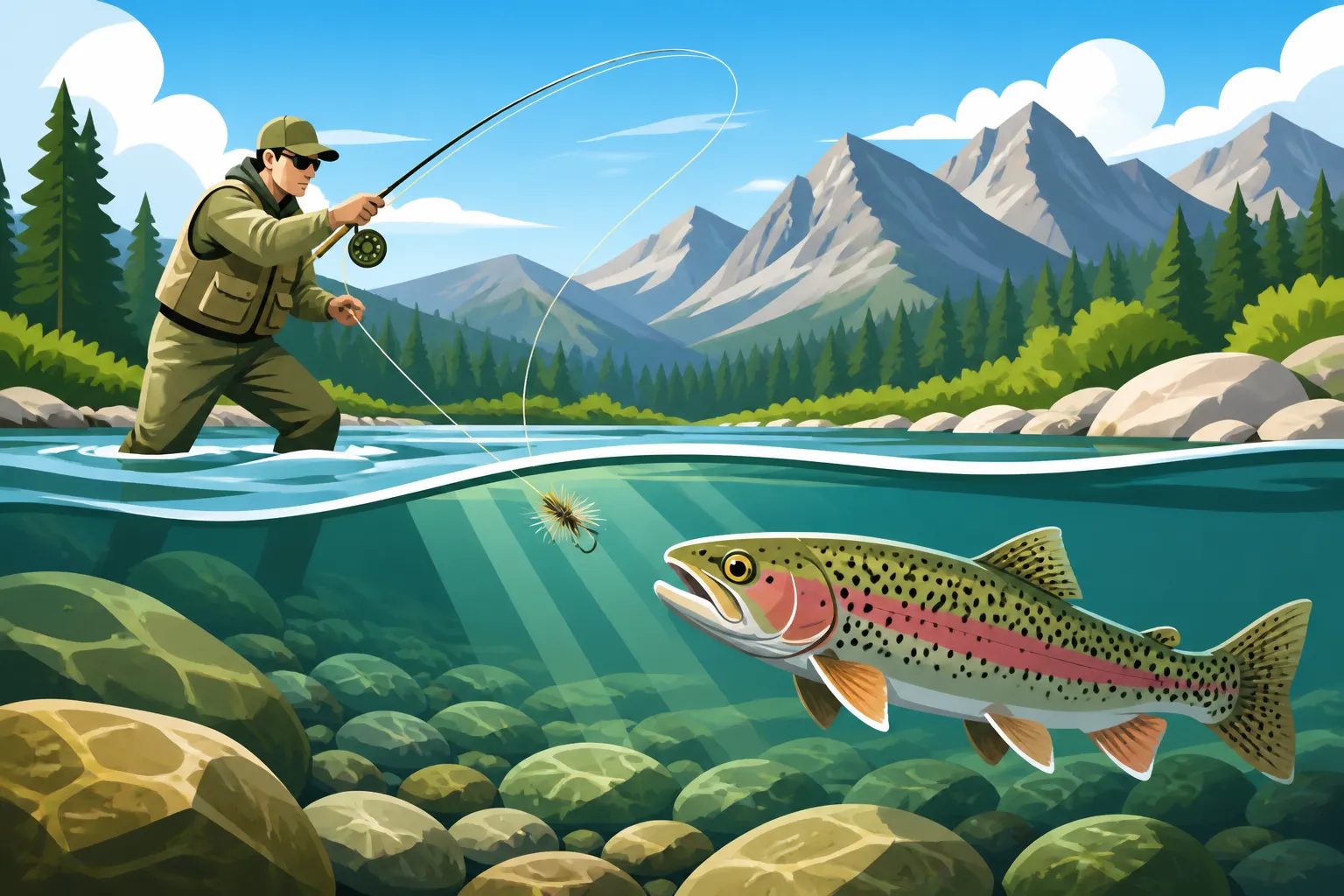
For fly anglers, learn to execute a soft presentation. This means controlling your loop, checking your cast slightly to lay the leader out gently, and avoiding false casting directly over the fish. An upstream or up-and-across cast is often best, allowing your fly to drift naturally before your line passes over the fish. After your cast, managing your line to eliminate drag is paramount. Any unnatural pull on the fly will look suspicious. This requires mending your line effectively – repositioning it on the water to account for different current speeds. Our guide on How to Fly Fish in Idaho delves deeper into these techniques.
Spin anglers need to focus on smooth, controlled casts. Sidearm casts can help keep your lure low to the water, reducing its profile against the sky and creating less splash. Aim for an unweighted, natural entry into the water, as if the bait or lure just drifted in. Once your lure is in the water, resist the urge to retrieve too quickly or erratically. A slow, subtle retrieve, often with pauses, will appear much more natural to a scrutinizing trout. Practice is key to developing this delicate touch.
Reading the Water: Spotting the Shy Ones
In clear water, being able to read the water effectively becomes even more vital. You're not just looking for obvious seams and eddies; you're actively trying to spot individual fish or subtle signs of their presence. Understanding Reading Water on Idaho's Rivers is a skill that pays off immensely.
Trout in clear water will often hold in specific locations where they feel safe but can still ambush food. Look for:
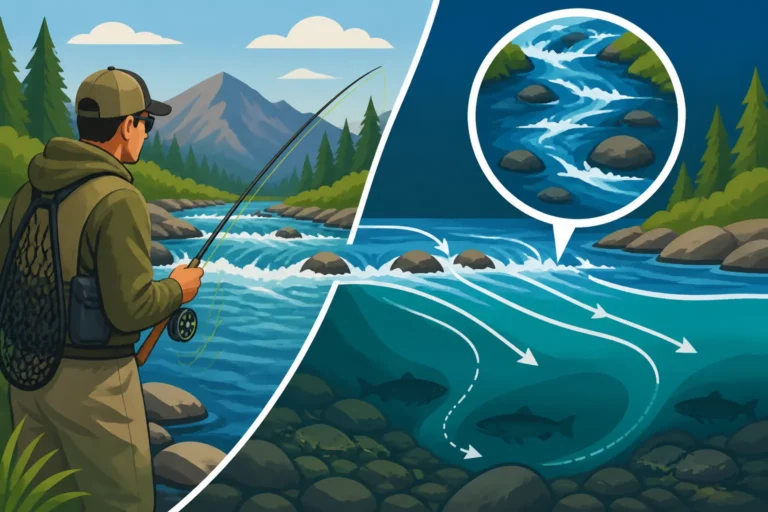
- Shadow Lines: The edge of a shadow cast by the bank, trees, or boulders. Fish will often sit just inside the sunny side, darting into the shade for cover.
- Deep Pockets: Areas where the water depth increases suddenly, offering refuge.
- Undercut Banks: Overhangs created by erosion where trout can hide, unseen, but still watch for food drifting by.
- Log Jams and Submerged Structure: Any cover that breaks up the current and provides a sense of security.
- Ripples and Turbulences: While the water overall is clear, small pockets of slightly disturbed water can offer cover and allow fish to feel less exposed.
Take your time scanning the water before you cast. With polarized sunglasses, you might be surprised at how many fish you can actually spot. Once you see a fish, observe its behavior. Is it actively feeding? Is it holding tight to cover? This information will help you decide on your presentation and approach. When you find these shy ones, learning How to Approach Skittish Trout on Idaho Spring Creeks will significantly boost your success.
When to Fish and Where to Find Them
The "when and where" becomes more pronounced in clear water. Trout behavior is heavily influenced by conditions, and knowing the optimal times and typical hiding spots can drastically improve your chances.
Best Times to Tackle Clear Water
As mentioned earlier, light conditions are paramount.
- Dawn and Dusk: These are often the absolute best times for clear water fishing. The low light minimizes your visibility and the trout's wariness. Plus, insects are often more active during these periods, bringing trout out to feed. The period right at first light, before the sun hits the water directly, can be magical.
- Overcast Days: A consistently cloudy day is a blessing for clear water anglers. The diffuse light reduces shadows and glares, making trout less anxious and more willing to venture from cover. This is a great time to fish midday.
- Before a Storm: Sometimes, just before a thunderstorm rolls in, atmospheric pressure changes can stimulate feeding. The darkening skies also create lower light conditions, mimicking dawn or dusk.
Conversely, bright, mid-day sun on clear waters is often the toughest. If you have to fish during these times, focus intensely on the deepest, shadiest, and most structured areas, and be extra vigilant with your stealth. Consider consulting our How Water Temperature Affects Idaho Trout Fishing article, as temperature often correlates with feeding windows.
Seeking Sanctuary: Where Trout Hide in Clear Water
Trout are survivors, and in clear water, their survival instincts drive them to seek out places that offer safety and a feeding advantage. You won't find them hanging out in open, exposed areas for long.
- Deep Pools with Structure: The deepest parts of a pool, especially those with boulders, logs, or undercut banks, are prime clear water lies. The depth itself provides cover from aerial predators, and the structure offers a place to escape quickly.
- Turbulent Water Edges: While the water may be clear, the edges of faster, broken water can still provide enough surface disturbance to conceal a trout's position. They might hold just out of the main current, waiting for food to be swept by.
- Heavy Bank Cover: Overhanging trees, dense bushes, and tall grass provide vital shade and concealment. Trout will often hug these banks, especially during bright conditions. Fish these areas very cautiously, often by casting from a low, hidden position.
- Confluences and Inflows: Where a smaller stream or tributary flows into a larger clear water body, the slightly different water temperature or subtle change in clarity can create an attractive lie. These spots often concentrate food as well.
Remember, the goal is to make your presence as unnoticeable as possible and to present an offering that looks utterly natural. By understanding the trout's perspective in clear water, adjusting your gear, refining your approach, and knowing where to find them, you'll dramatically increase your success rate and turn those challenging conditions into rewarding fishing experiences in Idaho. For a comprehensive look at the various species you might encounter, don't forget to check out our Idaho Fish Species Guide.
Disclaimer
This article is for general informational purposes only and does not constitute professional advice. Laws, prices and regulations vary by location and change over time. Consult a qualified professional for guidance on your specific situation.