What Reservoir Drawdown Does to Idaho Bass Fishing
It’s a scenario many Idaho bass anglers have faced: you roll up to your favorite reservoir, excited for a day of chasing smallmouth or largemouth, only to find the water level significantly lower than your last visit. That sudden drop can feel disheartening, making familiar spots look completely different and leaving you wondering where the bass could possibly be. This guide will walk you through exactly what reservoir drawdown is, how it profoundly impacts Idaho bass fishing, and most importantly, how you can adapt your strategies to continue finding success, even when the water pulls back.
What Exactly Is Reservoir Drawdown?
Reservoir drawdown, at its core, is the deliberate lowering of water levels in a man-made lake or impoundment. It’s not some random act of nature, but usually a controlled process driven by several factors, many of which are vital to our state’s infrastructure and economy. Understanding why it happens can help you anticipate when and where you might encounter it.
The Reasons Behind Water Level Changes
One of the primary drivers of drawdown in Idaho reservoirs is agricultural irrigation. As the summer months get hotter and drier, farms across the state rely heavily on stored water to nourish their crops. Reservoirs act as giant batteries, holding snowmelt and spring runoff, then releasing it incrementally through the irrigation season. This means that as summer progresses, you'll often see these water bodies steadily shrink. Another significant factor is hydroelectric power generation. Many of Idaho's reservoirs are tied to dams that produce electricity, and water releases might be timed to meet energy demands, causing levels to fluctuate. Flood control is also a critical reason; sometimes, reservoirs are drawn down in anticipation of heavy rains or snowmelt to create capacity and prevent downstream flooding.
Different Types of Drawdown Effects
Not all drawdowns are created equal, and the impact on fishing can vary wildly depending on the type and severity. A "slow, steady drawdown" over weeks or months is far less disruptive than a "rapid drop." Slow drawdowns allow fish time to adjust and move with the receding water, often concentrating them in predictable areas. Rapid drops, however, can disorient bass, strand baitfish, and expose vast amounts of cover and structure that were previously submerged. Then there's the "seasonal drawdown," which is a predictable cycle tied to annual irrigation or power demands. For instance, many reservoirs hit their lowest points in late summer or early fall before refilling over winter and spring. Knowing these patterns for your local spots can give you a significant advantage. Finally, an "emergency drawdown" might occur due to dam maintenance or unforeseen environmental factors, which can be the most unpredictable and challenging for anglers.
How Drawdown Impacts Bass Behavior and Habitat
When the water level drops, it's not just the shoreline that changes; the entire underwater world for bass gets turned upside down. Their feeding habits, their preferred hideouts, and even their migration patterns shift dramatically. It's like their entire neighborhood suddenly got a huge renovation, and they have to find new spots to hang out.
Concentrating Fish and Changing Cover
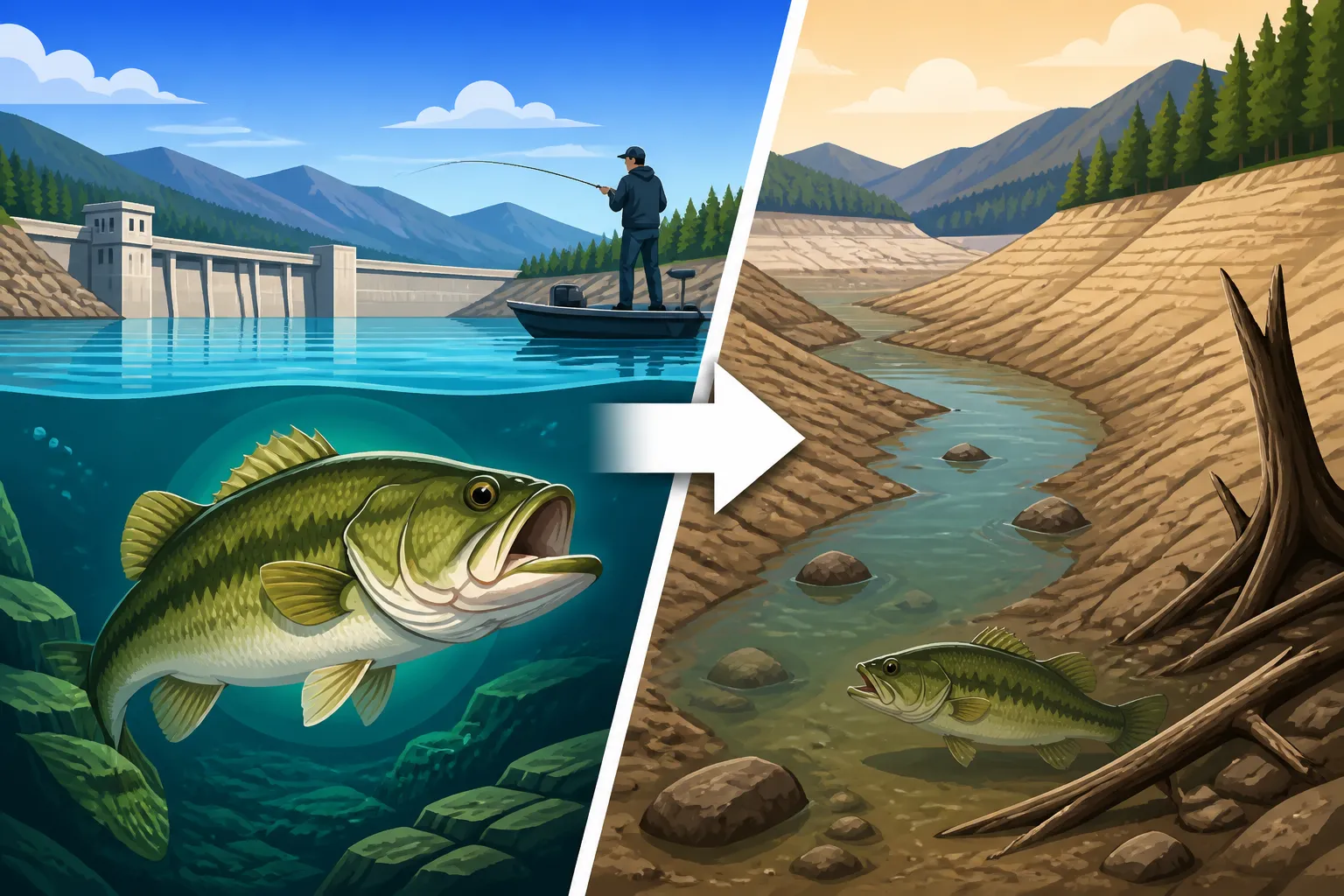
One of the most immediate and impactful effects of drawdown is the concentration of fish. As the water recedes, bass, along with their forage, are pushed into smaller areas. This might sound like a good thing, and sometimes it is, making them easier to locate. However, it also means increased competition for food and space, which can sometimes make them more cautious. More notably, drawdown exposes what was once prime submerged cover – brush piles, rock formations, stumps, and old creek channels. These features, which once held fish, are now dry land, forcing bass to abandon them. They're seeking new forms of protection and ambush points, often deeper or along steeper banks that still offer immediate access to deeper water. Understanding these changes is crucial, as what was once a hot spot at full pool might be completely barren during low water.
Impact on Spawning and Forage
Drawdown can have a particularly harsh effect on the delicate balance of bass reproduction and the availability of their food sources. Bass typically spawn in shallow, protected areas, often near submerged vegetation or woody debris. If a rapid or significant drawdown occurs during the spawning season, it can expose nests, leaving eggs vulnerable to predation by birds and other fish, or simply drying them out. This can significantly impact the year's recruitment of new bass. Beyond spawning, forage species like kokanee, perch, and various baitfish also rely on stable water levels and specific types of submerged vegetation for their own survival and reproduction. When these habitats are disrupted, it can lead to a decline in baitfish populations, which, in turn, impacts the bass's food supply and overall health. Anglers should be aware that prolonged or severe drawdown can lead to long-term changes in the fishery, making it harder to find consistent action. You might even find yourself looking for resources on topics like "Idaho Kokanee Fishing Guide" to understand the forage base.
Water Clarity and Temperature Shifts
Lower water levels often lead to changes in water clarity and temperature, both of which are critical factors influencing bass behavior. With less volume, the water can heat up much faster, especially in shallower bays and coves. Bass, being cool-water fish, will seek out deeper, cooler refuge when surface temperatures soar, often pushing them off the banks and into main lake channels or near deeper structure. Conversely, if a drawdown happens during colder months, the reduced volume might make the water cool faster, impacting their metabolism and making them less active. Clarity can also change. Sometimes, less water means more suspended sediment, making the water murkier, which might cause bass to rely more on their lateral line and scent. Other times, the lack of current and reduced runoff can lead to surprisingly clear conditions, making bass more skittish and visible, requiring a more subtle approach from anglers. You might even discover new, clear spots to practice your techniques, such as those described in "Best Technique for Catching Idaho Trout in Clear Water."
Adapting Your Bass Fishing Strategy During Drawdown
Alright, so the water's low. That doesn't mean it's time to pack up your rods and head home! It just means you need to think differently, be observant, and be willing to adjust. Adaptability is the name of the game when it comes to fishing Idaho's reservoirs during drawdown.
Targeting New Structure and Depths
When the familiar banks are exposed, bass aren't just going to disappear; they're going to relocate to the next available cover. This often means they'll move to the new shoreline, which is usually steeper, deeper, and rockier than the original gradually sloping banks. Look for channel swings, points that now drop off sharply, or areas where the old creek bed is still submerged near the current edge. Bass will use any remaining structure: isolated stumps, larger boulders, or even sharp ledges that create ambush points. A good fish finder can become your best friend here, helping you locate those subtle underwater features that are no longer visible from the surface. You'll want to focus your efforts on these newly prominent deep-water features, as bass will often stack up there, waiting for bait to pass by. Remember, the fish are still there; they're just in different neighborhoods. You might find a guide on "How to Use a Fish Finder on an Idaho Reservoir" helpful in these situations.
Lure Selection and Presentation Adjustments
With shallower, potentially clearer water, your lure choices and how you present them need a serious rethink. Heavy, noisy lures might spook fish in these conditions. Instead, opt for more subtle presentations. If bass are holding tight to vertical cover, try finesse jigs, drop-shot rigs, or Ned Rigs. These allow for a slower, more deliberate presentation that can coax bites from wary fish. Shallow-running crankbaits or square bills can still be effective if you find areas with slightly submerged stumps or rock piles, but choose colors that match the forage or the water clarity. For topwater action, smaller walk-the-dog baits or poppers can work in low-light conditions, especially around any remaining patchy cover. On days when the bite is tough, don't be afraid to downsize your lures or switch to natural baits if allowed. You might even find some specialized gear for these conditions on Amazon, from lightweight rods to specific soft plastic baits that mimic distressed baitfish. The key is to match the hatch and the mood of the fish. Sometimes, what works on a windy day, as explored in "Best Fishing Technique for a Windy Day on an Idaho Lake", might not be suitable for calm, low-water conditions.
Strategic Fishing Techniques
When the reservoir is drawn down, certain techniques really shine. "Bank fishing techniques for Idaho rivers" might give you some ideas. If you have a boat, power fishing techniques like covering a lot of water with crankbaits might be less effective than slowing down and systematically dissecting specific pieces of structure. "Vertical jigging" over deep points or submerged timber can be incredibly productive, as bass often stack up vertically. "Flipping and pitching" into any remaining sparse cover, even if it's just a few reeds or a single large rock, can also pay off. If you're fishing from shore, long casts with weightless worms or small swimbaits can reach fish holding just off the exposed banks. Pay close attention to current, if any, around old river channels or dam outflow areas, as bass will often position themselves to ambush prey in these spots. Also, consider the time of day: low light conditions often bring bass shallower, even in drawn-down reservoirs, offering a brief window for shallower presentations before they retreat to deeper water as the sun climbs high.
| Water Level Stage | Typical Bass Location | Effective Techniques | Recommended Lures/Baits |
|---|---|---|---|
| Full Pool | Shallow coves, submerged timber, weed lines, creek channels | Power fishing, jigging, topwater | Spinnerbaits, Chatterbaits, Frogs, Jigs, Crankbaits |
| Slight Drawdown | Outer edges of weed lines, exposed points, deeper creek channels, visible rock piles | Finesse fishing, slow retrieves, targeting edges | Wacky rigs, Ned rigs, Drop-shots, Shallow crankbaits |
| Significant Drawdown | Steep drop-offs, main lake points, channel swings, isolated deep cover | Vertical jigging, deep cranking, slow presentations | Deep diving crankbaits, Heavy jigs, Jigging spoons, Soft plastic worms |
Top Idaho Reservoirs for Bass Fishing During Varying Water Levels
Idaho is blessed with a multitude of reservoirs, and while many experience drawdown, some offer more consistent bass fishing even in low water. Knowing which ones tend to hold up well, or at least offer predictable patterns, can save you a lot of frustration.
Reservoirs Known for Resilient Bass Fisheries
Some Idaho reservoirs simply handle drawdown better than others, either due to their natural depth, the type of structure they possess, or the management practices of the Idaho Fish and Game. For instance, C.J. Strike Reservoir, a favorite for "Idaho Smallmouth Bass Fishing", often experiences significant drawdown, especially in late summer. However, its expansive canyon walls and abundant rock structure provide plenty of vertical cover for smallmouth to relate to, even when water levels are low. The bass simply move deeper along the ledges. American Falls Reservoir, while known for trout and perch, also holds decent populations of bass that can be found concentrating around the deeper main river channel and the remnants of submerged structures during drawdown. It's not uncommon to find schools of smallmouth bass holding tight to the old railroad grade that becomes more prominent as the water drops. You’ll want to be familiar with the "Idaho Bass Fishing Guide" for these areas. These reservoirs, despite fluctuations, tend to offer more consistent opportunities than those that become vast, featureless mudflats at low water.
What to Look for in Low-Water Reservoirs
When scouting a reservoir during drawdown, you're essentially looking for features that create vertical relief and immediate access to deeper water. Areas with steep banks, rocky bluffs, or old river channels that cut close to the shore are prime candidates. Look for points that extend far out into the reservoir, as these often have steeper drop-offs and act as current breaks. Submerged creek beds that are still holding water are also excellent targets, especially where they intersect with the main lake. Any remaining woody cover, like standing timber or brush piles, that are still partly submerged will attract bass seeking shelter. If you're new to fishing for these species, it might be worth exploring an "Idaho Largemouth Bass Fishing" resource before you head out, as largemouth tend to prefer different types of cover than smallmouth. The key is to think like a bass: where would you go to find cover, ambush prey, and escape the sun, if your familiar shallow haunts suddenly dried up? These are the locations you need to target.
Seasonal Drawdown and Planning Your Trips
Many Idaho reservoirs follow fairly predictable seasonal drawdown patterns. This means you can often plan your trips to coincide with the best fishing windows, or at least know what to expect. Generally, water levels tend to be highest in late spring and early summer after snowmelt, offering traditional shallow water opportunities. As summer progresses into fall, drawdown for irrigation is at its peak. This period can be challenging but also rewarding, as bass are more concentrated. Winter often sees a slow refill, but ice fishing conditions, as discussed in "How to Ice Fish in Idaho", bring their own set of challenges and opportunities. By researching the historical water levels of your target reservoir, you can gain a significant advantage. The Idaho Department of Water Resources or local dam operators often publish water level data, which, while not real-time fishing advice, can help you anticipate conditions. Knowing these patterns allows you to mentally prepare and pack the right gear, whether it's for chasing smallmouth in rocky canyons or largemouth in the remaining pockets of cover. It's all about proactive planning!
Disclaimer
This article is for general informational purposes only and does not constitute professional advice. Laws, prices and regulations vary by location and change over time. Consult a qualified professional for guidance on your specific situation.