How to Read a Pool on an Idaho River
Stepping up to a promising pool on an Idaho river can feel like looking at a secret code written on the water's surface. You see the deep, swirling currents, the calm eddies, and the riffles, but how do you know where the fish are hiding, feeding, or resting? It's a common frustration for both new and experienced anglers, and understanding how to effectively read these river pools is a critical skill that unlocks a world of fishing opportunities. This guide will help you decipher the subtle clues that Idaho's rivers offer, transforming a confusing expanse of water into a map of prime fishing lies.
Understanding the Anatomy of a River Pool
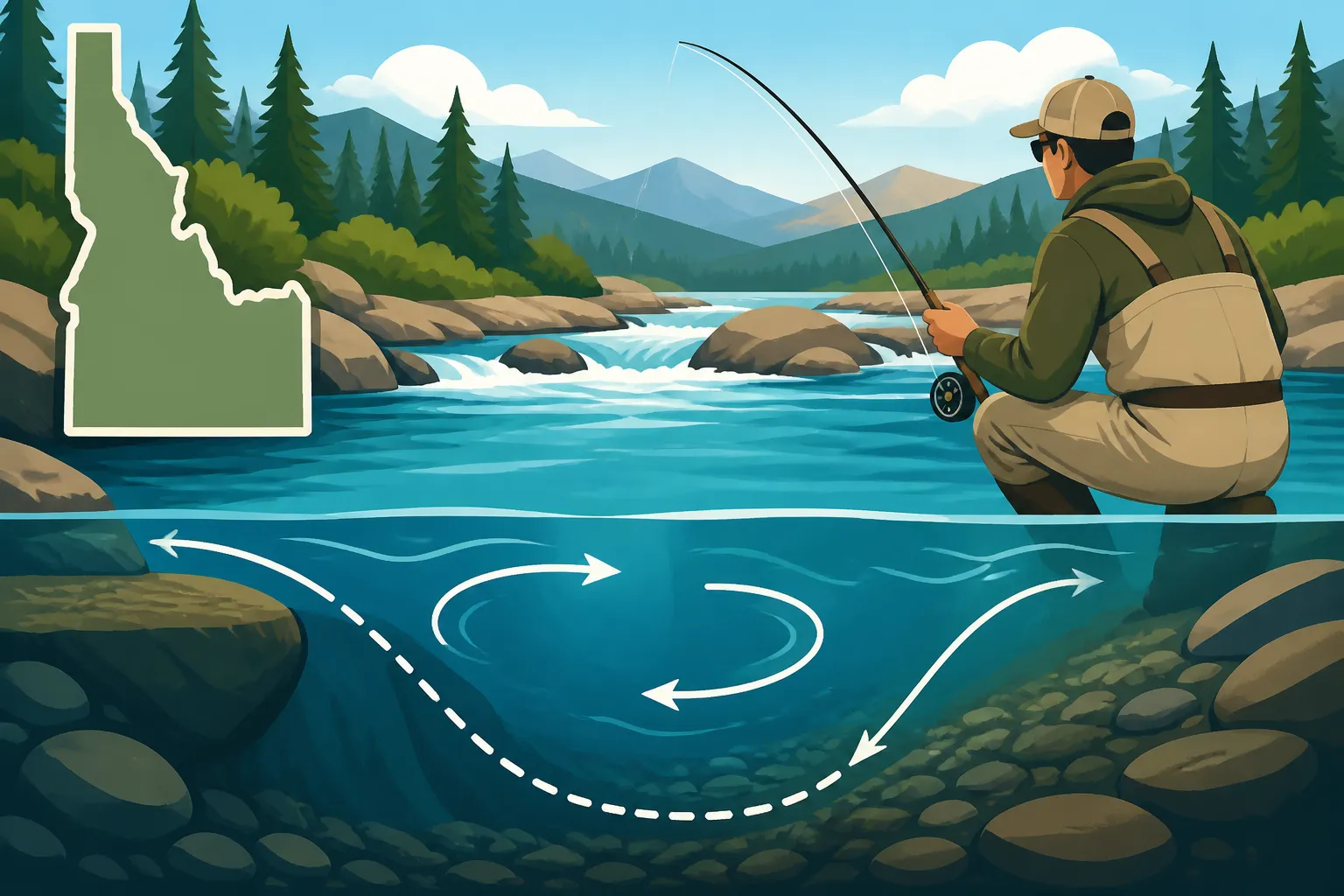
Every river pool, no matter its size or the specific Idaho river it calls home, follows a general structural pattern. Thinking about a pool in terms of its distinct sections – the head, the body, and the tailout – is the first step in understanding where fish are likely to be found. Each section offers different conditions and, therefore, attracts different fish species or fish exhibiting different behaviors. You'll find that these patterns are consistent whether you're on a major waterway like the Salmon River or a smaller, more intimate stream.
The Head of the Pool
The head of the pool is where the faster-moving water from an upstream riffle or run first slows down as it deepens into the pool. This transition zone is a crucial feeding area for many fish. Imagine a conveyor belt of food, bringing insects, baitfish, and other morsels right to the fish waiting at the edge of the current. The water here is often well-oxygenated and turbulent enough to provide cover from overhead predators, making it a comfortable spot for active fish.
Fish holding in the head of the pool are usually looking to feed with minimal effort. They'll position themselves just out of the main current, in what we call a "current seam," waiting for food to drift past. This requires them to be alert and ready to strike, making them prime targets for a well-presented lure or fly. Targeting these areas means understanding how the incoming current transitions into the slower, deeper water of the main pool.
When approaching the head of a pool, think about casting upstream and letting your offering drift naturally into this feeding lane. Whether you're nymphing for trout or drifting bait for steelhead, the presentation needs to mimic the natural flow of food. Many anglers find success by covering the varied speeds and depths of this zone thoroughly, working their way across the head of the pool to ensure they hit any potential holding lies.
The Body of the Pool
The body of the pool is typically the deepest and slowest section. It's the calm heart of the pool, often characterized by a more uniform current flow, if any at all. While the head of the pool is about active feeding, the body is more about resting, seeking refuge, and conserving energy. Larger, more elusive fish often hold in these deep, dark pockets, especially during bright daylight hours or when pressured.
Within the body of the pool, look for subtle depressions, submerged rocks, fallen logs, or undercut banks. These features provide vital cover and a sense of security for fish. While they might not be actively feeding, they are still present and can be coaxed into striking if your presentation is intriguing enough and lands in their immediate vicinity. This section demands a slower, more methodical approach, often with heavier gear to get your offering down deep.
Fishing the body of the pool often involves techniques that allow your bait or lure to spend more time in the strike zone, such as jigging, deep nymphing, or slow trolling. It's a place where patience pays off, and understanding how to present your offering subtly can make all the difference. Remember, fish here are often less aggressive, so a gentle twitch or a slow retrieve might be more effective than an aggressive presentation.
The Tailout of the Pool
The tailout is the shallowing, often narrowing section at the downstream end of the pool, where the water begins to speed up and transition back into a riffle or run. This area is another important feeding zone, much like the head, but with different dynamics. As the water shallows and accelerates, it creates a choke point where food items become concentrated, and fish can ambush them efficiently. This section is especially relevant to understand when you're thinking about Idaho Fishing Season Dates and Limits.
Fish in the tailout are often smaller, more aggressive, and opportunistic feeders. They will dart out from cover or from deeper pockets to snatch food as it rushes by. The current here can be tricky, so accurate casting and managing your line to avoid drag are crucial. The tailout is also a key travel corridor for migrating fish, like salmon and steelhead, as they move between holding lies.
Approaching the tailout effectively involves presenting your offering to fish that might be looking upstream into the current. Swinging flies, casting small spinners, or drifting worms and crickets can be highly effective. Because the water is often shallower and clearer here, stealth is paramount. Move slowly, keep a low profile, and make your first cast count, as fish can be easily spooked in these areas.
Decoding Water Currents and Subtleties
Beyond the general sections of a pool, truly reading the water involves recognizing the smaller, more intricate patterns created by currents, depth, and structure. These subtle cues are the secret language of the river, telling you exactly where fish are positioned and why. Mastering this skill is a cornerstone of the Idaho Fishing Techniques Guide.
Seams and Eddies
Current seams are invisible lines where two different currents meet. Often, one current is faster and the other slower, creating a distinct "seam" of varying water speed. Fish love these seams because they can hold in the slower water, expending minimal energy, while still being perfectly positioned to dart into the faster current to grab food that drifts by. Look for visual clues like floating debris or foam lines that delineate these seams. They are common in the head and tailout of pools, and along the edges of the main current in the body.
Eddies are areas where the current flows upstream or in a circular motion, usually behind an obstruction like a large rock, a log, or an abrupt bank. These are classic resting spots where fish can get out of the main current entirely, yet still have food brought to them by the swirling water. They're also prime ambush points. Casting into an eddy requires understanding its unique current dynamics; often, you'll need to cast upstream of the eddy to allow your offering to drift into it naturally.
Fishing seams and eddies effectively means understanding that fish are often facing into the slower current or facing upstream within the eddy itself. Your presentation needs to enter these zones as naturally as possible, mimicking the food sources that collect there. This is where subtle drifts and careful line management truly shine, especially when you're trying to fool a wary trout.
Depth Changes and Structure
Rivers are rarely uniformly deep, and these changes in depth are critical for fish. Drop-offs, shelves, and trenches provide fish with vertical cover and access to different water temperatures and current speeds. Fish will often hold at the base of a drop-off, where they can retreat to deeper water if threatened or move up to feed when comfortable. A good way to visualize these changes is by observing how the current flows; a sudden slowing or change in surface texture can indicate a depth change below.
Underwater structure, whether natural or man-made, is a magnet for fish. Large boulders, submerged logs, root wads, bridge pilings, and even old tires can provide vital cover, shade, and current breaks. Fish will tuck in tightly to these structures, using them as ambush points or safe havens. Your job is to present your bait or lure as close to this structure as possible without getting snagged. This often means making precise casts and being ready to set the hook quickly.
Learning to identify depth changes and structure, even if you can't see them directly, is a huge advantage. This is where a good pair of polarized sunglasses from a site like Amazon can truly make a difference, cutting the glare and allowing you to see into the water. Additionally, experience on a particular river will teach you where these hidden gems lie. Remember, fish relate to structure, so if you find structure, you'll likely find fish.
Surface Tells: Riffles, Boils, and Foam Lines
The surface of the water provides a wealth of information if you know how to interpret it. Riffles, those choppy, shallow sections upstream of a pool, often signify oxygenated, fast water that brings food. Fish rarely hold in the fastest part of a riffle but will position themselves just below it, where the current eases, waiting for food.
Boils and upwellings are visual indicators of underwater current disruptions. A "boil" on the surface can mean there's a large rock, a log, or a significant depth change below that is deflecting the current upwards. These can be fantastic holding lies, as the disrupted current often creates a current break or a pocket of slower water where fish can rest. Observe where these boils consistently appear, as they usually mark a stable feature.
Foam lines are like nature's conveyer belts. They form where currents meet and slower water accumulates debris, insects, and other organic material. These lines often mark productive current seams and frequently hold feeding fish. Casting along a foam line, especially with a dry fly or a topwater lure, can be incredibly effective, as you're presenting your offering right where fish expect to find food. Pay attention to how these lines drift and where they accumulate.
Seasonal Considerations for Reading Pools
The river is a living, breathing ecosystem that changes dramatically throughout the year. How you read a pool and where you expect to find fish will shift with the seasons, especially on Idaho's diverse waterways. These seasonal variations are vital for any angler to understand, affecting everything from Best Time of Year to Fish in Idaho to specific techniques.
Spring Runoff and High Water
Spring in Idaho often brings snowmelt and runoff, resulting in high, fast, and often turbid water. During this period, fish tend to move out of the main current and seek refuge in slower, more predictable water. In a river pool, this means they'll likely be concentrated along the very edges, in large eddies, or in the deepest, slowest parts of the main pool where the current is weakest. The head and tailout, if too turbulent, might be less productive.
When the water is high and murky, fish rely more on scent and vibration to locate food. This might mean using larger, brighter lures or bait that displaces more water. Targeting the areas directly behind large obstructions, like submerged boulders or fallen trees, becomes crucial. These spots offer a much-needed break from the relentless current. Understanding How to Fish Idaho Rivers During Spring Runoff is essential for success during this challenging yet often rewarding time.
Another aspect of high water is that fish don't have to fight the current as much in these slower pockets, conserving energy. They're often closer to the banks than you might expect, sometimes in mere inches of slack water. Don't overlook these often-ignored margins, as they can hold surprising numbers of fish looking for an easy meal carried by the high water.
Summer Low Flows and Warm Water
As summer progresses, many Idaho rivers experience lower flows and warmer water temperatures. This dramatically changes how fish use pools. Trout, in particular, become much more sensitive to warm water and will seek out the coolest, most oxygenated water available. This often means they'll drop into the deepest parts of a pool, especially where there might be a spring seep, or they'll congregate in the fastest, most oxygenated riffles and runs directly above or below a pool.
During low, clear water conditions, stealth becomes paramount. Fish are more easily spooked, and longer leaders, lighter lines, and smaller, more natural presentations are often required. Early morning and late evening often provide the best fishing opportunities when water temperatures are cooler and fish are more active. Look for shaded areas within pools, like undercut banks or sections shaded by trees, as these can offer cooler sanctuary.
The focus shifts from brute force to finesse. If you're How to Fly Fish in Idaho during these conditions, matching the hatch or using small, subtle nymphs can be incredibly effective. For spin fishers, small inline spinners or natural baits presented with minimal weight might entice a strike. Always be mindful of fish stress during warm water, and practice good catch-and-release techniques to ensure their survival.
Fall Spawning and Migrations
Fall is a dynamic season on many Idaho rivers, particularly those that host migratory species like steelhead and Chinook salmon. As these anadromous fish return to their spawning grounds, river pools become critical holding and resting areas. Steelhead, for instance, will hold in the deep, slower sections of pools, conserving energy for their upstream journey, but they will also stage in the head and tailouts, especially during lower light conditions.
Reading a pool during fall migrations involves looking for these larger, darker fish. They often "stack up" in specific areas, especially at the heads of larger pools where there's sufficient depth and current to hold them comfortably. While not actively feeding in the same way trout do, they can be provoked into striking with aggressive presentations. This is why understanding Idaho Steelhead Fishing Guide techniques is so crucial during this time.
Other resident fish, like trout and whitefish, are also active in the fall, often feeding heavily to prepare for winter. They will still utilize the classic pool features—seams, eddies, and structure—but might be more aggressive as they sense the approaching cold. The tailouts of pools can be particularly productive for resident trout, as they ambush migrating insects and smaller baitfish that are swept downstream.
Winter Slow-Downs and Ice
Winter brings cold water, often lower flows, and sometimes ice to Idaho's rivers. Fish metabolism slows down considerably, and they become less active. They'll seek out the deepest, slowest, and most stable water available to conserve energy. This typically means the very bottom of the deepest sections of large pools, often near a bank or significant structure that provides a current break.
During winter, fish won't chase your offering far. Your presentation needs to be slow, precise, and directly in their face. This is not the time for fast retrieves or aggressive lures. Nymphing with tiny flies, jigging small spoons or soft plastics, or very slow presentations of natural bait are often the most effective. Fish in winter tend to be grouped up, so if you find one, you'll often find others.
Ice fishing on lakes is common in Idaho, but river fishing in winter is a different beast. Where rivers remain open, finding those deep, slow pools becomes paramount. The key is to be patient, fish slowly, and focus on the bottom half of the water column. Don't be discouraged by a lack of visible activity; the fish are there, just dormant. Remember to layer up your clothing for warmth!
Practical Tips for Approaching and Fishing a Pool
Now that you understand the different parts of a river pool and how they change with the seasons, let's talk about putting it all into practice. It's one thing to know where fish should be, and another to actually catch them. These tips will help you bridge that gap and improve your success on the water, whether you're targeting Idaho Rivers Known for Mountain Whitefish or trophy trout.
Stealth and Observation
The absolute first rule when approaching any fishing spot, especially a river pool, is stealth. Fish are incredibly aware of their surroundings. Heavy footsteps on the bank, a silhouette against the skyline, or a dropped tackle box can send them scattering. Approach the water slowly, keeping a low profile, and avoid casting a shadow over the water you intend to fish.
Before making your first cast, take a few minutes to observe the pool. This is arguably the most valuable step in Reading Water on Idaho's Rivers. Look for rising fish, subtle dimples on the surface, or fish flashing beneath the water. Watch the currents, the foam lines, and how any debris drifts. This observation period will confirm where the current seams are, identify potential holding lies, and tell you if fish are actively feeding. You might even spot a large fish holding in a spot you wouldn't have considered.
Having a good pair of polarized sunglasses is non-negotiable here. They cut the glare and allow you to see into the water, spotting structure, fish, and subtle current changes that would otherwise be invisible. You can find excellent options on Amazon that make a huge difference in your ability to read the water. Binoculars can also be surprisingly useful for scouting a large pool from a distance without spooking anything.
Targeting Specific Holding Lies
Once you've observed the pool and identified potential holding lies, it's time to make your cast. The general strategy is to start fishing the water closest to you and work your way outwards, moving upstream as you go. This prevents spooking fish in nearby water that you haven't fished yet. For example, if you approach the tailout, fish it thoroughly before moving to the main body.
Head of the Pool: Focus on the transition zone where the fast water meets the slow. Cast upstream and allow your lure or fly to drift naturally into the seams. Cover the entire width of this zone, working your way across.
Body of the Pool: This requires a more patient, methodical approach. Cast to areas of known structure or depth changes. Let your offering sink, and work it slowly near the bottom. This is where a deep nymph rig or a weighted jig excels.
Tailout of the Pool: Target the shallower, faster water where food concentrates. Cast upstream and across, allowing your offering to swing through the current. Be ready for quick strikes in this active feeding zone.
Vary your presentation. If one technique isn't working, try another. Change your depth, your retrieve speed, or even your lure/fly pattern. Fish can be finicky, and sometimes a small adjustment is all it takes to trigger a bite.
Gear Considerations for Pool Fishing
The right gear can make a significant difference in your ability to fish pools effectively. While specific choices depend on the target species (e.g., Idaho Trout Limits by Water or Idaho Salmon and Steelhead Permit), some general principles apply.
For spin fishing, a medium-light to medium action rod, 6 to 7.5 feet long, is versatile for most Idaho river pools. It allows for accurate casting of various lures, from small spinners and spoons (you can easily find a great selection on Amazon) to soft plastics and bait rigs. A good quality reel spooled with 6-10 lb test monofilament or fluorocarbon line is standard. Remember, heavier line for high, murky water; lighter line for low, clear conditions.
If fly fishing, a 5-weight or 6-weight rod, 9 feet long, is a fantastic all-around choice for Idaho trout streams. For larger rivers or when targeting steelhead, an 8-weight or 9-weight rod might be necessary. Floating lines are standard, but sinking tips or full sinking lines are invaluable for getting flies down deep in the body of a pool, especially during high water or winter. Don't forget an ample supply of leaders and tippet, as river fishing often means snags.
Regardless of your chosen method, having a small, portable tackle box or vest with a variety of lures, flies, weights, and indicators is key. Conditions can change rapidly on the river, and being able to adapt your presentation on the fly is a sign of an experienced angler. Always have spare line, nippers, and forceps handy, too!
Practical Pool Fishing Scenarios and Techniques
To help tie all this together, let's consider a few real-world scenarios you might encounter on an Idaho river.
| Pool Section | Key Characteristics | Fish Behavior | Recommended Technique | Gear Considerations |
|---|---|---|---|---|
| Head | Incoming current, transition to deeper water, oxygenated | Active feeding, ambushing drifting food | Upstream cast, natural drift, nymphs, small spinners, bait | Longer leader, appropriate weight for drift, polarized sunglasses |
| Body | Deepest, slowest water, often with structure, cover | Resting, refuge, less active feeding, seeking security | Slow retrieve, jigging, deep nymphing, bottom bouncing bait | Heavier weights, sinking lines/tips (fly), sensitive rod |
| Tailout | Shallowing water, current accelerates, choke point | Opportunistic feeding, ambushing concentrated food | Upstream/across cast, swing flies, small lures, light bait rigs | Stealth, precise casting, light line, quick hookset |
| Seams | Meeting point of different currents, foam lines | Holding in slower water, darting into fast current to feed | Parallel drifts, careful line management to avoid drag | Good line control, matching current speed |
| Eddies | Upstream or circular current, behind obstructions | Resting, feeding on trapped food, ambush points | Cast into upstream side of eddy, allow natural circular drift | Accurate casting, understanding eddy current |
For example, if you're fishing the Boise River Greenbelt and come across a large pool, you might start by casting small spinners or dry flies along the foam lines in the tailout, moving slowly upstream. As you reach the deeper body, you might switch to a weighted nymph or a small jig, focusing on any visible structure like submerged logs. Finally, at the head, where the current picks up, a subtle drift with a nymph or a swinging wet fly could be the ticket. This comprehensive approach ensures you thoroughly cover all the potential holding lies in the pool.
The more time you spend observing and experimenting, the better you'll become at instinctively knowing where fish are hiding. Don't be afraid to try different techniques; sometimes the fish want something unexpected. Happy fishing!
Disclaimer
This article is for general informational purposes only and does not constitute professional advice. Laws, prices and regulations vary by location and change over time. Consult a qualified professional for guidance on your specific situation.