How to Cast to Selective Trout on a Spring Creek
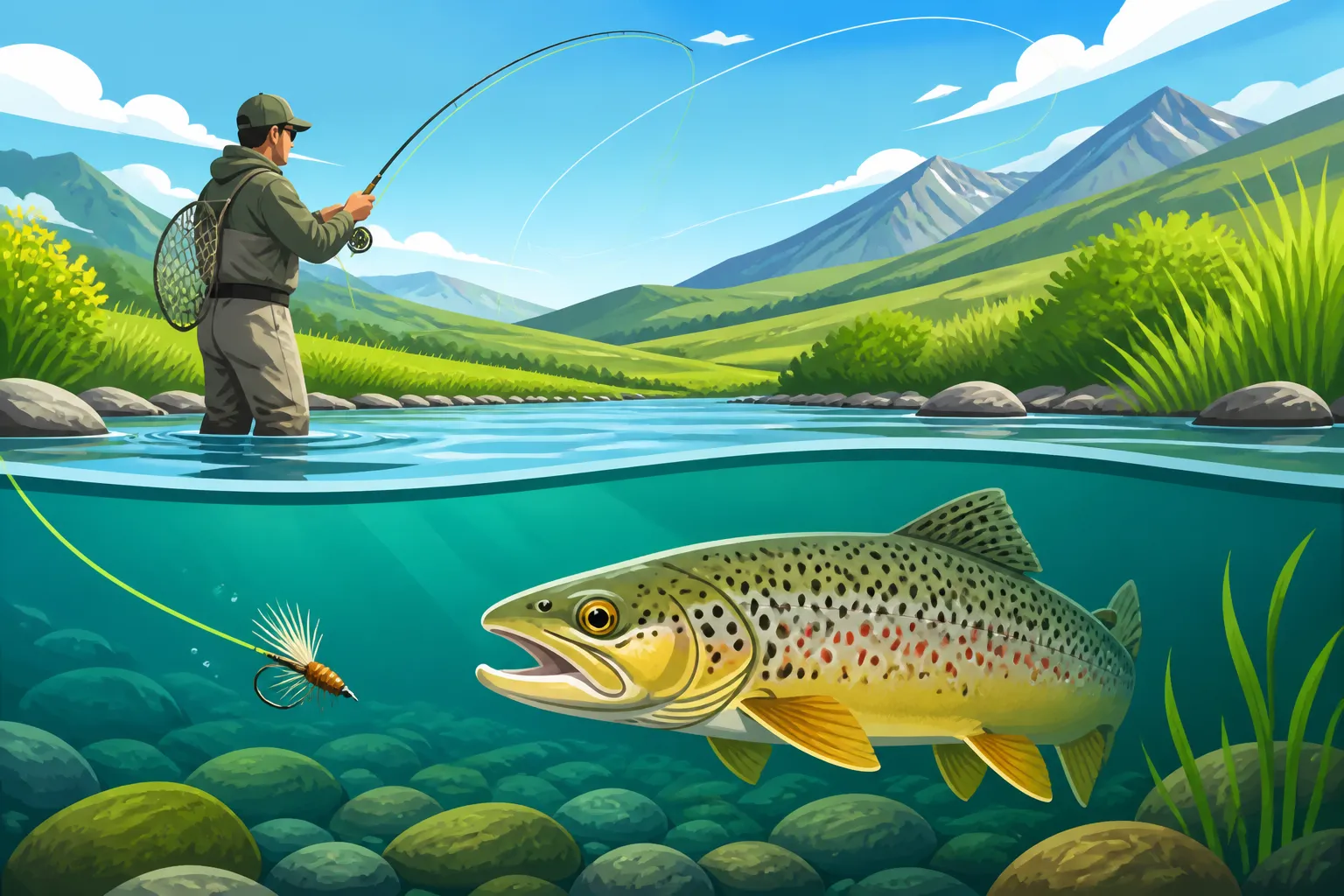
Oh, the elusive spring creek trout. There's hardly a more humbling or rewarding experience in fly fishing. Many of us have stood on the banks of a crystal-clear Idaho spring creek, watching a perfect trout sip naturals with infuriating nonchalance, while our perfectly tied fly gets ignored time and time again. It's enough to make you want to throw your rod in the water! But don't despair; those selective fish can be caught. This guide will dive deep into the nuanced art of casting to these finicky feeders, equipping you with the strategies and finesse needed to unlock success on Idaho's most challenging waters.
Understanding the Picky Eater: Why Spring Creek Trout Are So Selective
Spring creek trout aren't just being difficult for the sake of it, even if it feels that way sometimes. Their environment shapes their behavior, making them some of the most discerning fish you'll encounter. Once you understand why they're so particular, you can adjust your approach to meet their high standards.
The Abundance of Natural Food
Imagine a never-ending buffet, perfectly stocked with your favorite meals. That's essentially what a spring creek offers to its trout. These waters are incredibly rich in aquatic insect life, providing a consistent, high-quality food source year-round. Unlike freestone rivers that experience dramatic fluctuations in flow and temperature, which can wash out insect populations, spring creeks offer a stable haven for midges, mayflies, and caddisflies to thrive through all their life stages.
Because of this constant, reliable food supply, trout in spring creeks don't have to be opportunistic. They don't need to chase down every passing morsel; they can afford to be highly selective. They'll often key in on a specific size, shape, and color of insect, sometimes even a particular life stage like an emerger, dun, or spinner, ignoring anything that doesn't perfectly match their current preference. This is why you might see dozens of fish rising, yet they all ignore your fly until you make the precise match. This level of discernment is a hallmark of places like Silver Creek, where trout have truly become masters of their domain.
Clear Water and Spooky Fish
Spring creeks are renowned for their gin-clear, pristine waters. While breathtakingly beautiful, this clarity is a double-edged sword for the angler. For the trout, it means they have exceptional visibility, allowing them to inspect every potential food item—and every potential threat—with incredible scrutiny. They can easily spot heavy leaders, unnatural drifts, and even the angler's silhouette or shadow from a surprising distance.
This constant high visibility, coupled with the ever-present threat of predators like osprey, eagles, otters, and, yes, even us anglers, makes spring creek trout incredibly wary and "spooky." A single false cast too close, a clumsy step on the bank, or a flash of sun on your rod can send an entire pod of feeding fish scattering for cover. Successful spring creek fishing hinges on becoming a phantom on the water, minimizing your presence and approaching each fish with the utmost stealth.
Consistent Flows and Stable Environments
The defining characteristic of a spring creek is its consistent water source, typically from underground springs. This results in incredibly stable water temperatures and flows throughout the year, regardless of heavy rain or snowmelt. This stability fosters predictable insect hatches, creating routines that trout become intimately familiar with. They learn exactly when and where certain insects will emerge, and they position themselves accordingly.
This predictability, while helpful for understanding their general habits, also reinforces their selectivity. Trout become highly tuned to the patterns of their environment. If a particular mayfly hatch occurs at 2 PM every sunny afternoon, those fish will be looking for that specific mayfly. Anything else might be dismissed with a flick of a fin. This stability means there's less room for error in your presentation or fly choice compared to the more dynamic environment of a large river where fish might be more forgiving. Knowing when Idaho's General Trout Season Opens can help you plan your visit to these stable waters.
The Art of the Approach: Stealth and Presentation Are Key
Before you even think about casting, you need to think about how you approach the water and the fish. On a spring creek, your approach is often more critical than your cast itself. If you spook the fish before your fly hits the water, it doesn't matter how perfect your presentation is.
The Low Profile and Slow Movement
Imagine yourself as a predator, quietly stalking prey. On a spring creek, you are, in fact, a predator, and the trout are highly aware of their surroundings. This means moving slowly, deliberately, and with a low profile. Avoid walking directly on the bank when possible, as vibrations carry through the ground and water. If you must walk the bank, do so with soft, measured steps.
Always look for natural cover. Use tall grasses, bushes, and trees to break up your silhouette. Often, this means crouching, kneeling, or even crawling on your hands and knees to get into position. Think about where your shadow falls, especially on sunny days. A shadow drifting over a feeding lane is an instant alarm bell for trout. The goal is to appear as non-threatening as possible, allowing you to get within casting range without alerting your target. This level of patience is a skill developed over time, and it's essential for success when fishing Idaho's most sensitive waters.
Upstream Advantage and Angle Management
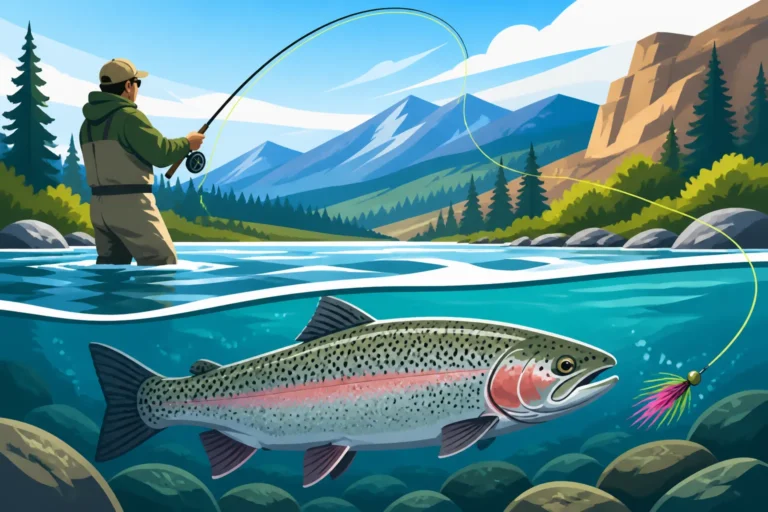
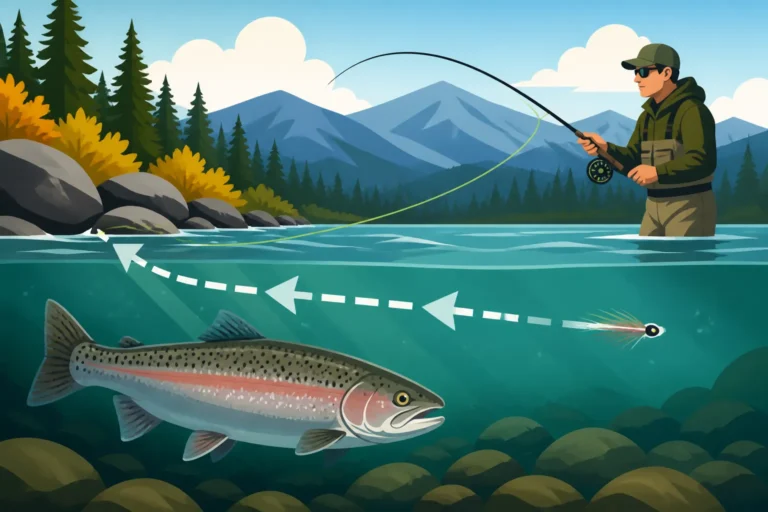
When approaching a specific feeding trout, consider your position relative to the fish. The general rule of thumb for spring creeks is to approach from downstream and cast upstream or upstream-and-across. Why? This allows your fly to drift naturally down to the fish, just as a natural insect would. It also keeps your leader and fly line behind or to the side of the fish's primary cone of vision, making it less likely for them to detect something unnatural.
Casting directly over a fish is usually a recipe for disaster. The line falling, the shadow, and the leader landing directly in their view are all red flags. Instead, try to position yourself so you're casting to the fish, not over it. Angle management also plays a crucial role in managing drag. By casting upstream and slightly across, you can often achieve a longer drag-free drift because the current will pull your line and fly at a similar speed for a longer duration. Understanding how to Read Water on Idaho's Rivers will greatly enhance your ability to manage these angles.
Leader and Tippet Selection
This is where many anglers make their first critical mistake on spring creeks. Heavy, short leaders and thick tippets are an absolute no-go. For these educated trout, the leader itself is a major clue that something isn't right. You need to present your fly on the finest, longest, and least visible line possible.
I typically start with a 12-foot leader, often tapering down to 6X or even 7X tippet. On some extremely clear and calm waters, I might even go as fine as 8X. The extra length helps keep the fly line further away from the fish, and the fine tippet minimizes its visibility in the clear water. Fluorocarbon tippet, which is denser than monofilament and sinks, can be excellent for nymphs and emergers as it helps them get into the feeding zone quickly and is almost invisible underwater. For dry flies, many still prefer monofilament for its buoyancy, but fluorocarbon's low visibility can still be an advantage, especially in calm water. Stocking up on a variety of tippet sizes from Amazon before your trip is a smart move, ensuring you have options for all conditions. Having the right Idaho Fishing Gear Guide by Season can also make a huge difference.
Mastering the Cast: Delivering the Fly with Finesse
Even with perfect stealth and the right leader, a clumsy cast will blow your chances. Spring creek fishing demands casts that are not only accurate but also incredibly delicate and designed to maximize a drag-free drift.
The Reach Cast and Mend
The reach cast, sometimes called a curve cast or a reach mend, is an indispensable tool for spring creek anglers. Instead of casting straight out, you perform a standard cast but, as the line extends forward, you "reach" your rod in the direction opposite the current. This immediately puts a mend, or curve, in your fly line and leader as it lands on the water, effectively giving you extra time for a drag-free drift.
Executing it requires smooth timing: load your rod, make your forward cast, and as the loop unrolls and the line straightens in the air, sweep your rod tip sideways in an arc, away from the current. The line will then land with a belly upstream or downstream, giving your fly a more natural float. This is particularly useful when you need to extend your drift past a conflicting current seam without directly mending your line after it's already on the water, which can be jarring to picky trout. Mastering the reach cast is a fundamental skill for anyone learning How to Fly Fish in Idaho.
The Parachute Cast and Slack Line
Sometimes, the currents are so complex, or the fish are so particular about drag, that even a well-executed reach cast isn't enough. This is where various slack-line casts come into play, with the parachute cast (or pile cast) being a prime example. The goal is to introduce deliberate slack into your leader and line as it lands on the water.
To perform a parachute cast, you essentially "dump" your line onto the water with a very abrupt stop of the rod tip, causing the leader and fly to pile up softly rather than straightening out perfectly. This pile of slack line then allows the fly to drift freely for a longer period before the current can grab the line and pull the fly unnaturally. While it might look messy, it's incredibly effective for very short, delicate presentations to risers in complex water or when the slightest drag spooks the fish. These casts are tricky and require practice, but you can find a fantastic selection of books on advanced casting techniques on Amazon to help you hone your skills.
Accuracy and Soft Landings
On a spring creek, "close enough" often isn't good enough. Trout in these clear, stable environments often hold in very precise feeding lanes, sometimes only moving an inch or two to intercept food. This means your cast needs to be incredibly accurate, placing the fly exactly where the fish is positioned and where the natural insects are drifting.
Practice casting to small targets on your lawn to improve your pinpoint accuracy. Think of your target as a teacup, not a bathtub. Equally important is a soft landing. A fly crashing down onto the surface of a calm spring creek is unnatural and will send most selective trout bolting. You want your fly to settle onto the water like a natural insect, gently touching down without a splash or disturbance. This requires a smooth, controlled forward cast with a delicate, high loop and a soft presentation. It's a hallmark of experienced anglers who consistently catch fish in challenging situations, particularly when trying to catch Idaho Cutthroat Trout Fishing Guide in these delicate waters.
Fly Selection and Imitation: Matching the Hatch (or the Sub-Surface)
Once you've mastered the approach and the cast, the final piece of the puzzle is presenting the right fly. This is often the most frustrating aspect of spring creek fishing, as trout can be incredibly specific.
Observing the Hatch and Water
Before you tie on a single fly, take time to observe. This cannot be stressed enough. Sit quietly on the bank, upstream and out of sight, and watch the water. Look for rises: how are the fish rising? Are they sipping gently, meaning small midges or spinners? Are they splashing aggressively, indicating caddis or larger mayflies? What direction are they facing? What's their rhythm?
Then, look for the insects themselves. Are there adult insects flying around? Are there shucks (the shed exoskeletons of nymphs) clinging to streamside vegetation? Gently sweep a fine-mesh net through the water in a quiet eddy to see what nymphs might be drifting. Examine spiderwebs and leaves for trapped insects. This detective work will give you invaluable clues about what the trout are feeding on. This observation is paramount on places like the Henry's Fork, where legendary hatches can occur.
Dry Fly Imitation: Size, Profile, and Color
Once you've observed, you need to match. When trout are rising, they are typically keying in on three things: size, profile (shape), and color. It's not enough to just have a "mayfly" pattern; it needs to be the right mayfly.
- Size: This is often the most critical factor. If the naturals are size 20, a size 16 fly will often be refused. Carry a wide range of sizes for common spring creek patterns like Baetis (Blue-Winged Olives), Pale Morning Duns (PMDs), Tricos, and various caddis patterns.
- Profile: Does your fly mimic the silhouette of the natural insect as it sits on the water? A low-riding Trico spinner needs a different profile than a high-floating Green Drake dun. Parachute patterns, comparaduns, and CDC (Cul-de-Canard) flies are excellent for their realistic profiles and delicate landings.
- Color: While often subtle, color can matter. Naturals can range from olive to grey to brown. Pay attention to the subtle hues of the insect's body, wings, and legs.
Sometimes, the trout are so focused that even if you have the right size and color, if the action or drift isn't perfect, they'll ignore it. This is where an understanding of how to use various techniques for dry fly fishing a spring creek comes in handy. Many high-quality flies from brands like Umpqua and Orvis are designed specifically for these conditions. When building your fly box, remember the importance of having a variety of patterns that represent different life stages, not just the adult. For more general advice, check out our guide on Best Lures for Idaho Trout Fishing.
Nymphing and Emerger Tactics
What if the trout aren't rising? That means they're likely feeding subsurface, either on nymphs drifting in the current or on emergers struggling to break through the surface film. Don't limit your spring creek approach to only dry flies.
- Nymphing: Small, subtle nymphs are deadly effective. Think size 18-22 Pheasant Tail Nymphs, Zebra Midges, Barr's Emergers, or various tiny scuds. Fish these either under a very small, sensitive strike indicator, or try Euronymphing techniques for maximum sensitivity and control. The key is to get your nymph down to the feeding depth quickly and maintain a perfectly drag-free drift. Again, fine tippet (6X-7X) is crucial.
- Emergers: Many times, trout will feed on insects that are in the process of emerging, stuck in the surface film. They might make a subtle "sip" or "porpoise" rise, but they won't fully break the surface. An emerger pattern, like a CDC Comparadun or a Sparkle Dun, fished in the surface film can be incredibly effective. Sometimes, swinging a soft-hackle emerger pattern lightly downstream and across, mimicking an insect struggling to emerge, can also trigger a strike from reluctant fish. Consider a specific "How to Fish Silver Creek's Technical Water" for more on this.
Here’s a quick overview of some essential fly patterns for Idaho’s selective spring creek trout:
| Fly Pattern Type | Common Imitation | Typical Sizes | Presentation Notes |
|---|---|---|---|
| Parachute Adams | Mayfly Dun (General) | 16-24 | High visibility, gentle landing for risers. |
| Baetis (BWO) Dun/Spinner | Blue-Winged Olive | 18-24 | Essential for overcast days, often found on Henry's Fork. |
| PMD (Pale Morning Dun) | Pale Morning Dun | 16-20 | Important summer hatch, delicate presentation. |
| Trico Spinner | Trico Mayfly | 22-28 | Tiny, low-riding; best in early mornings. |
| Elk Hair Caddis | Adult Caddisfly | 14-20 | Skittering presentation can imitate egg-laying. |
| Zebra Midge | Midge Pupa/Larva | 18-24 | Subsurface, fished under an indicator or Euronymphing. |
| Pheasant Tail Nymph | Mayfly Nymph (General) | 16-22 | Versatile subsurface pattern, often weighted. |
| Barr's Emerger | Mayfly Emerger | 18-22 | Fished in the film, excellent for subtle risers. |
| Scud/Sowbug | Scuds | 16-20 | Important food source in weed beds, often found on Silver Creek. |
Remember, success on spring creeks is a puzzle, and each piece – stealth, presentation, casting finesse, and fly selection – must fit perfectly. Don't be afraid to experiment, be patient, and most importantly, enjoy the challenge these incredible fish offer. If you're looking to learn more about a specific trout species, check out our Idaho Rainbow Trout Fishing Guide.
Disclaimer
Fishing regulations, conditions, and fish behavior can change. Always consult the latest Idaho Fishing Regulation Brochure and Proclamation from the Idaho Department of Fish and Game before heading out. Fishing involves inherent risks; always prioritize safety and responsible angling practices.