Fly Fishing Techniques for Idaho Spring Creeks
There’s something truly special, almost sacred, about fly fishing Idaho’s spring creeks. They aren't your typical freestone rivers, wide and roaring with meltwater. Instead, these are often crystal-clear, slow-moving gems, fed by consistent groundwater, creating an ecosystem that challenges even the most seasoned angler. If you've ever felt the frustration of trout refusing your perfectly presented fly, or seen them spook at the slightest ripple, you know the humbling reality of these waters. This guide aims to demystify the art of fly fishing these technical Idaho spring creeks, equipping you with the knowledge and techniques to turn those frustrations into unforgettable triumphs.
The Unique Challenge of Idaho's Spring Creeks
Idaho is blessed with a variety of fishing waters, from vast lakes to roaring rivers, but its spring creeks stand apart. These unique ecosystems are formed where groundwater seeps or springs directly from the earth, maintaining remarkably stable temperatures year-round. This consistency fosters an incredible abundance of aquatic insect life, making them prime destinations for discerning trout. However, this stability and clarity come with a significant catch: the trout living in these waters are often incredibly wary and selective, demanding the utmost precision from anglers.
Pristine Waters and Wary Trout
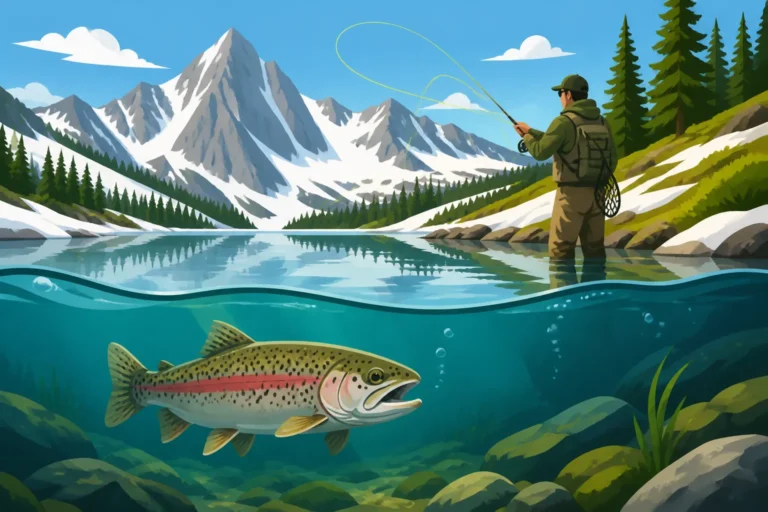
Imagine water so clear that you can count the pebbles on the bottom, even in several feet of depth. That's a typical Idaho spring creek. This pristine clarity is both a blessing and a curse. On the one hand, it allows you to spot feeding fish and observe their behavior, which is an invaluable tool for understanding what they're eating. On the other hand, that same clarity means the trout can see you just as easily. They are constantly on high alert, and any shadow, sudden movement, or unnatural reflection can send them darting for cover. These fish, often residents of these stable environments for years, become incredibly wise to angling pressure. They've seen it all, and they've learned to be picky, inspecting every offering with a critical eye.
Furthermore, spring creeks often lack the obvious, churning pocket water or large boulders that provide ample cover in other river types. Instead, cover might be subtle undercut banks, overhanging vegetation, or deep, slow pools. The fish learn to use these subtle features to their advantage, making them even harder to approach without detection. The challenge isn't just about placing a fly; it's about becoming a ghost, moving slowly, observing diligently, and making your presence virtually undetectable until the very moment of your cast.
Consistent Temperatures and Prolific Hatches
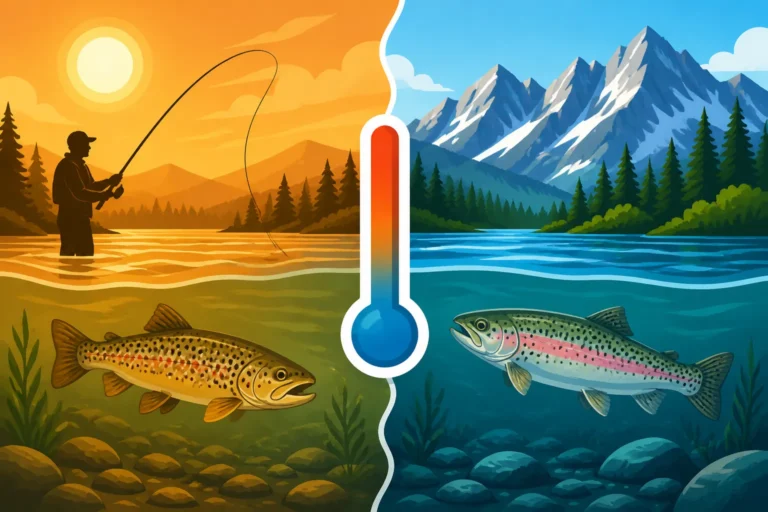
One of the most defining characteristics of spring creeks is their stable water temperatures. Unlike freestone rivers that fluctuate wildly with air temperature and snowmelt, spring creeks maintain a relatively consistent temperature range throughout the year. For instance, Idaho's famous Silver Creek near Sun Valley stays cool in the summer and relatively warm in the winter, thanks to its groundwater source. This thermal stability creates an ideal habitat for aquatic insects to thrive, leading to incredibly diverse and prolific hatches.
Anglers often speak of "matching the hatch," and nowhere is this phrase more critical than on a spring creek. When a specific insect is emerging or ovipositing, trout will often key in on that particular food source, ignoring everything else. This intense selectivity means that not only does your fly need to be the right size and shape, but it also needs to be the right color and stage of the insect's life cycle. You might see hundreds of tiny midges on the water, but if your imitation isn't the exact size or if it's too high in the water column, those trout will simply ignore it. This consistent, rich food supply is what grows large, healthy trout in these creeks, but it also makes them incredibly discerning diners. Understanding the specific insect life present, from tiny midges and robust mayflies to various caddisflies and even terrestrial insects, is paramount to success. For more on this, you might find our guide on Idaho Fishing Techniques Guide helpful.
Essential Gear for Stealth and Precision
Fishing Idaho's spring creeks successfully demands a refined approach, and that starts with your gear. This isn't the place for heavy-duty setups or robust lines; subtlety and precision are the names of the game. Every piece of equipment, from your rod to your fly box, should be chosen with delicate presentations and stealth in mind.
Rod, Reel, and Line Selection
For most Idaho spring creek scenarios, a lighter fly rod is your best friend. Think about rods in the 3-weight to 5-weight range, typically between 8.5 to 9 feet in length. A softer, more moderate action rod is often preferred because it allows for more delicate presentations and protects fine tippets when fighting a fish. A faster action rod can be too stiff, making it harder to lay down a dry fly gently or make subtle mends. For example, a 9-foot, 4-weight rod is a superb all-around choice for many spring creek situations, offering enough backbone for wind resistance but enough finesse for tiny dry flies.
Your reel doesn't need to be a high-tech drag monster; most spring creek fish aren't going to strip line off your reel at a blistering pace. A simple, lightweight reel that balances your chosen rod is usually sufficient. Focus on something with a smooth, consistent drag, even if it's a basic click-and-pawl system, as it will help protect those light tippets.
The fly line itself is crucial. A weight-forward floating line is standard. Consider lines designed for delicate presentations, often labeled as "presentation taper" or "troutspecific." These lines tend to have longer, finer front tapers that help turn over long leaders more gently, minimizing splash and disturbance. Companies like Scientific Anglers and Rio offer excellent lines specifically designed for these technical applications. You can often find a good selection of these specialized lines on platforms like Amazon.
Leaders, Tippet, and Fly Boxes
If your rod and line are the engine, your leader and tippet are the delicate transmission connecting you to the fish. Length is paramount here. Most anglers will start with a 9-foot leader and add 3-5 feet of tippet, making for an overall leader system of 12-15 feet, or even longer in extremely clear or spooky conditions. This extended length helps present your fly naturally, away from the heavier fly line, and allows for more effective drag-free drifts. Tapered leaders are essential, providing a smooth transition of energy from the fly line to your fly.
When it comes to tippet, you'll be using much lighter stuff than on a freestone river. Fluorocarbon is often preferred, especially for nymphs, because its refractive index is closer to water, making it less visible to fish. It also sinks faster, which can be an advantage when getting nymphs down quickly. For dry flies, standard monofilament nylon tippet is usually fine, as it floats better. Common tippet sizes range from 5X down to 7X or even 8X for truly tiny flies and incredibly selective fish. Always have a variety of sizes with you – 5X, 6X, and 7X are almost mandatory. Companies like Seaguar (for fluorocarbon) and Orvis (for nylon) offer excellent tippet materials.
Finally, your fly boxes should be well-organized and stocked with a wide array of small, realistic imitations. Given the prolific hatches on Idaho spring creeks, you'll want multiple patterns, sizes, and stages for midges, mayflies, and caddis. Having a dedicated nymph box, dry fly box, and perhaps an emerger box is a good idea. Make sure your boxes are waterproof and durable, because you don't want to lose your meticulously tied flies to a slip on the bank. These specialized fly boxes are readily available on Amazon, often with different foam inserts for various fly types.
Deciphering Spring Creek Water
Unlike the obvious seams and pockets of a turbulent mountain river, Idaho's spring creeks often present a subtle, almost featureless appearance to the untrained eye. However, beneath that tranquil surface lies a complex world of micro-currents and hidden lies where selective trout hold. Learning to "read" this water is a skill developed over time, but there are distinct clues to look for.
Spotting Subtle Lies
Trout, especially large, wary ones, are always looking for three things: food, cover, and minimal energy expenditure. In a spring creek, where cover can be scarce and water movement gentle, these needs translate into subtle holding spots. Start by looking for anything that breaks the uniform flow or provides a hiding place.
Undercut banks are classic trout lies. The bank itself provides overhead cover, shielding the fish from predators and bright sunlight, while the undercut portion allows them to sit out of the main current flow, darting out to intercept food as it drifts by. Look for darker areas under the bank or slight indentations in the bankline. Overhanging vegetation, like willows or grass, also offers crucial cover. Fish will often hold directly underneath these branches, waiting for insects to drop from above or for nymphs to drift past. Any subtle changes in depth can also indicate a lie. A slight depression in the streambed, even just a few inches deeper than the surrounding water, can be a prime spot, especially if it's paired with some current break. Don't overlook submerged rocks or logs, even small ones. These create small current shadows that provide a comfortable holding spot. Often, these subtle lies require you to get low, wear polarized sunglasses, and patiently scan the water, sometimes for several minutes, before a fish reveals itself.
Understanding Micro-Currents and Seams
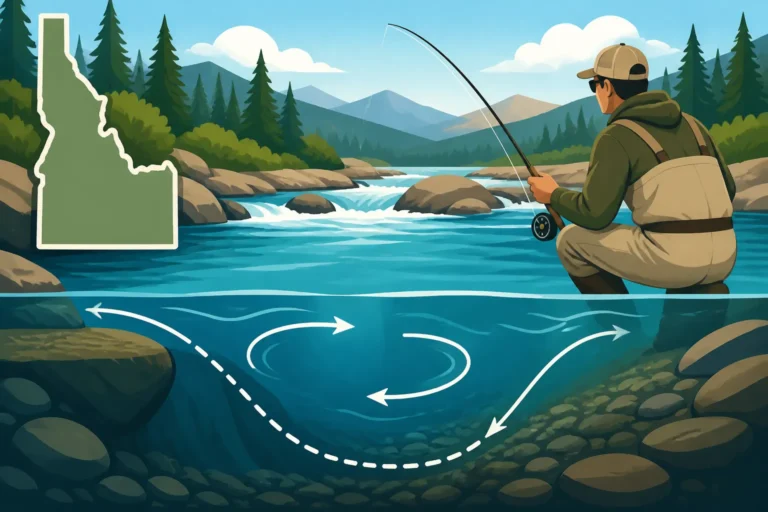
While spring creeks might appear slow and uniform, they are a labyrinth of micro-currents. These subtle differences in water speed are critical, as they dictate where food accumulates and where trout position themselves to feed efficiently. The biggest mistake you can make is assuming the entire creek moves at one speed.
Pay close attention to where faster water meets slower water. These "seams" are insect superhighways. A fish will typically hold in the slower water adjacent to the faster current, conserving energy while having a steady stream of food delivered to them. Look for subtle lines on the surface where debris or foam collects; these often indicate a current seam. Even a slight bend in the creek can create a complex current dynamic, with faster water on the outside bend and slower water on the inside. Trout will often stack up in the inside bend, picking off food that tumbles past.
Also, observe how your indicator or fly drifts. Does it speed up, slow down, or veer off course? This is crucial information telling you about the underlying currents. A perfect drag-free drift is impossible if you don't understand the complex current structures. Sometimes, a tiny eddy just behind a clump of grass or a submerged rock can hold a surprisingly large trout, patiently waiting for an unfortunate bug to get caught in the swirl. Mastering this ability to Reading Water on Idaho's Rivers is a fundamental skill for any Idaho angler.
Mastering the Art of Presentation
This is where the rubber meets the road on Idaho's spring creeks. You can have the perfect fly and know exactly where the fish are, but if your presentation isn't flawless, you might as well be casting rocks. Precision, delicacy, and cunning are your best weapons.
Delicate Casts and Drag-Free Drifts
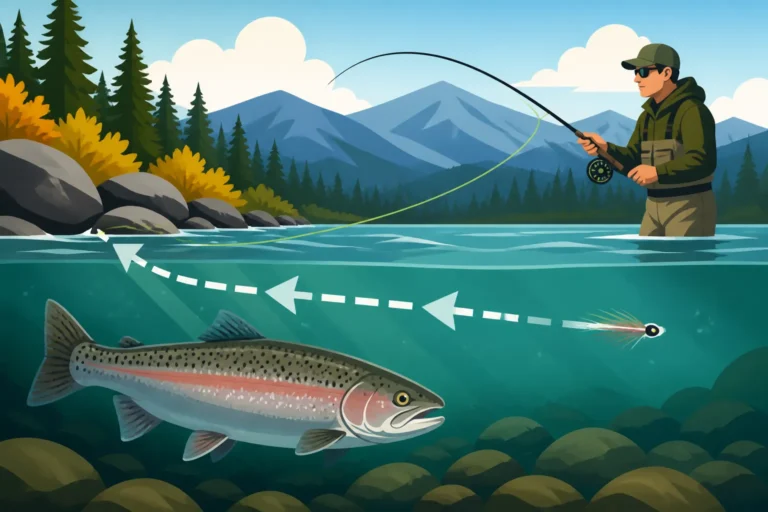
The cardinal rule of spring creek fly fishing is achieving a drag-free drift. Drag occurs when your fly line or leader is pulled by conflicting currents, causing your fly to move unnaturally through the water, as if it's being tethered or propelled by an unseen force. Wary trout will instantly detect this artificial movement and refuse your fly, even if it's a perfect imitation.
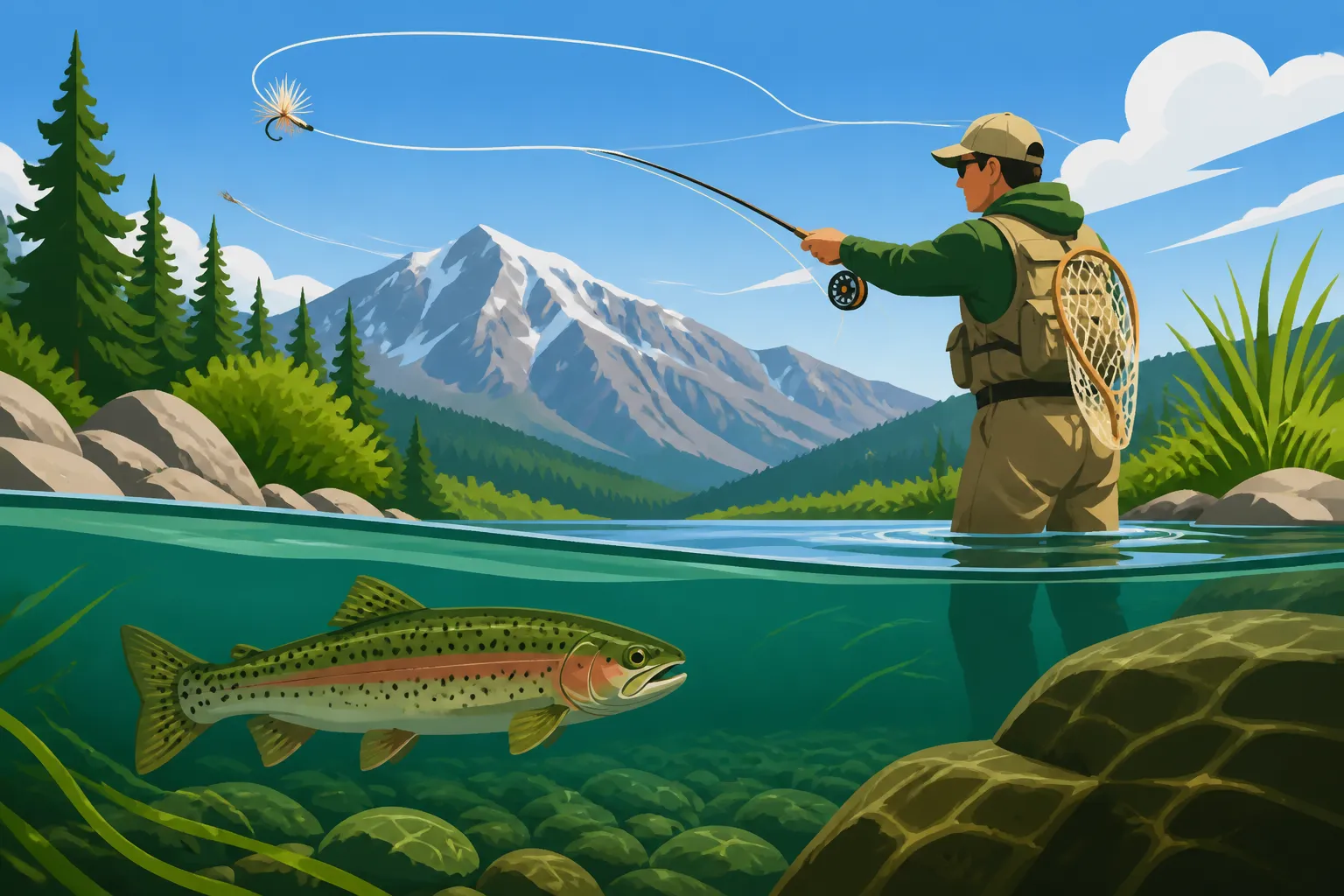
To achieve a drag-free drift, your cast needs to be delicate and precise. Avoid false casting unnecessarily, as each pass of your line over the water can alarm fish. Aim for a single, controlled cast that places your fly exactly where you want it. Reach casts, where you extend your rod arm upstream or downstream as the line unfurls, are incredibly useful for introducing slack or guiding your leader around conflicting currents. Curve casts, which intentionally land your line in an arc, can also help present a fly to a specific spot while keeping your main line out of the fastest current.
Once the fly is on the water, constant line management is key. This often means "mending" – quickly flipping a portion of your fly line upstream or downstream to counteract current differences and extend your drag-free drift. A good mend doesn't disturb the fly; it merely repositions the slack in your line. It’s a subtle art, and one you'll continuously refine. If you're struggling with this, focusing on How to Cast to Selective Trout on a Spring Creek can make a huge difference.
Upstream vs. Downstream Approaches
The direction from which you approach and cast to a fish can significantly impact your success on a spring creek. Both upstream and downstream presentations have their merits and challenges.
Upstream Approach: This is generally the preferred method for dry fly fishing on spring creeks. By casting upstream and slightly across, your fly drifts towards you, allowing you to watch the fly and detect strikes more easily. Crucially, your line lands above the fish, meaning the fly is the first thing the trout sees, not the shadow or splash of your line. This minimizes the chance of spooking the fish. However, an upstream cast often means you're retrieving line towards you, which can create drag if not managed carefully with mends. It also requires you to get upstream of the fish, which can be challenging on small, clear creeks without spooking them. Wading carefully, staying low, and moving slowly are paramount when executing an upstream approach.
Downstream Approach: While less common for dry flies, a downstream approach can be incredibly effective, particularly for nymphing or fishing streamers, or when approaching a fish in a tight, brushy spot where an upstream cast is impossible. When casting downstream, you're often standing above or alongside the fish, allowing your fly to drift away from you. The advantage here is that your fly line remains behind the fish, further reducing the chance of spooking them. The challenge lies in detecting strikes, as the line is moving away, and setting the hook effectively. When nymphing downstream, a subtle "lift and drift" can be used, where you raise your rod tip slightly to keep the line taut and feel for strikes as the fly tumbles. For specific techniques on this, particularly with subsurface patterns, exploring How to Nymph Fish a River might be beneficial.
Managing Line and Eliminating Drag
Beyond the cast itself, what you do after the fly hits the water is what truly defines a drag-free drift. This is where active line management comes into play, a continuous dance between rod, line, and current.
The instant your fly lands, you should assess its drift. If the fly line or leader is being pulled faster or slower than the fly itself, you need to mend. An aerial mend is performed while the line is still in the air during the cast, throwing a curve into the line that delays drag. A water mend is done after the line lands, flicking your rod tip to reposition the fly line without disturbing the fly. This often means picking up slack and throwing it upstream. The goal is to keep just enough slack in the line for a natural drift, but not so much that you can't feel a strike or set the hook.
Another critical technique is the reach cast, where you extend your casting arm in the direction of the drift just as the fly lands. This puts an immediate belly of line in the air, allowing the fly to float drag-free for a longer duration before the current takes hold of the main line. Similarly, stack mends can be used on longer drifts, where you essentially "stack" loops of line on the water above your fly, which slowly get pulled downstream, feeding slack into the drift. The key to all these techniques is subtlety; abrupt movements will negate all your prior efforts at stealth. Remember, the fish aren't just looking at the fly; they're sensing the entire system. Any unnatural tug or acceleration will send them packing.
Unlocking the Code: Matching the Hatch and Fly Selection
On Idaho's spring creeks, fly selection isn't just a suggestion; it's often the difference between a day of frustration and a day of triumph. The trout here are connoisseurs, accustomed to a rich and varied buffet of aquatic insects. You need to present them with exactly what they're looking for, or at least a convincing approximation.
Key Invertebrates and Their Imitations
Spring creeks are insect factories, churning out a consistent supply of mayflies, caddisflies, midges, and various crustaceans like scuds and sowbugs. Understanding the life cycle and appearance of these insects is crucial for successful fly selection.
- Mayflies: These are arguably the most iconic insect for fly anglers. Idaho spring creeks host a variety of species, from tiny Baetis (Blue-Winged Olives) that can hatch year-round, to larger March Browns, Pale Morning Duns (PMDs), and Callibaetis. You'll need imitations for all stages: nymphs, emergers (when they're struggling to break the surface), duns (the winged adult), and spinners (the spent adult after mating). For example, a reliable BWO nymph like a Pheasant Tail or Hare's Ear, an emerger like a Sparkle Dun, and a parachute dry fly are essential.
- Caddisflies: Often overlooked in favor of mayflies, caddis can provide explosive dry fly action. Their irregular, jerky flight patterns and fluttering egg-laying dives can drive trout wild. You'll want caddis larva patterns (like a LaFontaine Sparkle Pupa), pupa imitations (e.g., CDC Caddis Emerger), and adult dry flies (Elk Hair Caddis or X-Caddis) in various sizes and colors to match the local species.
- Midges: These tiny, mosquito-like insects are present year-round and can be a primary food source, especially in winter or during slow periods. Matching them requires very small flies (sizes #18-26 or even smaller) and ultra-fine tippets. Larva patterns (blood midges, zebra midges), pupa (disco midges, WD-40s), and tiny adult dry flies (Griffith's Gnat) are critical.
- Crustaceans: Scuds and sowbugs are often abundant in the weed beds and on the bottom of spring creeks. Trout frequently feed on them, even when no hatch is occurring. Having a selection of realistic scud and sowbug patterns in olive, gray, and tan, weighted to sink effectively, is a smart move.
- Terrestrials: Don't forget the land-based insects! During warmer months, ants, beetles, and grasshoppers can fall into the water, providing substantial meals for trout. Having a few ant and beetle patterns, and larger hopper imitations, can save a slow summer day.
For more specifics, checking out What Flies to Use on Henry's Fork in Summer or Best Flies for Cutthroat Trout can give you tailored advice for different species and seasons.
Nymphs, Emergers, and Dry Flies
Knowing which fly to use is often about understanding what stage of the insect's life cycle the trout are focused on. This requires careful observation of both the water and the fish's feeding behavior.
- Nymphs: Most of a trout's diet consists of nymphs and larvae living on the bottom. When you see fish actively feeding subsurface (sometimes indicated by a subtle flash or head shake, or simply by observing fish holding deep), nymphing is the way to go. Use weighted nymphs or add split shot to your leader to get your fly down to the fish. A strike indicator can help detect subtle takes. The key is a drag-free drift along the bottom where the naturals reside.
- Emergers: This is often the most frustrating and rewarding stage to imitate. Trout often key in on insects as they "emerge" or transition from nymph to adult, struggling in the surface film. You'll see fish porpoising or sipping just below the surface, refusing dry flies that sit too high. Emerger patterns, which often incorporate a shuck or trailing shuck and sit in the surface film, are deadly. Think CDC emergers, soft hackles, or cripple patterns. Presentation must be just as delicate as with a dry fly.
- Dry Flies: The most exciting way to catch a fish, dry fly fishing is all about imitating the adult insect on the surface. When you see fish actively rising, sipping bugs off the top, it's time for a dry fly. The challenge is presenting it perfectly, without drag, and matching the specific size, shape, and color of the natural. On selective spring creek trout, a perfect imitation of a size #20 Baetis dun, presented flawlessly, might get a take, while a slightly off pattern or a hint of drag will be ignored. This requires finesse and patience, as detailed in our guide on How to Dry Fly Fish a Spring Creek.
Here’s a quick overview of common Idaho spring creek hatches and some reliable fly patterns to have in your box:
| Insect Type | Common Sizes | Life Stages Imitated | Essential Fly Patterns | Best Time of Year |
|---|---|---|---|---|
| Midges | #18 – #26 | Larva, Pupa, Adult | Zebra Midge, Blood Midge, Disco Midge, Griffith's Gnat, WD-40 | Year-round, especially winter |
| Baetis (BWO) | #18 – #22 | Nymph, Emerger, Dun, Spinner | Pheasant Tail, Hare's Ear, Barr's Emerger, Sparkle Dun, Parachute Adams (BWO colors) | Spring, Fall, Winter |
| PMD (Pale Morning Dun) | #14 – #18 | Nymph, Emerger, Dun, Spinner | Juju Baetis, RS2, Harrop's CDC Thorax Dun, Loopwing PMD, PMD Cripple | Late Spring, Summer |
| Caddisflies | #14 – #20 | Larva, Pupa, Adult | LaFontaine Sparkle Pupa, Peacock Caddis, Elk Hair Caddis, X-Caddis | Spring, Summer, Fall |
| Scuds / Sowbugs | #14 – #20 | Adult | Olive Scud, Grey Scud, Tan Sowbug | Year-round |
| Terrestrials | #10 – #18 | Adult | Ant patterns, Foam Beetle, Parachute Hopper | Summer |
This table is a starting point. Always check local fly shop reports or stream conditions before you go, as hatches can vary by year and specific location.
Advanced Tactics and the Ethos of Spring Creek Angling
Once you've got the basics down, you can start delving into the more refined techniques that separate good spring creek anglers from truly exceptional ones. Beyond the mechanics, there's also an ethos to fishing these delicate waters – a commitment to conservation and ethical angling.
Sight Fishing and Stalking
Sight fishing is arguably the most rewarding and challenging aspect of spring creek angling. It involves actively spotting a fish before you cast to it, observing its feeding behavior, and then making a precise, targeted presentation. This is where patience truly becomes a virtue.
Start by moving slowly and deliberately along the bank, keeping a low profile. Use polarized sunglasses – they are non-negotiable for spring creek fishing, cutting through glare and allowing you to see into the water. Scan the water ahead, looking for subtle movements, flashes of color, or the distinct shape of a trout holding in a current seam or near cover. Don't just look for whole fish; sometimes, a slight pectoral fin movement or the flash of a white mouth opening and closing is all you'll see. Often, the bigger, smarter fish will be tucked away in less obvious spots.
Once you spot a fish, stop. Observe its behavior. Is it actively feeding? What seems to be its rhythm? Is it taking insects off the surface, just below, or are you seeing it darting for subsurface food? If you see it rising, note the size and color of the naturals it's taking. This observation period is crucial for selecting the right fly and planning your approach. Then, plan your cast. Consider wind direction, sun position (to avoid casting your shadow), and upstream obstacles. Your goal is to get your fly to the fish before it knows you're there, with minimal disturbance. This often means making a single, perfect cast rather than multiple attempts. It's a bit like hunting, requiring stealth and careful execution.
Ethical Angling and Conservation
The pristine nature of Idaho's spring creeks and the wild, often large, trout that inhabit them demand a strong commitment to ethical angling and conservation. These are delicate ecosystems, and our actions as anglers can have a significant impact.
Catch and Release: Many spring creeks, especially those with robust populations of wild trout, are managed as catch-and-release-only waters or have highly restrictive harvest regulations. Even where harvest is permitted, consider releasing your catch, especially larger, older fish that are important for breeding. If you do intend to keep fish, be absolutely certain you understand the specific Idaho Catch Limits and Bag Limits Explained for that particular water and species.
Handle Fish Gently: When you do land a fish, handle it with the utmost care, especially if you plan to release it.
- Keep them wet: Try to keep the fish in the water as much as possible. If you must remove it for a quick photo, do so quickly and support its body weight.
- Wet hands: Always wet your hands before touching a fish. Dry hands can remove the fish's protective slime layer, leaving it vulnerable to disease.
- Minimize handling: Don't squeeze the fish or put your fingers in its gills.
- Remove hooks carefully: Use forceps or a hemostat to quickly and gently remove the hook. If the fish is deeply hooked and removal would cause significant damage, it's often better to cut the line as close to the hook as possible. Barbless hooks are highly recommended, making release much easier and less traumatic for the fish. In fact, some special regulation waters in Idaho, like parts of the South Fork of the Snake River, have Idaho Barbless Hook Requirements.
- Revive properly: Hold the fish gently in the current, facing upstream, until it can swim away strongly on its own.
Respect the Environment:
- Stay on established paths: Avoid trampling fragile stream banks and vegetation.
- Pack it in, pack it out: Leave no trace. Take all your trash with you, including discarded fishing line.
- Be mindful of other anglers: Spring creeks are often popular. Give fellow anglers plenty of space.
- Understand regulations: Always consult the current Idaho Fishing Regulations Explained for the specific water you are fishing. Rules can change and vary greatly by location.
By adhering to these practices, we can ensure that Idaho's spring creeks remain healthy, vibrant ecosystems for generations of anglers to enjoy.
Disclaimer
Please note that fishing regulations, conditions, and recommended techniques can change. Always consult the latest official Idaho Fish and Game regulations before heading out. Fishing involves inherent risks, and it is your responsibility to ensure your safety and adherence to all laws and regulations.