What Happens If You Keep a Wild Steelhead in Idaho?
It’s easy to get swept up in the thrill of landing a beautiful steelhead here in Idaho, especially when you’ve been working hard for it. But that exhilarating moment can turn into a serious headache if you don't know—or worse, ignore—the critical difference between a hatchery and a wild fish. Mistaking one for the other, or intentionally keeping a wild steelhead, can lead to a host of unpleasant and costly repercussions. This guide is here to walk you through exactly what those consequences are, so you can avoid a truly regrettable fishing experience.
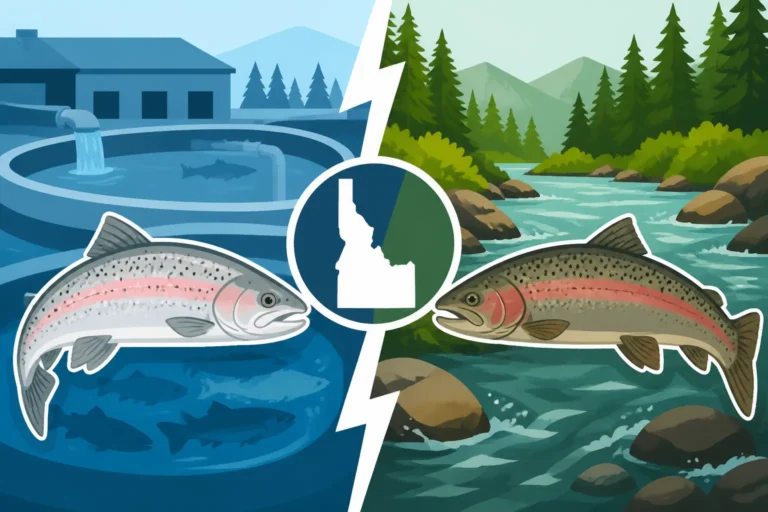
The Critical Distinction: Wild vs. Hatchery Steelhead
For many anglers, the dream of hooking into a powerful Idaho steelhead is a powerful draw. These magnificent fish, renowned for their fighting spirit, offer an unparalleled fishing experience. However, Idaho’s rivers are home to both hatchery-raised and wild steelhead, and understanding the difference isn't just a matter of trivia—it's a fundamental part of responsible and legal angling in the Gem State. The rules are strict for a very good reason: protecting the genetic integrity and survival of our native wild populations.
Understanding the Adipose Fin Clip
The most crucial identifier, and the one Idaho Fish and Game officers will look for, is the adipose fin. This small, fleshy fin is located on the back of the fish, between the dorsal fin and the tail. On hatchery-raised steelhead, this fin is typically clipped off before the fish are released into the wild. It’s a deliberate and highly effective method used by fish hatcheries across the Pacific Northwest to distinguish their stock from wild, naturally spawning fish.
When you land a steelhead, the very first thing you should do, even before admiring its beauty, is locate that adipose fin. If it's completely missing, cleanly removed, you've got yourself a hatchery fish that can often be legally retained, provided you have the proper permits and it's within season and bag limits. However, if that little fleshy fin is intact and present, you are holding a wild steelhead. This fish must be immediately and carefully released back into the water. Sometimes, a fin might be partially damaged from a past injury, making identification tricky. In such cases, if there’s any doubt whatsoever about whether it’s clipped, the safest and most legal course of action is always to assume it’s a wild fish and release it. Investing in a good waterproof fish identification guide, easily found on Amazon, can really help when you're out on the water and unsure.
Why the Rules Differ
The differing regulations for wild and hatchery steelhead are rooted in critical conservation efforts. Wild steelhead populations face numerous challenges, including habitat loss, hydroelectric dams, and historical overfishing. These native fish are vital for maintaining healthy ecosystems and genetic diversity. They are the backbone of future generations of fish, ensuring the resilience and natural balance of Idaho’s rivers.
Hatchery programs, while sometimes controversial, serve a different purpose. They are primarily designed to supplement fish populations, providing angling opportunities and harvestable fish to take pressure off wild stocks. By clipping the adipose fin, wildlife agencies ensure that anglers can easily differentiate between the two, allowing for regulated harvest of hatchery fish while providing strict protection for the more vulnerable wild fish. This strategy allows Idaho Fish and Game to manage sport fisheries sustainably, ensuring that anglers can enjoy the thrill of fishing for years to come without jeopardizing the long-term health of the wild runs. Remember, these regulations are not arbitrary; they are the result of extensive scientific study and management strategies aimed at preserving a precious natural resource. You can find more details on these rules in the Idaho Fishing Regulations Explained or by checking the Idaho Steelhead Bag Limits for specific water bodies.
The Immediate Consequences of Keeping a Wild Steelhead
Let's cut right to it. If you make the mistake of keeping a wild steelhead, the consequences are immediate and can be quite jarring. Idaho Fish and Game officers are highly trained and dedicated to protecting these resources, and they patrol Idaho's rivers diligently.
On-the-Spot Enforcement and Citations
Imagine this scenario: You've just landed a beautiful steelhead, and maybe in your excitement, you didn't check the adipose fin, or perhaps you did, and decided to take a chance. An Idaho Fish and Game officer, who might have been observing from a distance or on a routine patrol, approaches. The first thing they'll do is ask to inspect your catch and your fishing license and permits. If that adipose fin is intact on a fish you've decided to keep, the jig is up.
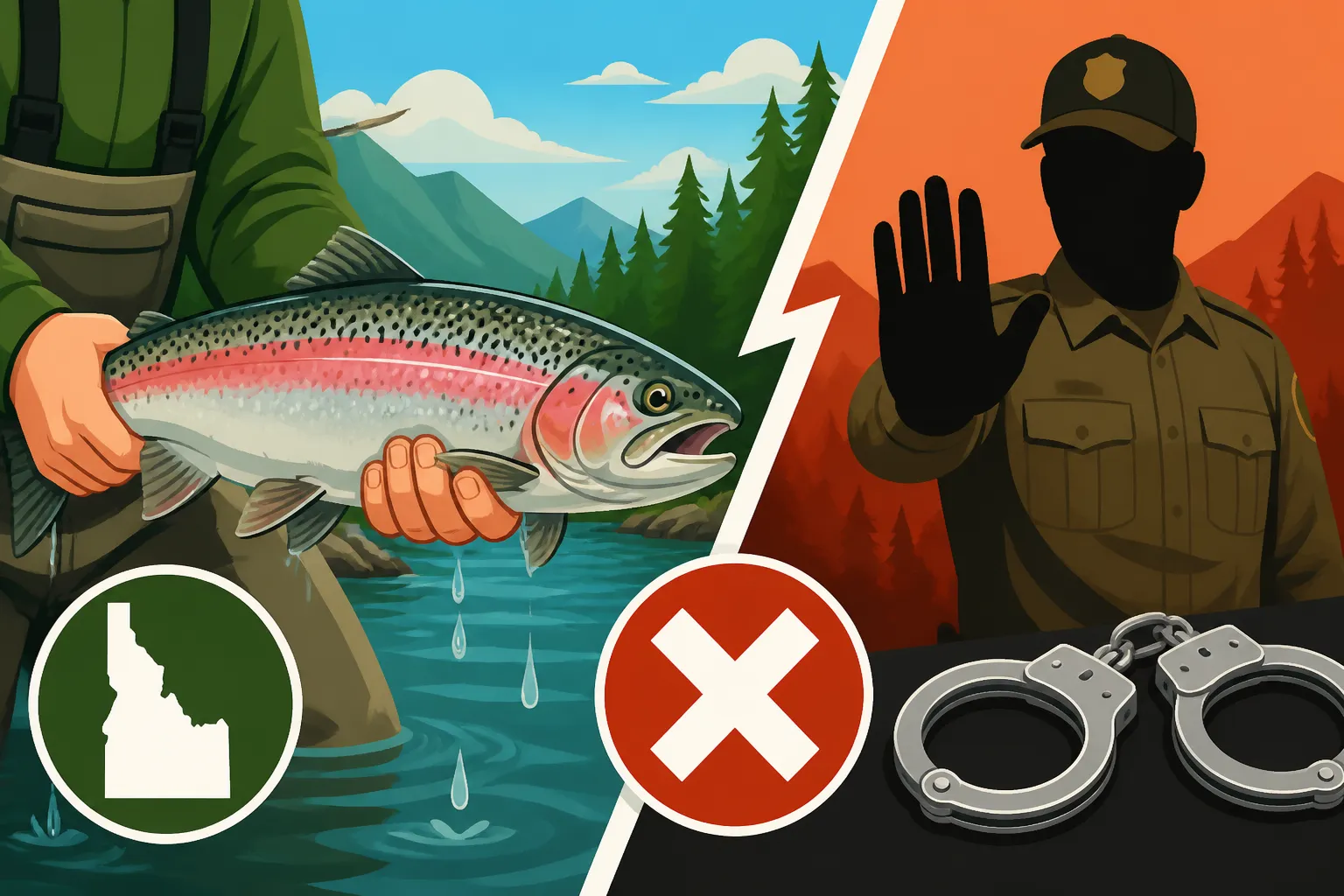
The officer will immediately issue you a citation. This isn't just a slap on the wrist; it's a formal legal document. They'll explain the violation, which is typically classified as illegal possession of a protected species or exceeding a harvest limit, even if you only had one wild fish. Your fishing trip will likely be over then and there. In some cases, especially if there’s suspicion of multiple violations or if you’ve already exceeded your legal limit with hatchery fish, they may even confiscate your gear, though this is less common for a first-time single wild steelhead offense. You'll be given a court date, and the reality of your mistake will start to sink in. This isn't just about a lost fish; it's about a tarnished record and a significant legal process ahead.
Loss of Fishing Privileges
Beyond the immediate citation, one of the most impactful consequences for any avid angler is the potential loss of your fishing privileges. Idaho Fish and Game takes these violations seriously, and one of their primary tools for ensuring compliance is through license revocation or suspension. A conviction for illegally possessing a wild steelhead will almost certainly lead to your Idaho fishing license being suspended for a period, which could range from a few months to several years, depending on the severity and whether it's a repeat offense.
This isn't just for Idaho, either. Many states have reciprocal agreements through a program called the Interstate Wildlife Violator Compact. This means that a suspension of your fishing privileges in Idaho could result in the suspension of your fishing and hunting licenses in many other member states. So, if you live in Washington, Oregon, Montana, or almost any other state that's part of the compact, your Idaho violation could mean you can't fish or hunt back home either. The joy of fishing across the West could be taken away, all because of one wild fish. It's a stark reminder that the consequences extend far beyond Idaho's borders. Before you even head out, make sure you understand all the ins and outs of your Idaho Fishing License Guide.
Legal Ramifications and Penalties
The journey after receiving a citation for keeping a wild steelhead often involves the legal system, and it can be a drawn-out and expensive process. This isn't just about paying a quick fine; it involves court appearances and potentially much more.
Fines and Court Appearances
When you're issued a citation for illegally possessing a wild steelhead, you'll be given a mandatory court date. This means you can't just mail in a check and hope it goes away. You'll have to appear before a judge, often in a county near where the infraction occurred. This alone can be a significant burden, requiring you to take time off work, travel, and potentially hire legal representation.
The fines associated with such a violation can be substantial. For a first offense, you might be looking at fines ranging from several hundred to over a thousand dollars, plus court fees and surcharges. These fines are designed to be a deterrent, reflecting the serious nature of poaching a protected species. For example, similar violations in the Pacific Northwest have seen fines in the range of $500-$1,500, not including restitution for the fish itself, which can add another hefty sum. This monetary penalty is in addition to any license suspension. It’s a clear message that Idaho prioritizes the protection of its wild fish, and illegal harvest comes with a steep price tag. Having a good understanding of all the Idaho Fishing License Cost Guide sections helps ensure you’re always compliant.
Potential Jail Time or Probation
While not typical for a single, first-time offense of keeping a wild steelhead, it is absolutely within the realm of possibility for more serious cases to involve jail time or probation. Factors that can elevate the penalty include:
- Repeat Offenses: If you have a history of wildlife violations, especially similar ones, the courts will be far less lenient. Each subsequent offense will likely carry escalating penalties, including longer license suspensions, higher fines, and a greater chance of incarceration.
- Multiple Fish: Keeping more than one wild steelhead significantly increases the severity of the charge. This moves beyond a simple mistake and suggests a deliberate disregard for regulations.
- Commercial Intent: If there's any evidence that you intended to sell the wild steelhead, the charges become felonies, with much stiffer penalties, including significant jail time and massive fines.
- Resisting Arrest or Obstruction: Any attempt to evade an officer, hide fish, or provide false information will immediately escalate the charges and increase the likelihood of jail time.
In such heightened scenarios, judges have the discretion to impose short jail sentences, typically ranging from a few days to several months, or to place offenders on probation. Probation involves strict conditions, like regular check-ins, community service, and maintaining a clean record, with any violation potentially leading to immediate incarceration. It’s a very real and sobering aspect of wildlife law enforcement, designed to protect Idaho's natural resources and deter those who would exploit them.
Enhanced Penalties for Specific Circumstances
Beyond the standard fines and potential for license loss, certain circumstances can trigger enhanced penalties, turning an already bad situation into a truly disastrous one. Wildlife violations are often not viewed in isolation, and the context surrounding the offense can drastically change the outcome.
Consider situations where the illegal taking of a wild steelhead is combined with other infractions. For instance, if you're caught keeping a wild steelhead and you also happen to be fishing without a valid license, or perhaps you didn't have the required Idaho Salmon and Steelhead Permit for that particular river. These additional violations stack up, leading to multiple charges and significantly higher cumulative fines. It demonstrates a broader disregard for the regulations, which judges and prosecutors will take into account.
Another aggravating factor could be the location. If the violation occurs in a particularly sensitive area, such as a designated wild and scenic river or a stretch known for critical spawning habitat, the courts might view it more severely due to the heightened environmental impact. Likewise, if the officer observes blatant waste of the fish, or if the method of taking was illegal (e.g., snagging, using prohibited bait), these details contribute to a harsher sentencing. The Idaho legal system is designed to protect its wildlife vigorously, and these enhanced penalties underscore that commitment, ensuring that those who deliberately or repeatedly violate the rules face serious repercussions.
Long-Term Impact on Anglers and Conservation
The ramifications of illegally keeping a wild steelhead stretch far beyond the immediate legal and financial penalties. There are profound long-term impacts, both on your personal standing as an angler and on the broader conservation efforts that benefit all of us.
Reputation and Ethical Angling
Being cited for a wildlife violation, especially one involving a protected species like wild steelhead, can carry a significant social cost within the angling community. Idaho is home to a passionate and tight-knit community of anglers, many of whom are deeply committed to conservation and ethical practices. News of such violations can spread quickly, particularly among those who frequent the same rivers and fishing spots.
Your reputation among fellow anglers could be seriously damaged. You might find yourself ostracized or viewed with suspicion. Ethical angling is about more than just following the letter of the law; it's about respecting the resource, practicing good sportsmanship, and contributing to the sustainability of the sport. A violation can indicate a lack of these values, leading to a loss of trust and respect from your peers. For many, the joy of fishing is deeply intertwined with the camaraderie and shared passion for the outdoors. Losing that standing can be just as painful as any fine or license suspension, leaving you feeling isolated in a community you once cherished. Many anglers choose to carry a copy of the Idaho Fishing Regulation Brochure and Proclamation with them, or have it handy on their phone, to ensure they're always up-to-date and avoid any accidental missteps.
The Broader Conservation Picture
Every single wild steelhead that is illegally removed from Idaho’s rivers represents a direct hit to the delicate balance of its ecosystem and the strenuous efforts dedicated to species recovery. These aren't just fish; they're vital genetic links in a chain that stretches back millennia. Wild steelhead contribute to the natural spawning process, passing on genes that are perfectly adapted to their specific river systems – genes that hatchery fish, by their very nature, often lack.
When wild fish are removed illegally, it diminishes the spawning stock, reducing the number of eggs laid and the genetic diversity of future generations. This weakens the population's ability to withstand environmental changes, disease, and other pressures. Furthermore, it undermines the considerable investment of time, money, and scientific effort put forth by organizations like Idaho Fish and Game, the U.S. Fish and Wildlife Service, and numerous non-profit conservation groups. These groups work tirelessly on habitat restoration, dam removal efforts, and responsible management to ensure these iconic fish thrive. Your one illegal act, while seemingly small, directly counteracts these collective efforts, making the uphill battle for conservation even steeper for everyone involved. It's a reminder that we all share responsibility in preserving Idaho’s incredible natural heritage.
Understanding Idaho Fishing Violation Penalties
To give you a clearer picture of the types of penalties you might face for various fishing violations in Idaho, here's a general overview. Keep in mind that actual fines and penalties can vary based on the specific circumstances, the judge's discretion, and whether it's a first or repeat offense.
| Violation Category | Example Offense | Typical First Offense Fine (Estimated) | License Suspension (Estimated) | Other Potential Penalties |
|---|---|---|---|---|
| Protected Species Violation | Keeping a wild steelhead, bull trout, or sturgeon | $500 – $1,500 + restitution | 1-3 years | Court appearance, community service, potential jail time for repeat offenses |
| License/Permit Violation | Fishing without an Idaho Fishing License Guide, no salmon/steelhead permit | $150 – $500 | 6 months – 1 year | Court appearance, purchase of required license/permit |
| Exceeding Bag Limit | Keeping more fish than allowed (e.g., Idaho Trout Limits by Water) | $200 – $750 per over-limit fish | 6 months – 2 years | Confiscation of illegally taken fish |
| Prohibited Methods | Snagging, using illegal bait, more than allowed rods | $250 – $1,000 | 6 months – 1 year | Confiscation of gear |
| Boating/Access Violations | Illegal launch, littering, reckless boat operation | $100 – $500 | N/A (Boating privileges may be affected) | Court appearance, cleanup orders |
Note: These are estimates and actual penalties can vary widely. Restitution refers to additional costs assessed for the value of the illegally harvested fish.
Important Note on Regulations
Fishing regulations in Idaho are dynamic and can change. While this guide provides a comprehensive overview, it is your responsibility as an angler to always consult the most current official Idaho Fishing Seasons and Rules brochure, published by the Idaho Department of Fish and Game, before heading out. This brochure is updated annually and contains all the specific rules, seasons, bag limits, and special regulations for all waters in Idaho. You can often pick up a physical copy at any Idaho Fish and Game office or most sporting goods stores, or download the latest version directly from their website. Staying informed is the best way to ensure a legal and enjoyable fishing experience.
Disclaimer
The information provided in this article is for general informational purposes only and does not constitute legal advice. While we strive to provide accurate and up-to-date information, fishing regulations are subject to change. Always consult the official Idaho Fish and Game regulations and, if necessary, seek legal counsel for specific situations.