How to Tell a Hatchery Steelhead from a Wild One in Idaho
One of the trickiest, and most important, aspects of steelhead fishing in Idaho is knowing the difference between a hatchery-reared fish and a wild one. This isn't just a matter of curiosity; misidentifying a steelhead can lead to serious legal trouble and, more importantly, can harm crucial conservation efforts for these magnificent wild fish. This guide will walk you through the tell-tale signs, ensuring you can confidently identify your catch and comply with Idaho's vital fishing regulations.
Why Identifying Steelhead is Crucial in Idaho
For anglers who love the thrill of catching steelhead in Idaho, understanding the regulations isn't just a recommendation—it's a requirement. The rules surrounding steelhead are among the most stringent, primarily because wild steelhead populations are a protected resource.
Regulatory Compliance and Conservation
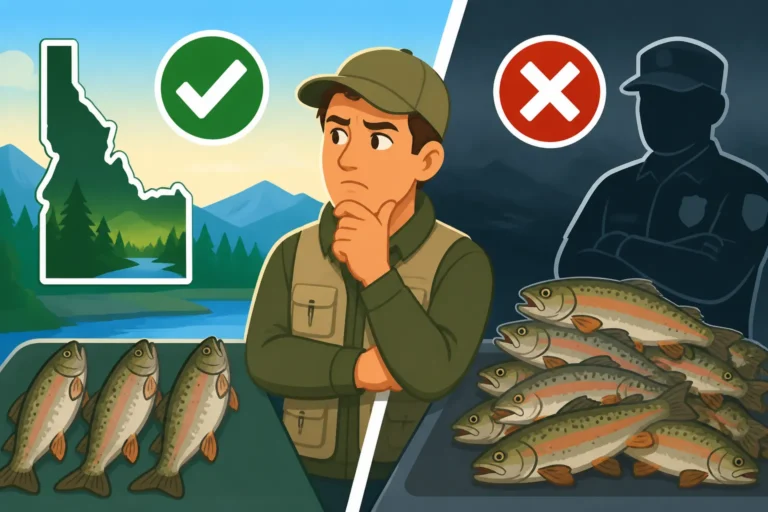
Idaho Fish and Game has very specific rules that differentiate between hatchery and wild steelhead. Simply put, in most waters, you can keep a hatchery steelhead, but wild steelhead must be released immediately and unharmed. This distinction is at the heart of the state's conservation strategy for these anadromous fish, which migrate from the ocean to spawn in Idaho's rivers. If you accidentally keep a wild steelhead, even unknowingly, the penalties can be severe, including hefty fines and even suspension of fishing privileges. It's a heavy burden to place on an angler in the heat of the moment, but it's absolutely necessary for the species' survival. The goal is to allow wild fish to return to their spawning grounds, ensuring future generations of steelhead. These efforts are part of broader Idaho Fishing Regulations Explained designed to protect native species and maintain healthy fisheries.
Imagine you're out on the Clearwater River, the sun is shining, and you hook into a powerful steelhead that puts up an incredible fight. You land it, and now comes the moment of truth. Is it a hatchery fish you can take home for dinner, or a wild one that needs to be gently released? The wrong decision, even an honest mistake, can have significant repercussions. Understanding these rules is a sign of respect for the resource and the hard work that goes into managing it.
Understanding Adipose Fin Clips
The cornerstone of steelhead identification in Idaho, and across much of the Pacific Northwest, is the adipose fin clip. This isn't some arbitrary marking; it's a deliberate, standardized method used by hatcheries to mark fish destined for harvest. The adipose fin is a small, fleshy fin located on the fish's back between the dorsal fin and the tail fin. Unlike other fins, it has no rays or spines. When steelhead are raised in a hatchery, this fin is clipped off, typically when the fish are very small.
The practice of fin clipping has been in place for decades, serving as a clear visual identifier. Its purpose is twofold: first, it allows anglers to easily distinguish between hatchery-reared fish and wild fish in the field. Second, it helps fisheries managers assess the survival rates of hatchery fish and monitor the impact of fishing pressure on wild populations. This distinction is so important that special permits like the Idaho Salmon and Steelhead Permit are required for anglers pursuing these species, underscoring the management effort. Without this simple clip, distinguishing between the two would be incredibly difficult, making effective conservation and harvest management nearly impossible.
The Primary Indicator: The Adipose Fin
When you're reeling in a steelhead, your eyes should immediately go to that small, fatty fin. This is the single most reliable way to tell if you've got a hatchery or wild fish on your line.
What to Look For: A Clean Clip vs. Natural Deformities
A hatchery steelhead will have a cleanly clipped adipose fin. This means the fin is entirely absent, and in its place, you'll see a smooth, healed scar or simply an empty space. It won't look torn or tattered; it will be a deliberate, almost surgical removal. The area where the fin once was should be completely smooth, blending in with the fish's natural contours. This is the definitive sign that the fish originated from a hatchery. Over time, the area typically heals quite well, leaving no doubt that the fin was removed by human intervention.
Now, here's where it gets tricky and anglers sometimes get confused: natural damage. Wild fish, living in a natural environment, can sustain injuries. They might get into fights, rub against rocks, or encounter predators, all of which can result in a damaged or deformed adipose fin. However, this natural damage will almost always look different from a clean clip. A naturally damaged fin might be torn, jagged, partially missing, or have scar tissue that makes it appear shriveled or deformed. It won't have that smooth, intentional absence of the entire fin. It's crucial to look closely. Is there any remnant of a fin, no matter how small or misshapen? If so, it's likely a wild fish. If it's a completely smooth, empty space where the fin should be, then you've got yourself a hatchery fish.
Other Subtle Clues and Secondary Indicators
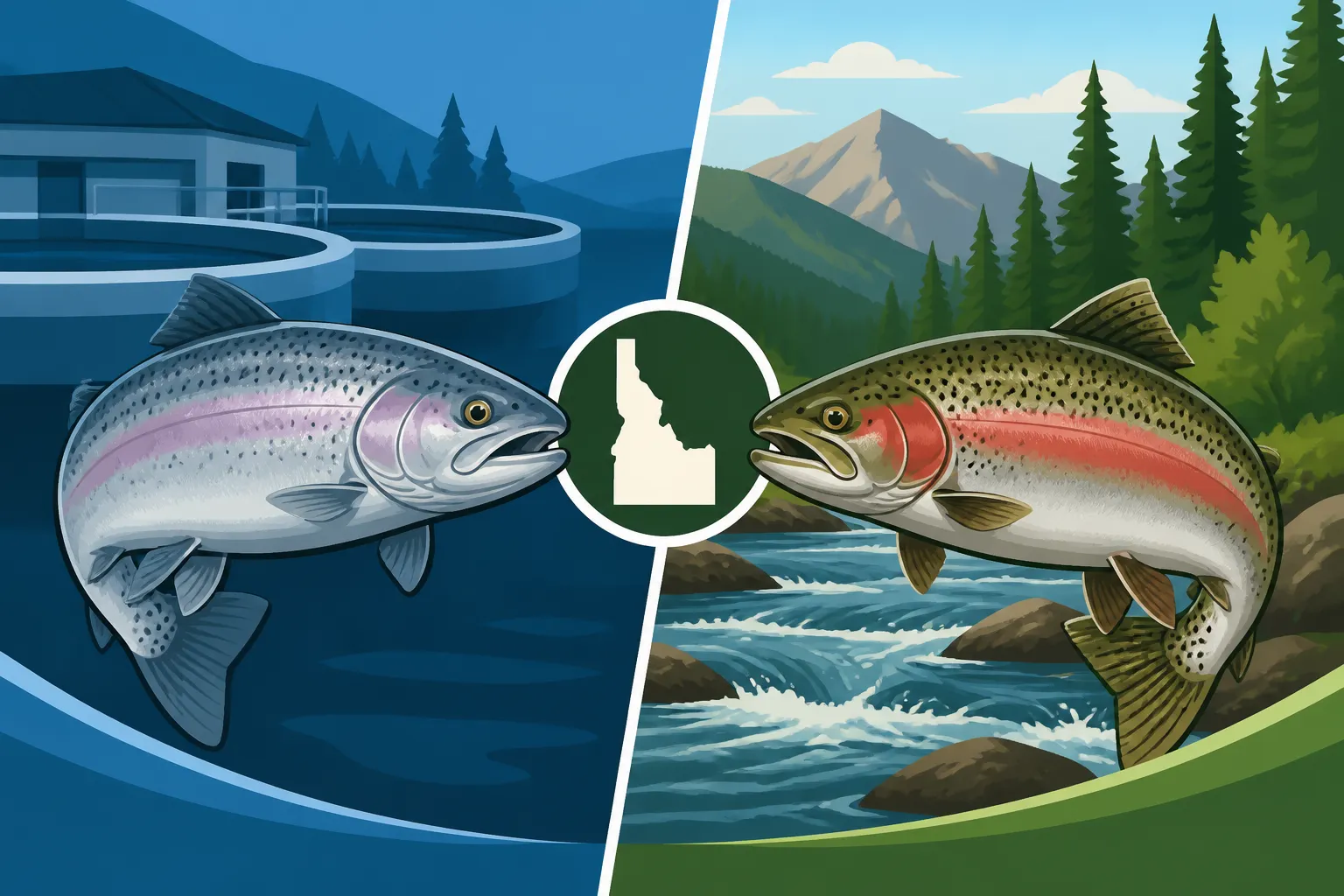
While the adipose fin is the primary indicator, sometimes, especially with fish that have been in the river for a while, it can be helpful to look for secondary characteristics. These aren't foolproof on their own but can offer supporting evidence. Wild steelhead often tend to be more slender, powerful, and typically exhibit more vibrant, distinct coloration and spotting patterns compared to their hatchery counterparts. Their time spent in the wild, navigating currents and foraging naturally, often results in a more athletic physique.
Beyond body shape, examine the other fins. Wild steelhead often have perfect, unblemished fins—dorsal, pectoral, pelvic, and caudal (tail) fins—with sharp, defined edges. Hatchery fish, on the other hand, sometimes show signs of wear and tear from their time in crowded hatchery raceways. You might see slightly frayed fins, stunted fins, or even some minor deformities on their other fins. While not a definitive marker like the adipose clip, these subtle differences can reinforce your identification. Even the snout and jaw can sometimes offer clues; hatchery fish, due to their artificial environment and diet, occasionally have blunter or slightly deformed snouts. Again, these are supporting details, not the main event, but they can definitely help if you're on the fence. For more detailed visual examples, checking out an Idaho Steelhead Identification Guide can be incredibly helpful.
| Feature | Hatchery Steelhead | Wild Steelhead |
|---|---|---|
| Adipose Fin | Missing entirely (cleanly clipped) | Present (even if small, torn, or deformed) |
| Body Shape | Often thicker, sometimes less streamlined | Generally leaner, more muscular, streamlined |
| Coloration | Can be duller, less vibrant, sometimes more silver | Brighter, more distinct colors, pronounced spots |
| Other Fins | May show wear, fraying, or slight deformities | Typically perfect, sharp-edged, unblemished |
| Snout/Jaw | Sometimes slightly blunter or less defined | Sharper, more pointed, natural profile |
| Overall Vigor | Still strong, but sometimes less 'wild' fight | Extremely strong, powerful, and agile fight |
Practical Tips for On-the-Water Identification
Identifying a steelhead correctly can feel like a high-pressure situation, especially when you know the consequences of a mistake. But with a few practical tips and a commitment to conservation, you can make the right call every time.
Best Practices for Quick and Accurate ID
When you land a steelhead, the clock starts ticking. The goal is to identify it quickly and, if it's a wild fish, release it with minimal stress. First and foremost, always carry a pair of fish-friendly forceps or pliers and a net with rubber mesh, which is much gentler on a fish's slime coat and fins than traditional nylon nets. When you bring the fish close, try to keep it in the water as much as possible. If you must remove it, do so quickly and gently. Use wet hands to support its belly and cradle its body. Your first glance should be directed straight to the adipose fin area. Is it there, or is it completely absent and smooth?
If there's any doubt, any tiny shred of fin tissue, or any ambiguity, always, always err on the side of caution and assume it's a wild fish. It’s better to release a hatchery fish mistakenly than to keep a wild one illegally. Good lighting is also critical; sometimes, shadows or glare can make identification difficult. Adjust your position, or gently turn the fish to get a clear view. Many experienced anglers wear polarized sunglasses, which help cut glare off the water and make it easier to see submerged features and fish details. You can find excellent polarized sunglasses and other essential gear on platforms like Amazon, making it easy to prepare for your next trip. Remember, the fish's well-being is paramount.
What to Do If You Catch a Wild Steelhead
If you've identified your catch as a wild steelhead, your next actions are vital. The law requires immediate and careful release. This means you should not take the fish out of the water any more than necessary. If it's in a rubber net, ideally, you can check the fin and then simply submerge the net and allow the fish to swim free. Avoid handling the fish excessively, especially don't squeeze it or put your fingers in its gills. The slime coat on a fish is its first line of defense against disease, and handling can remove it.
If you need to unhook it, do so while the fish is still in the water or quickly cradle it with wet hands. Use your forceps to remove the hook promptly. If the fish is deeply hooked, which is rare with steelhead but can happen, cut the line as close to the hook as possible rather than trying to wrench it out, which can cause irreparable damage. Allow the fish to recover in the water, supporting it gently until it's strong enough to swim away on its own. Often, the fish just needs a moment to regain its bearings before it kicks off with a powerful tail beat. Learning How to Release a Sturgeon Safely in Idaho provides similar principles for careful handling of large, sensitive fish. Practicing these techniques ensures that the wild steelhead you catch can continue its journey upstream to spawn, contributing to the health of Idaho's fisheries.
Common Misconceptions and Challenges
Even with the best intentions and knowledge, on-the-water identification can present a few hurdles. It's natural to have questions, especially when conditions aren't ideal or you encounter something unexpected.
The "Almost Clipped" Fin Syndrome
One of the most common sources of confusion for anglers is what I like to call the "almost clipped" fin syndrome. This occurs when a wild steelhead has an adipose fin that is naturally very small, oddly shaped, or has been partially damaged or worn down by life in the river. You might look at it and think, "Is that a partial clip? Did it grow back?" This is where the definitive rule comes into play: if any part of the adipose fin is present, no matter how tiny or deformed, consider it a wild fish. A hatchery clip is a complete absence, a smooth void.
Think of it this way: imagine someone cut off a piece of toast. It's either completely missing that piece with a clean edge, or it's still there, maybe crumbled or torn. There's no in-between when it comes to a hatchery clip. If you see any tissue that looks like it could possibly be a fin remnant, you must treat that fish as wild. It's an important distinction because the survival of wild populations depends on anglers making the conservative choice. Trying to discern between a "naturally small" fin and a "partially grown back" fin is a slippery slope. When in doubt, let it swim. For more information on why this distinction is so vital, read up on Why Wild Steelhead Must Be Released in Idaho.
Learning from Experienced Anglers and Resources
No matter how many articles you read or videos you watch, there's no substitute for real-world experience. If you're new to steelhead fishing in Idaho, or even if you're just looking to sharpen your identification skills, consider spending some time with an experienced angler or, even better, booking a trip with one of the many knowledgeable Idaho Steelhead Fishing Guides. They encounter hundreds, if not thousands, of steelhead each season and can point out the subtle nuances that often go unnoticed by less experienced eyes. They can also provide real-time feedback on your identification skills, ensuring you're confident in your decisions.
Beyond personal mentorship, Idaho Fish and Game provides invaluable resources. The official Idaho Fishing Regulation Brochure and Proclamation is your go-to source for all rules and regulations, including detailed descriptions and often illustrations of hatchery versus wild fish. Always carry a current copy, whether a physical printout or a digital version on your phone, to refer to when uncertainty strikes. You can also find numerous field guides and instructional books on fish identification, many available through retailers like Amazon, that can further enhance your knowledge. The more you educate yourself and spend time on the water, the more natural and confident your steelhead identification will become. Understanding What a Clipped Adipose Fin Means on a Steelhead is foundational, and these resources will help reinforce that knowledge.
Disclaimer
Please remember that fishing regulations can change. Always consult the most current Idaho Fish and Game regulations brochure before heading out on the water. This guide is for informational purposes only and should not replace official state regulations.