Where Bull Trout Are Found in Idaho
It's no secret that Idaho is a fishing paradise, but some of its inhabitants hold a special kind of mystique. Among these, the bull trout stands out as one of the most enigmatic and coveted catches for serious anglers. They’re a true wild fish, demanding the coldest, cleanest waters, and finding them isn't always straightforward. This guide will take a deep dive into precisely where these magnificent, protected fish make their homes in Idaho, helping you understand their habitat needs and the specific regions where you might encounter them, always with respect for their conservation status.
The Ideal Bull Trout Habitat: Cold, Clean, and Connected
Before we talk about specific rivers and lakes, it’s essential to understand what a bull trout needs to survive and thrive. These fish aren't like your everyday rainbow trout that can tolerate a wider range of conditions. Bull trout are incredibly particular, and their habitat requirements dictate exactly where you'll find them in the vast wilderness of Idaho.
Temperature and Water Quality Demands
Bull trout are the epitome of a cold-water species. They absolutely require water temperatures that consistently stay below 55°F (13°C), and ideally even colder, especially during critical life stages. If the water warms up much beyond that, they become stressed, stop feeding, and can even die. This is why you rarely find them in warmer, slower rivers or lowland lakes. They seek out pristine, oxygen-rich streams and rivers, often fed by snowmelt or cold groundwater springs.
Imagine a scorching Idaho summer day; while other fish might be sluggish, bull trout are tucked away in deep, cold pools, under shady banks, or congregating around cold water inputs. They cannot tolerate siltation, pollution, or anything that degrades water quality, as their sensitive gills and prey base depend on crystal-clear conditions. This intrinsic need for cold, pure water is the first and most critical filter for identifying potential bull trout habitat.
Spawning and Rearing Requirements
Their needs become even more stringent when it comes to reproduction. Bull trout don't just spawn anywhere; they require very specific conditions. They migrate upstream, often into much smaller, high-gradient tributaries, seeking out areas with loose, clean gravel beds. These gravels need to be free of fine sediment, which can suffocate their eggs. Crucially, they also need consistent groundwater upwelling through these gravels, which provides a stable temperature and oxygen supply for their developing embryos.
The young bull trout, called "fry" and "juveniles," spend their first few years in these small, undisturbed headwater streams. These rearing habitats are often characterized by abundant overhead cover from vegetation, woody debris, and undercut banks, providing protection from predators and strong currents. If a stream lacks these pristine spawning and rearing conditions, it simply won't sustain a bull trout population, no matter how cold the main river might be. This makes these fragile, often remote, tributary streams vital to their continued existence.
Migratory Patterns and Connected Waters
What makes bull trout unique is their highly migratory nature. Unlike some trout that live their entire lives in one stream, many bull trout undertake extensive migrations. There are generally two forms: "fluvial" bull trout, which migrate between larger rivers and smaller spawning tributaries, and "adfluvial" bull trout, which live in large lakes and migrate into rivers to spawn.
These migrations are epic journeys, sometimes covering hundreds of miles. They move from their foraging grounds in large rivers or lakes to their natal (birth) streams to spawn, and then return. This means that even if you find them in a large body of water like Priest Lake Fishing for Trophy Lake Trout or Lake Pend Oreille, they depend entirely on the health and accessibility of the tributary streams that flow into those lakes. Dams, culverts, and other barriers that block these migratory pathways are devastating to bull trout populations, highlighting why connected, unobstructed river systems are so vital for their survival.
Key Regions and River Systems in Idaho Known for Bull Trout
Idaho is a big state, and while bull trout aren't everywhere, they are certainly present in some of its most iconic and wild landscapes. Knowing which major river drainages and regions typically hold these fish is your first step. Remember, their presence is always tied to the cold, clean, and connected habitat described above.
North Idaho's Panhandle Waters
The Panhandle region of Idaho, with its vast national forests and rugged mountains, is a stronghold for bull trout. This area boasts some of the most pristine cold-water ecosystems in the state.
- Clearwater River System: The North and Middle Forks of the Clearwater River, along with many of their tributaries (like the Kelly Creek, Crooked River, and Little North Fork), are renowned for their bull trout populations. These rivers flow through extensive wilderness, offering that critical cold, undisturbed habitat. Anglers often target these waters for other species and might encounter bull trout. You'll find these areas often have specific rules in the Idaho Fishing Regulation Brochure and Proclamation regarding gear and handling.
- St. Joe River: Known as "The Joe," this magnificent river is a gem for native fish, including bull trout. The upper stretches and its high-elevation tributaries provide excellent spawning and rearing habitat. This is quintessential Westslope Cutthroat trout country, but bull trout are an important part of the ecosystem here, lurking in the deeper pools.
- Kootenai River System: Flowing through the very northern tip of Idaho, the Kootenai River and its associated drainages, particularly those high in the Purcell and Cabinet Mountains, support bull trout. The large, deep waters of the Kootenai itself can hold them, but it's the tributary streams that are the lifeblood for reproduction.
- Lake Pend Oreille and Priest Lake: These two enormous, deep, cold lakes are home to adfluvial bull trout. While the main lakes provide vast foraging grounds where bull trout can grow to impressive sizes, the fish rely on rivers like the Pack River, Clark Fork River, and various smaller streams flowing into them for their spawning migrations. Fishing these large lakes often involves deep-water trolling, and specialized gear available on platforms like Amazon can be helpful for reaching these depths.
Central Idaho's Salmon River Drainage
Moving south into the heart of Idaho, the vast and rugged Salmon River drainage is another critical area for bull trout. This region is a true wilderness, with much of it falling within protected areas like the Frank Church-River of No Return Wilderness.
- Mainstem Salmon River and Major Forks: The Salmon River itself, especially its middle and upper sections, along with its major forks like the Middle Fork of the Salmon River and the South Fork of the Salmon River, are known for hosting bull trout. These are powerful, free-flowing rivers that offer expansive, cold-water habitat. Bull trout here are often fluvial, moving between the main river and smaller, colder tributaries.
- High-Elevation Tributaries: It's often in the countless smaller, colder streams feeding into the Salmon River system where you'll find the most critical bull trout habitat. Streams like the Yankee Fork, Big Creek, and numerous unnamed creeks provide essential spawning and rearing grounds. Access to many of these areas can be quite challenging, requiring backpacking or pack-horse trips. This remoteness helps protect these fragile populations.
- Sawtooth and White Cloud Mountains: The streams originating in these majestic mountain ranges, particularly those that eventually flow into the Salmon River system, are prime bull trout territory. The Redfish Lake area, while famous for sockeye, also has tributaries that support bull trout populations. The pristine, glacial-fed waters are ideal.
Eastern Idaho's Snake River Tributaries
While the lower Snake River and its immediate tributaries are generally too warm and often too altered for widespread bull trout populations, there are specific, high-elevation tributaries in Eastern Idaho that still harbor these fish.
- South Fork of the Snake River Tributaries: While the South Fork itself is primarily known for its incredible Yellowstone Cutthroat Trout fishery, some of its high-elevation, cold-water tributaries flowing out of the Wyoming Range and Palisades Wilderness Study Area can support bull trout. These are often small, remote streams that maintain the necessary cold temperatures and pristine conditions.
- Tributaries in the Eastern Mountains: Throughout the mountainous regions of eastern Idaho, any truly cold, high-gradient stream that remains undisturbed and flows into a larger, cool river system could potentially hold bull trout. These are typically isolated pockets, often requiring significant exploration to locate.
Understanding Bull Trout Zones and Regulatory Restrictions
It's absolutely vital to understand that where bull trout are found is closely tied to how they are managed. These are not a common game fish you can freely pursue and harvest. In fact, they are a federally protected species, and fishing for them comes with very strict rules.
Protected Status and Conservation Efforts
Bull trout are listed as a "Threatened" species under the Endangered Species Act. This means their populations are at risk, and significant conservation efforts are in place to help them recover. As anglers, this puts a huge responsibility on us. When you're out on the water in Idaho, especially in known bull trout habitat, you need to be constantly aware that you might encounter one. This protected status is why you'll find detailed sections on them in the Idaho Fishing Regulations Explained every year.
Idaho Fish and Game, along with federal agencies, works tirelessly to protect and restore bull trout populations. This includes habitat restoration projects, managing water resources, and, most importantly for anglers, implementing strict fishing regulations designed to prevent harm to the species. Understanding What Idaho's Bull Trout Protections Mean for Anglers is not just a suggestion; it's a legal requirement and an ethical imperative for anyone fishing in these areas.
Catch and Release Only
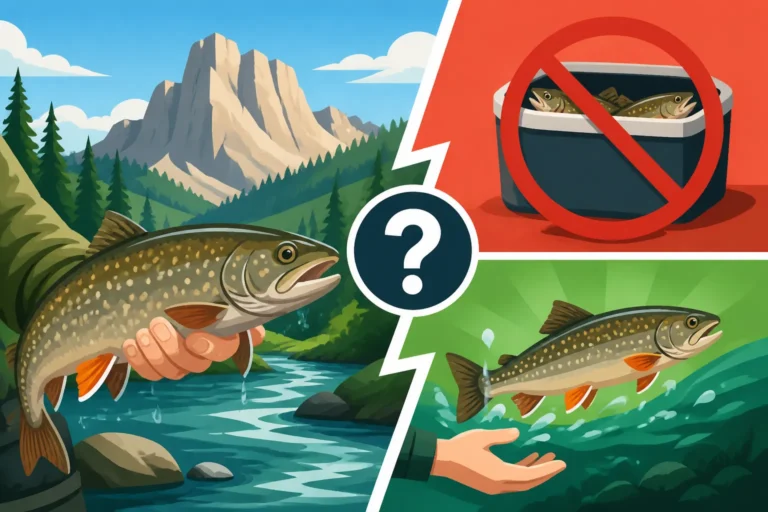
This cannot be stressed enough: all bull trout fishing in Idaho is strictly catch and release. There are no circumstances under which you are permitted to keep a bull trout. If you accidentally catch one, it must be released immediately and unharmed. This is a non-negotiable rule designed to ensure the survival of every individual fish.
Here’s a breakdown of what that means in practice:
| Regulation Aspect | Description | Importance |
|---|---|---|
| Possession | Zero possession. You cannot keep, transport, or harvest a bull trout. | Protects a federally threatened species. |
| Release | Immediately release any bull trout caught, with minimal handling. Do not remove the fish from the water if possible. | Minimizes stress and injury to the fish, increasing survival rates. |
| Barbless Hooks | Often required in areas with bull trout, or highly recommended if not explicitly mandated. | Makes hook removal easier and reduces tissue damage, crucial for catch-and-release success. |
| Identification | Anglers must be able to positively identify a bull trout to differentiate it from other species. | Prevents accidental harvesting of a protected fish. |
If you're unsure about the specifics of Can You Keep a Bull Trout in Idaho?, always check the current year's regulations before heading out. Ignorance of the law is not an excuse, and violations can carry significant penalties.
Avoiding Accidental Catches and Proper Identification
Given their protected status, it's not just about what you do when you intentionally target them; it's also about what happens if you catch one by accident while fishing for other species like rainbow or cutthroat trout. This is especially common because bull trout often inhabit the same waters as other desirable trout species.
Learning How to Identify a Bull Trout is paramount. They have distinct characteristics that differentiate them from other salmonids:
- Spots: Bull trout have light-colored spots (yellow, orange, or salmon-colored) on a darker body (olive, gray, or brown). This is opposite to most other trout (like rainbow or brown trout) which have dark spots on a lighter body.
- Mouth: They have a very large mouth that extends well past the back of the eye, often referred to as a "gator mouth."
- Teeth: Their teeth are noticeably larger and more formidable than those of other trout.
- No Red or Orange Stripe: Unlike rainbow trout or redband trout, bull trout lack a prominent red or orange stripe along their lateral line.
- Adipose Fin: Like all salmonids, they have an adipose fin, but it doesn't help distinguish them from other trout species.
When fishing in known bull trout areas, consider using tactics that minimize harm if you do hook one. This includes using single, barbless hooks, as widely available on Amazon, which makes release much quicker and less damaging. It's an important part of How to Avoid Accidentally Catching Bull Trout. If you do hook a bull trout, handle it as little as possible. Keep it in the water, use wet hands if you must touch it, and remove the hook quickly and gently. A pair of hemostats or long-nosed pliers can be incredibly useful for this task.
Gear and Techniques for Responsibly Pursuing Bull Trout
For those who wish to responsibly pursue bull trout where regulations allow, having the right gear and understanding responsible techniques is crucial. Remember, the goal is always a safe, quick release to protect this vulnerable species.
Specialized Tackle for Cold Water
Fishing for bull trout often means fishing in swift, cold, and sometimes deep waters. They are predatory fish, and when they strike, they do so with force. Therefore, your tackle needs to be up to the task.
- Rods and Reels: You'll want a medium-heavy to heavy action spinning or baitcasting rod, typically 7 to 8 feet long, capable of handling larger lures and heavier fish. For fly fishing, a 6 to 8-weight rod is usually appropriate, especially for casting large streamers. Pairing these with a robust reel spooled with strong monofilament, fluorocarbon, or braided line (10-20 lb test for spin gear, appropriate tippet for fly fishing) is essential. A good quality fishing reel can be found on Amazon.
- Lures and Flies: Bull trout are primarily piscivorous, meaning they eat other fish. Therefore, lures and flies that imitate baitfish are often most effective.
- Spinning/Casting: Spoons (like Johnson Silver Minnow or Dardevle), large spinners (Mepps, Panther Martin), and diving plugs (Rapala, Kwikfish) in natural baitfish colors (silver, blue, black, olive) are popular choices. Larger soft plastic swimbaits rigged on heavy jig heads can also be deadly in deeper pools.
- Fly Fishing: Large streamer patterns are king for bull trout. Think patterns like Sculpzillas, Clouser Minnows, articulated streamers (e.g., Dolly Llama), and large woolly buggers in dark colors (black, olive) or bright, attention-grabbing colors. Fish these with aggressive retrieves to mimic fleeing baitfish.
- Waders and Footwear: Since you'll often be wading in cold, fast-flowing rivers or walking along rocky banks, reliable waders and wading boots with good grip are a must. Staying warm and safe is paramount. Look for durable, breathable waders and sturdy boots, many of which are available through Amazon with quick shipping.
Techniques to Minimize Harm
Successfully catching a bull trout is a privilege, but ensuring its survival after the catch is the true measure of a responsible angler.
- Single, Barbless Hooks: This is the most crucial piece of advice. If your lures come with treble hooks, consider replacing them with single, barbless hooks. You can also crimp down the barbs on existing hooks with pliers. Barbless hooks greatly reduce the time it takes to unhook a fish and minimize tissue damage, especially around the mouth and gills. This is particularly important for a species like bull trout where Why Barbless Hooks Are Required for Idaho Sturgeon also applies and is a good practice for all sensitive species.
- Minimize Fight Time: While exciting, a prolonged fight can exhaust a fish, making it more vulnerable after release. Use appropriately sized tackle to bring the fish in efficiently.
- Keep the Fish Wet: Whenever possible, keep the bull trout in the water. If you need a photo, lift it briefly, but return it to the water immediately. Avoid dragging it onto rocks or dry ground. Their gills are extremely sensitive, and exposure to air, especially in warm conditions, is highly stressful.
- Gentle Handling: If you must handle the fish, use wet hands. Avoid squeezing or putting pressure on its belly or gills. Support its weight horizontally.
- Revive Before Release: In swift currents, hold the fish gently facing upstream, allowing water to flow over its gills until it regains strength and can swim away under its own power. Don't just toss it back; ensure it's strong enough to orient itself and swim away.
Fishing for bull trout in Idaho is an experience that connects you with some of the wildest parts of the state and a truly magnificent native fish. By understanding where they live, respecting their protected status, and practicing responsible catch-and-release techniques, you contribute to their conservation and the health of Idaho's pristine aquatic ecosystems. For more on the calendar of fishing, check out Idaho Fishing Season Dates and Limits.
Disclaimer
This article is for general informational purposes only and does not constitute professional advice. Laws, prices and regulations vary by location and change over time. Consult a qualified professional for guidance on your specific situation.