Fishing Priest Lake for Trophy Lake Trout
There’s something truly magical about the thought of hooking into a giant lake trout, a true freshwater leviathan, especially in a place as stunning as Idaho’s Priest Lake. But let’s be honest, standing on the shore or even piloting a boat on such a vast, deep expanse can feel utterly overwhelming when you’re chasing these elusive, bottom-dwelling giants. This guide is here to cut through the confusion, offering a deep dive into the specific strategies, gear, and local insights you’ll need to increase your chances of landing that trophy Mackinaw you've been dreaming of.
Why Priest Lake is the Premier Destination for Trophy Lake Trout
Priest Lake isn't just any body of water; it's a deep, cold, oligotrophic lake in Idaho's Panhandle, making it an ideal habitat for Salvelinus namaycush, or the lake trout, often locally referred to as Mackinaw. Anglers travel from far and wide, drawn by the lake's reputation for producing not just numerous lake trout, but truly colossal ones.
The Lake's Unique Ecosystem for Giants
What makes Priest Lake such a powerhouse for growing monster Mackinaw? It boils down to a few critical factors that create a near-perfect environment for these apex predators. First, the sheer depth of the lake, plunging over 300 feet in places, provides the cold, oxygen-rich water that lake trout absolutely thrive in, especially during the warmer months when shallower waters become too warm for them. These deep pockets become their sanctuaries, offering stable temperatures and plenty of cover.
Second, Priest Lake boasts an abundant and diverse forage base. While kokanee salmon are a staple in many Idaho lakes, Priest Lake’s Mackinaw also feast on a variety of smaller fish like whitefish and even juvenile Gerrard rainbow trout, providing them with a rich, high-fat diet that fuels rapid growth. This consistent food supply, combined with the ideal habitat, means lake trout here have every opportunity to reach truly astounding sizes, with many fish regularly tipping the scales into the double digits and occasional giants pushing past 20 or even 30 pounds.
Priest Lake's Record-Setting Potential
It’s no exaggeration to say that Priest Lake holds some serious record-breaking potential. The current Idaho state record for lake trout stands at a staggering 57 pounds, 8 ounces, caught right here in Priest Lake in 1968. While that record has stood for decades, the genetics and habitat are still very much present for another monster to emerge. Every season, anglers pull out lake trout that are truly impressive, making every trip a potential date with a fish of a lifetime.
The allure of Priest Lake isn't just about the possibility of a record, though. It's about the consistent opportunity to catch fish that many other waters simply can't produce. Whether you're a seasoned trophy hunter or just hoping to experience the thrill of a big fight, the lake offers unparalleled chances to tangle with truly enormous lake trout.
Understanding Lake Trout Behavior and Seasonal Patterns
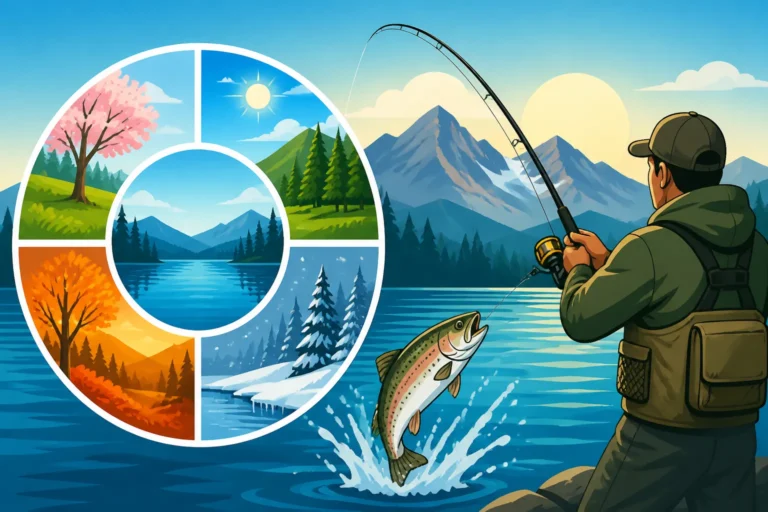
To successfully target trophy lake trout on Priest Lake, you absolutely need to understand their seasonal movements and feeding behaviors. These fish are creatures of habit, largely dictated by water temperature and the availability of their preferred forage. Without this knowledge, you're essentially looking for a needle in a haystack on a very large lake.
Spring Tactics after Ice-Out
Once the ice finally recedes from Priest Lake, usually around April or early May, the lake trout begin to move into shallower waters. The water temperature is still very cold, typically in the low to mid-40s, and the Mackinaw are hungry after a long winter. This is a fantastic time to target them because they're more accessible and often more aggressive.
During this period, focus your efforts on depths ranging from 20 to 60 feet. Look for areas adjacent to steep drop-offs, points, and rocky reefs where they can ambush baitfish. Trolling with spoons, plugs, or even large minnow imitations can be incredibly effective. Consider using planer boards to spread your lines out and cover more water, as the fish can be somewhat scattered. As the water slowly warms into late spring, they might push a bit deeper, but they’ll still be relatively active in the upper water column compared to their summer patterns.
Summer's Deep-Water Game
As the heat of summer arrives and the surface waters of Priest Lake warm significantly, the lake trout retreat to their deep-water sanctuaries. This is when the true deep-water game begins. From June through September, expect to find trophy Mackinaw in depths ranging from 80 feet all the way down to 200+ feet. Locating them becomes a process of using your electronics to find thermoclines, bait balls, and the fish themselves.
Successful summer fishing almost exclusively involves deep-water trolling or vertical jigging. Downriggers are practically mandatory for precise depth control, allowing you to present your lures right in the strike zone. You'll often find schools of fish congregated around deep structure like submerged humps, channels, and the deepest basins of the lake. Pay close attention to any sudden changes in depth or bottom composition displayed on your sonar, as these are prime holding areas for big fish. This is where your ability to read the water column and identify structure truly pays off.
Fall's Feeding Frenzy
Autumn is arguably one of the best times of the year to chase trophy lake trout on Priest Lake. As the air temperatures drop and the lake water begins to cool, the Mackinaw become incredibly active and often move back into shallower depths, albeit not as shallow as spring. This seasonal shift, usually from late September through November, triggers a significant feeding frenzy as they prepare for winter.
During the fall, target depths between 40 and 100 feet. The fish are often spread out but are aggressively pursuing baitfish. Trolling remains highly effective, and you might even find success with large jigging spoons worked vertically over submerged structure. The cooler water means the fish are more robust and put up an even harder fight. Early mornings and late evenings can be particularly productive as the trout move into shallower feeding grounds. For those willing to brave the crisp autumn air, the rewards can be truly spectacular. You can learn more about general "Idaho Fishing Season Dates and Limits" by checking out our comprehensive guide.
Essential Gear and Advanced Techniques for Priest Lake Mackinaw
Chasing trophy lake trout on Priest Lake isn't just about luck; it's about being prepared with the right gear and knowing how to use it effectively. These fish are powerful, and the deep, clear waters require precision and robust tackle.
Deep-Water Trolling Setups
For deep-water trolling, which is the bread and butter for big Mackinaw on Priest Lake, your setup needs to be serious. You'll want sturdy trolling rods, typically 7-9 feet in length, with a medium-heavy to heavy action to handle heavy weights and powerful fish. Pair these with conventional reels capable of holding 250-300 yards of 20-30 lb test monofilament or fluorocarbon, or even better, 50-80 lb braided line with a 20-30 lb fluorocarbon leader. The braid offers superior sensitivity and strength in deep water.
Downriggers are non-negotiable for precise depth control. You'll often be running heavy weights (8-12 lbs) to get your lures down to the fish. Make sure your downriggers are well-maintained and your releases are set appropriately. Lures of choice typically include large spoons (like the well-known Apex lures or Luhr Jensen J-Plugs), large plugs, and sometimes even oversized soft plastics rigged to imitate kokanee or whitefish. Varying your lure colors and sizes until you find what the fish are reacting to is key.
Vertical Jigging Tactics
While trolling covers ground, vertical jigging is an excellent strategy when you've located schools of lake trout concentrated around specific deep-water structure. This technique requires a slightly different approach and can be incredibly exciting when a big Mackinaw slams your jig.
Use a heavy-action jigging rod, typically 6 to 7 feet, paired with a high-quality conventional or heavy-duty spinning reel spooled with 30-60 lb braided line and a heavy fluorocarbon leader (20-40 lb). Large jigging spoons, like Northland Buck-Shot Rattle Spoons or Gibbs Minnow Lures, weighing 1 to 4 ounces are common. The technique involves dropping your jig to the desired depth, then sharply lifting and dropping the rod tip to impart an erratic, wounded baitfish action. Pay close attention to your sonar; if you mark fish, drop your jig right into their zone. Sometimes a subtle lift is all it takes; other times, an aggressive rip will trigger a strike. It’s also important to consider your leader material, as Priest Lake’s clear waters often mean stealth is important.
Reading Your Electronics and Locating Fish
Your fish finder is your absolute best friend on Priest Lake. Without it, you're truly fishing blind. Spend time learning to interpret what you see on the screen. Look for bait balls, which appear as dense clouds or arches, usually indicating the presence of smaller forage fish. Then, look for larger, distinct arches either within or just below these bait balls – these are often your trophy lake trout.
Pay attention to bottom contours. Deep humps, shelves, and areas where the bottom transitions from soft to rocky are prime holding areas. GPS is also crucial for marking successful spots and navigating back to them. If you’re trolling, try to follow contour lines or known breaks. If you're jigging, mark the exact spot where you're seeing fish and try to stay on top of them. Some anglers even use advanced mapping systems that show detailed underwater topography, giving them a significant edge. When trying to pinpoint locations, don't hesitate to check out resources like FishingBooker to see if local guides are sharing insights about specific hotspots or techniques for "Priest Lake's Trophy Lake Trout Fishing Grounds."
Top Fishing Spots and Prime Times on Priest Lake
Priest Lake is a big place, and knowing where and when to drop your lines can make all the difference between a memorable trip and a frustrating one. While lake trout can be found throughout the lake, certain areas consistently produce bigger fish.
Key Hotspots for Monster Mackinaw
While local guides often keep their most secret spots close to the vest, there are several general areas on Priest Lake known for holding trophy lake trout. The deepest basins of the lake, particularly in the northern half, are prime territory, especially during summer. These include areas near the mouth of the Thorofare (which connects to Upper Priest Lake) and towards the middle of the main lake body.
Another consistent producer is the area around Coolin and the southern end of the main lake, particularly around deep points and the drop-offs into the main basin. Submerged structure, like humps and rock piles that rise from the deep floor, are magnets for Mackinaw. For example, some of the deeper water around Eightmile Island and Indian Creek can be very productive. Remember, lake trout are often oriented to structure, so finding these underwater features on your sonar is paramount.
Daily Timing and Weather Influence
Just like any fishing, timing can be everything. While lake trout are often deep, they can be more active during certain times of the day. Generally, early mornings and late evenings tend to be the most productive periods, especially when the fish move slightly shallower to feed. During midday, particularly in summer, they often hug the bottom in the deepest, coolest water.
Weather also plays a role. Overcast days can sometimes extend the productive bite window, as the reduced light penetration makes fish feel more comfortable moving around. Changes in barometric pressure, particularly a steady pressure or a falling barometer before a storm, can sometimes trigger a feeding spree. However, very stormy conditions can make fishing unsafe and less effective. Always prioritize safety on such a large body of water.
Utilizing Fishing Charters and Guides
If you're new to Priest Lake or serious about maximizing your chances for a trophy, consider booking a trip with a local fishing guide. Guides possess invaluable local knowledge about current patterns, hot spots, and effective techniques. They also have all the specialized gear, including top-notch electronics and downriggers. A guide can significantly shorten your learning curve and increase your odds of success.
You can find reputable guides through local tackle shops, marinas, or by checking online platforms. Services like FishingBooker can connect you with experienced, licensed guides who specialize in trophy lake trout on Priest Lake. A professional guide can teach you the nuances of deep-water fishing and even help you understand how to approach the specific water conditions you encounter on any given day. To learn more about selecting a guide, you can review our guide on how to book a fishing guide in Idaho.
Regulations and Conservation on Priest Lake
Fishing for trophy lake trout on Priest Lake is a privilege that comes with responsibility. Understanding and adhering to Idaho’s fishing regulations is crucial not only for avoiding fines but, more importantly, for ensuring the long-term health of this incredible fishery.
Understanding Idaho's Fishing Regulations
Idaho has specific regulations for different species and different waters. For Priest Lake lake trout, these regulations dictate bag limits, possession limits, and sometimes even size restrictions. For instance, the general rule on Priest Lake allows for a generous bag limit of 6 lake trout, with no size limits on five of those fish, but only one over 20 inches. This is a special regulation designed to promote the harvest of smaller lake trout, which helps reduce competition and allows more food for the potential trophy fish to grow larger. Always consult the current Idaho Fishing Regulation Brochure and Proclamation before heading out, as rules can change annually. You can find out more about these specifics in our detailed guide on "Idaho Fishing Regulations Explained".
It's also essential to distinguish between a "bag limit" (how many you can catch and keep in a single day) and a "possession limit" (how many you can have in your possession, including at your home, at any given time). Misunderstanding these can lead to serious penalties. An Idaho Fishing License Guide is also a must-read for all anglers, ensuring you have the proper licenses and endorsements before you even wet a line.
Catch and Release Best Practices for Big Fish
While many anglers keep their lake trout for the table (they are delicious!), for those truly enormous, decades-old trophy fish, catch and release is highly encouraged to maintain the genetic stock of potential giants. Releasing a large fish properly is just as important as catching it.
When you land a large lake trout, try to minimize its time out of the water. Handle the fish gently with wet hands, supporting its belly. If possible, remove the hook while the fish is still in the water, using long-nosed pliers or a dehooking tool. If you must bring it aboard for a quick photo, do so quickly and keep it horizontal. Avoid placing fingers in its gills or lifting it by the jaw alone, as this can damage its internal organs or jaw structure. Allow the fish to recover alongside the boat, holding it gently upright until it swims away under its own power. These big fish are fighters, and they've earned their chance to spawn again and potentially get even bigger.
Enjoying the Broader Priest Lake Experience
Fishing for trophy lake trout is undeniably a highlight, but Priest Lake offers so much more. From its stunning natural beauty to a range of recreational activities, it’s a destination that invites you to linger and explore.
Beyond the Boat: Exploring Priest Lake
When you're not on the water chasing Mackinaw, take the time to appreciate the pristine surroundings. Priest Lake is nestled among the Selkirk Mountains, offering breathtaking views and abundant wildlife. Hiking trails abound, from leisurely strolls along the shore to more challenging routes into the surrounding forests. The Priest Lake State Park offers camping facilities, picnic areas, and swimming beaches, perfect for family enjoyment.
For those who enjoy paddling, kayaking and paddleboarding on the calmer days are fantastic ways to experience the lake's serene beauty. The Thorofare, a scenic waterway connecting Priest Lake to Upper Priest Lake, is a popular destination for canoeing and wildlife viewing, offering a glimpse into a truly wild and undeveloped part of Idaho.
Accommodations and Amenities
Priest Lake has a range of options for accommodations, from rustic cabins and campsites to luxury resorts. The towns of Coolin and Nordman offer basic services, including gas, groceries, and a few dining options. Larger towns like Sandpoint, about an hour's drive south, provide more extensive amenities.
When planning your trip, consider what kind of experience you're looking for. Many visitors opt for vacation rentals, providing a home-away-from-home feel, while others prefer the convenience of a lodge or resort that might offer boat rentals, guided tours, or on-site dining. Websites like FishingBooker often list local accommodations and can help you plan your entire trip, including finding a place to stay that's close to your fishing launch points.
Conclusion: The Lure of Priest Lake
Fishing Priest Lake for trophy lake trout isn't just a pursuit; it's an adventure. It’s about more than just the fish; it’s about the crisp mountain air, the stunning scenery, and the quiet determination that comes with hunting one of freshwater’s most elusive giants. With the right knowledge, proper gear, a bit of patience, and a healthy respect for the fishery, your next trip to Priest Lake could very well be the one where you finally feel the unmistakable tug of that trophy Mackinaw, a moment that will stay with you long after you’ve released it back to the depths.
Seasonal Lake Trout Depth Guide for Priest Lake
| Season | Typical Depth Range |
|---|---|
| Early Spring (Ice-Out – Mid-May) | 20-60 feet (Actively feeding, may be shallower near structure) |
| Late Spring (Late May – Early June) | 40-80 feet (Beginning to transition deeper as surface warms) |
| Summer (June – September) | 80-200+ feet (Deepest waters, congregating around thermocline and deep structure, often in 48-52°F range) |
| Early Fall (Late September – October) | 40-100 feet (Moving shallower as water cools, aggressive feeding, often suspended over deeper water) |
| Late Fall (November – Ice-On) | 60-120 feet (Consolidating in slightly deeper water before winter, still active but less scattered than early fall) |
| Winter (Ice Fishing) | Varies, often 30-100 feet (Can be found shallower under ice, but still orient to deep structure and bait; check local conditions for safe ice thickness) |
Disclaimer
The information provided in this guide is for general informational purposes only and is subject to change. Always consult the most current Idaho Fish and Game regulations and local advisories before engaging in any fishing activities. Fishing conditions, fish behavior, and access can vary significantly.