How Far Idaho’s Sockeye Salmon Travel from the Ocean
There’s something truly magnificent about the journey of Idaho’s sockeye salmon, a story of perseverance that’s almost unbelievable. Many folks hear about salmon returning to Idaho and wonder just how far these incredible fish actually travel from the vast Pacific Ocean to their crystal-clear spawning grounds high in our mountains. It’s not just a few hundred miles; it’s an epic saga against currents, predators, and man-made obstacles. This guide will take you on that incredible aquatic odyssey, explaining the routes, the challenges, and the sheer willpower of these remarkable creatures.
The Incredible Sockeye Salmon Journey: An Overview
For many anglers and nature enthusiasts, the sockeye salmon run in Idaho is almost mythical. It conjures images of vibrant red fish battling upstream, but the full scope of their migration is often underestimated. These aren't just fish; they're endurance athletes, completing one of the longest and most challenging migrations of any anadromous species on Earth. Understanding their life cycle and the dual calls of the ocean and home helps to truly appreciate the magnitude of their journey.
Life Cycle of the Idaho Sockeye
The life cycle of an Idaho sockeye salmon begins not in the ocean, but in the cold, clear waters of our high mountain lakes, predominantly Redfish Lake in the Sawtooth Valley. Unlike many other salmon species that hatch in rivers and quickly head for the sea, sockeye, especially those in Idaho, spend a significant portion of their early lives in freshwater lakes. Here, as tiny fry and then smolts, they grow and develop, feeding on plankton and preparing for the monumental migration ahead. This lake-rearing stage is crucial for their survival and distinguishes them from other salmonids that might be found in faster-moving river currents from the get-go.
Once they reach a certain size, typically after one to three years in the lake, these young sockeye smolts begin their downstream journey. They're driven by an innate instinct to find the richer feeding grounds of the Pacific Ocean. This initial leg of their journey is still fraught with peril, but it's a gentle glide compared to the upstream battle that awaits them later in life. They navigate through a complex network of rivers, reservoirs, and dams, gradually making their way towards the vast saltwater expanse where they will spend the majority of their adult lives.
After years of growing in the Pacific, an even stronger, almost mystical pull guides them back. Mature sockeye, now vibrant red and powerful, turn their fins back towards the very stream and lake where they were born. This upstream migration is the most celebrated and observed part of their life cycle, a true spectacle of nature. It's a journey fueled by stored energy and an undeniable instinct, culminating in the act of spawning, after which these incredible fish complete their life's purpose and die, providing nutrients back to the ecosystem that nurtured them.
The Call of the Ocean and the Call Home
Why do these fish undertake such an arduous journey, risking so much just to return to their freshwater origins? It all comes down to the best environments for different life stages. The ocean offers an unparalleled abundance of food, allowing sockeye to grow rapidly and reach impressive sizes. In the vastness of the Pacific, they can feast on krill, small fish, and other marine organisms, building up the fat reserves necessary for their long migration and the energy-intensive process of spawning. Without this oceanic growth period, they simply wouldn't have the size or strength to make it back to Idaho.
However, the freshwater lakes and rivers of Idaho, while less abundant in adult food, provide the ideal, protected environment for spawning and the early development of their young. The cold, oxygen-rich waters of places like Redfish Lake offer refuge from many ocean predators and provide the specific conditions necessary for eggs to incubate and fry to hatch and grow. It’s a delicate balance; the best place to grow large and strong is the ocean, but the best place to successfully reproduce is the pristine mountain headwaters of Idaho. This is why sockeye are considered anadromous – they migrate from saltwater to freshwater to spawn.
The drive to return to their natal waters is incredibly strong, almost like a GPS programmed into their very being. Scientists believe they use a combination of the Earth's magnetic field, the sun's position, and an incredibly acute sense of smell to navigate back to the exact stream where they originated. Imagine swimming thousands of miles, only to find your way back to a specific creek mouth based on its unique scent profile – it’s truly astounding. This powerful homing instinct ensures genetic continuity and allows populations to thrive in specific, adapted environments.
Measuring the Miles: The Epic Migration Route
When we talk about the distance Idaho's sockeye salmon travel, we're not just discussing a short trip across a local river. We're talking about one of the most extensive migrations in the animal kingdom, a journey that spans states and ecosystems. It's a testament to their evolutionary drive and a poignant reminder of the interconnectedness of our natural world, from the mountains of Idaho to the depths of the Pacific Ocean.
From Idaho's High Mountain Lakes to the Pacific
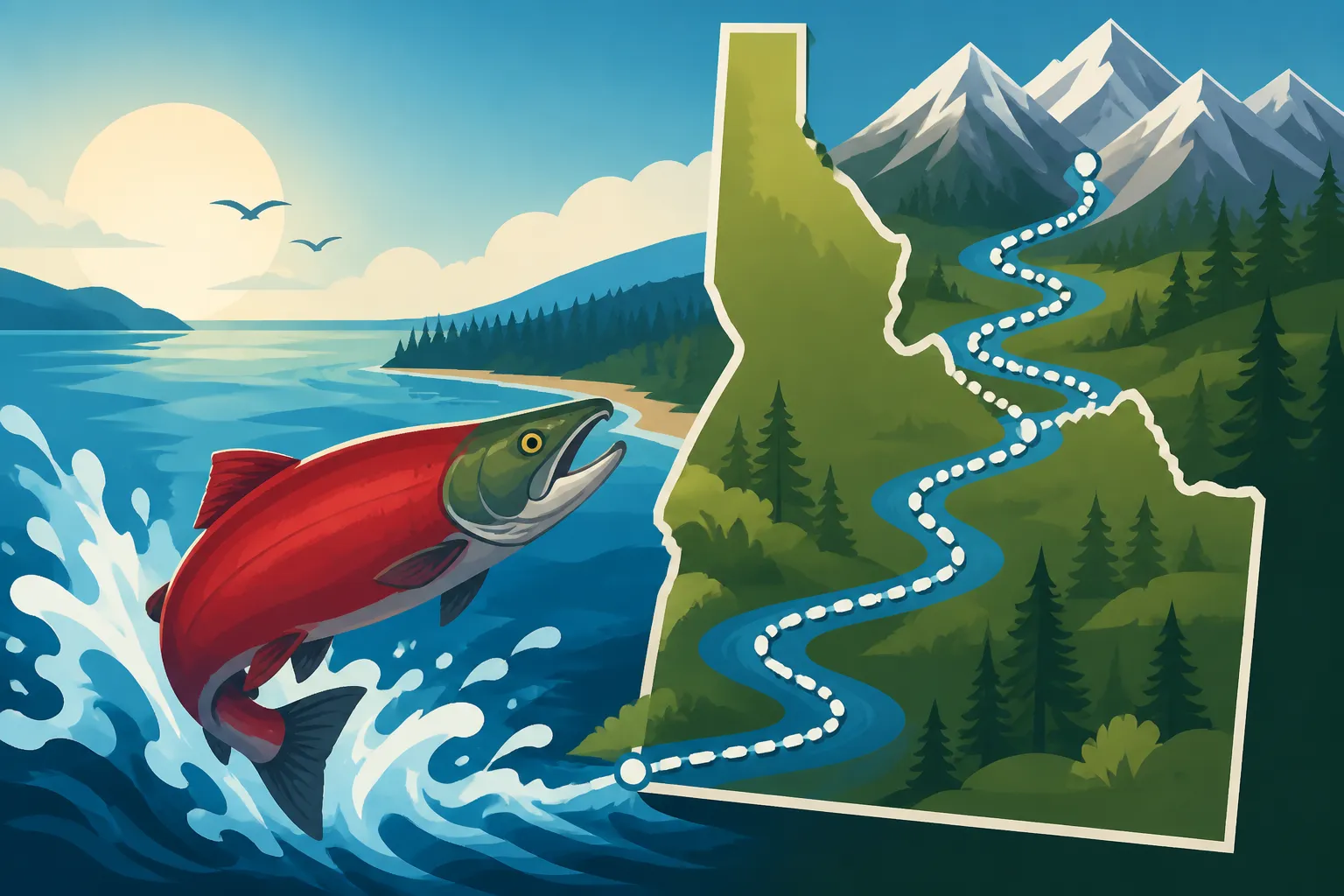
The journey begins in the heart of Idaho, specifically in the pristine, high-altitude alpine waters of the Sawtooth Valley. While several lakes historically supported sockeye, today, Redfish Lake is the primary focus of recovery efforts. These waters are nestled within the Sawtooth National Recreation Area, providing a stunning backdrop to the start of an epic adventure. From Redfish Lake, the young sockeye smolts embark on a downstream voyage that takes them first into the Salmon River. This iconic Idaho river carves its way through some of the most rugged and beautiful wilderness in the state.
From the Salmon River, these intrepid fish enter the mighty Snake River. The Snake River itself is a significant waterway, flowing through Idaho, Oregon, and Washington before it finally merges with the colossal Columbia River. The Columbia River then acts as the final freshwater highway, carrying the sockeye a considerable distance through Washington and Oregon, eventually depositing them into the vast expanse of the Pacific Ocean. It's a multi-stage journey through a complex river system, with each segment presenting its own unique challenges and opportunities for growth. You can learn more about What Idaho's Sockeye Salmon Run Looks Like at Redfish Lake to get a better visual of their starting and ending point.
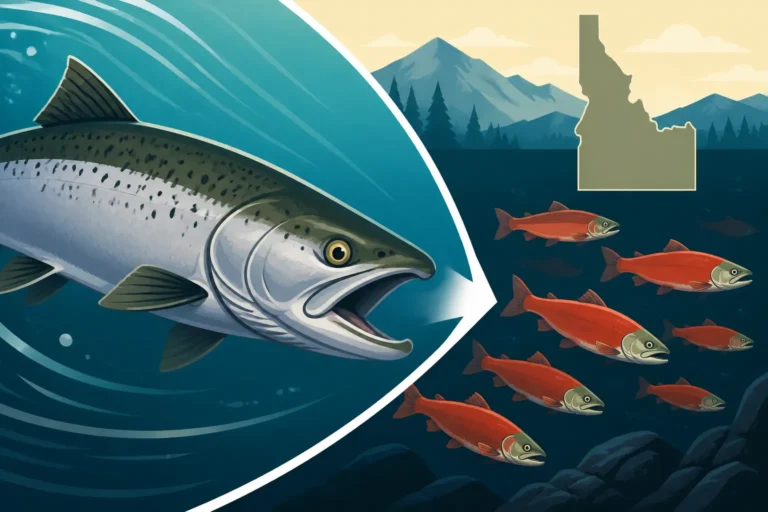
This downstream journey to the Pacific alone covers hundreds of miles. Once in the ocean, these fish don't just hang out near the coast. They often travel thousands of miles north into the Gulf of Alaska and the Bering Sea, seeking out rich feeding grounds. This vast oceanic travel makes their return even more remarkable. When it's time to spawn, they reverse this entire process, swimming back against the powerful currents of the Columbia, Snake, and Salmon Rivers, and finally ascending into Redfish Lake. The sheer scale of this round trip is staggering, a true feat of nature that highlights why protecting these migration corridors is so vital.
The Downstream and Upstream Challenges
The sockeye's journey is a tale of two very different struggles: the relatively gentler downstream migration and the incredibly arduous upstream battle. Heading out to sea, the biggest challenges are often predation from larger fish and birds, and navigating past the various dams along the Columbia and Snake Rivers. While they're generally swept downstream by the current, the process of passing through or around dam structures can still be disorienting and stressful for young smolts. It's a critical period where many are lost, even before they reach the ocean.
However, the real test of endurance comes during the upstream return. Imagine swimming against thousands of miles of powerful river current, not to mention the numerous hydroelectric dams that stand in their way. Each dam represents a significant hurdle, requiring the sockeye to locate and utilize fish ladders – a series of stepped pools designed to allow fish to bypass the dam. These ladders, while engineered to help, still expend immense energy from the fish and can be bottlenecks where predators, both natural and human (via legal fishing), can take a toll. You might even find some valuable reading on Amazon about the engineering marvels and challenges of fish ladders.
Beyond the physical barriers, sockeye face varying water temperatures and flows, especially during Idaho's hot summers. Low water conditions can make river passage more difficult and expose fish to warmer temperatures, which can be lethal. Conversely, high, muddy flows from spring runoff can make navigation challenging. Predators like eagles, bears, and other fish species lie in wait at various points along the river. The cumulative stress of these factors means that only a fraction of the sockeye that leave Redfish Lake successfully return, making each returning fish a true survivor.
The Sheer Distance in Numbers
So, let's put some numbers to this incredible feat. From Redfish Lake in the Sawtooth Valley, a sockeye salmon must travel approximately over 900 miles just to reach the mouth of the Columbia River and the Pacific Ocean. This freshwater leg involves navigating the Salmon, Snake, and Columbia Rivers, a journey that takes them across Idaho, Oregon, and Washington. But that's just one way, and it only covers the river systems.
Once in the Pacific, these fish aren't simply lounging by the beach. They often migrate thousands of additional miles north into the rich feeding grounds of the Gulf of Alaska and even the Bering Sea. While the exact oceanic routes vary, adding another 1,000 to 3,000 miles (or more) to their total journey is not uncommon for many salmon species. This means a full round trip could easily amount to over 4,000-6,000 miles for an Idaho sockeye! To put that in perspective, that's roughly equivalent to driving across the entire continental United States and back again, but doing it by swimming upstream, battling currents, and jumping over obstacles.
It's a journey that demands incredible physiological adaptations and an unwavering instinct. This extraordinary distance makes the return of even a single sockeye to Redfish Lake a monumental event. It underscores why the conservation of these fish and their migratory corridors is so profoundly important to Idaho's natural heritage. Understanding How Far Idaho's Sockeye Salmon Travel from the Ocean really helps appreciate the scale of their struggle and the triumph of each successful return.
The Ocean Phase: Growth and Survival
After the initial downstream sprint from Idaho's mountain lakes, young sockeye smolts transition into a new, expansive world: the Pacific Ocean. This phase is critical for their development, transforming them from small, silvery freshwater fish into robust, powerful adults. The ocean offers a bounty of resources that are simply not available in their natal streams, allowing for rapid growth and the accumulation of vital energy reserves.
Life in the Pacific Waters
Upon reaching the Pacific, Idaho's sockeye salmon disperse into the vast saltwater environment, often heading northward into cooler, nutrient-rich waters. The Gulf of Alaska and the Bering Sea are common feeding grounds for many sockeye populations. Here, the ocean's food web provides an abundant diet of krill, zooplankton, and small schooling fish. This rich diet is crucial for their growth. Unlike their early years in lakes where food sources might be limited, the ocean provides a smorgasbord, allowing them to pack on weight and build muscle.
During this time, their bodies also undergo significant physiological changes to adapt to the marine environment. Their kidneys and gills adjust to process saltwater, a process called osmoregulation, which is essential for survival in the ocean. They shed their parr marks (camouflaging spots) and develop a more uniform, often iridescent silver coloration that helps them blend in with the oceanic environment. This period is not without its dangers, however, as they become prey for larger marine predators like seals, orcas, and larger fish. It's a continuous balancing act between growth and survival in a vast, unforgiving ecosystem.
Imagine needing certain specialized gear for different environments; similarly, the sockeye's body is designed to adapt to these two vastly different worlds. Their time in the ocean is a period of intense feeding and development, critical for accumulating the energy reserves that will power their incredible return journey to Idaho. If you're interested in learning more about the intricacies of ocean life, Amazon has a wealth of books on marine biology and salmon migration that can provide even deeper insights.
Oceanic Travels and Maturation
Sockeye salmon typically spend one to three years, sometimes even four, in the Pacific Ocean. This duration is highly dependent on environmental conditions, food availability, and their specific genetic programming. During these years, they mature sexually, and their bodies prepare for the final, most demanding phase of their lives. They grow considerably, transforming from slender smolts into robust, powerful adult salmon, often reaching weights that are many times their initial size when they left freshwater.
As they mature, a remarkable internal clock and compass begin to guide them. The exact mechanisms are still subjects of scientific study, but it's believed they utilize the Earth's magnetic field, the sun's position, and an incredible sense of smell to pinpoint their exact natal river system. This oceanic phase is not just about growing physically; it's about ripening, storing energy, and honing the navigational instincts that will lead them thousands of miles back to Idaho. The sheer scale of their travel during these years is a testament to the ocean's capacity to support abundant life and the sockeye's incredible migratory drive.
This period of oceanic travel is vital for the health of the species. A healthy ocean environment with ample food and favorable conditions translates directly to more robust, larger sockeye returning to Idaho, increasing their chances of successful spawning. The challenge lies in the fact that oceanic conditions are constantly changing due to natural cycles and human impacts, which can affect their survival rates far from Idaho's shores. The Idaho Fish Species Guide offers more context on how various fish species interact with their environments, both fresh and saltwater.
The Return to Redfish: The Final, Herculean Effort
The moment the sockeye salmon turn their noses upstream from the Pacific Ocean, their fate is sealed. They stop feeding and begin a one-way trip, fueled solely by the energy reserves they've painstakingly accumulated during their years at sea. This final leg of the journey is arguably the most dramatic, a true test of their will and an inspiring natural spectacle that captures the hearts of those who witness it.
Navigating Thousands of Miles Upstream
Returning to Idaho's high mountain lakes means navigating back through the same river systems they descended as smolts: the Columbia, Snake, and Salmon Rivers. But this time, they are swimming against the current, a relentless force that demands incredible strength and stamina. The journey is made even more challenging by the series of eight major hydroelectric dams on the Columbia and lower Snake Rivers. Each dam presents a monumental barrier, requiring the fish to locate and ascend fish ladders. These ladders, while designed to help, are energy-intensive and can cause delays, making the fish vulnerable to warmer water temperatures and predators.
It's a marvel of nature how these fish manage to find their way back. Scientists believe their homing instinct is primarily guided by olfaction – their sense of smell. As they approach the mouth of the Columbia River, they can detect the subtle chemical signatures of their natal river system. As they move further upstream, these scents become more specific, guiding them past major tributaries until they locate the exact stream that leads to their spawning grounds, such as Redfish Lake. This precise navigation, over thousands of miles, is almost incomprehensible to us.
The physical toll of this upstream battle is immense. Sockeye push their bodies to the absolute limit, fighting strong currents, leaping falls, and navigating complex river channels. They utilize powerful bursts of energy, resting in slower pools before tackling the next rapid or fish ladder. By the time they reach Idaho, their bodies are often scarred, and their energy reserves are significantly depleted, but their determination remains unwavering.
The Spawning Grounds: A Race Against Time
The ultimate goal of this monumental journey is reproduction. Once the sockeye finally reach their natal waters, like Redfish Lake, their bodies have undergone a dramatic transformation. Their silver oceanic coloration gives way to a brilliant, fiery red body and a green head – a striking visual signal that they are ready to spawn. The males develop a pronounced hump on their back and hooked jaws, or kypes, used in competition for mates.
Upon reaching the spawning grounds, which are often shallow, gravel-bottomed areas in the lake or tributary streams, the female sockeye constructs a "redd" – a nest dug in the gravel with her tail. She then deposits her eggs, which are simultaneously fertilized by a male. This process can take several days, with females laying thousands of eggs, depending on their size. The act of spawning is the culmination of their entire life's purpose, the final, most crucial step in ensuring the continuation of their species. It's a race against time as their bodies continue to deteriorate.
After spawning, both male and female sockeye salmon will die within days or weeks. This phenomenon, known as semelparity, means they reproduce only once in their lifetime. Their decaying bodies provide a vital nutrient input back into the freshwater ecosystem, fertilizing the very waters that will nurture their offspring. It's a powerful cycle of life and death, an essential component of the health of places like the Sawtooth Valley. The Watching the Sockeye Return to Redfish Lake event is a testament to the importance of this cycle.
Conservation and the Future of Idaho's Sockeye
The incredible journey of Idaho's sockeye salmon is unfortunately also a story of severe decline and dedicated recovery efforts. Due to the cumulative impacts of habitat loss, historical overfishing, and especially the construction and operation of numerous dams along their migratory corridor, Idaho's sockeye salmon were listed as endangered. The very fact that they travel How Far Idaho's Sockeye Salmon Travel from the Ocean makes them incredibly vulnerable to disruptions along their lengthy route.
Today, significant efforts are underway to protect and restore these iconic fish. Hatchery programs, like the one at Eagle Fish Hatchery, play a crucial role in rearing sockeye smolts and releasing them into Redfish Lake, supplementing the wild population. Researchers and conservationists are constantly monitoring fish passage at dams, improving fish ladder designs, and experimenting with new transportation methods to help smolts bypass the dams on their way to the ocean. There's also a strong focus on habitat restoration in their spawning grounds to ensure that when they do return, they have the best possible chance to reproduce successfully.
The challenges are immense, but the dedication to saving these magnificent fish is equally strong. Their continued presence in Idaho is a symbol of our wild heritage and a reminder of the need to protect the intricate ecosystems that support such extraordinary life. Every single sockeye that completes this thousands-of-miles journey back to Idaho is a triumph, and understanding their plight helps us appreciate the ongoing efforts to secure their future. For more detail on their status, you can check out Are Idaho's Sockeye Salmon Endangered?.
Here's a quick look at the incredible journey stages:
| Stage | Location | Approximate Duration | Key Activity | Challenges |
|---|---|---|---|---|
| Egg/Fry | Redfish Lake/Tributary | ~1 year | Hatching, Early Growth | Predation, Water Quality |
| Smolt (Lake) | Redfish Lake | 1-3 years | Further Growth, Maturation for Migration | Predation, Food Availability |
| Smolt (Downstream) | Salmon, Snake, Columbia Rivers | ~Few Weeks | Migration to Ocean | Predation, Dam Passage, Stress |
| Adult (Ocean) | Pacific Ocean (Gulf of Alaska, Bering Sea) | 1-4 years | Feeding, Rapid Growth, Sexual Maturation | Predation, Food Availability, Ocean Conditions |
| Adult (Upstream) | Columbia, Snake, Salmon Rivers | ~Several Weeks to Months | Migration to Natal Spawning Grounds | Dams, Predators, Water Temp/Flows, Exhaustion |
| Spawning | Redfish Lake/Tributary | ~Few Days | Reproduction, Laying Eggs | Exhaustion, Predation |
Disclaimer
This article is for general informational purposes only and does not constitute professional advice. Laws, prices and regulations vary by location and change over time. Consult a qualified professional for guidance on your specific situation.