Best Guided Trips for Learning to Fish Henry’s Fork
Stepping onto the legendary Henry's Fork can feel like walking into a fly fishing masterclass you're not quite ready for. Its reputation for finicky, selective trout in crystal-clear water often leaves even seasoned anglers scratching their heads, let alone someone just looking to learn the ropes. This guide is dedicated to breaking down why a guided trip on Henry's Fork isn't just a luxury, but often the best way for beginners and those looking to truly improve their skills to unlock the secrets of this incredible river.
Why Henry's Fork is a Special (and Challenging) Fishery for Learners
Henry's Fork isn't just another trout stream; it's an icon. Nestled in eastern Idaho, near the gateway to Yellowstone National Park, it draws anglers from around the globe. But what makes it so revered also makes it notoriously difficult, especially for those who are still developing their fly fishing prowess.
Understanding Henry's Fork's Reputation
When anglers talk about Henry's Fork, words like "technical," "selective," and "challenging" come up almost immediately. The water here is often slow, clear, and shallow, particularly in stretches like the famous "Ranch" section. This crystal-clear visibility means the trout see everything – your fly, your leader, your shadow, even your clumsy cast. They've learned to be incredibly wary, inspecting every offering with a discerning eye. It's not a river where you can just toss any old fly with a heavy splash and expect success. These fish demand precise presentation, perfect drifts, and a keen understanding of entomology. Henry's Fork's Most Technical Water for Fly Anglers dives deeper into why these sections are so renowned for their difficulty.
Moreover, Henry's Fork is famous for its prolific insect hatches. From massive salmonflies to tiny tricos, the river can be a smorgasbord for trout. However, this also means the fish often key in on very specific insects, sometimes ignoring everything else. If you're not "matching the hatch" – presenting a fly that closely imitates what the fish are currently eating – you might as well be throwing pebbles. For a beginner, simply identifying the insects hatching, let alone selecting the correct imitation from a fly box with hundreds of patterns, can be utterly overwhelming. The pressure of trying to crack the code of Henry's Fork can easily turn a relaxing day into a frustrating lesson in humility.
The Learning Curve Without Guidance
Picture this: You've driven hours, invested in some decent gear, and finally find yourself standing on the banks of Henry's Fork. You're excited, you string up your rod, tie on what you hope is the right fly, and start casting. After an hour of watching your fly drift untouched while fish rise all around you, the excitement starts to wane. You try another fly, then another. Your casts get sloppier. You might spook a few fish with a heavy landing fly or a poorly placed shadow. By midday, you're exhausted, frustrated, and questioning why you even bothered.
Without someone there to guide your hand, literally and figuratively, the learning curve on Henry's Fork is incredibly steep. You won't know if your problem is your casting technique, your fly choice, your leader setup, or simply not understanding where the fish are holding in the subtle currents. This isn't a river for trial-and-error without a mentor. It's the kind of water that can instill bad habits or, worse, make you give up on fly fishing altogether before you've even truly begun to appreciate its beauty. Trying to figure out "How to Fish Henry's Fork During a Hatch" on your own can be particularly daunting.
What a Guided Henry's Fork Trip Offers Beginners
This is where a dedicated guide transforms your Henry's Fork experience from a potential nightmare into an invaluable learning opportunity. A good guide acts as a teacher, a strategist, and an all-around facilitator, ensuring you get the most out of your time on the water.
Expert Instruction on Technique and Presentation
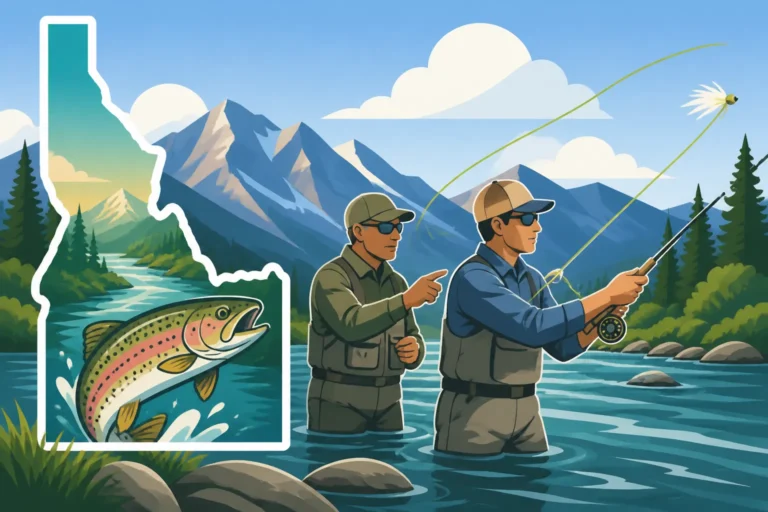
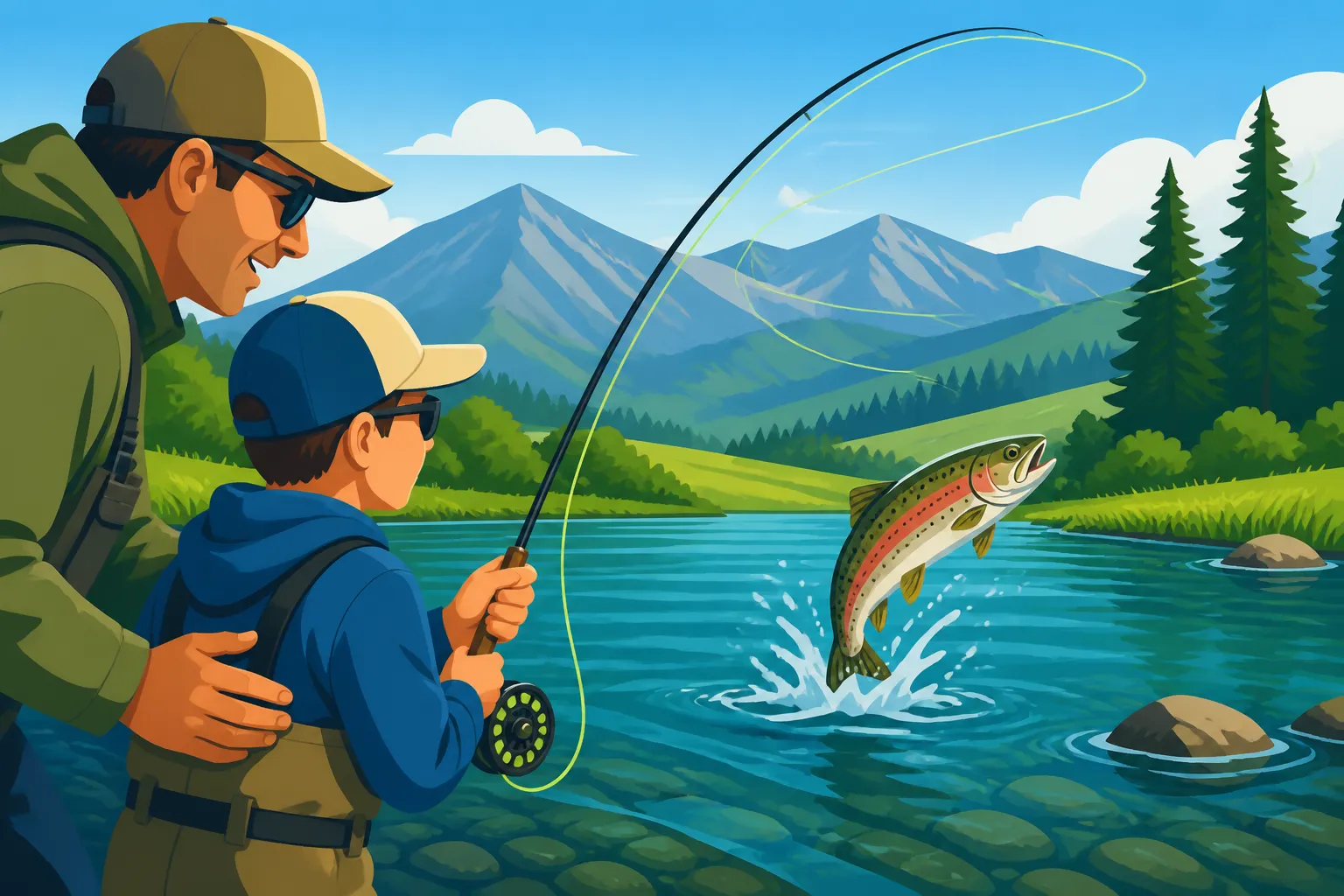
Perhaps the most significant benefit of a guided trip for a learner on Henry's Fork is the personalized, real-time instruction you receive. Imagine having a seasoned pro standing right beside you, offering immediate feedback on your cast. They can spot a subtle flaw in your loop or a missed mend that you wouldn't notice in a hundred casts on your own. They can teach you the nuances of upstream dry fly presentation, the critical importance of a drag-free drift, and how to gently lay a fly down like a natural insect. Learning how to mend line to achieve that perfect drift is fundamental on Henry's Fork, and a guide can patiently walk you through it.
Beyond casting, a guide will teach you how to "read the water" – identifying prime lies where trout are likely to feed, understanding current seams, and knowing how different features of the riverbed affect fish behavior. They'll show you how to set the hook effectively on a subtle take and, crucially, how to play and land one of Henry's Fork's famously powerful trout without breaking your delicate tippet. This hands-on, one-on-one coaching accelerates your learning curve dramatically. Many guides offer specific "Fly Fishing Lessons Available Through Idaho Guides" which are perfect for this.
Navigating Access and Understanding Regulations
Henry's Fork is a complex river with a mix of public and private access points. For a newcomer, knowing where you can legally access the river, especially the prime fishing spots, can be a major headache. Guides, through years of experience and local connections, know exactly where to go. They can take you to productive stretches that are publicly accessible but less crowded, or they might even have arrangements for private access that would otherwise be unavailable to you. This saves you valuable fishing time that would otherwise be spent driving around and looking at maps.
Furthermore, the regulations on Henry's Fork can be highly specific and vary by section, season, and even by the type of fish you're targeting. There might be barbless hook requirements, specific bait restrictions, or catch-and-release only zones. A guide ensures you're always compliant with the local Idaho Fishing Regulations Explained, preventing potential fines or accidental violations. They live and breathe these rules, allowing you to focus purely on the act of fishing and learning. This is especially true if you are fishing in Henry's Fork's 70 Miles of Fishable Water Explained near towns like Last Chance or Island Park.
The Right Gear and Flies for the Job
Let's face it, accumulating a full arsenal of fly fishing gear can be expensive, and knowing which flies to bring for Henry's Fork is a science in itself. A guided trip usually includes all the necessary equipment: high-quality rods and reels, waders and boots, and most importantly, a vast selection of local, proven fly patterns. Your guide will assess the conditions, observe any hatching insects, and then hand you the exact fly you need, already tied to the correct leader and tippet. This eliminates the guesswork and the need for a significant upfront investment in specialized gear.
This service is invaluable for learners. Instead of fumbling through a fly box wondering if a size 18 Parachute Adams or a size 20 Baetis emerger is the right choice, your guide will tell you, explain why it's the right choice, and even show you how to tie it on. This hands-on lesson in fly selection and rigging is crucial for understanding the ecosystem of Henry's Fork. Many outfitters near Henry's Fork, easily found via platforms like FishingBooker, will detail exactly what gear is provided, allowing you to focus on the learning experience. They often carry patterns that are locally tied and proven effective, which you might not find at your average fly shop elsewhere.
Choosing the Right Guided Trip for Your Learning Style
Selecting the perfect guided trip on Henry's Fork depends heavily on how you prefer to learn and your personal comfort level on the water. Both wade trips and drift boat trips offer distinct advantages.
Wade Trips vs. Drift Boat Trips for Instruction
When it comes to learning on Henry's Fork, you generally have two primary options: a wade trip or a drift boat trip. Both are excellent, but they offer different experiences tailored to different learning preferences.
-
Wade Trips:
- Pros: This is often the most intimate and hands-on way to learn. You're physically in the water, feeling the currents, and getting a true sense of the riverbed. Your guide will be right beside you, able to demonstrate casting techniques, entomology, and knot tying up close. You can focus on specific runs and pools for extended periods, refining your technique in one spot. It's excellent for learning river navigation, understanding fish lies from a different perspective, and getting a feel for playing fish in moving water while standing. This can be less intimidating than a boat for some.
- Cons: Your mobility is limited to what you can walk and wade safely. You won't cover as much water as in a boat, which might mean fewer opportunities to encounter fish if they're spread out. It can also be more physically demanding, as you'll be standing and wading for most of the day.
-
Drift Boat Trips:
- Pros: Drift boat trips cover significantly more water, allowing you to experience diverse sections of the river, from slow pools to faster riffles. Your guide rows the boat, positioning you perfectly for drifts and covering vast stretches where fish might be holding. This means more chances to cast to fish and see different types of water. It's less physically demanding, as you're mostly sitting or standing comfortably in the boat. Guides can instruct you on casting from a boat, which is a different skill set.
- Cons: While you're still casting and catching, the "hands-on" immersion of being in the water is reduced. The guide is usually at the oars, meaning instruction might be a bit more distanced than a wade trip where they are right next to you in the water. For pure casting mechanics, a wade trip might offer more direct, immediate correction.
Here's a quick comparison:
| Feature | Wade Trip for Learning | Drift Boat Trip for Learning |
|---|---|---|
| Instruction Focus | Close-up, intimate, precise casting, river navigation. | Broad water reading, covering diverse water, boat casting. |
| Physical Demands | Higher (wading, standing) | Lower (mostly seated/standing in boat) |
| Water Coverage | Limited to walkable stretches | Extensive, covers many miles |
| Immersion | High (in the water) | Moderate (on the water, but not in it) |
| Best For | Refining specific techniques, detailed entomology. | Experiencing more of the river, varied fishing situations. |
| Guide Proximity | Often right beside you | Often at the oars, guiding from a distance |
| Gear Provided | Waders, boots, rod, reel, flies (usually) | Boat, rods, reels, flies, sometimes waders/boots |
Ultimately, for a pure learning experience focused on casting, reading water, and handling fish, a wade trip often provides the most direct, one-on-one instruction. However, if you want to see more of the river and get more varied fishing opportunities while still learning, a drift boat is an excellent choice. Many guides, especially those found on platforms like FishingBooker, will offer both, so discuss your learning goals with them.
What to Look for in a Beginner-Friendly Guide
Not all guides are created equal, especially when it comes to teaching beginners. When you're looking for a guide on Henry's Fork specifically for learning, keep these qualities in mind:
- Patience and Communication Skills: Henry's Fork can be tough, and learning is a process. You need a guide who is infinitely patient, encouraging, and can explain complex concepts in an easy-to-understand manner. Look for guides whose reviews mention their teaching ability and calm demeanor.
- Focus on Instruction, Not Just Catching: While everyone wants to catch fish, your primary goal is to learn. A good teaching guide will prioritize showing you how to fish over simply putting you on fish themselves. They'll let you make casts, even if imperfect, and provide constructive feedback rather than taking over the rod.
- Local Expertise: This goes beyond just knowing the river. A true Henry's Fork expert understands the local entomology, seasonal patterns, and subtle changes in fish behavior. They know How to Fish Henry's Fork During a Hatch and can explain why certain flies are working. A guide from the area, perhaps one who has been guiding on Henry's Fork for years, will possess invaluable insights.
- Gear and Fly Provisions: As mentioned earlier, a guide who provides quality gear and a comprehensive fly selection is crucial for learners, saving you time and money.
- Safety First: Especially for wade trips, a guide who prioritizes safety in slippery conditions or strong currents is non-negotiable.
When you're browsing guides on platforms like FishingBooker, pay attention to their specialties. Many will explicitly state if they enjoy working with beginners or teaching fly casting. Don't be afraid to call a few guides and chat with them about your learning objectives before booking. Ask them about their approach to teaching first-timers or those looking to refine their skills.
Planning Your Learning Trip: Timing and Logistics
The timing of your trip can significantly impact your learning experience on Henry's Fork.
- Best Seasons for Learning: While Henry's Fork can be fished year-round in some sections, late spring (May-June) and early fall (September-October) are often excellent times for learning. During these periods, the major hatches like salmonflies or caddis can be abundant, offering clearer targets for trout and more predictable feeding behavior. Water levels are often more stable, and weather can be pleasant. Mid-summer can be great for specific hatches like PMDs and tricos, but the low, clear water and intense pressure can make it even more challenging for beginners. When Idaho's General Trout Season Opens and Idaho Trout Season Opening Weekend Explained can give you an idea of peak times.
- Booking in Advance: Good guides, especially those specializing in Henry's Fork, book up quickly. If you have specific dates in mind, especially during prime seasons, it's wise to book several months in advance. Websites and services like FishingBooker often allow you to view a guide's availability far out.
- What to Bring: Even though guides provide most gear, you should still bring essentials: polarized sunglasses (critical for spotting fish and protecting your eyes), a hat, sunscreen, layers of clothing (weather in Idaho mountains can change rapidly), a rain jacket, snacks, water, and your Idaho Fishing License Guide which you will need to purchase beforehand. Your guide will confirm specific items.
- Consider a Half-Day vs. Full-Day: For a complete beginner, a half-day trip might be enough to absorb the initial instruction without becoming overwhelmed. For those with some experience looking to refine skills, a full-day trip offers more time on the water to practice and explore. Discuss this with your guide.
A guided trip on Henry's Fork, specifically tailored to learning, isn't just about catching fish – it's about gaining the knowledge and confidence to approach this iconic river, and many others, with skill and understanding. It's an investment in your fly fishing journey that pays dividends for years to come.
Disclaimer
This article is for general informational purposes only and does not constitute professional advice. Laws, prices and regulations vary by location and change over time. Consult a qualified professional for guidance on your specific situation.