Best Reel for Salmon Fishing
When you're out on the water, whether it's the mighty Salmon River or a large Idaho reservoir, there's nothing quite like the electrifying jolt of a salmon hitting your line. But that initial thrill can quickly turn to frustration if your reel isn't up to the task of handling these powerful, hard-fighting fish. Choosing the best reel for salmon fishing in Idaho means understanding the unique demands of our waters and the sheer strength of the salmon themselves, ensuring your equipment can stand up to the challenge and help you land that trophy catch rather than watch it swim away with a broken line.
The Unique Challenges of Salmon Fishing in Idaho
Idaho might be landlocked, but we are incredibly blessed with anadromous species like Chinook salmon and steelhead (which are essentially sea-run rainbow trout, but fight with salmon-like power) that make incredible journeys to our rivers. We also have thriving populations of Kokanee salmon in our lakes and reservoirs. Each of these presents its own unique challenge, and your reel needs to be ready for anything.
Understanding Idaho's Salmon Species and Their Fight
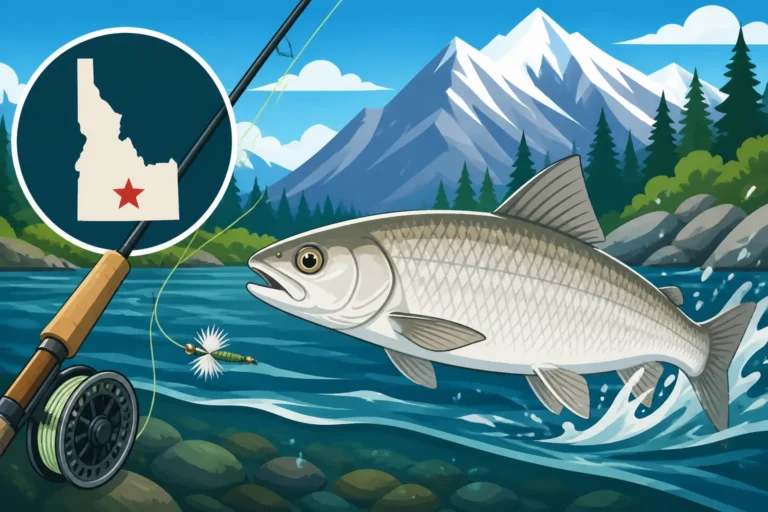
First off, let's talk about the stars of the show. When most folks think of "salmon fishing" in Idaho, they're often dreaming of the big, powerful Chinook salmon that ascend rivers like the Salmon and Clearwater. These fish are absolute freight trains, capable of blistering runs that can strip hundreds of feet of line in seconds. Their sheer size and incredible muscle demand a reel that can absorb massive amounts of pressure without faltering.
Then there are steelhead. While technically a trout, their anadromous nature means they return from the ocean with incredible vigor, making them one of the most sought-after game fish in Idaho. Landing a big steelhead often feels every bit like fighting a salmon – acrobatic jumps, deep dives, and relentless head shakes. A reel designed for robust salmon fishing is also going to be an excellent choice for pursuing these magnificent fish, especially when you're looking for an Idaho Steelhead Fishing Guide or are preparing for the Total Cost to Fish for Steelhead in Idaho as a Resident.
On the other hand, you have Kokanee salmon, often found in our larger lakes like Coeur d'Alene and Pend Oreille. These are landlocked sockeye, typically smaller than Chinook or steelhead, but they put up a spirited fight on lighter tackle. While a heavy-duty salmon reel might be overkill for Kokanee, the principles of a smooth, reliable drag and durable construction still apply, just scaled down. This guide will focus more on the heavier-hitting species, as they truly test the mettle of a fishing reel.
The Demands of River vs. Lake Environments
The environment you're fishing in dramatically impacts the type of reel performance you need. When fishing for Chinook or steelhead in rivers, you're often dealing with strong currents that add another layer of resistance to an already powerful fish. These fish might run downstream, using the current to their advantage, requiring a reel with excellent line capacity and a quick retrieve to keep up and prevent slack. Snags, rocks, and submerged timber are constant threats in a river system, making precise control and quick reactions from your reel essential.
Lake fishing for Kokanee, or even for planted Chinook in certain reservoirs, might seem less demanding, but it has its own challenges. Trolling is a common technique, which means your reel needs to stand up to hours of continuous work, especially if you're using downriggers and heavy weights. When a fish does hit, it might be a surprise, requiring an instant response from a reliable drag. Think about chasing a trophy on Lake Coeur d'Alene for Kokanee and Chinook – the open water allows for long runs, so line capacity is still paramount.
What Happens When Your Reel Isn't Up to Snuff
We've all been there: a monster fish hits, the drag screams, and then… snap. Or perhaps the reel seizes up mid-fight, the handle jams, or the drag system starts to stutter and slip. It's not just a lost fish; it's a lost opportunity, a broken heart, and sometimes, a broken piece of gear. These moments validate the frustration many anglers feel when their equipment fails. A cheap or poorly maintained reel simply cannot withstand the explosive power and prolonged battles that Idaho salmon deliver.
You might find yourself trying to hand-line a fish because your reel stopped working, risking serious cuts or line burns. Or perhaps the reel's retrieve rate is so slow that a salmon charging directly at your boat creates so much slack that the hook simply falls out. Investing in a quality reel isn't about luxury; it's about minimizing these heartbreaking scenarios and ensuring you have the best possible chance to experience the full thrill of landing an Idaho salmon.
Essential Reel Features for Idaho Salmon
When you're staring down the options at your local tackle shop or browsing through countless models online, it's easy to get overwhelmed. But for Idaho salmon, there are a few non-negotiable features that rise above the rest. These are the cornerstones of a reel that can truly handle the challenge.
The Non-Negotiable: A Superior Drag System
If there's one feature you absolutely cannot compromise on when choosing a reel for Idaho salmon, it's the drag system. A salmon's first run can be incredibly powerful, and a sticky, jerky, or inconsistent drag will inevitably lead to broken lines or pulled hooks. Imagine a big Chinook taking off like a rocket on the Salmon River; a smooth drag allows the line to peel off steadily, absorbing the shock and tiring the fish without reaching the line's breaking point.
Look for reels with a robust, multi-washer drag system made of durable materials like carbon fiber or sealed stainless steel. These materials resist heat buildup during long runs and provide consistent pressure. The drag should engage smoothly from zero resistance to its maximum setting, with no hesitation or stickiness. You should be able to make fine adjustments during the fight, increasing or decreasing pressure as the fish surges or tires. A high maximum drag pressure is certainly a plus, but the smoothness of that drag is far more critical than simply a high number. Without a buttery-smooth drag, your battle with an Idaho salmon is often over before it truly begins.
Strength and Durability: Frame, Spool, and Gears
A salmon reel isn't a delicate instrument; it's a workhorse. The entire reel needs to be built like a tank. This starts with the frame. Look for reels constructed from strong, corrosion-resistant materials like anodized aluminum or high-strength graphite composites. Aluminum offers superior rigidity, preventing frame flex under extreme pressure, which can lead to gears binding or misalignment. Saltwater-rated reels, even though Idaho is freshwater, often boast the kind of corrosion resistance and heavy-duty construction that stands up to the toughest freshwater conditions and prolonged use.
The spool should also be made from a strong, lightweight alloy to handle the stress of line peeling off at high speeds and the pressure of a fully loaded line. Pay attention to the gearing. Stainless steel or marine-grade brass gears are preferred for their durability and ability to withstand the tremendous torque exerted during a salmon fight. Cheaper reels often use softer metals or plastics that wear down quickly, leading to sloppy retrieves and eventual failure. Think about how many times you'll be cranking against a powerful fish – those gears need to hold up. Even small components like bail arms on spinning reels need to be robust to prevent bending or failure.
Line Capacity and Retrieval Rate: Keeping Up with the Fight
Salmon are known for their long, powerful runs. Whether it's a Chinook tearing downriver or a large Kamloops rainbow trout on Lake Pend Oreille making a dash for the depths (a fish often requiring similar tackle), you need ample line capacity. A reel that holds at least 200-250 yards of your chosen line (often 20-30 lb test braided line or heavy mono) is a good starting point for larger salmon and steelhead. Running out of line when a trophy fish is still peeling it off can be heartbreaking. Don't skimp here; it's better to have too much line than not enough.
Beyond just how much line it holds, consider how quickly the reel can retrieve that line. This is measured by the gear ratio. A faster retrieval rate (e.g., 6.2:1 or higher for spinning reels, or high-speed baitcasters) is incredibly valuable for salmon fishing. Why? Because salmon, especially when they're tired, will sometimes turn and swim directly at you. A slow retrieve means you can't pick up slack fast enough, leading to a limp line, a lost connection, and a missed opportunity. A faster gear ratio allows you to maintain tension, keep the hook set, and regain control of the fight much more efficiently.
However, sometimes a powerful, lower gear ratio (e.g., 4.9:1) is preferred for cranking power, especially with baitcasters, if you're doing a lot of deep-water cranking or need maximum torque. The ideal is often a balance, but for those long, unexpected runs and sudden charges, a good retrieval rate can make all the difference.
Choosing the Right Type of Reel for Salmon
Now that we know what to look for, let's explore the types of reels that excel at salmon fishing. In Idaho, you'll primarily see anglers using spinning reels and baitcasting reels, each with its own advantages depending on your fishing style and the specific salmon species you're targeting.
Spinning Reels: Versatility and Ease of Use
Spinning reels are arguably the most versatile and user-friendly option, making them a popular choice for many Idaho anglers, from beginners to seasoned pros. Their open-face design and fixed spool mean less chance of backlashes, and they are generally easier to cast, especially with lighter lures or baits. For targeting Kokanee salmon, a medium-sized spinning reel (in the 2500-4000 size range) is perfect, offering enough line capacity and a smooth drag for these smaller but feisty fish.
For larger Chinook salmon and steelhead, you'll want to step up to a heavy-duty spinning reel, typically in the 5000-8000 size range. These larger reels boast stronger frames, more robust gearing, and significantly larger, more powerful drag systems. Look for models with a sealed drag to prevent water and debris from compromising performance, especially when you're fishing in adverse conditions on rivers like the Clearwater. Many anglers prefer spinning reels for drift fishing, casting spoons or spinners, or even for float fishing presentations where precise casting and quick line pickup are crucial. The ability to switch hands easily and the overall forgiving nature of spinning reels make them a solid contender for diverse salmon fishing techniques across Idaho. You can find a vast selection of reliable spinning reels on Amazon.
Baitcasting Reels: Power and Precision for Big Fish
Baitcasting reels are the preferred choice for many experienced salmon and steelhead anglers, particularly when targeting the largest and most powerful fish in strong currents. These reels offer superior cranking power due to their direct drive system and often feature more substantial drag systems capable of putting immense pressure on a fish. The main advantage of a baitcaster lies in its control and power. When you hook into a true monster on the Fishing the Salmon River for Steelhead and Chinook, a baitcaster's ability to precisely cast heavy lures or baits and then muscle the fish to the net is unmatched.
Baitcasters typically come in two main forms: round profile and low profile. For heavy-duty salmon fishing, many gravitate towards round profile baitcasters (often called conventional reels) due to their robust construction and incredible line capacity, often holding hundreds of yards of heavy braided line. Low-profile baitcasters are also excellent, offering ergonomic comfort and superb casting distance, often favored for throwing larger plugs or jigs. The learning curve for baitcasters is steeper, as backlashes can be common without proper technique, but the rewards in terms of power, precision, and the direct feel of the fight are significant. When paired with the right rod, like a stout steelhead or salmon rod, a quality baitcasting reel creates a formidable setup for the toughest fish in Idaho.
Considering Gear Ratios and Their Impact
We touched on retrieval rate earlier, but let's dive a little deeper into gear ratios. This number represents how many times the spool rotates with one full turn of the handle.
- Low Gear Ratios (e.g., 4.0:1 to 5.0:1): These reels prioritize cranking power. Every turn of the handle moves less line, but with much more force. This is fantastic when you're fighting a really stubborn, heavy fish that's trying to dig into the bottom of a river or when you're pulling a heavy lure against a strong current. Some anglers prefer this for the sheer torque it provides when battling a large Chinook salmon.
- Medium Gear Ratios (e.g., 5.0:1 to 6.0:1): This is often the sweet spot for general salmon fishing. It offers a good balance of power and speed, allowing you to effectively fight powerful fish while still being able to pick up slack relatively quickly if needed.
- High Gear Ratios (e.g., 6.0:1 to 7.0:1+): These reels are all about speed. You can retrieve line very quickly, which is excellent for presentations that require fast retrieves (like burning a spinner) or for catching up to a fish that's swimming towards you. For anadromous fish like steelhead and Chinook, a higher gear ratio can be an advantage when they make those unpredictable dashes.
The best choice depends on your specific technique. If you're primarily back-trolling plugs for steelhead, a medium to lower gear ratio baitcaster might be preferred for its power. If you're casting and retrieving spoons quickly for salmon, a higher gear ratio spinning reel might be your go-to. Many anglers even carry multiple setups to be ready for different scenarios when preparing for a trip based on the Idaho Fishing Season Calendar.
Here's a quick comparison of general features for spinning and baitcasting reels when targeting Idaho salmon:
| Feature | Spinning Reel (Heavy Duty Salmon) | Baitcasting Reel (Heavy Duty Salmon) |
|---|---|---|
| Ease of Use | Easier for beginners, less prone to backlashes | Steeper learning curve, requires thumb control |
| Casting | Excellent for lighter lures, longer casts overall for lighter tackle | Exceptional for heavier lures, very accurate, good distance with practice |
| Power/Torque | Good, especially in larger sizes | Superior, direct drive for maximum leverage |
| Drag System | Very good, typically front drag with large washers | Excellent, often multi-disc for consistent, powerful braking |
| Line Capacity | Good, especially in 5000-8000 series | Excellent, often holds more heavy line |
| Feel of Fight | Good, can be less direct | Very direct, more "connected" feel to the fish |
| Ideal For | All-around versatility, drift fishing, casting lighter lures, beginners | Heavy lures, back-trolling, jigging, experienced anglers, strong currents |
| Maintenance | Generally easier to maintain | Requires more regular cleaning and lubrication |
Caring for Your Investment: Reel Maintenance Tips
You've invested in a quality salmon reel, one designed to handle the brutal fights and challenging conditions that Idaho fishing throws at it. But even the best reel won't last if it's not properly cared for. Regular maintenance isn't just about extending the life of your gear; it's about ensuring peak performance when that trophy salmon finally hits.
Post-Trip Cleaning and Storage
This is perhaps the most crucial step, and often the most overlooked. After every fishing trip, especially if your reel has been exposed to dirt, sand, or water, take the time to give it a quick cleaning.
- Rinse Thoroughly: Use a gentle stream of fresh water (not a high-pressure spray) to rinse your reel. Pay attention to the spool, frame, and any moving parts. This washes away grit, slime, and any potential corrosive elements. Don't submerge the entire reel unless it's specifically designed for it.
- Dry Completely: Shake off excess water and then use a soft cloth to gently wipe down the exterior. Ensure the reel is completely dry before storing it. Leaving it wet can lead to rust and corrosion, especially in bearings and other metal components. A small fan can help circulate air for a thorough drying.
- Loosen the Drag: Before putting your reel away, always back off the drag knob completely. Keeping the drag washers compressed for extended periods can prematurely wear them out and reduce their effectiveness. This simple step can significantly extend the life of your drag system.
- Proper Storage: Store your reel in a cool, dry place, away from direct sunlight or extreme temperature fluctuations. A reel cover or a dedicated reel case can protect it from dust and accidental bumps, whether it's in your garage or packed for another adventure.
Remember that a few minutes of care after each outing can save you hours of frustration and potentially costly repairs down the line.
Routine Lubrication and Inspection
Beyond the immediate post-trip cleaning, your salmon reel needs periodic, more in-depth attention. How often depends on how frequently you fish, but at least once or twice a season for active anglers is a good idea.
- Lubrication: Refer to your reel's manufacturer instructions for specific lubrication points. Generally, you'll want to apply a small amount of high-quality reel oil to bearings and a light coating of reel grease to gears. Don't overdo it; too much lubricant can attract dirt and hinder performance. A tiny drop or a thin film is usually all that's needed. You can often find specialty reel oils and greases on Amazon, which are designed to protect your gear.
- Inspect All Components: While lubricating, take the opportunity to inspect your reel thoroughly. Check for any loose screws, signs of wear on the gears (grinding or roughness), or corrosion on the frame or handle. Feel the spool for any nicks or burrs that could damage your line, which is especially important when you're fishing for Idaho Chinook Salmon.
- Drag Washer Check: Occasionally, it's a good idea to disassemble your drag stack (following manufacturer instructions) and clean the drag washers. If they're carbon fiber, they usually just need to be wiped clean. If they're felt or cork, they might need a tiny bit of special drag grease. Look for any signs of wear, fraying, or hardening; if they look compromised, it's time for replacements.
- Line Management: While not strictly reel maintenance, inspect your fishing line regularly. Look for abrasions, nicks, or kinks, especially the first few feet of line. Salmon fishing is brutal on line, and a weak spot is an invitation for disaster. Re-spool your line regularly, especially if you fish frequently.
Taking these steps ensures that your reel is always ready for action, providing the smooth, powerful performance you need to conquer Idaho's salmon and other powerful game fish, whether you're targeting Idaho Salmon and Steelhead Permit species or trout. A well-maintained reel will be a trusted companion on countless successful fishing adventures.
Disclaimer
This article is for general informational purposes only and does not constitute professional advice. Laws, prices and regulations vary by location and change over time. Consult a qualified professional for guidance on your specific situation.