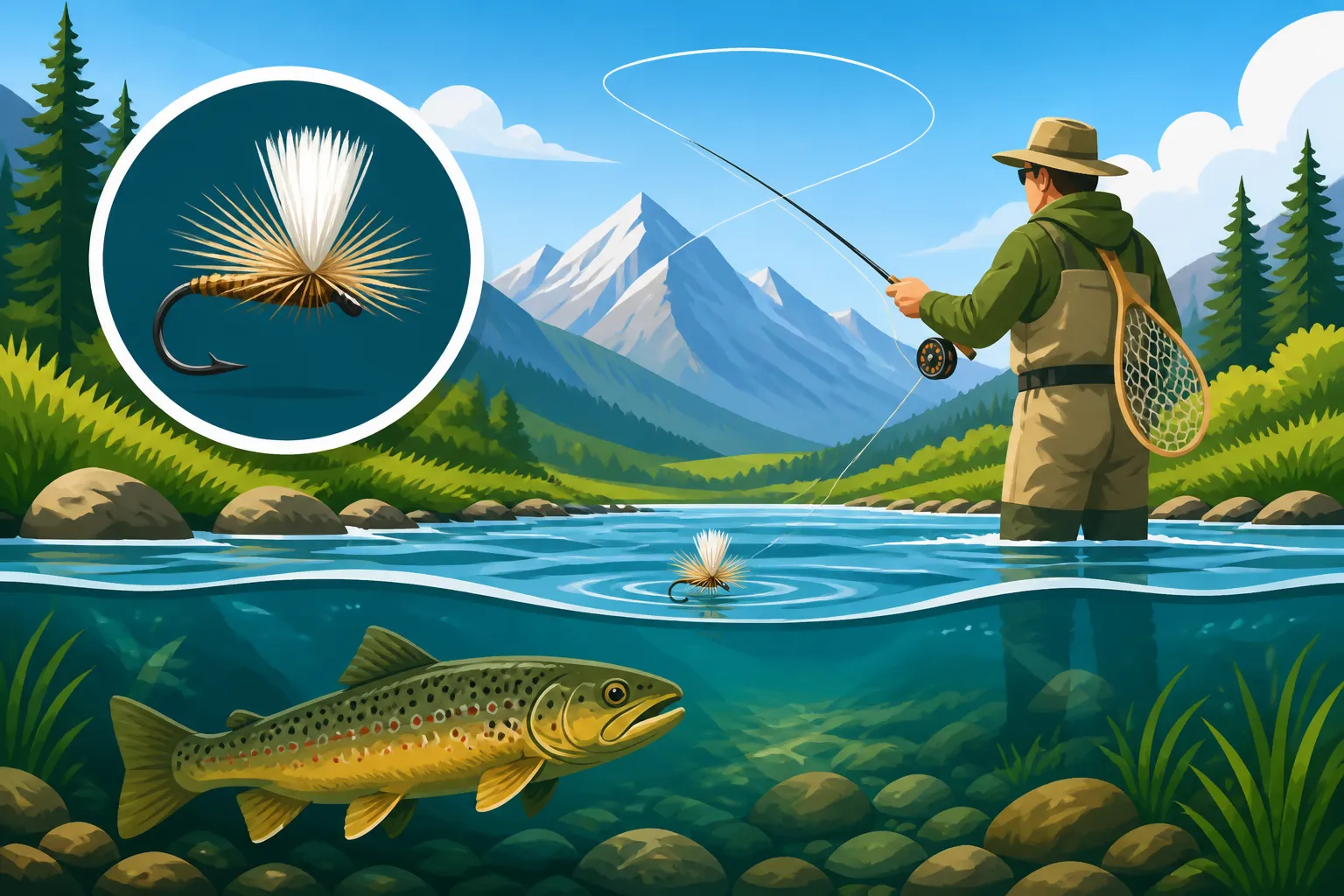
How to Dry Fly Fish a Spring Creek
There’s something uniquely captivating and, let’s be honest, often utterly frustrating about dry fly fishing a spring creek. The crystal-clear, steady waters of Idaho’s spring creeks like Silver Creek or portions of the Henry's Fork can feel like both a blessing and a curse. You can see the fish, sometimes big ones, but getting them to eat your artificial fly when they're sipping naturals in a tiny feeding lane? That’s the real puzzle, the one that makes you want to pull your hair out, or perhaps, keep coming back for more. This guide is all about demystifying the art of dry fly fishing these challenging, yet incredibly rewarding, waters.
Understanding Idaho's Spring Creeks and Their Unique Challenges
Idaho is blessed with some truly iconic spring creeks, and they represent a distinct class of fishing water. If you’ve spent most of your time on freestone rivers with their turbulent currents and varied habitats, a spring creek will demand a complete shift in your mindset and approach. The beauty is undeniable, but so are the challenges.
What Makes a Spring Creek Different?
Imagine a river born from underground springs, where the water temperature remains remarkably consistent year-round. That's a spring creek. This thermal stability fosters an incredibly rich and diverse aquatic insect population. Unlike freestone rivers that experience dramatic temperature swings and runoff events, spring creeks offer a steady environment for bugs to thrive. This means consistent hatches, often year-round, which sounds fantastic, right? Well, it is, but it also means the trout living in these waters are incredibly well-fed and therefore, incredibly selective.
The water itself is often gin-clear, providing little cover for anglers and even less room for error. Every ripple, every shadow, every clumsy step on the bank can alert a wary trout to your presence. The substrate is typically fertile, fostering abundant weed growth, which further complicates casting and drifting, creating intricate feeding lanes and potential snags. It’s a delicate ecosystem where patience and precision are paramount.
The Hyper-Selective Nature of Spring Creek Trout
This consistency and abundance of food have shaped the trout in Idaho’s spring creeks into highly intelligent, discerning feeders. They don't just eat "bugs"; they eat specific bugs, in specific sizes, drifting in a specific manner. If your fly is a size 18 Baetis and they’re eating a size 20, they might ignore yours. If your size 18 Baetis drags even a centimeter, they'll likely ignore it.
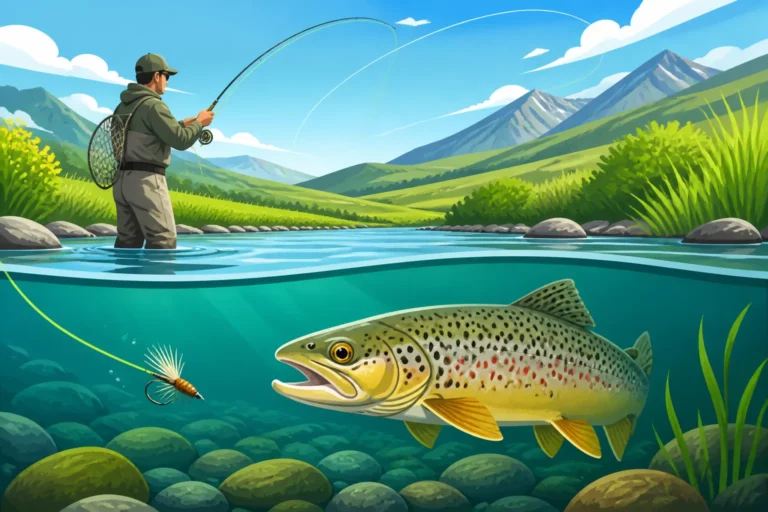
You'll often observe fish holding in a specific spot, rhythmically rising to pick off naturals as they drift by. They're locked into a feeding pattern, and convincing them to deviate from that pattern for your offering is the ultimate test. It's not about finding fish; it's about fooling fish you can already see. This can be infuriating when you're making what feels like perfect casts, only to be met with repeated refusals. But when it all comes together, and that trout sips your dry fly with confidence, it's an exhilarating feeling that few other forms of fishing can match. These fish have seen it all, which is why your presentation must be flawless.
Notable Idaho Spring Creeks
When we talk about dry fly fishing spring creeks in Idaho, two names immediately spring to mind:
- Silver Creek: Often referred to as "the Ivy League of fly fishing," Silver Creek, near Sun Valley, is a national treasure. Its wide, open meadows and incredibly clear, slow-moving water present a challenge that draws anglers from around the globe. The trout here are famously selective, demanding impeccable casts and drifts. It's a place where you truly feel like you're earning every fish. If you're looking to hone your skills on some truly technical water, exploring How to Fish Silver Creek's Technical Water is a must.
- Henry's Fork of the Snake River: While a much larger river, certain sections of the Henry's Fork, particularly the renowned "Ranch" section, fish very much like a spring creek. Here, slow, glassy flows over rich weed beds create the perfect conditions for legendary hatches and equally legendary picky trout. The Henry's Fork demands long, accurate casts and often calls for tiny dry flies, mirroring the selective nature found on smaller spring creeks. Many anglers seek out guides specifically to navigate these challenging waters; you can find more information in our guide on How to Fly Fish Henry's Fork.
These waters are not just fishing spots; they are classrooms that teach patience, observation, and the supreme importance of finesse.
Essential Gear for Dry Fly Fishing Idaho Spring Creeks
Approaching Idaho's spring creeks requires specific tackle choices. You wouldn't bring a sledgehammer to perform delicate surgery, and the same principle applies here. Your gear needs to be balanced for stealth, delicate presentation, and protecting fine tippets.
Rods, Reels, and Lines
When it comes to rods for spring creek dry fly fishing, think delicate. You’re not trying to cast huge streamers or heavy nymph rigs across a wide river.
- Rods: A softer, medium-action rod in the 7.5 to 9-foot range, typically a 3-weight or 4-weight, is ideal. The softer action helps protect light tippets from powerful surges by larger trout and aids in delicate presentations. A longer rod (8.5-9 feet) can also help with line management and achieving those crucial drag-free drifts. You can find a good selection of specialized fly rods that fit this description by browsing online retailers like Amazon.
- Reels: The reel's primary function here is to hold your line and provide a smooth drag for fighting fish on fine tippet. It doesn't need to be overly fancy or expensive, just reliable. A lightweight, click-and-pawl or disc drag reel that balances well with your chosen rod is perfect.
- Lines: A weight-forward (WF) floating line is the standard. For spring creeks, consider a line with a long, fine front taper designed for delicate presentations. This taper helps the fly land softly and improves turnover on those longer, finer leaders you'll be using.
Leader and Tippet Perfection
This is arguably one of the most critical aspects of spring creek dry fly fishing. Your leader and tippet are the direct connection between your line and your fly, and they need to be nearly invisible and perfectly presented.
- Leaders: You’ll want long leaders, typically 12 to 15 feet in length, sometimes even longer for ultra-spooky fish. A long leader helps create distance between your brightly colored fly line and the fish, reducing the chance of spooking them. Tapered leaders, usually 5X to 7X, are the starting point. They need to turn over your fly gently.
- Tippet: The tippet is the final, thinnest section of your leader, directly attached to your fly. For most spring creek dry fly situations, you'll be fishing 6X or 7X fluorocarbon or monofilament tippet. Fluorocarbon is often preferred due to its lower visibility in water, but monofilament is softer and can offer a more natural drift, especially with tiny flies. Always carry a spool of multiple sizes, as conditions and fly sizes will dictate what's needed. When stocking up on your leader and tippet spools, Amazon offers a wide variety of reputable brands.
The key is to use the lightest tippet you can get away with while still having enough breaking strength to land a fish. It's a constant balancing act. Learn the best knots for fly fishing, as a failed knot means a lost fish and a lot of frustration. Our guide on Idaho Fishing Knots Every Angler Should Know can help you practice.
Fly Selection: Matching the Hatch
Spring creek trout are discerning diners, so matching their current meal is paramount. This isn't about having the largest fly box; it's about having the right flies.
- Observation is Key: Before even tying on a fly, spend time observing the water. What insects are hatching? What size are they? What color? Are the fish rising consistently, or are they only occasionally sipping? Look for adult insects on the water, shucks along the banks, and nymphs in the water.
- Common Spring Creek Hatches:
- Midges (Chironomids): Often present year-round, especially in cooler months. Tiny flies, sizes 18-28.
- Baetis (Blue-Winged Olives): Small mayflies, sizes 18-24, common in spring and fall, and on cloudy days.
- Tricos: Miniscule mayflies, often sizes 24-28, that hatch in huge numbers on summer mornings.
- Caddisflies: Various species, sizes 14-20, often hatch in the evenings, creating chaotic rises.
- PMDs (Pale Morning Dun Mayflies): Sizes 14-18, a common summer hatch.
- Terrestrials: Ants, beetles, hoppers become important in summer and early fall, especially on windy days when they're blown onto the water.
- Pattern Variation: Even when you identify the hatch, having different patterns that represent the same insect (e.g., a high-riding adult, a cripple, an emerger) can make a huge difference. Sometimes trout key in on a specific life stage. Having a well-stocked fly box with various sizes and patterns of these common insects, easily found on Amazon, will prepare you for most situations.
Understanding the insect life cycle and the seasonal changes is part of the deep dive into Idaho Fishing Season Calendar and Best Time of Year to Fish in Idaho.
Master the Techniques: The Art of the Dry Fly Presentation
Catching trout on a dry fly in a spring creek isn't just about having the right gear; it's about mastering the finesse required to present your fly naturally and flawlessly.
Reading the Water: Beyond the Obvious
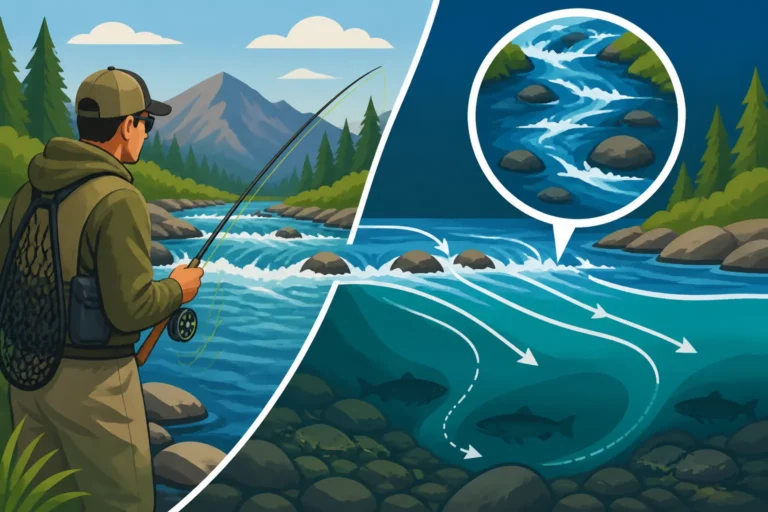
On a spring creek, "reading the water" takes on a whole new dimension. The currents might look slow and uniform, but beneath the surface, subtle seams, micro-eddies, and conflicting currents are constantly at play. These nearly invisible forces can drag your fly unnaturally, signaling to a wary trout that something is amiss.
- Observe Surface Currents: Look for slight variations in the surface film. A wrinkle here, a swirl there – these indicate changes in current speed that can kill your drift. Pay attention to how natural debris (leaves, bubbles) moves. Your fly needs to mimic that movement precisely.
- Identify Feeding Lanes: Trout in spring creeks often hold in very specific feeding lanes, waiting for food to drift into their strike zone. These lanes are usually adjacent to weed beds, current seams, or slight depressions in the streambed. A fish rising repeatedly in the same spot is a clear indicator of a feeding lane. Your job is to drop your fly directly into that lane, upstream of the fish, allowing it to drift naturally into its view.
- Recognize Subtle Rises: Spring creek trout often rise subtly, barely breaking the surface. A small dimple, a gentle sip – these are often indicators of fish taking tiny midges or Baetis. Don't mistake them for splashing rises you might see on a freestone river. Learning to spot these subtle takes is crucial. Our guide on How to Read a Riffle on an Idaho River can provide a foundation, but spring creek reading is a step beyond.
The Delicate Cast and Presentation
Accuracy and delicacy are far more important than distance or power here. A noisy, splashy cast will send trout scattering faster than you can blink.
- Low-Angle Casts: Instead of high, open loops, practice low-angle casts that keep your line closer to the water. This reduces false casts and minimizes the shadow of your line overhead, which can spook fish.
- Reach Casts: This is an indispensable technique. As your line unfurls, extend your rod arm upstream or downstream to position your rod tip, introducing slack into your line after the fly has landed. This gives your fly a longer, drag-free drift.
- Slack-Line Casts (S-Casts/Serpentine Casts): By wiggling your rod tip during the forward cast, you can intentionally put wiggles or "S" curves into your fly line. This slack helps delay drag and is invaluable when dealing with conflicting currents.
- Accuracy Over Distance: Focus on placing your fly precisely a few feet upstream of the feeding fish. Often, this requires shorter, more controlled casts rather than trying to bomb it across the river. Think "soft landing" and "surgical strike." If you need to refine your technique, consider practicing the skills covered in How to Cast to Selective Trout on a Spring Creek.
Achieving a Drag-Free Drift
This is the holy grail of spring creek dry fly fishing. A drag-free drift means your fly is moving at the exact same speed as the natural current around it, without any tension from your line. Any drag, even microscopic, will instantly alert a discerning trout that your fly is artificial.
- Line Management is Key: As soon as your fly lands, begin managing your line. Watch your leader and fly line intently. If you see any unnatural acceleration, deceleration, or deviation from the natural current, it's dragging.
- Mending: Mending involves repositioning your fly line without moving your fly. If your line starts to pull your fly, gently lift your rod tip and roll a small portion of your line upstream or downstream, "mending" it to put more slack in the right place. This takes practice and can be done mid-drift.
- Upstream vs. Downstream Approaches: Sometimes approaching a fish from directly upstream, casting a short line, and simply following the drift with your rod tip can be effective. Other times, a downstream approach, making a reach cast upstream and letting the fly drift back towards you, can offer a longer, more natural drift with less line over the fish. Experiment to see what works best for the specific spot.
Hook Set and Fighting Fish
Once a trout decides to take your perfectly presented dry fly, the moment of truth arrives. These fish are often strong, and your tippet is light.
- Gentle Hook Set: Unlike setting the hook on a nymph or streamer, a dry fly hook set should be gentle but firm. A sharp, powerful jerk can easily snap fine tippet. A subtle lift of the rod, feeling for the weight of the fish, is usually all it takes.
- Fight with the Rod, Not the Reel: Your rod is designed to absorb shock. Keep your rod tip high and use its flex to tire the fish. Apply steady, side pressure to steer the fish away from snags like weed beds or fallen logs.
- Protect Light Tippets: Be prepared for surges. Let the drag do its job. Don't try to stop a powerful run with a locked reel; you'll break off instantly. Often, a quick burst of speed from a trout will snap a 6X or 7X tippet, so try to guide the fish to open water as much as possible. It can take a surprisingly long time to land a big fish on such light tackle, so patience is key.
Advanced Tips for Tricky Spring Creek Conditions
Just when you think you've got spring creeks figured out, Mother Nature throws a curveball. Wind, changing light, or a sudden change in fish behavior can make things incredibly tough.
Dealing with Wind and Challenging Light
Wind is the bane of dry fly anglers, especially on open spring creeks. It makes casting accurate and delicate presentations incredibly difficult and can wreak havoc on your drift.
- Casting in Wind: Practice casting into and with the wind. A tighter loop, often achieved by keeping your casting stroke shorter and more powerful, can help punch through the wind. When the wind is at your back, try a parachute cast to help your fly land softly without tangling your leader.
- Wind and Drift: The wind will inevitably push your line and fly around, creating drag. Longer leaders and slack-line casts become even more critical. You might need to make more frequent, subtle mends to counteract the wind's effects.
- Challenging Light: Bright, sunny days can make trout incredibly spooky, driving them to hide in deeper water or under cover. Low light, like overcast days or mornings and evenings, often brings fish out and makes them more comfortable feeding on the surface. On bright days, focus on shaded areas or use even longer leaders and a stealthier approach. Conversely, sometimes a heavier overcast sky can trigger a hatch, making fish more active.
Approaching Skittish Trout on Idaho Spring Creeks
Spring creek trout are not just selective in their eating; they are often incredibly wary of predators, including you. Stealth is non-negotiable.
- Low Profile: Stay low to the ground. Crouch, kneel, or even crawl into position. Your silhouette against the sky is a huge red flag for trout.
- Slow Movements: Avoid sudden, jerky movements. Move slowly and deliberately. Think of yourself as a predator stalking its prey – any sudden motion can send them fleeing.
- Stay Back: Use the longest practical casting distance to avoid getting too close. The farther you are from the fish, the less likely you are to spook them. This means practicing those longer, accurate casts.
- Avoid Shadows: Be mindful of your shadow. If it falls across the water where you're fishing, you're broadcasting your presence. Pay attention to the sun's position and try to fish with the sun in your face or to your side. These fish have adapted to a clear environment, making them incredibly sensitive to any changes in their surroundings.
When to Adjust: Switching Flies and Strategies
One of the most common frustrations on spring creeks is getting repeated refusals, even when you're confident you've matched the hatch and executed a good drift. This is when it's time to adapt.
- Change Size: Even if you have the right pattern, a trout might be keying in on a slightly different size. Go one size smaller, or sometimes even one size larger, if you're getting refusals.
- Change Shade/Hue: Natural insects aren't all uniform in color. Subtle differences in the shade of olive or brown can make a difference. If you have the same pattern in a slightly different hue, try it.
- Change Presentation: Is your fly consistently dragging? Re-evaluate your casting and mending. Maybe a different cast (e.g., a reach cast instead of a simple overhead cast) will solve the issue.
- Change Pattern: If size and hue changes don't work, try a different pattern that represents the same insect. Sometimes a trout is looking for a cripple, an emerger, or a spinner pattern rather than a perfect adult. The trout on these waters are incredibly observant.
- Take a Break: Sometimes, the best strategy is to simply walk away from a particularly stubborn fish for a few minutes. Give it time to forget your presence, then return with a fresh perspective and a new fly or approach. Remember, the fish aren't always wrong; sometimes, we just need to try something different. This is part of the overall philosophy covered in our Idaho Fishing Techniques Guide.
Common Idaho Spring Creek Hatches and Dry Fly Patterns
This table offers a quick reference for some of the common insects you'll encounter on Idaho's spring creeks and the dry fly patterns that typically imitate them. Remember, sizes and specific colors can vary, so observation is always your best tool!
| Insect (Common Name) | Season | Sizes (Hook #) | Common Dry Fly Patterns | Notes |
|---|---|---|---|---|
| Midges (Chironomids) | Year-round | #18 – #28 | Griffith's Gnat, Adult Midge, Cluster Midge | Crucial in winter and early spring, often tiny sips. |
| Blue-Winged Olives (BWO) | Spring/Fall/Cloudy | #18 – #24 | Parachute Adams, Comparadun BWO, Sparkle Dun BWO | Prolific hatch, fish are very selective to size and drift. |
| Pale Morning Duns (PMD) | Summer | #14 – #18 | Parachute PMD, CDC Comparadun PMD, Rusty Spinner | Often hatch in late morning/early afternoon, creamy yellow bodies. |
| Caddisflies | Spring/Summer/Fall | #14 – #20 | Elk Hair Caddis, X-Caddis, Goddard Caddis | Erratic, skittering rises; often fished with a dead drift or slight twitch. |
| Tricos (Tiny Mayflies) | Summer Mornings | #24 – #28 | Trico Spinner, Parachute Trico, Black Gnat | Very small, often fished as a spinner fall. |
| Ants | Summer/Early Fall | #14 – #20 | Cinnamon Ant, Black Ant, Fur Ant | Excellent when fish are ignoring emerging insects. |
| Hoppers/Grasshoppers | Summer/Early Fall | #8 – #14 | Dave's Hopper, Morrish Hopper, Chernobyl Ant | Best on windy days, near grassy banks. |
Remember, carrying a variety of patterns in different sizes and shades will significantly increase your chances of success. And don't forget to check local regulations; sometimes, special rules apply to specific sections, such as Idaho Barbless Hook Requirements in certain waters.
Ultimately, dry fly fishing a spring creek is a journey. It’s about slowing down, observing, refining, and celebrating the small victories. It’s about appreciating the beauty of these unique Idaho waters and the incredible trout that call them home. It’s often said that if you can master spring creeks, you can fish anywhere, and there's a lot of truth to that.
Disclaimer
This article is for general informational purposes only and does not constitute professional advice. Laws, prices and regulations vary by location and change over time. Consult a qualified professional for guidance on your specific situation.