How to Catch Mountain Whitefish in Cold Rivers
It can be surprisingly tricky to consistently hook into mountain whitefish, especially if you're used to more aggressive trout. They're often overlooked, or seen as a nuisance, but trust me, these feisty cold-water dwellers offer a fantastic angling challenge in Idaho's crystal-clear rivers. This guide is all about demystifying the art of catching mountain whitefish, giving you the insider tips and techniques to target them successfully.
Understanding Mountain Whitefish and Their Preferred Haunts
Before we even talk about rods and reels, let's get to know the mountain whitefish a little better. These incredible native fish are often overshadowed by their more famous trout cousins, but they're a vital part of Idaho's river ecosystems. They thrive in cold, clean, oxygen-rich water, which is why you'll find them in some of our most pristine mountain streams and larger rivers.
Where to Find Whitefish in Cold Rivers
Mountain whitefish aren't just swimming aimlessly; they have preferred hangouts. Think like a whitefish for a moment. They're constantly looking for food, but also trying to conserve energy and avoid predators. This means they’ll often be found near the bottom, right in the current seams, where food drifts by but they don't have to fight the main flow too hard.
You'll typically locate them in the deeper sections of riffles, where fast-moving water transitions into slower, deeper pools. These areas create perfect feeding lanes. They love holding behind current breaks like large rocks, submerged logs, or even subtle changes in the riverbed. Tailouts of long, slow pools, just before the water picks up again, are also prime spots. If you're on a larger river like the Salmon River or the South Fork of the Snake River, look for slightly slower, deeper runs with gravel bottoms. These fish are bottom feeders, so they're rarely found near the surface unless a significant hatch is occurring, or they're darting after a specific food item. In colder months, they might congregate in even deeper, slower pools where the water temperature is more stable. Understanding how to read water on Idaho's rivers is key to consistently finding these fish.
Identifying Mountain Whitefish
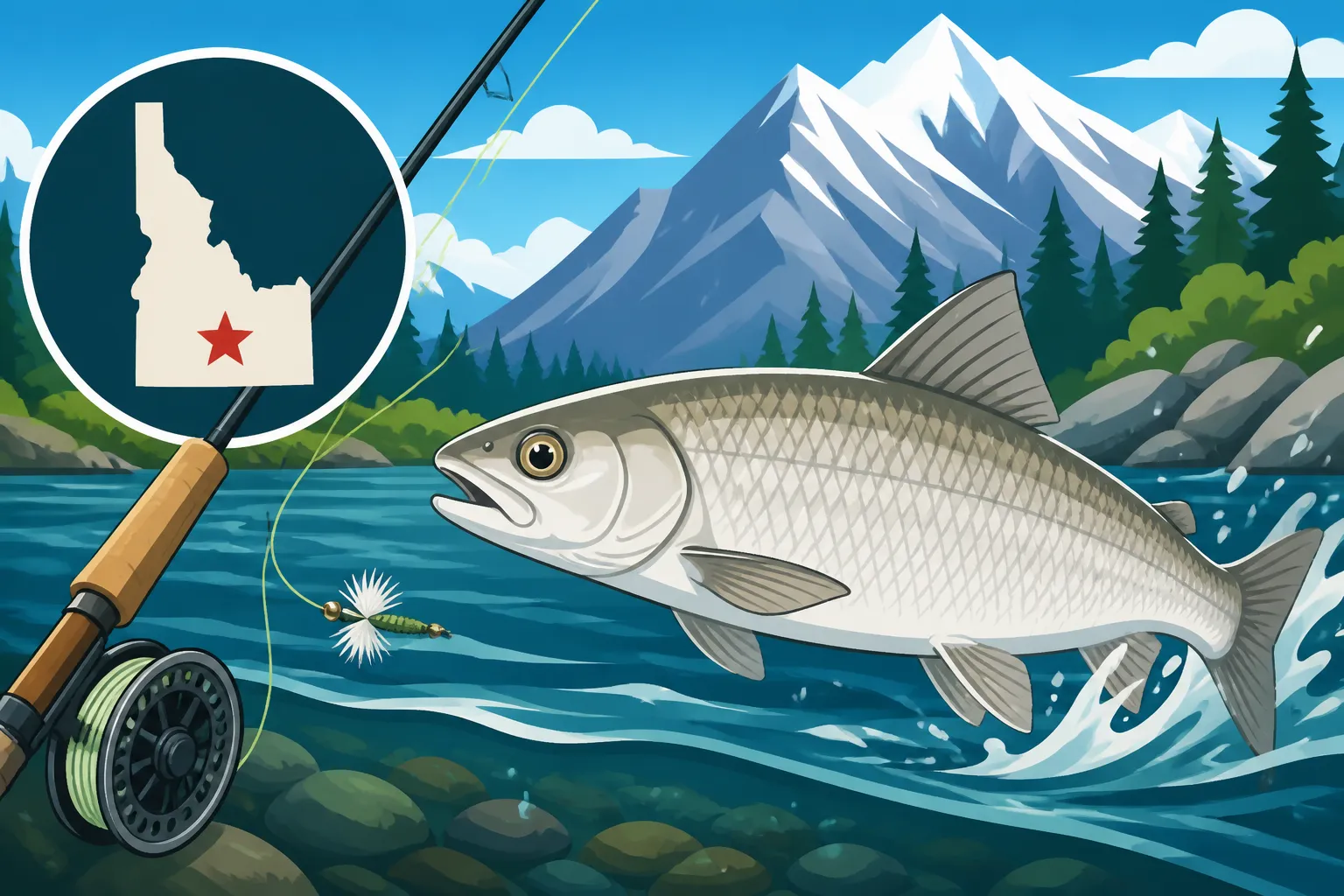
Sometimes anglers confuse mountain whitefish with various trout species, especially young rainbow or cutthroat trout. However, whitefish have distinct features. They have a slender, torpedo-shaped body with relatively small scales and a small, underslung mouth. Their color is generally silvery or bronze, with olive or brownish backs, fading to white on their bellies. Unlike trout, they lack the vibrant spots or distinct coloration, though they can have subtle markings. Their fins are typically clear or slightly dusky. Perhaps the most distinguishing feature is their adipose fin (the small, fleshy fin between the dorsal and tail fins), which is present, just like in trout and salmon, but their overall mouth shape is a giveaway—it's much smaller and points downwards, perfect for picking up insects off the riverbed. They rarely exceed 20 inches in Idaho, with a common size being 10-16 inches in most rivers.
Essential Gear for Mountain Whitefish Angling
You don't need highly specialized gear to catch whitefish, but a few considerations can drastically improve your success. Think light tackle and sensitive setups to detect their often subtle bites.
Rods, Reels, and Line Choices
When it comes to rods, sensitivity is paramount. A light to ultra-light spinning rod, typically 6 to 7 feet long, with a fast action tip, is ideal. This allows you to feel those faint taps and subtle pulls that signal a whitefish bite. For fly anglers, a 3-weight or 4-weight fly rod, about 8 to 9 feet long, offers the delicate presentation needed for small flies and better feel for the takes.
Matching your rod with the right reel is crucial. A small, smooth spinning reel in the 1000 or 2000 series is perfect for spinning setups, providing enough drag for these spirited fighters while keeping the overall setup light. For fly fishing, a standard disc-drag fly reel that balances your chosen rod will suffice; whitefish aren't typically making drag-screaming runs, but a smooth drag is always nice.
Line choice is also important. For spinning gear, I recommend 4-pound test monofilament or fluorocarbon. Monofilament offers a bit more stretch and forgiveness, while fluorocarbon is nearly invisible underwater and incredibly sensitive, allowing you to detect those subtle bites even better. If you’re going with a braid, tie on a fluorocarbon leader of about 4-6 feet for stealth. For fly fishing, a weight-forward floating line matched to your rod weight is standard, with a 9-foot tapered leader ending in 4x-6x tippet, depending on the fly size and water clarity.
Terminal Tackle and Weights
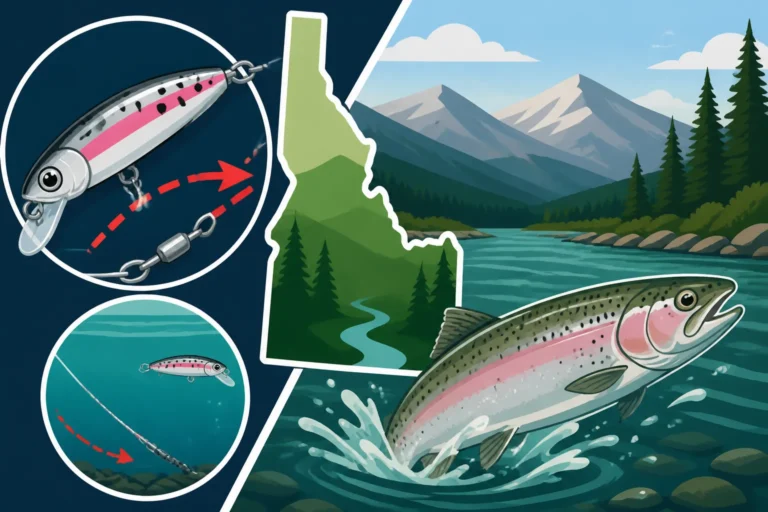
Since whitefish are almost exclusively bottom feeders, your terminal tackle needs to get your bait or lure down to them efficiently. For spin fishing, a simple slip-sinker rig or a drop-shot rig works exceptionally well. A small #8 or #10 baitholder hook (or even a small treble hook if allowed and using bait) is usually appropriate. Swivels are your friend to prevent line twist, especially in current.
You'll need a selection of split shot or small lead weights to get your offerings to the desired depth without hindering the natural drift. Start with lighter weights and gradually increase until you're ticking the bottom occasionally. The goal is to present your bait as naturally as possible. In fast current, a small pencil lead or Slinky weight can help keep your presentation down without snagging as much as a round split shot. On slower, deeper runs, a single split shot might be all you need.
For fly fishing, you'll be using strike indicators and various amounts of split shot or lead putty on your leader, depending on the depth and current speed. Again, the idea is to get your nymph drifting naturally near the bottom. Small, high-quality swivels are also handy for connecting leaders to tippets, especially if you're running a multi-nymph rig. Remember that Idaho fishing regulations explained cover specific rules about weights and hooks.
Top Techniques for Catching Mountain Whitefish
Consistency in catching mountain whitefish often comes down to presenting your offering effectively right in their feeding zone. Whether you prefer spin fishing or fly fishing, there are a few techniques that truly shine.
Nymphing and Drift Fishing
Without a doubt, nymphing is probably the most consistently productive method for mountain whitefish, especially for fly anglers. This technique involves drifting an artificial insect imitation (a nymph) along the river bottom, mimicking natural aquatic insects that whitefish feed on. Use a strike indicator set at a depth that allows your nymph to tumble along the bottom, occasionally ticking rocks. The drift needs to be as natural and drag-free as possible.
For spin anglers, a similar "drift fishing" approach with bait or small artificials is incredibly effective. This means casting upstream and allowing your bait to drift downstream, maintaining a tight line to feel bites while letting the current carry your offering naturally. You'll want just enough weight to bounce along the bottom without constantly snagging. In a faster riffle, a heavier split shot might be needed, while in a slower run, just a couple of small ones could be perfect. This method, whether fly or spin, gets your offering into the whitefish's preferred feeding zone. When using this technique, be mindful of Idaho Rules on Using Live Bait.
Spin Fishing with Small Lures
While whitefish are primarily bottom feeders, they will absolutely strike small lures, especially those that mimic forage fish or aquatic insects. Small inline spinners, like a size 0 or 1 Panther Martin or Rooster Tail, can be very effective. Cast them quartering upstream and retrieve slowly, allowing them to tumble and flash near the bottom. Small jigs, 1/32 to 1/8 ounce, tipped with a tiny piece of worm or scented soft plastic, are also excellent. Bounce these jigs along the bottom in pools and slower runs. The key is small and subtle; don't overpower them with big, aggressive presentations. For a variety of options, checking out the "Best Lures for Idaho Trout Fishing" might give you some ideas that also apply to whitefish.
Fly Fishing with Dry Flies and Streamers
While nymphing is king, don't rule out other fly fishing techniques entirely. On rare occasions, especially during a strong mayfly or caddisfly hatch, whitefish will rise to dry flies. If you see fish consistently rising and ignore your nymphs, try a small dry fly. However, this is more of an exception than the rule.
Streamers can also be effective, particularly small, unweighted patterns fished on a dead drift or with a very subtle retrieve close to the bottom. Patterns like a black Woolly Bugger (size 10 or 12) or a small sculpin imitation can entice a strike. This technique is less about aggressive pursuit and more about presenting an opportunistic meal. For those looking to really delve into this, the "How to Fly Fish in Idaho" guide offers excellent foundational knowledge.
Best Baits and Lures for Mountain Whitefish
Just like any fish, whitefish have their preferences. Sticking to their natural diet in cold river environments will lead to the most success.
Natural Baits That Work Wonders
When allowed by Idaho Fishing Regulations Explained, natural baits are often irresistible to mountain whitefish. The hands-down champion bait is a small piece of nightcrawler or garden worm. Thread a small piece (about 1/2 to 1 inch) onto a size #8 or #10 bait hook, ensuring the hook point is exposed. The scent and natural wiggle are incredibly attractive. Maggots and wax worms are also highly effective, especially when fished under a bobber or on a small jig.
Other natural options include small grasshoppers or crickets when they're prevalent in the late summer and fall, or even salmon eggs. The key is to present them naturally on or very near the bottom. Remember, whitefish have small mouths, so keep your bait offerings small and manageable.
Effective Artificial Lures
For artificials, think small and imitative. The best lures mimic the insects and small prey items that whitefish naturally encounter.
- Small Jigs: As mentioned earlier, 1/32 to 1/8 ounce marabou jigs or small leadhead jigs tipped with a tiny plastic grub (like a Berkley PowerBait Micro Grub or a Bobby Garland Baby Shad) are killer. Black, olive, white, and brown are excellent colors.
- Inline Spinners: Size 0 or 1 Mepps Aglia, Blue Fox Vibrax, or Rooster Tail spinners in silver, gold, or black with bright accents can trigger strikes due to their flash and vibration. These are readily available on Amazon and in most tackle shops.
- Flies (Nymphs): This is where fly anglers excel. Key patterns include:
- Pheasant Tail Nymph: A classic all-around insect imitation.
- Hare's Ear Nymph: Another versatile pattern mimicking various aquatic insects.
- Prince Nymph: A flashier, attractive pattern that often works when others don't.
- Copper John: Heavy and buggy, great for getting down quickly.
- Zebra Midge: Especially effective in colder weather or when fish are being picky. Sizes 14-20 are usually best.
- Egg Patterns: Especially in rivers with spawning salmon or steelhead, egg patterns can be deadly.
Don't be afraid to experiment with size and color. Sometimes a subtle change can make all the difference. The "Best Bait and Lures for Idaho Fishing" article provides more general insights that can be adapted for whitefish.
Mastering the Art of the Bite and Fight
Catching mountain whitefish is as much about finesse as it is about brute force. Their bites can be incredibly subtle, and their fight, while not epic like a steelhead, is surprisingly spirited on light tackle.
Recognizing the Subtle Take
This is where many anglers miss out. Whitefish bites are rarely aggressive tugs like a bass or a hard-hitting trout. Instead, expect a gentle tap, a slight hesitation in your line's drift, or sometimes just a feeling of added weight. If you're spin fishing, your rod tip might just give a tiny twitch. If fly fishing with a strike indicator, it might dip slowly, twitch, or simply stop in the current.
It requires constant vigilance and focus. Keep your eyes glued to your line or indicator. Any anomaly in the natural drift warrants a gentle but firm sweep-set of the hook. Don't go for a huge, trout-setting arc, as their mouths are delicate and you might pull the hook free or tear their mouth. A quick, upward snap of the wrist is often enough. Trust your instincts; if something feels "off," set the hook. This is where the sensitivity of your rod and line truly pays off. Many anglers improve their catch rate by simply paying closer attention to these subtle signs.
Playing and Landing Whitefish
Once hooked, mountain whitefish put up a surprisingly good fight, especially in current. They tend to roll and twist, often staying deep and using the current to their advantage. On light tackle, they can feel like much larger fish. The key is to keep a steady, gentle pressure on the fish and avoid horsing them in. Their mouths are somewhat soft, so too much pressure can tear the hook out.
Use the bend of your rod to absorb their head shakes and rolls. If you're drift fishing in a river, they'll often try to stay in the current, so guide them gently towards a slower eddy or slack water. When they get close, be ready with a small net. A rubberized net is ideal as it protects the fish's slime coat and scales, especially if you plan to release them. Avoid beaching them on rocky shores, as this can cause injury. Handle them gently and quickly, especially in cold weather, to minimize stress. If you're interested in other species, the "Idaho Fish Species Guide" has more information on what you might encounter.
Disclaimer
Please ensure you always check the most current Idaho fishing regulations and season dates before heading out. Rules and limits can change, and it's every angler's responsibility to be aware of and abide by them. Always practice responsible angling, including proper catch and release techniques for any fish you don't intend to keep.