Idaho Fishing Techniques for Muddy Spring Water
Oh, the joy of spring in Idaho! The mountains shed their snowy blankets, the rivers swell with eager anticipation, and a collective buzz fills the air as anglers dust off their gear. But let's be real, often with that beautiful melt comes a less-than-picturesque reality: muddy, churning waters that can make finding fish feel like searching for a needle in a haystack. It's frustrating when you're ready to hit your favorite spot, only to find the river looking like a chocolate milkshake. This guide is here to demystify those murky conditions, offering you the techniques, gear, and mindset to successfully fish Idaho's muddy spring waters and turn that frustration into a fantastic fishing day.
Understanding Idaho's Spring Runoff and Muddy Waters
Spring in Idaho is a season of dramatic change, and while beautiful, it can present some real challenges for us anglers. The transformation of clear, inviting streams into murky, raging torrents happens quickly, leaving many scratching their heads about where the fish have gone and what to do next.
Why Spring Runoff Happens in Idaho
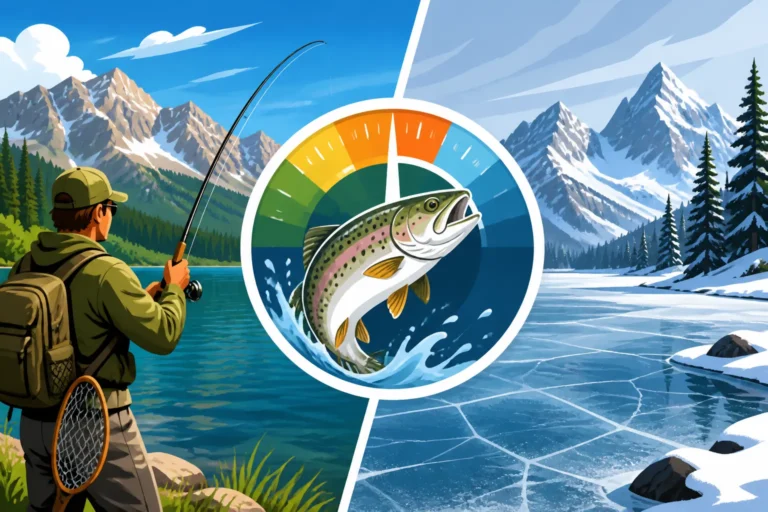
The primary culprit behind Idaho's muddy spring waters is, quite simply, the snowmelt. Our state is blessed with incredible mountain ranges, from the majestic Sawtooths to the rugged Selkirks, and these peaks accumulate immense amounts of snow over the winter months. As temperatures rise in late spring and early summer, this snow begins to melt rapidly. This isn't just a gentle trickle; it's a monumental hydrological event. Combine that with spring rains, and you have an unstoppable force that scours the landscape.
This massive influx of water rushes down mountainsides, through valleys, and into our rivers and streams, like the Clearwater River and the mighty Salmon River. As it moves, it picks up sediment – soil, sand, gravel, and organic debris – from the banks and streambeds. This is what gives the water its characteristic brown, turbid appearance. The sheer volume and velocity of the water, especially in drainages where wildfires have recently occurred, can loosen even more material, intensifying the murkiness. This is a natural cycle, but it certainly changes the game for fishing. For a deeper dive into how this affects angling, check out our guide on Idaho's Spring Runoff and How It Affects Fishing.
How Sedimentation Affects Fish Behavior
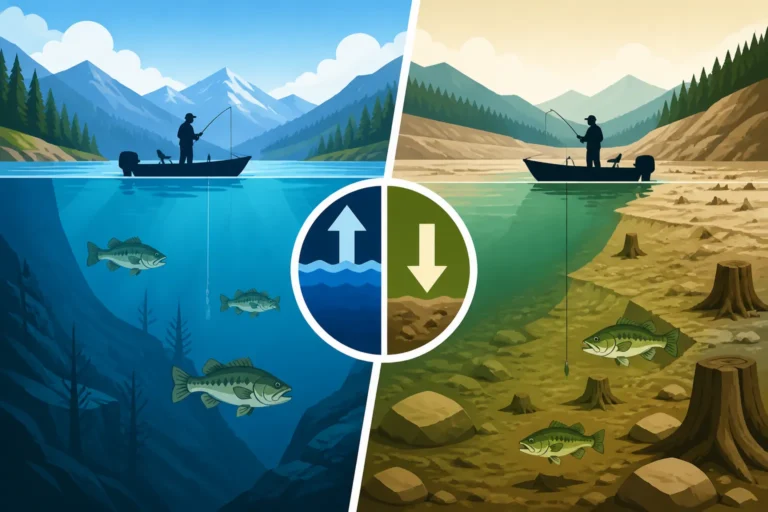
Muddy water isn't just aesthetically displeasing; it fundamentally alters the aquatic environment and, consequently, fish behavior. The most obvious impact is reduced visibility. Fish, especially sight-feeders like trout, rely on their vision to locate prey and avoid predators. When the water is opaque, their hunting strategies change dramatically. They can't see as far, so they become less active and might move to areas where the water is slightly clearer or where they can rely on other senses.
Beyond visibility, heavy sedimentation can reduce dissolved oxygen levels, especially if there's a lot of decaying organic matter being churned up. This can make fish lethargic and less inclined to feed aggressively. Food sources themselves are affected; insect hatches might be suppressed, and small baitfish can become disoriented. Fish often seek refuge from the strong currents and debris-laden water, moving into slower eddies, behind large rocks, or into the mouths of smaller, clearer tributary streams. These areas offer a break from the main current and often present clearer water and more stable conditions, making them prime targets for anglers.
The Challenges of Fishing Muddy Water
Fishing in muddy conditions can feel like a completely different sport than fishing in clear water. Many anglers get discouraged, pack up early, or avoid the water altogether. But understanding the specific challenges can help you adapt and still have a successful outing.
Impaired Visibility for Both Angler and Fish
The most immediate and obvious challenge is the severely reduced visibility. As an angler, you can't see the bottom structure, where fish might be holding, or even subtle currents that could indicate a good spot. This means you have to rely more on reading the water's surface, understanding typical river characteristics, and developing a feel for what's happening beneath the surface. You can't visually track your lure, making bite detection more challenging, especially with lighter takes.
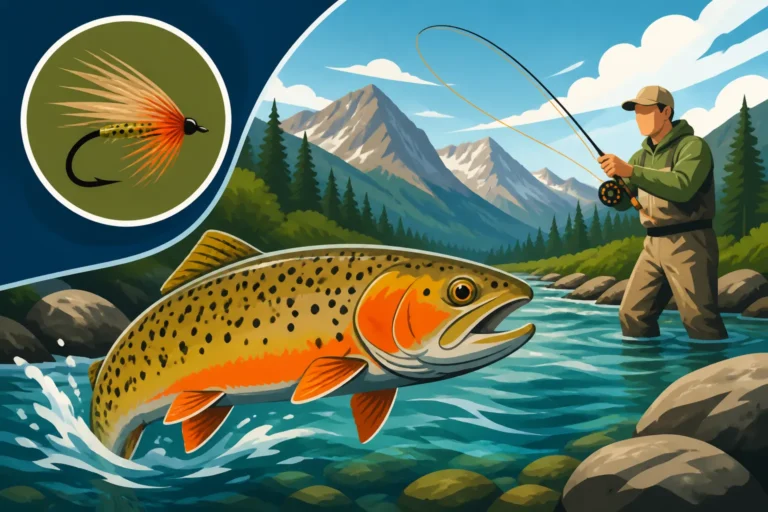
For the fish, this lack of visibility is even more profound. Fish like rainbow trout and cutthroat trout, which often key in on visual cues, are forced to change their predatory tactics. They won't spot a small, natural-colored fly or lure from afar. This means your presentation needs to be much closer to the fish, and you need to give them something they can easily detect using senses other than sight. Trying to use delicate, clear-water presentations in these conditions is often an exercise in futility.
Altered Fish Feeding Habits and Locations
When the water turns muddy, fish feeding habits shift dramatically. They move away from areas of heavy current and turbid water, seeking out slower, more oxygenated, and often slightly clearer water. This might be in the soft seams behind boulders, in deep pools, or along the edges of the river where the current is less intense. The mouths of incoming creeks or springs that might be running clearer than the main river can become fish magnets.
Their feeding strategies also adapt. Instead of chasing down prey by sight, fish rely heavily on their lateral line system to detect vibrations and their sense of smell to locate food. This means that lures and baits that create a strong thump or wobble, or those imbued with powerful scents, become far more effective. Aggressive, fast retrieves that work in clear water are often replaced by slow, deliberate presentations that give fish more time to home in on the offering. Think of it like trying to find food in a dark room – you'd use your hands and nose, not your eyes. Fish do something similar in muddy water.
Essential Gear and Tackle for Muddy Conditions
When faced with off-color water, your usual go-to gear might not be the most effective. Adapting your setup is crucial for success. It’s not just about what you throw in the water, but how you’re able to feel and detect what’s happening down there.
Rods, Reels, and Lines for Low Visibility
In murky conditions, the subtlety of your line choice and rod sensitivity become paramount. You're going to be relying less on seeing your strike indicator or line twitch, and more on feeling those often-light bites. For rods, consider something with a bit more backbone than you might use in clear water, allowing you to drive a hook home through a fish that might be less aggressive. A medium-heavy action rod, around 6.5 to 7 feet, is often a great choice for spinning gear, especially when tossing heavier baits or lures. Look for rods with good sensitivity in the tip, even if they have a strong backbone.
When it comes to lines, forget delicate fluorocarbon leaders for invisibility. In muddy water, visibility isn't an issue for the fish, and you'll need strength and feel. Braided line, with its near-zero stretch, transmits every bump and subtle tap directly to your hands. This is a game-changer for detecting bites in turbid water. You might run a short, heavier fluorocarbon or monofilament leader (say, 2-3 feet) off your braid, not for invisibility, but to protect your main line from abrasion against submerged debris. For those who prefer monofilament, step up a pound or two in breaking strength. For specific applications like steelhead fishing, a heavier, more durable mainline like a 20-30 lb test braid can be critical when battling powerful fish in heavy current, as discussed in our Idaho Steelhead Fishing Guide. You can find reliable braided lines from brands like PowerPro or Berkley on platforms like Amazon, making it easy to get them delivered before your next trip.
Lures and Baits That Shine in Turbid Water
This is where you really need to think like a fish with poor eyesight but excellent other senses. Your goal is to trigger strikes through vibration, sound, and scent, rather than visual appeal alone.
Vibrating Lures: Anything that displaces a lot of water is your friend.
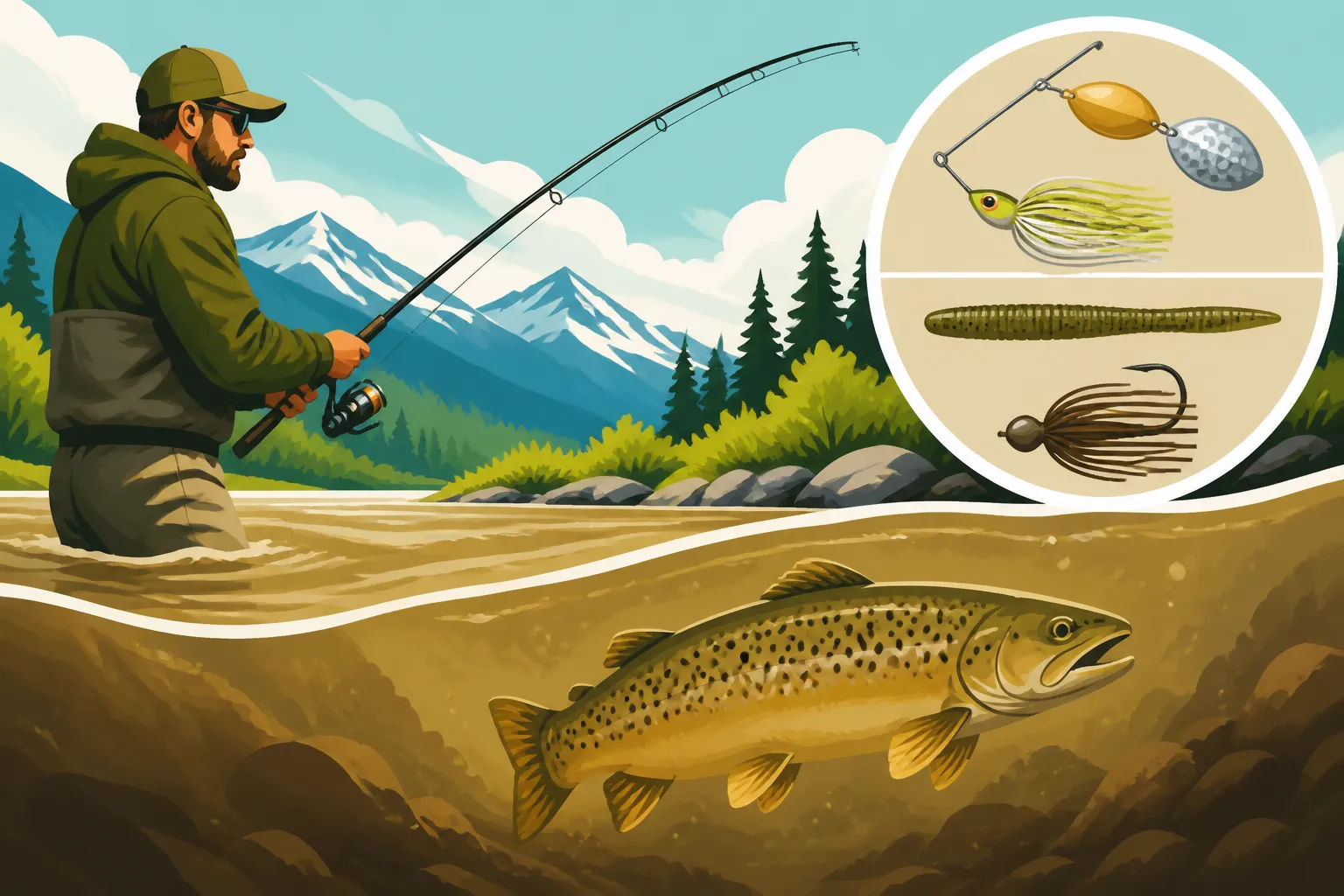
- Spinnerbaits: These are bass fishing staples, but their thumping blades are irresistible in muddy water for many species, including bigger trout and smallmouth bass. The flash isn't as critical as the vibration.
- Crankbaits: Deeper diving, wide-wobbling crankbaits, especially those with internal rattles, send out powerful sonic signals. Choose models that are designed to bump off the bottom, creating more commotion.
- Vibrating Jigs (ChatterBaits): These hybrids offer the flash and vibration of a spinnerbait with the profile of a jig, creating a unique thumping action that fish can't ignore.
Scented Baits and Soft Plastics: If they can't see it, let them smell it!
- Natural Baits: Worms, salmon eggs, or even chunks of cutbait are fantastic. The natural scent trail is a powerful attractant.
- Scented Soft Plastics: Brands like Berkley Gulp! and PowerBait are designed to leach scent, making them highly effective. Worms, grubs, and creature baits in these formulations work wonders. Even applying scent sprays to your regular soft plastics or hard baits can significantly increase your strike rate. You can often find a wide variety of these scented baits on Amazon.
- Jigs with Scent/Trailers: Pairing a jig with a scented soft plastic trailer or tipping it with a piece of worm amplifies its effectiveness.
High-Contrast Colors: While scent and vibration are key, color still plays a role, especially in slightly stained rather than completely opaque water.
- Bright/Fluorescent Colors: Chartreuse, neon green, hot pink, and fire tiger patterns stand out better in low light conditions.
- Darker Silhouettes: Sometimes, a dark color like black or purple can create a strong silhouette against a slightly lighter background, making it easier for fish to detect.
Here's a quick reference table to help choose your weapon:
| Lure/Bait Type | Key Feature for Muddy Water | Best for Species | Notes |
|---|---|---|---|
| Spinnerbaits | Strong Vibration, Flash | Bass, Larger Trout, Pike, Muskie | Use larger blades for more thump; bright skirts. |
| Crankbaits | Wide Wobble, Rattles | Bass, Walleye, Trout | Focus on square bills for shallow rocky areas, deep divers for pools. |
| Vibrating Jigs | Unique Thump, Action | Bass, Pike | Great all-around search bait. |
| Scented Soft Plastics | Powerful Scent Trail | Trout, Bass, Panfish, Catfish | Berkley Gulp!, PowerBait worms/grubs; slow retrieves. |
| Natural Baits | Strong Natural Scent | Trout, Steelhead, Catfish, Panfish, Sturgeon | Worms, salmon eggs, roe bags, cutbait; often fished still or drifted. |
| Jigs (Tipped) | Profile, Scent/Trailer | Bass, Trout, Crappie, Perch | Pair with scented plastic or worm; work slow and close to bottom. |
When selecting your gear, remember that durability is also important, as muddy water often brings more debris. For a broader overview of what baits and lures work across Idaho's diverse fisheries, check out our guide on Best Bait and Lures for Idaho Fishing.
Proven Techniques for Fishing Idaho's Muddy Spring Waters
Having the right gear is only half the battle. How you present that gear makes all the difference when the water is looking like a silt-filled mess. These techniques capitalize on a fish's non-visual senses and their tendency to hold in specific areas during runoff.
Slow and Low Presentation Strategies
In muddy water, fish often hug the bottom, seeking refuge from the strong currents and waiting for food to come to them. They're typically not actively chasing, so your presentation needs to be slow, deliberate, and close to where they're holding.
-
Bottom Bouncing/Drifting: This is a fantastic technique, especially for trout and steelhead in rivers like the Salmon River or the Clearwater. Use enough weight (lead, slinky weights, or pencil sinkers) to keep your bait or lure bouncing along the bottom without constantly snagging. Let the current do the work, slowly carrying your offering downstream. The key is to maintain a slight tension on your line so you can feel those subtle taps or the sudden heaviness that indicates a bite. This methodical approach gives fish ample time to detect your bait by scent or vibration, even in zero visibility. For more specific steelhead tactics, our guide on How to Fish for Steelhead in the Clearwater River offers excellent advice that can be adapted to muddy conditions.
-
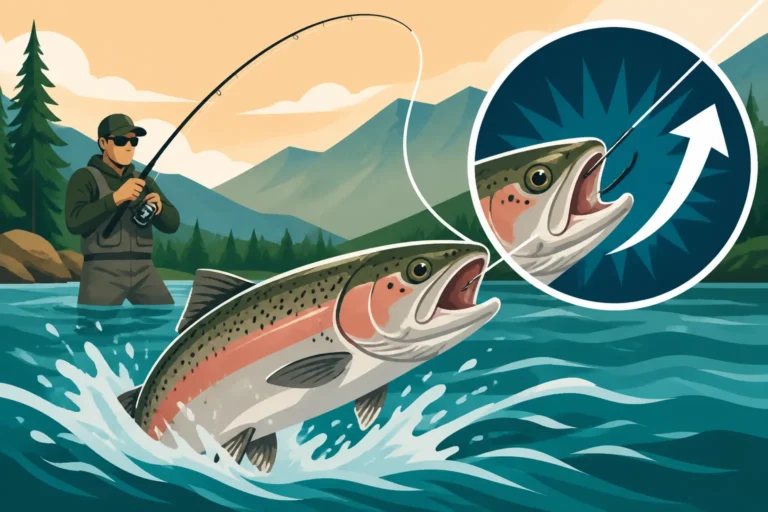
Slow Rolling Crankbaits and Spinnerbaits: Instead of burning these lures back to the bank, slow down your retrieve significantly. You want the lure to "wobble" or "thump" its way back, maximizing its vibration. Many anglers make the mistake of retrieving too fast, pulling the lure over the fish before they even know it's there. Try to maintain bottom contact with crankbaits, letting them deflect off rocks and logs, which can often trigger a reaction strike.
-
Jigging: Jigs, especially those tipped with scented soft plastics or natural bait like a worm, are incredibly versatile. Cast them out, let them sink to the bottom, and then use a slow lift-and-drop retrieve. The jig's weight makes noise on the bottom, and the motion of the soft plastic creates subtle vibrations. This technique works well in deeper pools or slower moving water for species from trout to bass to crappie.
Targeting Transition Zones and Clearer Water Pockets
Even in widespread murkiness, there are always pockets or seams of relatively clearer water where fish will congregate. Finding these "sweet spots" is often the secret to success during runoff.
-
Eddies and Current Seams: Look for areas where the main current slows down, creating an eddy or a distinct seam. This could be behind a large boulder, a log jam, or on the inside bend of a river. These spots offer fish a break from the main current and often collect food. The water here might also be slightly less turbid than the main flow. Cast into the main current and let your lure or bait drift into these calmer zones, as fish will be sitting at the edge, waiting to ambush anything that washes by.
-
Tributary Mouths: This is perhaps the most reliable spot to find active fish during runoff. When a smaller, clearer stream flows into a muddy main river, it creates a plume of cleaner, often warmer, water. Fish from the main river will push into or hold right at the edge of this clear water seam, where visibility is better, and food sources might be more plentiful. This is a prime location to target with slow-drifting baits or scented jigs. Often, the incoming water carries more oxygen and a different food base, making it a buffet for hungry fish.
-
Bank Edges and Overhanging Cover: Fish will often move closer to the banks during high, muddy water. The current is typically slower here, and overhanging trees or brush provide cover from predators and the strong flow. These areas also tend to concentrate debris and insects, creating feeding opportunities. Present your lures or baits right along these bank edges, focusing on any visible structure like downed trees or undercut banks.
-
Deep Pools: While fast-moving riffles become difficult to fish effectively, deep pools, especially those with slower currents, can hold a lot of fish. The sheer depth can offer fish a sense of security and a break from the surface turbulence. Employ bottom-bouncing techniques or heavy jigs to get your offering down into the strike zone. Our Reading Water on Idaho's Rivers guide can help you identify these key holding areas more effectively.
Utilizing Scent and Vibration to Attract Fish
Since visual cues are severely limited, turning up the volume on scent and vibration is critical. This is where modern fishing technology truly helps us adapt to challenging conditions.
-
Scented Baits and Attractants: As mentioned, pre-scented soft plastics like PowerBait and Gulp! are fantastic. But don't underestimate the power of external scent attractants. Sprays, gels, and dips, often made from real fish oils or synthetic pheromones, can be applied to any lure or bait. Brands like Pro-Cure or Mike's Salmon Eggs scents can be found at local tackle shops or online retailers like Amazon. Reapply them frequently, as the current will wash scent away over time. The goal is to create a strong, irresistible scent trail that fish can follow directly to your hook.
-
Lures with Rattles: Many crankbaits and some jigs come equipped with internal rattles. These create distinct acoustic vibrations that travel through the water, attracting fish from a distance. The sound can mimic struggling baitfish or insects, triggering an investigatory bite. When choosing lures, actively shake them to hear their rattle; some are subtle, others are quite loud. Match the sound to the species and conditions you're targeting.
-
Blade Baits and Underspins: These lures incorporate spinning blades that generate both flash and significant vibration. While the flash might be less visible in muddy water, the "thump" of the blade is still highly detectable. Underspins, which are jigs with a small spinner blade attached beneath the head, combine the jig's profile with the attractant of a spinner. These are particularly effective for bass and larger predatory trout.
By combining these strategies, you're building a comprehensive approach that targets fish where they're holding, and gives them every reason to bite, even when they can't see what they're doing.
Specific Species Tactics in Muddy Spring Conditions
Different fish species react to muddy water in unique ways, and tailoring your approach to your target is crucial. What works for a sluggish trout might not be the ticket for an aggressive bass.
Trout and Panfish Approaches
When Idaho's rivers and lakes turn muddy, trout and panfish can become quite challenging, but certainly not impossible, to catch. They often retreat to the calmer, slightly clearer edges and deeper pockets, becoming more reliant on scent and feel.
-
Bottom Fishing with Natural Baits: For rainbow trout and panfish like perch and crappie, a simple bottom rig with a worm, PowerBait, or salmon eggs can be deadly. Use just enough weight to hold your bait on the bottom or allow it to slowly drift. Fishing these offerings in slower eddies, behind structure, or in the protected seams where a smaller, clear tributary meets a muddy main river, can be highly effective. The natural scent and taste are key. For example, if you're targeting trout after When Idaho's General Trout Season Opens and the water is still high and dirty, this passive method allows them to find your bait without having to chase.
-
Jigs under Bobbers/Floats: In slower moving or still muddy waters, a jig suspended under a bobber can be very productive. Use a brightly colored jig (chartreuse, orange, white) or one tipped with a small piece of worm or a scented soft plastic. The bobber keeps your bait at a consistent depth, and the jig itself offers a subtle profile and vibration. This is particularly good for crappie, perch, and even some trout that are suspended in the water column in deeper pools. Make sure your bobber is large enough to be easily seen, as you'll be looking for any slight dip or movement.
-
Small, Vibrating Lures: For more aggressive trout or panfish, small spinnerbaits or inline spinners with bright blades (like a Panther Martin or Mepps in chartreuse or fluorescent orange) can trigger strikes. The vibration helps fish locate them. Focus on casting these into areas where clearer water is present, even if it's just a small seam, and retrieve them slowly.
Bass and Steelhead Strategies
These hard-fighting species require a more robust approach in muddy water, but their powerful predatory instincts can still be exploited.
-
Bass (Smallmouth and Largemouth): When smallmouth bass fishing in rivers like the Snake River or largemouth bass in reservoirs like Lake Lowell get muddy, bass will often move shallow, hugging cover.
- Spinnerbaits: This is arguably the number one muddy water bass lure. The thumping blades and bright skirts (chartreuse, white, or black and blue) are irresistible. Cast them into submerged brush, along riprap banks, or over submerged grass beds.
- Crankbaits: Deep-diving crankbaits that bang off the bottom or shallow-running square bills that deflect off wood and rocks create commotion and attract attention. Look for rattles inside the lure.
- Jigs with Scented Trailers: A dark-colored jig (black and blue or brown) paired with a bulky, scented plastic trailer is excellent for flipping into heavy cover or slowly dragging along the bottom. The scent and larger profile provide a strong presence.
- ChatterBaits/Vibrating Jigs: These are also excellent for covering water and finding active bass in turbid conditions due to their unique vibration.
-
Steelhead: Fishing for steelhead in Idaho's muddy spring rivers, like the Salmon or Clearwater, is a true test of patience and technique. These anadromous fish are powerfully built and will hold in current breaks, deep troughs, and transition zones.
- Bait Fishing (Roe Bags, Worms): This is often the most effective method in muddy water. Steelhead rely heavily on scent. Use fresh salmon or steelhead roe, cured eggs, or even large nightcrawlers. Present these under a float (bobber-dogging) or bottom-bounced with enough weight to keep them ticking along the bottom. Use bright, high-vis floats (like a DNE float) that are easier to track in low light and murky water. The strong scent trail from the eggs or worms is paramount.
- Heavy Jigs with Scent: Brightly colored jigs (chartreuse, orange, pink) tipped with cured roe or a scented soft plastic grub (like a Berkley Gulp! Maggot) can also be effective. Drift these through likely holding water, ensuring they get down deep.
- Slower, Larger Hardware: While not as primary as bait, larger, slower-revolving spinners (like a #5 or #6 in bright colors) or wide-wobbling plugs (like a Kwikfish or Mag Lip) can sometimes entice a strike if fished slowly and directly in a holding lane. Again, adding scent to these is a huge advantage. Remember to check the current Idaho Fishing Regulations Explained for any specific rules regarding bait or hook styles, especially for steelhead.
Safety and Ethical Considerations
Fishing during spring runoff, especially when waters are high and muddy, comes with unique risks and responsibilities. Being prepared and mindful of your impact is more important than ever.
Navigating High Water and Debris
High, fast-moving, and turbid water presents significant safety hazards. The current can be deceptively powerful, capable of sweeping you off your feet or pulling a boat downstream rapidly. Submerged obstacles, which are usually visible in clear water, are completely hidden.
-
Wading Safety: If you're wading, exercise extreme caution. Even familiar spots can change dramatically with high water. The bottom can be unstable, and rocks can shift. Use a wading staff for stability and to probe the bottom ahead of you. Never wade alone, and always let someone know where you're going and when you expect to return. Consider wearing a personal flotation device (PFD), even if you're a strong swimmer, especially when wading in strong currents. The cold temperature of spring runoff water also adds another layer of danger; hypothermia can set in quickly if you fall in. Our guide on What to Wear Fishing Idaho Rivers in Early Spring offers practical advice for staying warm and safe.
-
Boating Safety: For boat anglers, debris in the water is a major concern. Large logs, entire trees, and other flotsam can become submerged or partially submerged, creating hazards for propellers and hulls. Keep a constant lookout and operate at reduced speeds, especially in unfamiliar waters. Always wear a PFD, and ensure all safety equipment (oars, throw cushion, horn, fire extinguisher) is readily accessible. Be particularly wary near bridge pilings, log jams, and tight bends where debris tends to accumulate and currents are often strongest.
-
Bank Stability: Banks can be undercut and unstable due to erosion from high water. Avoid standing too close to the edge, especially if the ground feels soft or looks like it's crumbling. Give trees near the bank a wide berth, as they can suddenly fall in if their root systems are undermined.
Protecting Fish in Stressful Conditions
Muddy, high water is already a stressful environment for fish. They're expending more energy fighting currents, dealing with reduced oxygen, and struggling to find food. As anglers, we have an ethical responsibility to minimize any additional stress we might cause.
-
Minimize Fight Time: When you hook a fish, try to land it as quickly and efficiently as possible. Prolonged fights, especially with powerful fish like steelhead in strong currents, can exhaust them to the point of no return. Use appropriate tackle that allows you to control the fish without overly stressing it.
-
Careful Handling: If you plan to release a fish (and remember, many species, like wild steelhead, are catch-and-release only in Idaho), handle it as little as possible. Keep the fish in the water as much as you can. If you need to take a quick photo, wet your hands thoroughly before touching the fish and support its body horizontally. Avoid squeezing or handling it by the gills. Barbless hooks, which are required for certain species like sturgeon and often recommended for catch and release fishing, make removal much easier and cause less damage.
-
Release Quickly: Once landed, unhook the fish swiftly and gently release it back into the water, head first, allowing it to swim off under its own power. If it's disoriented, hold it gently upright in the current until it regains its strength and swims away on its own.
By prioritizing safety and practicing ethical angling, we can continue to enjoy Idaho's incredible fishing opportunities even during the challenging, yet often rewarding, spring runoff season.
Disclaimer
Please remember that fishing conditions, regulations, and safety guidelines can change. Always consult the latest Idaho Fish and Game regulations brochure or website before heading out on any fishing trip. Be aware of weather conditions and water levels, and always prioritize personal safety. The information provided here is for general guidance only.