Smallmouth Bass Water Near Boise
For many anglers in the Boise area, the desire to feel that distinctive, hard-hitting tug of a smallmouth bass is a powerful draw. These energetic, bronzeback fighters offer a thrilling angling experience that goes beyond the more common trout species found in Idaho's colder waters. If you've been wondering where to find these feisty fish close to home and how to entice them to bite, this guide is your comprehensive look into the best smallmouth bass waters near Boise and the strategies to fish them effectively.
Understanding Idaho's Smallmouth Bass Appeal
Smallmouth bass are a joy to pursue, known for their aggressive strikes, acrobatic jumps, and sheer fighting power. Unlike their largemouth cousins, smallmouth often prefer clearer, cooler water with rocky or gravelly bottoms and current, making many of Idaho's rivers and reservoirs ideal habitats. Near Boise, anglers are incredibly fortunate to have access to some truly phenomenal smallmouth fishing opportunities, often just a short drive away.
Why Smallmouth Are a Favorite for Many
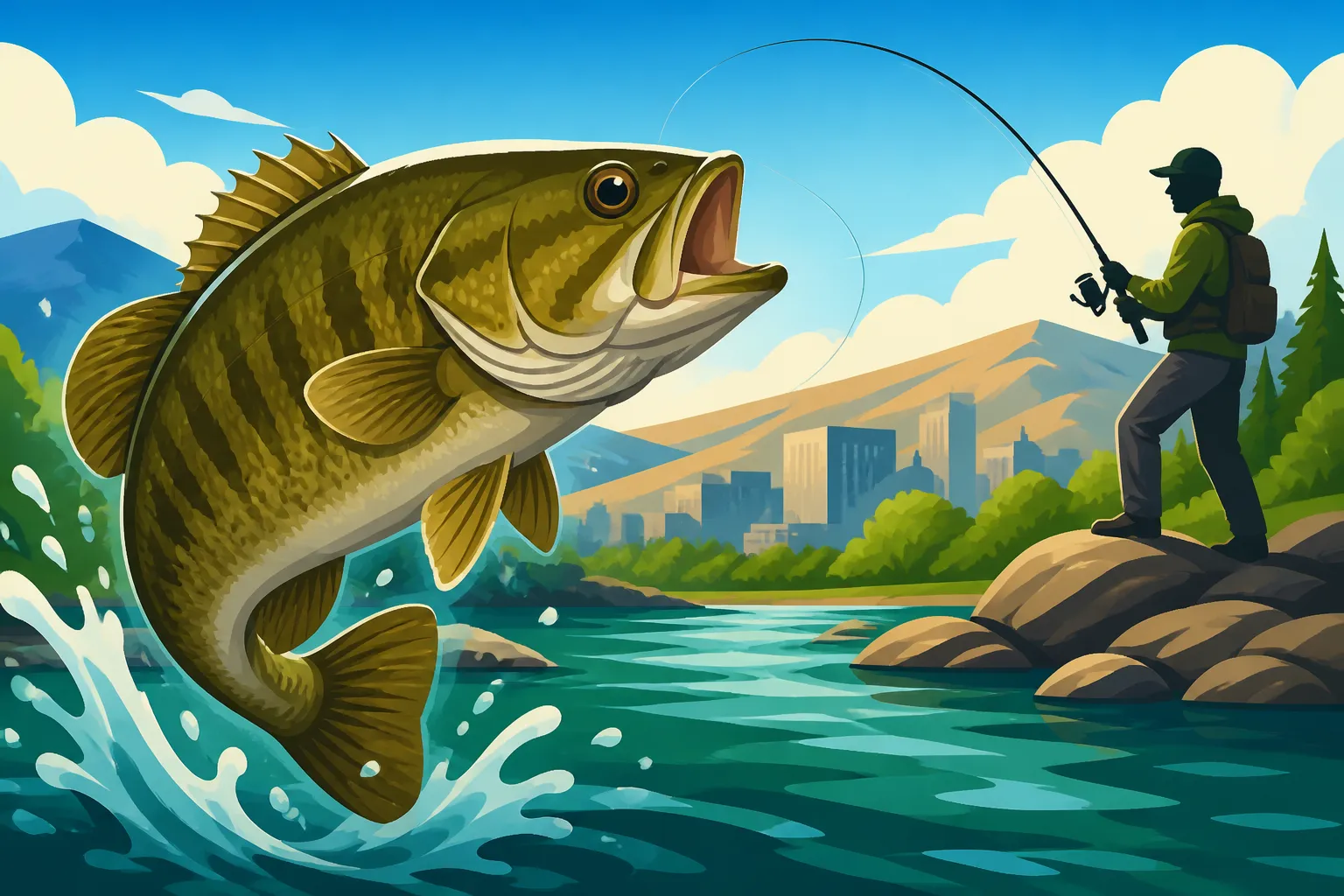
There's something uniquely satisfying about a smallmouth bass. They aren't just big lumps that pull hard; they're intelligent predators that respond to a variety of techniques, offering a dynamic fishing experience. When you hook into a good one, especially in current, be prepared for a fight that will test your tackle and your reflexes. They'll often try to dive into cover, use the current to their advantage, and leap out of the water in an attempt to throw the hook. This spirited behavior is precisely why so many people get hooked on smallmouth fishing.
Beyond their fighting prowess, smallmouth bass are also visually striking fish. Their mottled, bronze-to-brown coloration helps them blend into rocky riverbeds, and their large eyes and powerful jaws are perfect for ambushing prey. Plus, they can be found in some truly scenic parts of Idaho, making the entire fishing excursion a pleasure, whether you're catching fish or just enjoying the beauty of the outdoors.
Key Factors for Smallmouth Habitat
Smallmouth bass are creatures of habit, and understanding their preferred environment is crucial to locating them. They thrive in waters that provide a good balance of cover, current, and forage. Think rocky points, submerged ledges, gravel bars, current seams, and areas with scattered boulders or fallen timber. These structures offer ambush points for prey like crawfish and baitfish, and protection from predators.
Water temperature is another significant factor. While they can tolerate a range, smallmouth are most active and feed aggressively when water temperatures are between 60-70 degrees Fahrenheit. This generally translates to fantastic fishing from late spring through early fall in the Boise area. Knowing these preferences helps narrow down where to focus your efforts, transforming a wide-open river or reservoir into manageable sections with higher probability of success.
Prime Smallmouth Bass Hotbeds Near Boise
When you're looking for that signature smallmouth action near Idaho's capital city, a couple of key waterways immediately come to mind. These spots consistently produce good numbers of fish, often with some true trophy-sized specimens mixed in. Whether you prefer the dynamic challenge of river fishing or the vast expanses of a reservoir, you'll find excellent options within easy reach.
The Mighty Snake River for Bronzebacks
The Snake River, particularly the stretches below Hells Canyon Dam and even sections closer to the Treasure Valley, is a legendary smallmouth bass fishery. Its diverse structure, abundant forage, and varying current speeds create an ideal environment for these fish to thrive. Anglers travel from all over to experience the quality of smallmouth fishing here. For a deeper dive into this incredible waterway, you might want to check out our guide on Fishing the Snake River for Smallmouth Bass and Sturgeon.
Near Boise, popular sections include the waters around Weiser and further downstream. Here, the river offers a mix of deep pools, rocky rapids, and slower sections with plenty of submerged structure. The best approach often involves covering water, either by boat or by bank, casting to visible structure or current breaks. The smallmouth here are strong, owing to the constant fight against the current, and they'll give you a run for your money. Remember that safety on the Snake is paramount, especially in sections with strong currents or rapids. Always wear a life jacket and be aware of river conditions.
C.J. Strike Reservoir's Abundant Smallmouth
A bit closer to Boise, C.J. Strike Reservoir offers a completely different, yet equally productive, smallmouth bass experience. This large reservoir, formed by the Snake River, boasts an incredible population of smallmouth, making it one of the most consistent fisheries in the state. The reservoir's rocky shorelines, numerous coves, and varying depths provide ample habitat. The smallmouth here often grow to impressive sizes, with 2-3 pound fish being common and larger ones not out of the question.
C.J. Strike is particularly famous for its abundant yellow perch and crappie, but the smallmouth bass fishery is truly exceptional. It's an excellent destination for both boat and shore anglers. The smallmouth in C.J. Strike tend to relate closely to rocky points, submerged ledges, and deeper creek channels. Using a fish finder to locate structure and schools of baitfish can be incredibly effective here. You'll find plenty of public access points, campgrounds, and boat ramps around the reservoir, making it a convenient option for a day trip or a longer fishing adventure.
Nearby Owyhee River and Other Options
While technically just across the border in Oregon, the Owyhee River, particularly the section downstream from the dam, is a world-class smallmouth bass fishery and well within a reasonable drive from Boise for a day trip. This desert canyon river offers incredible scenery along with feisty smallmouth that readily attack flies and lures. Its wild, untamed nature provides a unique fishing experience that's a refreshing change of pace.
Closer to home, while not primarily known for smallmouth, sections of the lower Boise River system and larger ponds that connect to the Snake River drainage can occasionally hold smallmouth, especially in warmer months. However, for consistent and quality smallmouth action, the Snake River and C.J. Strike Reservoir remain the undisputed champions in the Boise vicinity. Exploring the Best Rivers for Fishing in Idaho and Best Reservoirs for Fishing in Idaho can help you pinpoint other potential spots, though for smallmouth, these two are hard to beat.
Effective Tactics and Tackle for Boise-Area Smallmouth
Catching smallmouth bass consistently requires a combination of the right tackle, knowledge of their behavior, and an understanding of the conditions. These aren't always the easiest fish to fool, but once you crack the code, the rewards are immense. Don't be afraid to experiment, as smallmouth can be notoriously finicky from one day to the next.
Lures That Get the Bite
Smallmouth bass are opportunistic feeders and will strike a wide variety of lures. The key is to match the hatch, so to speak, whether they're feeding on crawfish, minnows, or insects. For a comprehensive guide, check out our piece on Best Lures for River Smallmouth Bass.
- Jigs: These are arguably the most versatile and effective smallmouth lures. Tube jigs (like those from Bass Pro Shops or Strike King) in crawfish patterns (green pumpkin, brown, black/blue) are lethal when dragged or hopped along the bottom, mimicking a crawfish scurrying away. Hair jigs and skirted jigs also excel, especially around rocky cover. Pair them with a sensitive medium-light to medium-heavy spinning rod or baitcasting setup.
- Crankbaits: Diving crankbaits that imitate baitfish or crawfish are deadly, particularly in rivers or reservoirs with rocky structure. Rapala, Storm, and Berkley offer excellent options. Choose models that dive to the depth where the fish are holding, and vary your retrieve from steady to erratic. Lipless crankbaits are also fantastic for covering water and eliciting reaction strikes.
- Spinnerbaits and Chatterbaits: These provide flash and vibration, making them great for attracting aggressive smallmouth, especially in stained water or on overcast days. White, chartreuse, and perch patterns are popular. Fish them with a steady retrieve, or "pump" them through cover to create an erratic action.
- Topwater Lures: Nothing beats the explosive strike of a smallmouth on a topwater lure. Poppers, walk-the-dog baits (like Heddon Super Spook Jr.), and prop baits are incredibly exciting, especially during low-light conditions (dawn, dusk) or on calm, overcast days. Work them with pauses and twitches to mimic a struggling baitfish.
- Soft Plastics: In addition to tube jigs, creature baits, senkos, and grub tails rigged on jig heads or as drop-shots can be incredibly effective, especially when smallmouth are pressured or less aggressive. Colors mimicking natural forage are usually best.
Rods, Reels, and Line Choices
Having the right gear makes a huge difference in smallmouth fishing. You need a setup that's sensitive enough to detect subtle bites, but powerful enough to handle a feisty fish in current or around heavy cover.
- Rods: A 6'6" to 7' medium-light to medium-heavy fast-action spinning rod is a versatile choice for many smallmouth techniques, particularly jigs and soft plastics. For crankbaits, spinnerbaits, or heavier jigs, a 6'6" to 7' medium-heavy fast-action baitcasting rod offers more power and casting accuracy. Graphite rods are preferred for their sensitivity.
- Reels: For spinning setups, a 2500-3000 series reel provides a good balance of line capacity and smooth drag. For baitcasting, a reel with a 6.3:1 to 7.1:1 gear ratio is excellent for most applications, allowing for quick retrieves and keeping fish out of snags.
- Line: For spinning, 8-12 lb fluorocarbon or braided line with a fluorocarbon leader is a popular choice. Fluorocarbon is nearly invisible underwater and offers excellent sensitivity. Braid provides incredible strength and sensitivity, but a leader is often necessary for stealth. For baitcasting, 12-17 lb fluorocarbon is common, or braid with a fluorocarbon leader for tougher conditions.
| Lure Type | Best Conditions | Retrieval Style | Recommended Gear (Rod/Line) |
|---|---|---|---|
| Tube Jigs | Rocky bottoms, current seams, deeper water | Drag, hop, twitch along bottom | Med-Light Spinning, 8-10lb Fluorocarbon |
| Crankbaits | Open water, rocky points, varying depths | Steady retrieve, occasional twitch, vary speed | Med Baitcasting, 12-15lb Fluorocarbon |
| Spinnerbaits | Stained water, windy conditions, covering water | Steady retrieve, "pump" through cover | Med-Heavy Baitcasting, 15-20lb Fluorocarbon/Braid |
| Topwater Lures | Calm water, low light, aggressive fish | Walk-the-dog, pop, twitch with pauses | Med Spinning or Baitcasting, 15-30lb Braid (no stretch) |
| Soft Plastics | Finesse fishing, pressured fish, drop-shotting | Slow retrieve, subtle twitches, dead stick | Med-Light Spinning, 6-8lb Fluorocarbon |
Reading the Water and Targeting Structure
Smallmouth bass are structure-oriented fish, meaning they'll relate to specific features in the water. In rivers, look for current seams (where fast and slow water meet), eddies behind boulders, submerged logjams, and rocky shorelines. On reservoirs like C.J. Strike, focus on main lake points, coves with rocky bottoms, submerged humps, and the edges of old creek channels. Understanding how to use a fish finder on an Idaho reservoir can drastically improve your success.
When fishing rivers, casting upstream and allowing your lure to drift naturally with the current, then retrieving as it passes your position, is a highly effective technique. For jigs and soft plastics, maintaining bottom contact is often key. In reservoirs, fan casting around structure, then moving systematically, will help you cover water and locate active fish. Don't be afraid to slow down when you find a promising spot; smallmouth often school up.
Seasonal Strategies for Smallmouth Success
Smallmouth bass behavior changes dramatically with the seasons, largely driven by water temperature and spawning cycles. Understanding these patterns is key to being in the right place at the right time with the right presentation. Knowing when Idaho's fishing seasons start and end can help you plan your trips effectively.
Spring: Pre-Spawn and Spawning Frenzy
Spring, typically from April through early June in the Boise area, is an exciting time for smallmouth bass fishing. As water temperatures rise into the 50s and then 60s, smallmouth move from their deeper wintering grounds to shallower areas in preparation for spawning. This pre-spawn period is when they feed aggressively, stocking up on energy.
During pre-spawn, target rocky points, flats, and coves that receive a lot of sun. Crankbaits, spinnerbaits, and tube jigs fished slowly can be incredibly effective. As water temperatures reach the mid-60s, smallmouth will begin to spawn. They'll build nests (circular depressions) in shallow, gravelly areas, often near submerged logs or boulders. While they can be caught off their nests, it's generally recommended to practice catch-and-release during this sensitive time to ensure the health of the fishery. After the spawn, males will guard the fry, and both sexes will be looking to regain energy, often hitting anything that comes near.
Summer: Deep Water and Early Morning Bites
Idaho summers can get hot, and smallmouth bass respond by moving to deeper, cooler water or becoming more active during cooler periods of the day. From July through August, target smallmouth in 10-25 feet of water on reservoirs like C.J. Strike, focusing on deep rocky structure, humps, and main lake points. In rivers, they'll often be in deeper pools or tightly associated with current breaks where oxygen levels are higher.
Early mornings and late evenings are often the most productive times during summer. Topwater lures can be fantastic at dawn and dusk. During the heat of the day, switch to deeper presentations: drop-shot rigs, heavy jigs, and deep-diving crankbaits. Fan casting and using a fish finder to locate schools of fish are particularly important now. Understanding the Best Time of Day to Fish in Idaho During Summer Heat will greatly increase your chances.
Fall: The Feeding Blitz
Autumn is another fantastic time to target smallmouth bass near Boise. As water temperatures begin to cool, smallmouth embark on a feeding frenzy, trying to pack on weight before winter. They often move back to shallower depths, mimicking their spring patterns, but with a different urgency. September and October can offer some of the best fishing of the year.
Look for smallmouth along rocky banks, points, and channel swings. They'll be chasing baitfish, so lures that imitate minnows – crankbaits, spinnerbaits, and jerkbaits – are highly effective. Jigs and soft plastics are also strong performers. The fish are often aggressive and willing to hit a variety of presentations, making fall a rewarding time for both novice and experienced anglers. This is a great time to try new areas or techniques, as the fish are generally more cooperative.
Planning Your Smallmouth Adventure
Embarking on a smallmouth bass fishing trip near Boise doesn't have to be complicated, but a little planning goes a long way. From licenses to potential guides, knowing the ins and outs will ensure a smooth and enjoyable experience.
Licenses and Regulations
Before you even wet a line, make sure you have the proper Idaho Fishing License Guide. Every angler aged 14 and older needs a valid fishing license. You can purchase these online through the Idaho Department of Fish and Game website, at many sporting goods stores like Cabela's or Sportsman's Warehouse, or at various license vendors throughout the state. It's quick and easy, so there's no excuse to skip it!
Beyond the license, it's critical to be aware of the specific Idaho Fishing Regulations Explained for the waters you plan to fish. While there's a statewide daily bag limit for smallmouth bass (typically 6, possession limit 12, with no minimum length), some specific waters might have special regulations or reduced limits. Always consult the current Idaho Fishing Regulation Brochure and Proclamation, available online or wherever licenses are sold. For example, some areas might have catch-and-release only rules or different length restrictions. Understanding these rules is not just about avoiding fines; it's about protecting the fishery for future generations.
Consider a Guided Trip
If you're new to smallmouth fishing in Idaho, or want to explore new waters and learn from an expert, booking a guided trip can be an invaluable experience. Local guides specialize in specific waterways, understand the seasonal patterns, and know exactly which baits and techniques are currently producing fish. They can provide all the necessary gear and teach you the finer points of smallmouth fishing.
Services like FishingBooker can help you find reputable local fishing guides who specialize in smallmouth bass on the Snake River or C.J. Strike Reservoir. A guide can significantly shorten the learning curve, putting you on fish faster and teaching you skills that will benefit your future trips. Even experienced anglers often hire guides to gain local insights or target trophy fish more efficiently.
Respecting the Resource
Idaho's smallmouth bass fisheries are a precious resource, and responsible angling practices ensure they remain healthy for years to come. Practice catch-and-release, especially for larger breeding fish, if you're not planning to keep them for a meal. Handle fish gently, minimize their time out of water, and use proper de-hooking tools.
Always pack out everything you pack in, including fishing line and bait containers. Dispose of any waste properly. Be respectful of other anglers and private property. By following these simple guidelines, we can all contribute to preserving the fantastic smallmouth bass fishing opportunities near Boise.
Disclaimer
Please remember that fishing conditions, regulations, and fish populations can change. Always consult the latest Idaho Fish and Game regulations before heading out. Safety should always be your top priority when on the water.