Idaho Resident License vs Nonresident License Price Difference
It's a common head-scratcher when you're planning a fishing trip to Idaho: why do the license prices seem so different depending on where you call home? That feeling of confusion, or even a little frustration, when you're just trying to figure out what it'll cost to cast a line is completely understandable. This guide is here to unravel the mystery, diving deep into the financial realities and practical implications of the Idaho resident license vs. nonresident license price difference, so you can plan your angling adventure with confidence.
Understanding the Idaho Fishing License System
The system of resident and nonresident licenses isn't unique to Idaho, but it can certainly feel complex. At its core, the distinction is about more than just where you receive your mail; it’s about a deeply embedded philosophy of funding and resource management that shapes how we all get to enjoy Idaho's incredible waters.
Why Residency Matters for Fishing Licenses
Imagine living somewhere year-round, paying property taxes, sales taxes, and income taxes, all of which contribute to the state's infrastructure and services. Now imagine those services include wildlife management, habitat restoration, fish stocking programs, and public access maintenance for fishing spots. That’s precisely why residency is such a big deal when it comes to fishing licenses.
Idaho's resident anglers, through their ongoing tax contributions and license purchases, are considered the primary stakeholders in the state's natural resources. They're helping to fund the Idaho Department of Fish and Game (IDFG) operations that maintain healthy fish populations, conduct research, and enforce regulations across the state's vast network of rivers, lakes, and streams. When you're a resident, you're investing in your local fisheries day in and day out.
Nonresidents, while incredibly welcome and important to Idaho's tourism economy, typically don't contribute to the state's tax base in the same continuous way. Therefore, the higher price for a nonresident license helps to balance that contribution. It ensures that everyone who enjoys Idaho's world-class fishing—whether for a weekend or a lifetime—is participating in the financial upkeep of these precious resources. It's a way of saying, "Welcome, enjoy our beautiful state, and your license purchase helps us keep it beautiful for everyone." Without this system, the financial burden of managing such extensive and diverse fisheries would fall disproportionately on the local community.
Defining Idaho Residency for Angling
This is where it can get a little tricky, and it's absolutely crucial to get right. Simply owning property in Idaho or having a vacation home here doesn't automatically qualify you as a resident for fishing license purposes. The Idaho Department of Fish and Game has clear, specific criteria to determine residency, and they take it seriously. Misrepresenting your residency can lead to significant fines and penalties, so it's always best to be honest and informed.
Generally, to be considered an Idaho resident for licensing, you must have:
- Lived in Idaho for at least six continuous months immediately prior to purchasing a license. This means actually physically residing in the state, not just owning a mailing address here.
- Established a "domicile" in Idaho. This implies that Idaho is your principal and primary home, and you intend to make it your fixed and permanent place of abode.
- Demonstrated intent to reside in Idaho permanently. This isn't just a feeling; it's backed by actions. Examples include registering to vote in Idaho, holding an Idaho driver's license (and surrendering any out-of-state license), registering your vehicle(s) in Idaho, filing Idaho income taxes, and being employed in the state.
If you maintain a permanent home in another state, hold an out-of-state driver's license, or register your vehicles elsewhere, it's highly unlikely you'll qualify as an Idaho resident for a fishing license, regardless of how much time you spend here. The IDFG uses a combination of these factors to assess residency, and they can request proof. It’s not just a box you tick on a form; it’s a legal declaration. Always consult the official Idaho Resident Fishing License Guide or the latest IDFG regulations brochure if you're unsure about your specific situation. This due diligence can save you a lot of headache down the line.
The Nitty-Gritty: Price Comparison of Resident vs. Nonresident Licenses
Now, let's get down to the numbers, because that's what everyone really wants to know. The price difference between resident and nonresident fishing licenses in Idaho can be quite substantial, especially for annual options. These figures are generally updated annually, so it's always smart to double-check the current rates on the official Idaho Fish and Game website before you purchase. However, the proportional difference usually remains consistent.
Annual Fishing License Costs
For many anglers, especially those who plan to fish Idaho multiple times a year or for an extended season, the annual license is the most cost-effective choice. Here’s a typical breakdown of the general fishing license costs (as of recent updates, always verify current prices):
- Resident Adult Annual Fishing License: You're typically looking at around $31.75. This covers a full year of general fishing privileges in Idaho from the date of purchase. It's an incredible value for residents, granting access to hundreds of fishing opportunities for twelve months.
- Nonresident Adult Annual Fishing License: This is where the price jump becomes apparent. Nonresidents can expect to pay around $98.25 for their annual fishing license. This higher fee, as discussed, helps contribute to the conservation and management efforts without the continuous tax base provided by residents.
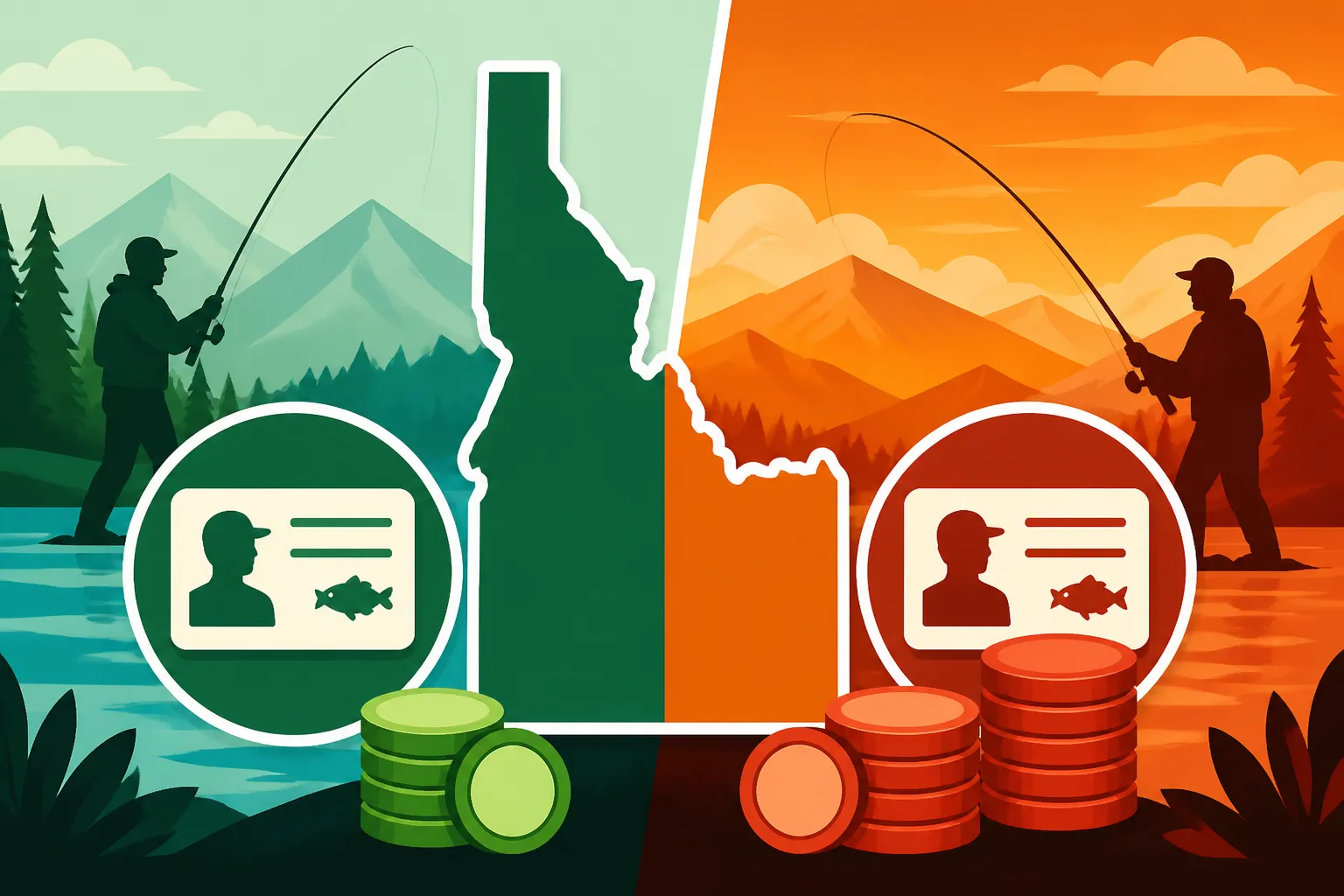
When you look at it, a nonresident annual license is roughly three times the cost of a resident annual license. This difference really highlights the state's approach to funding its fisheries. For a nonresident who plans just one long trip, say two weeks, the annual license is still often the best value, particularly when compared to stacking multiple short-term licenses.
It’s worth noting that if you’re a resident, you might also consider an Idaho Combination Hunting and Fishing License, which often provides even greater value if you enjoy both pursuits, streamlining your regulatory compliance into one purchase.
Short-Term and Specialty Permit Price Differences
Not everyone needs a full annual license. For shorter visits or specific fishing pursuits, Idaho offers various short-term and specialty permits. While these can seem more affordable upfront, it’s crucial to calculate if they truly offer the best value for your planned trip duration.
Short-Term Licenses:
Idaho understands that many visitors come for a quick getaway. Here's a look at common short-term options:
- Resident 1-Day Fishing License: Priced around $13.50. This is a great option for a spontaneous day trip or introducing someone new to fishing without a big commitment.
- Nonresident 1-Day Fishing License: Expect to pay around $15.50. The gap here is much smaller than the annual license, making it a relatively accessible option for out-of-state visitors wanting a single day on the water.
- Nonresident 3-Day Fishing License: This usually runs about $36.00. If you're coming for a long weekend, this is a popular choice, offering a bit of a discount compared to buying three separate one-day licenses.
- Nonresident 7-Day Fishing License: Priced at approximately $53.50. For a full week's vacation, this is often the most economical short-term option, providing considerable savings over individual daily licenses.
As you can see from the table below, the longer the nonresident short-term license, the better the daily value, but it rarely beats the per-day value of an annual license if you plan on fishing for more than 7-10 days in a year.
| License Type | Resident Price (Approx.) | Nonresident Price (Approx.) | Notes |
|---|---|---|---|
| Annual Fishing | $31.75 | $98.25 | Best value for frequent anglers |
| 1-Day Fishing | $13.50 | $15.50 | Minimal difference, great for a quick trip |
| 3-Day Fishing (Nonresident) | N/A | $36.00 | Good for long weekends |
| 7-Day Fishing (Nonresident) | N/A | $53.50 | Ideal for a week-long vacation |
| Salmon & Steelhead Permit | $31.75 | $39.50 | Required in addition to a base license for these species |
| Access & Depredation Fee | $5.00 | $10.00 | Often required for all annual licenses (varies by purchase) |
Specialty Permits:
Beyond the basic fishing license, Idaho requires additional permits for certain sought-after species, particularly anadromous fish like salmon and steelhead. These permits also reflect a resident/nonresident price difference.
- Idaho Salmon and Steelhead Permit: If you're dreaming of battling a powerful Steelhead on the Clearwater River or targeting Chinook, you'll need this. It's an additional cost on top of your base fishing license. For residents, it's typically around $31.75, while nonresidents will pay approximately $39.50. So, the Total Cost to Fish for Steelhead in Idaho as a Resident will include both the annual fishing license and this permit.
- Idaho Access and Depredation Fee: This fee, which can be around $5.00 for residents and $10.00 for nonresidents, is often added to annual licenses and helps fund programs that manage wildlife access and address depredation issues. While not strictly a "fishing permit," it's an additional cost that contributes to the overall conservation effort and should be factored into your total expense, especially when purchasing an annual license. You can find more details on what the Idaho Access and Depredation Fee Explained entails.
These specialty permits and fees highlight that the initial license price is often just the beginning. Anglers need to consider their target species and the duration of their trip to get a complete picture of their financial outlay.
Practical Implications for Anglers
Understanding the price differences between resident and nonresident licenses is more than just knowing the numbers; it's about making informed decisions for your fishing adventures. This knowledge can genuinely shape how you plan your trips and even how you think about moving to Idaho if you're a frequent visitor.
Planning Your Idaho Fishing Trip as a Nonresident
If you're coming from out of state to enjoy Idaho's fantastic fishing, careful planning around license costs can save you money and headaches. The key is to honestly assess the length of your trip and how often you anticipate visiting within a year.
- Short and Sweet Trips (1-3 days): For a quick weekend getaway, the nonresident 1-day or 3-day license might be your best bet. The incremental cost over a resident license for these shorter durations is relatively small. This is a perfect option if you're just dipping your toes into Idaho's waters or combining fishing with other activities. For example, if you're staying near Coeur d'Alene for a couple of days and want to try for some Kokanee, a 3-day license makes sense. You can grab a budget-friendly rod and reel combo on Amazon before you arrive to get started.
- Week-Long Adventures (7 days): If your vacation is a full week, the nonresident 7-day license often offers the most value. It works out cheaper per day than buying seven individual 1-day licenses. This is ideal for those extended trips to places like the Salmon River or the South Fork of the Snake.
- Frequent Visits or Extended Stays (More than 7-10 days/year): This is where the nonresident annual license truly shines. While its upfront cost is higher, if you plan to fish for more than 7-10 days spread across multiple trips in a calendar year, the annual license will almost certainly be more economical than continuously purchasing short-term licenses. For instance, if you visit Idaho for a week in the spring for trout and then come back in the fall for steelhead, the annual license paired with the Steelhead permit will likely be your cheapest route. Don't forget, you'll still need that additional Idaho Salmon and Steelhead Permit if you're targeting those species, regardless of your base license type.
Remember to also factor in the time of year and specific species you're targeting. For detailed information on where and when to fish, check out our Idaho Fishing Regulations Explained and Idaho Fishing License Cost Guide articles. When you're packing, having a reliable headlamp from Amazon can be a lifesaver for early morning or late evening fishing excursions, especially if you're trying to maximize your time on those short-term licenses!
The Value of Residency for Frequent Anglers
For those nonresidents who absolutely fall in love with Idaho's fishing and find themselves coming back again and again, the idea of establishing residency becomes incredibly appealing from a financial perspective. The substantial savings on annual fishing licenses and specialty permits add up quickly.
Consider an angler who visits Idaho four times a year, each time for a week, and targets steelhead in the fall and trout in the spring/summer. As a nonresident, they'd buy an annual license and a steelhead permit. If they were a resident, those costs would be significantly lower each year. Over several years, the savings could be quite substantial.
Beyond the immediate financial benefits, becoming an Idaho resident brings a deeper connection to the state's natural resources. You gain the ability to participate in local wildlife management decisions, receive resident-specific communications from IDFG, and fully immerse yourself in the angling community. It's not just about cheaper licenses; it's about becoming an integral part of the conservation efforts that keep Idaho a premier fishing destination. This deeper connection might motivate someone to explore how to Become an Idaho Resident if they are constantly enjoying the state's offerings.
Of course, establishing residency is a significant life decision, involving moving, changing legal documents, and integrating into a new community. But for the dedicated angler who dreams of endless days on the Snake River or Henry's Fork, the financial advantages of resident licenses can certainly be a strong pull.
Important Considerations Beyond the Base Price
Getting your primary fishing license is a critical first step, but it's not always the only step. Idaho has a nuanced system designed to protect its diverse fish populations and ensure sustainable angling for generations to come. Overlooking these additional requirements can lead to disappointment or, worse, legal trouble.
Additional Permits and Fees
It’s easy to think once you have your general fishing license, you’re all set. However, Idaho requires specific endorsements or permits for certain high-value or highly managed fisheries. This applies to both residents and nonresidents, though the fees often reflect the same resident/nonresident pricing differential.
The most common additional permit you’ll encounter is the Idaho Salmon and Steelhead Permit. If you plan on fishing for either of these iconic species, this permit is non-negotiable. It helps fund the intensive management, hatchery programs, and conservation efforts necessary to sustain these migratory fish. Without it, even with a valid general fishing license, you cannot legally harvest or often even target salmon or steelhead.
Another fee to be aware of, especially when purchasing an annual license, is the Access and Depredation Fee. While relatively small, it contributes to programs that mitigate wildlife conflicts and improve public access to hunting and fishing lands. It's often automatically added to annual license purchases and is a crucial part of the state's overall wildlife management budget. For more details, our article on Idaho Access and Depredation Fee Explained can provide clarity.
These additional costs can quickly add up, especially for nonresidents. For example, a nonresident planning to fish for steelhead will need their annual nonresident fishing license AND the nonresident Salmon and Steelhead Permit. This combined cost significantly increases the total outlay but is essential for legal and ethical participation in these specialized fisheries. Always check the current Idaho Fishing License Cost Guide to ensure you're aware of all potential fees.
Avoiding Common License Pitfalls
The regulations and licensing system exist for good reasons, primarily to protect Idaho's fish and wildlife resources. Ignorance of the rules is rarely an excuse, and violating them can have serious consequences.
- Fishing Without the Correct License: This is perhaps the most obvious pitfall. Fishing without a valid general fishing license, or without the specific permits required for certain species (like salmon or steelhead), can result in hefty fines, confiscation of your fishing gear, and even loss of future fishing privileges. Enforcement officers patrol Idaho's waters regularly, and they are diligent. It's not worth the risk. Always buy your license before you cast your first line. You can easily purchase your license online through the IDFG website, often referred to as Idaho Fishing License Online Purchase, or visit an authorized vendor.
- Misrepresenting Residency: As we covered, Idaho's definition of residency is strict. Attempting to purchase a resident license when you don't legally qualify is a serious offense. The price difference is significant enough that some might be tempted, but the penalties for fraud are severe. It's always better to purchase the correct nonresident license than to face legal repercussions.
- Not Carrying Your License: Once you've purchased your license, you must carry it with you while fishing. This can be a physical copy or an electronic version on your phone, as long as it's readily accessible for inspection by an enforcement officer. Don't leave it in the truck or at camp; it needs to be on your person.
- Ignoring Age Requirements: While this guide focuses on adult licenses, it's worth a quick mention that age requirements also factor into licensing. For instance, our guide on Do Kids Need a Fishing License in Idaho? clarifies specific rules for younger anglers, ensuring families don't accidentally run afoul of regulations.
The best way to avoid these pitfalls is to stay informed. Always download and review the most current Idaho fishing regulations brochure, which is available on the IDFG website or at license vendors. This free resource contains all the specific rules, season dates, bag limits, and licensing requirements you need to know. Don't hesitate to ask questions at a local sporting goods store or an Idaho Fish and Game office if you're unsure about any regulation. It’s always better to ask than to assume. Sometimes, finding a reputable local fishing guide (many are listed on Amazon with reviews for their services) can also provide invaluable insights into current regulations and best practices.
Disclaimer
Please note that all prices and regulations mentioned in this article are subject to change by the Idaho Department of Fish and Game. While we strive to provide the most current and accurate information, it is always the angler's responsibility to verify current license costs, regulations, and residency requirements directly through official Idaho Fish and Game channels before engaging in any fishing activity.