Best Lures for Cascade Reservoir Tiger Muskie
Chasing tiger muskie on Cascade Reservoir can feel like you're trying to catch a ghost. These elusive, toothy predators are notoriously fickle, often following your lure right to the boat only to vanish back into the depths without a strike. It's incredibly frustrating when you've spent hours casting, feeling like you're throwing everything but the kitchen sink at them, and still coming up empty-handed. This guide is here to cut through that frustration, breaking down the best lures that consistently entice those aggressive strikes from Cascade's magnificent tiger muskie.
Understanding Tiger Muskie Behavior in Cascade Reservoir
Before we even talk about specific lures, it's absolutely crucial to understand the "why" behind what works. Tiger muskie aren't like your average trout or bass; they have distinct behaviors, preferences, and hunting patterns that dictate lure effectiveness. Cascade Reservoir, being a unique and somewhat shallow body of water with abundant forage, creates specific conditions that influence how and when these fish feed. Knowing this local nuance is your first step to success.
Seasonal Movements and Depths
Tiger muskie in Cascade Reservoir move with the seasons, chasing comfortable water temperatures and, more importantly, their prey. In the spring, after ice-out, they're often found in shallower bays and flats where the water warms up faster. This is prime spawning time for many baitfish, and the muskie are looking for an easy meal. Think water depths of 5-15 feet. As summer progresses, the muskie tend to move to deeper, cooler water, often relating to submerged weed beds, rocky points, and channel edges in the 15-30 foot range, especially during the heat of the day. Early mornings and late evenings might see them push shallower again. Fall is arguably the best time for trophy muskie, as they enter a feeding frenzy, bulking up for winter. They'll actively cruise mid-range depths, often around 10-25 feet, but will push into shallows and suspend over deeper water, following schools of kokanee or perch. Winter, under the ice, they become more lethargic, often holding tight to structure at various depths. This understanding helps you choose lures that run at the right depth for the season.
Preferred Forage
What do Cascade's tiger muskie eat? The reservoir is teeming with yellow perch, kokanee salmon, and various shiners and suckers. This diverse diet is key to selecting the right lure colors and profiles. If you see schools of yellow perch flickering on your fish finder, you'd be wise to throw a lure that mimics a perch. If the kokanee are running thick, a silver or blue lure that imitates their sleek profile could be the ticket. They are opportunistic predators, but understanding their primary food sources gives you a significant advantage in lure selection. You can learn more about this by checking out our Idaho Fish Species Guide.
Essential Lure Categories for Cascade Reservoir Tiger Muskie
When you're targeting a fish as formidable as a tiger muskie, you can't just throw any old bass lure and expect results. These fish demand big baits, bold presentations, and a certain finesse in their pursuit. We'll break down the top categories of lures that consistently produce strikes on Cascade Reservoir.
Hard Baits: Crankbaits and Jerkbaits
Hard baits are workhorses in the muskie angler's arsenal, offering a variety of actions, depths, and profiles. They excel at covering water and imitating injured baitfish, which muskie find irresistible.
Diving Crankbaits for Depth and Reaction Strikes
Crankbaits are fantastic for covering a lot of water quickly and reaching specific depths. For Cascade, you'll want large, deep-diving models, generally in the 6-10 inch range, designed to get down to those 15-25 foot depths where muskie often cruise. Look for crankbaits with a strong, wide wobble that displaces a lot of water – this creates a commotion that can draw muskie in from a distance.
When to use them:
- Mid-summer: When muskie are holding deeper near structure or in cooler water.
- Fall: As muskie actively feed and follow baitfish schools at various depths.
- Covering open water: If you're searching for active fish over deeper flats or along channel edges.
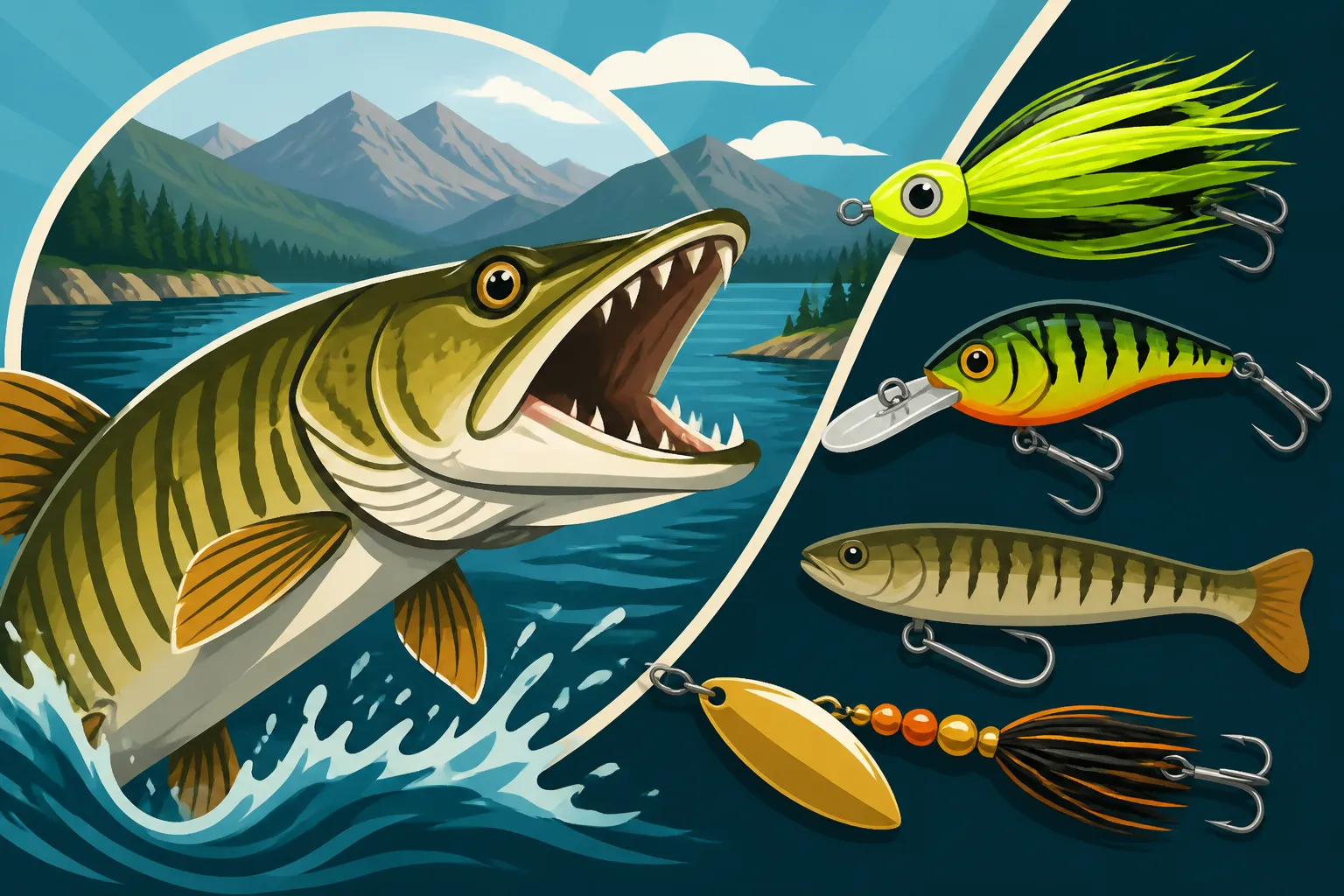
Popular choices often feature rattles for added attraction. Colors should mimic local forage like perch patterns (yellow, green, black stripes), natural baitfish colors (silver, blue, white), or even bright "firetiger" patterns which are universal muskie attractors, especially in stained water. Some anglers find success using larger Rapala Deep Diving Husky Jerks or similar big-lipped crankbaits. Retrieval is key: a steady retrieve with occasional pauses or erratic jerks can trigger a hesitant muskie.
Jerkbaits for Erratic Action and Suspended Fish
Jerkbaits, particularly suspending models, are absolutely deadly for tiger muskie. Unlike crankbaits that have a constant retrieve, jerkbaits are designed to be worked with a series of rod twitches and pauses, creating an erratic, dying-fish action that drives muskie wild. These lures are often 7-12 inches long and perfectly imitate a wounded yellow perch or kokanee. Brands like Rapala, Livingston Lures, and Storm are known for producing effective jerkbaits.
When to use them:
- Cooler water periods: Spring and fall when muskie are often cruising shallower or suspending.
- Over submerged weed lines: The pause allows the lure to hover tantalizingly over the weeds without snagging.
- Targeting visible fish: If you spot a muskie following, a sudden stop and twitch can often provoke a strike.
Colors again depend on water clarity and forage. Natural perch, silver/blue, and even darker patterns like black and gold can be effective. The retrieve is critical: a "twitch, twitch, pause" rhythm, sometimes varying the pause length, is the standard. Don't be afraid of a long pause – sometimes that's all it takes for a muskie to commit. You can find a vast selection of these on Amazon, making it easy to experiment with different sizes and colors without driving all over.
Spinnerbaits and Bucktails
These lures are all about flash, vibration, and aggression. They're designed to be retrieved quickly, triggering aggressive, territorial strikes from muskie.
Bucktails for Flash and Vibration
Bucktails are a classic muskie lure for a reason: they work. A big, flashy bucktail whirring through the water creates immense vibration and a visual spectacle that muskie can't ignore. For Cascade, you'll want larger bucktails, typically with tandem blades (two blades, one larger than the other) and robust skirt materials. Sizes can range from #8 to #10 blades, with overall lure lengths of 8-12 inches.
When to use them:
- Aggressive fish: When muskie are actively feeding and willing to chase.
- Warmer water: In summer and fall when muskie metabolism is high.
- Covering shallow to mid-depths: They are excellent for burning over weed beds or along shorelines.
Look for bucktails with large Colorado or Willowleaf blades, or a combination. Colorado blades create more thump and pull, ideal for slower retrieves or stained water, while Willowleaf blades offer more flash and are good for faster retrieves in clearer water. Colors like black, white, chartreuse, and muskie-specific patterns (like "tiger") are popular. Retrieval is usually fast and steady, creating a "wake" just under the surface, but don't hesitate to incorporate a "figure-eight" at the boat to seal the deal with followers.
Spinnerbaits for Weed-Friendly Presentations
While traditional muskie bucktails are often called "spinnerbaits" by bass anglers, there are also more conventional muskie spinnerbaits that often feature large single or double Colorado blades and bulky skirts. These are excellent for working through submerged vegetation, which Cascade has in abundance, without snagging.
When to use them:
- Fishing heavy cover: Around weed edges, submerged timber, or rocky shorelines.
- Vertical presentations: Dropping them into pockets in weed beds.
- Post-frontal conditions: When fish might be hugging cover.
Choose heavy models, often 1-2 ounces, with stout wire and hooks. The key here is the weedless design, allowing you to probe areas where other lures would snag. Again, perch, firetiger, or white/chartreuse patterns are strong contenders. You might use a slower, more methodical retrieve with these, feeling for the blades to thump through the water column. Our guide on Idaho Fishing Techniques Guide delves deeper into different lure presentations.
Soft Plastics and Swimbaits
The world of soft plastics has exploded for muskie fishing, offering incredibly realistic profiles and subtle actions that hard baits can't always replicate.
Large Soft Plastic Swimbaits for Realistic Action
Soft plastic swimbaits, often 8-14 inches long, are designed to mimic real baitfish with a natural swimming action. These can be rigged weedless or on weighted swimbait hooks, making them versatile for various depths and cover. Their soft texture can sometimes encourage muskie to hold on longer, giving you a better hookset opportunity.
When to use them:
- Pressured fish: When muskie are wary of hard baits.
- Clear water conditions: The realistic profile is highly effective.
- Vertical jigging: Dropping them onto fish located on electronics.
Look for swimbaits that have a pronounced tail kick or body roll, even at slow retrieve speeds. Colors should closely match the natural forage of Cascade: silver shiner, perch, or bluegill patterns. Many anglers use these on heavy jig heads (1-3 oz) for deeper presentations, or on screw-lock hooks with added belly weights for shallow water. Companies like Musky Innovations (Bulldawg) or Livingston Lures make some excellent options that are also widely available on Amazon.
Grub-Style and Paddle-Tail Plastics for Versatility
Beyond realistic swimbaits, large grub-style plastics or paddle-tail worms, often 6-10 inches, can be incredibly effective. Rigged on heavy jig heads, these provide a unique profile and thump that can trigger strikes. They're also excellent for vertical jigging near schools of perch or kokanee, where muskie might be lurking.
When to use them:
- Deeper water: Jigging for suspended fish or those holding tight to bottom structure.
- Cold water: When a slower, more subtle presentation is needed.
- Trying to "match the hatch": If muskie are feeding on smaller, broader-bodied forage.
Colors can vary widely, from natural greens and browns to bright chartreuse and orange. The key is to experiment with jig head weights to find the right fall rate and depth. A slow lift and drop, letting the paddle tail do its work on the fall, is a classic presentation.
Topwater Lures
There's nothing quite like a muskie strike on a topwater lure. It's violent, exhilarating, and unforgettable. While not always the most consistent producer, it's a technique that every Cascade muskie angler should have in their playbook for the sheer thrill.
Walk-the-Dog and Popper-Style Topwaters
Topwater lures like "walk-the-dog" baits (e.g., Heddon Super Spook) or large poppers create surface commotion that draws muskie up from surprising depths. They imitate injured or struggling prey on the surface.
When to use them:
- Low light conditions: Early morning, late evening, or overcast days when muskie are more likely to feed near the surface.
- Over submerged weed flats: When muskie are cruising just under the surface.
- Calm water: A smooth surface allows for the best lure action and visibility.
Sizes should be substantial, often 6-10 inches. Colors are less critical than action for topwater, but black, white, and natural patterns are popular. The retrieve for walk-the-dog lures is a rhythmic twitching of the rod tip to make the lure "walk" side-to-side. Poppers are worked with aggressive pulls that create a splash and gurgle. Be prepared for an explosive strike! You can find a good selection of these classic topwater options readily available on Amazon.
Useful Lure Comparison Table
To help you visualize and choose, here's a quick comparison of the main lure types for Cascade Reservoir tiger muskie:
| Lure Type | Best Conditions | Pros | Cons | Common Sizes | Target Depth |
|---|---|---|---|---|---|
| Crankbaits | Deeper water, covering open water, searching | Excellent depth control, wide wobble | Can snag easily in heavy cover | 6-10 inches | 10-25 feet |
| Jerkbaits | Cooler water, suspended fish, clear water | Erratic action, realistic profile, suspends | Requires active rod work, can be slow | 7-12 inches | 5-15 feet (suspending) |
| Bucktails | Aggressive fish, warm water, burning cover | High flash/vibration, covers water quickly | Less effective for subtle presentations | #8-#10 blades (8-12") | 2-10 feet |
| Spinnerbaits | Heavy cover, weed beds, vertical jigging | Weedless design, strong vibration | Can be less flashy than bucktails | 1-2 oz (6-10") | 5-20 feet |
| Soft Plastics | Pressured fish, clear water, vertical jigging | Realistic action, natural feel, versatile | Can be torn by teeth, may require re-rigging | 8-14 inches | Variable (shallow to deep) |
| Topwater | Low light, calm water, over weed beds | Explosive strikes, visually exciting | Limited effectiveness in choppy/deep water | 6-10 inches | Surface |
Key Considerations When Choosing Your Lures
Beyond the type of lure, several factors play a critical role in whether a muskie decides to bite or just give you the "muskie follow." Paying attention to these details can turn a frustrating day into a memorable one.
Matching the Hatch
This old fishing adage is especially true for tiger muskie. While they are apex predators, they're also highly efficient. If they're accustomed to feeding on 6-inch yellow perch, throwing a 12-inch shad imitator might not get the same reaction. Pay attention to the baitfish you see, or even what fish your sonar is marking.
- Size: As a general rule, use lures that are 6-12 inches long for tiger muskie on Cascade. However, if you notice smaller baitfish, don't be afraid to downsize slightly. Conversely, during the fall "feed bag" season, go big! Our How Big Do Tiger Muskie Get at Cascade Reservoir guide can give you an idea of the sizes you're targeting.
- Profile: Does the baitfish in Cascade Reservoir have a broad, deep body like a perch, or a slender, elongated profile like a shiner or kokanee? Choose lures that closely match that shape.
- Action: How does the dominant forage swim? Does it dart erratically, or does it have a smooth, subtle glide? Mimic that action with your retrieve.
Water Clarity and Light Conditions
These environmental factors significantly impact how a muskie sees and reacts to your lure.
Clear Water, Bright Days
When Cascade Reservoir is clear and the sun is high, muskie have excellent visibility. This is when realistic, natural colors often shine. Think silver, blue, natural perch, or subtle green patterns. Lures with less flash and more natural swimming actions (like soft plastic swimbaits or suspending jerkbaits) can be very effective. The muskie can scrutinize your offering, so subtlety can pay off.
Stained Water, Overcast Days
In stained or slightly murky water, or on cloudy, low-light days, muskie rely more on vibration and profile. This is when brighter, bolder colors like chartreuse, firetiger, or white become more prominent. Lures with a lot of flash (bucktails with large blades) or strong vibrations (rattling crankbaits) help muskie locate your bait. Sometimes, dark colors like black or purple can create a strong silhouette against the lighter sky, making them visible even in low light.
Practical Tips for Fishing Tiger Muskie with Lures
Having the right lures is just one piece of the puzzle. How you present them, the gear you use, and how you handle these magnificent fish all contribute to your success and their well-being.
Gear Setup for Muskie Fishing
Tiger muskie fishing is not for the faint of heart, or for light tackle. You need robust gear to handle these powerful, toothy predators.
- Rod: A heavy-action baitcasting rod, 7'6" to 9' in length, is ideal. This length provides leverage for casting large lures and fighting big fish. Brands like St. Croix or Fenwick offer excellent muskie-specific rods.
- Reel: A heavy-duty baitcasting reel with a good drag system and a high line capacity is essential. Look for models with a strong gear ratio for quickly retrieving large lures and battling hard-fighting fish.
- Line: Braided line, typically 65-100 lb test, is almost universally used for muskie. It has no stretch, providing excellent feel and hook-setting power.
- Leader: This is non-negotiable! Muskie have razor-sharp teeth that will cut through braided line in an instant. Use a heavy-duty fluorocarbon leader (80-130 lb test) or a steel leader (wire leader), at least 12-18 inches long. Ensure your leader has strong snaps and swivels to handle the lure and the fight. Our Idaho Fishing Gear Guide by Season offers more comprehensive advice on specific gear for different species.
Presentation and Retrieve
Once you've chosen your lure and assembled your gear, how you work the lure is the next crucial step.
- Vary your retrieve: Don't just reel in steadily. Experiment with speed changes, pauses, jerks, and twitches. Mimic an injured baitfish, not a robotic one.
- The "Figure Eight": This is perhaps the most important technique in muskie fishing. Many muskie will follow a lure right to the boat without striking. As your lure nears the boat, smoothly sweep it into a large figure-eight motion right at the side of the boat, keeping it in the water. This sudden change of direction and speed can often trigger a last-second strike from a hesitant follower. This is a critical skill for How to Catch Tiger Muskie at Cascade Reservoir.
- Cover water efficiently: Muskie are ambush predators and often widely dispersed. Fan-cast to cover different angles and depths around structure.
- Hit the spots: Focus your casts on prime muskie real estate: weed edges, rocky points, submerged timber, and drop-offs.
Safety and Handling
Tiger muskie are incredible fish, but they require careful handling due to their size, power, and formidable teeth.
- Tools are essential: Always have a long-nosed pliers or jaw spreaders, and a quality net or cradle. Never attempt to lip a muskie like a bass.
- Minimize out-of-water time: Muskie are powerful fish, and prolonged exposure out of the water can be highly stressful. Get your photos quickly and return them to the water promptly.
- Support the fish: When lifting a muskie for a photo, support its body horizontally with one hand under its belly and the other gripping the lower jaw. Avoid holding them vertically by the jaw, as this can damage their internal organs.
- Barbless hooks: Consider using barbless hooks or pinching down barbs on your lures. This makes unhooking much easier and less damaging to the fish, increasing their survival rate.
By understanding the muskie's behavior in Cascade, selecting the right lure category for the conditions, and employing effective techniques with appropriate gear, you'll dramatically increase your chances of landing one of these truly magnificent fish. It's a challenging pursuit, but the reward of seeing that striped torpedo erupt on your lure makes all the effort worthwhile.
Disclaimer
Fishing conditions and regulations in Idaho can change. Always consult the latest Idaho Fish and Game regulations brochure before heading out on the water. This information is intended for general guidance and educational purposes only.