How to Fish for Cutthroat Trout in Mountain Streams
There's nothing quite like the allure of Idaho's mountain streams, isn't there? The crisp air, the towering pines, and the promise of a truly wild fish often draw us far off the beaten path. But let's be honest, trying to fish these pristine, often challenging waters for elusive cutthroat trout can feel like an impossible puzzle if you're not prepared. This guide is here to unravel that mystery, offering practical, in-depth advice on everything from reading the water to choosing the perfect fly, ensuring your next backcountry adventure is a rewarding one.
Understanding Idaho's Cutthroat Trout and Their Habitat
Before you even string a rod, it's incredibly helpful to understand the fish you're pursuing. Idaho is home to several distinct subspecies of cutthroat trout, each with its own nuances and preferred haunts. Knowing these details will make you a much more effective and responsible angler.
The Different Types of Idaho Cutthroat
When we talk about cutthroat in Idaho, we're usually referring to two primary native subspecies, plus one that's been reintroduced. Each has subtle differences in appearance and behavior.
First, we have the Westslope Cutthroat Trout. These beauties are Idaho's state fish, and for good reason. They typically have a greenish-gold body, often with sparse, small spots concentrated towards the tail, and those signature red-orange "cutthroat" marks under their jaw are usually quite subtle. You'll find them predominantly in the northern and central drainages of Idaho, including the Clearwater, Salmon, and St. Joe river systems. They're incredibly resilient and can thrive in colder, nutrient-poor mountain streams. If you're heading into the rugged Frank Church Wilderness or the high country near McCall, chances are you'll be chasing Westslopes.
Then there's the Yellowstone Cutthroat Trout. These fish are generally found in the eastern part of the state, primarily in the Snake River Plain drainages, including the Henry's Fork and South Fork of the Snake River. They tend to be a bit more brassy or yellowish in color, with more pronounced and widespread spotting across their entire body, and their "cutthroat" marks are often a much brighter orange or red. They can tolerate slightly warmer waters than Westslopes and often grow a bit larger due to richer food sources in their habitats. For a deeper dive, check out our guide on Yellowstone Cutthroat Trout in Idaho.
Finally, while less common in mountain streams, you might encounter Bonneville Cutthroat Trout in specific drainages in southeastern Idaho, like the Bear River system. These are a reintroduced subspecies, distinct from the others, often having larger spots and a silvery-bronze hue. Regardless of the subspecies, protecting these native fish is a top priority for Idaho Fish and Game, so knowing what you've caught is key to adhering to specific regulations. Our comprehensive Idaho Cutthroat Trout Fishing Guide can offer even more insights into identifying these remarkable fish.
Preferred Habitats and Behavior
Cutthroat trout in mountain streams are creatures of opportunity and survival. They seek out cold, oxygen-rich water, which is why those pristine high-elevation streams are their stronghold. Their preferred habitats often include:
- Pocket Water: These are small, turbulent areas behind boulders or submerged logs where currents slow just enough for a fish to hold and ambush passing food. Cutthroat love these spots because they offer cover from predators and relief from strong currents, while still providing a conveyor belt of insects.
- Seams and Eddies: Where faster currents meet slower water, you'll find seams. Fish will often hold in the slower water, darting into the faster current to grab food. Eddies, those swirling pockets of slower water, are also prime real estate, especially downstream of large obstacles.
- Undercut Banks and Overhanging Vegetation: These offer excellent cover from both aerial predators (like osprey and eagles) and strong currents. Cutthroat feel safe tucked away under these banks and will readily dart out for a meal.
- Log Jams and Fallen Trees: Natural debris creates complex habitat, offering many nooks and crannies for fish to hide, rest, and feed. However, fishing these spots can be challenging due to snags.
- Riffles and Runs: While they might not hold directly in the fastest part of a riffle, cutthroat will often position themselves at the head or tail of a riffle, or along the edges, where food is dislodged and swept past them.
These trout are generally opportunistic feeders, primarily eating aquatic insects (mayflies, caddisflies, stoneflies), terrestrial insects (grasshoppers, ants, beetles), and sometimes small baitfish or leeches. Their behavior is heavily influenced by water temperature, clarity, and insect hatches. In colder water, they might be sluggish, holding tight to the bottom. As temperatures warm, they become more active, moving into faster water to feed more aggressively.
Essential Gear for Mountain Stream Cutthroat Fishing
When you're hiking into the backcountry, every ounce counts. The right gear for fishing cutthroat in mountain streams isn't about having the most expensive stuff, but rather the most practical, durable, and lightweight options that perform when it matters most.
Rods, Reels, and Lines
For mountain stream cutthroat, subtlety and precision often trump brute strength.
- Rods: A lightweight fly rod is typically ideal. Think 2-weight to 4-weight, in lengths ranging from 7 to 8.5 feet. A 7.5-foot, 3-weight rod is a fantastic all-around choice. This shorter length makes it easier to cast in tight quarters with overhanging trees, and the lighter weight provides excellent feel for smaller fish and delicate presentations. You don't need a heavy backbone because these fish, while spirited, aren't usually massive, and the goal is often finesse. For those who prefer spinning gear, an ultralight spinning rod, around 5 to 6 feet in length, paired with a matching ultralight reel is perfect. Look for something that breaks down easily for packing, like a 4-piece fly rod or a 2-piece spinning rod that fits into your backpack.
- Reels: For fly fishing, a simple, lightweight click-and-pawl or small disc-drag reel is more than sufficient. Its primary purpose is to hold your line, as you'll be stripping most fish in by hand rather than relying on the reel. For spinning, a small, sensitive reel in the 500-1000 size range, loaded with light line, is the way to go.
- Lines: A weight-forward floating fly line that matches your rod weight is standard. For spinning gear, 2-6 lb test monofilament or fluorocarbon is perfect. Many anglers prefer fluorocarbon for its low visibility and abrasion resistance, especially in clear mountain streams. Consider a spool of lighter leader and tippet (3x-6x for fly fishing) as well, because cutthroat in clear water can be incredibly wary.
Flies and Lures
This is where you can really tailor your approach to what the cutthroat are likely eating. Having a diverse, yet compact, selection is key. Our guide on the Best Flies for Cutthroat Trout delves into this even more.
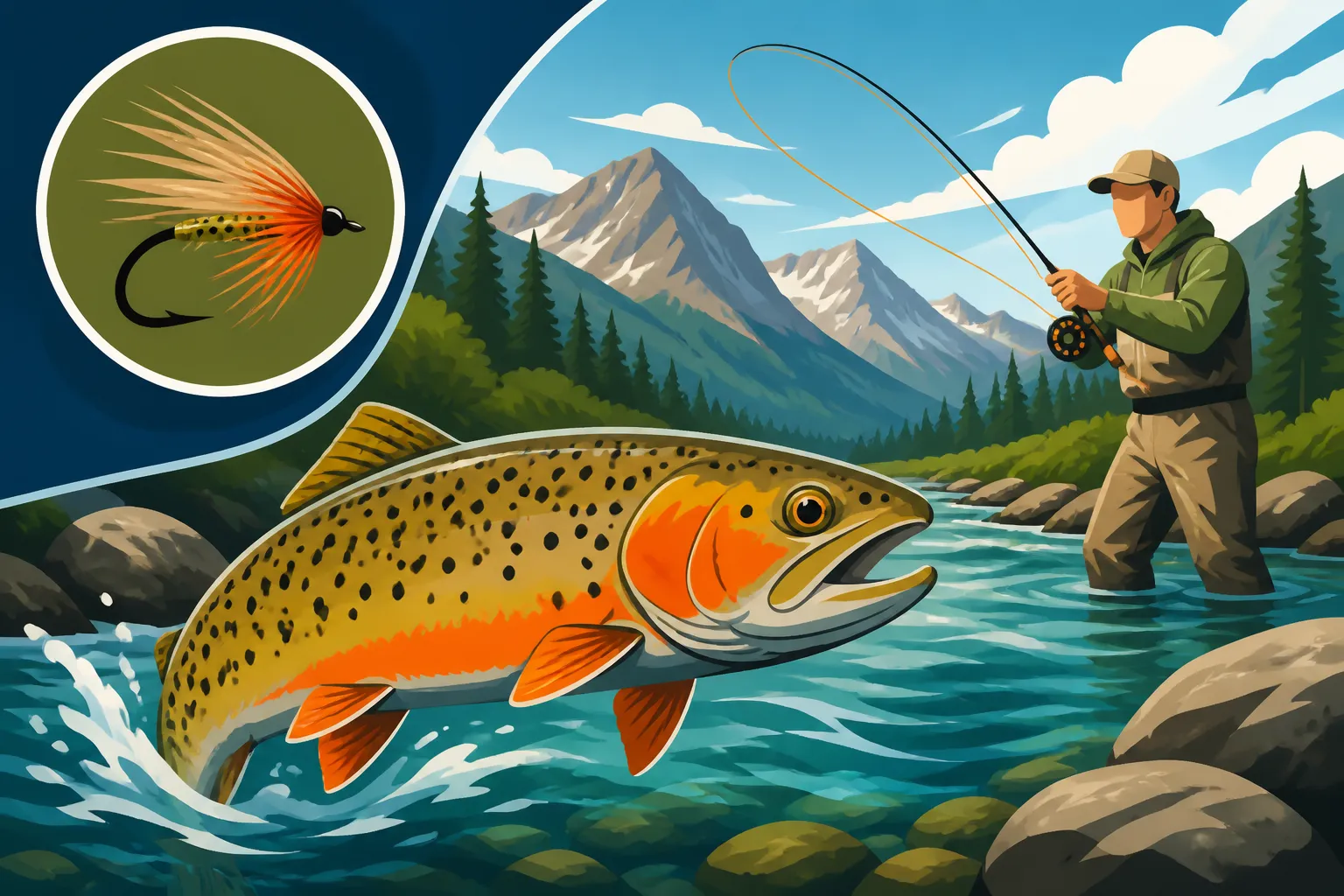
- Dry Flies: These are the most exciting for many fly anglers. Have a selection of generalist patterns that imitate common aquatic insects like Parachute Adams, Elk Hair Caddis, and Royal Wulff in sizes 12-18. Don't forget terrestrial patterns! Ants, beetles, and especially grasshoppers (like a Dave's Hopper or Chernobyl Ant) in sizes 8-14 can be deadly in late summer and early fall when these bugs accidentally fall into the water.
- Nymphs: When fish aren't rising, nymphs are your bread and butter. Tungsten-beaded nymphs like a Pheasant Tail, Hare's Ear, or Prince Nymph in sizes 14-20 are excellent choices. Bring a few larger stonefly nymphs (e.g., Pat's Rubber Legs) in sizes 8-12, as these are a consistent food source.
- Streamers: While not always necessary for cutthroat in smaller streams, a few small streamers like a Woolly Bugger (black, olive, or brown) in sizes 8-12 can entice a larger, more aggressive fish.
- Spinning Lures: For spin anglers, small inline spinners (like Panther Martin or Mepps Aglia) in sizes 0-2 with a black, silver, or gold blade are incredibly effective. Micro jigs tipped with a small piece of worm or scented soft plastic can also be deadly. Small spoons (like Kastmasters or Dardevles) are another excellent option. The key is small, subtle, and natural-looking presentations. You can find a great selection of these compact and effective lures on platforms like Amazon.
Waders and Footwear
Forget the heavy chest waders for most mountain stream fishing. You'll be doing a lot of hiking.
- Waders: Breathable stockingfoot waders, if you need them at all, are best paired with lightweight wading boots. However, for many mountain streams in summer and early fall, quick-drying hiking pants or shorts and wading sandals or old hiking shoes are perfectly adequate. Being able to wet-wade is often more comfortable and practical, especially on warmer days or when crossing large areas of dry land between fishing spots.
- Footwear: Felt-soled wading boots provide superior grip on slippery rocks, but they can track invasive species. Rubber-soled wading boots with good grip (or even studded rubber soles) are a great alternative, especially with proper care to prevent disease spread. If wet-wading, sturdy hiking sandals with good toe protection (like Chacos or Keens) or quick-drying trail shoes are ideal. Ensure whatever you choose has excellent ankle support if you're navigating uneven terrain.
Backcountry Essentials
Your fishing gear is only part of the equation for a successful, safe trip into the Idaho mountains. Think beyond the rod. Our guide on What Gear to Pack for a Sawtooth Backcountry Fishing Trip provides a comprehensive list.
- Backpack: A comfortable daypack (20-30 liters) is usually sufficient for a day trip. For longer treks or multi-day excursions, you'll need a larger backpacking pack.
- Water and Filtration: Always carry more water than you think you'll need, or a reliable water filter/purifier (e.g., Sawyer Squeeze, Katadyn BeFree) to replenish from streams. Dehydration is a serious risk in the mountains.
- Food: High-energy, non-perishable snacks (nuts, granola bars, jerky) are crucial.
- Navigation: A map and compass (and knowing how to use them!) are essential, even if you rely on a GPS device or smartphone. Cell service is often nonexistent in remote areas.
- First-Aid Kit: A compact, well-stocked kit for minor injuries and emergencies.
- Sun Protection: Sunscreen, a wide-brimmed hat, and polarized sunglasses (crucial for seeing fish and protecting your eyes).
- Rain Gear: A lightweight, packable rain jacket, even on sunny days, as mountain weather can change rapidly.
- Bear Spray: If you're in bear country (which much of Idaho's backcountry is), carry bear spray and know how to use it.
- Headlamp/Flashlight: In case you're out longer than expected.
- Small Net: A soft, rubber-mesh net is ideal for safely landing and releasing fish without harming them.
- Pliers/Forceps: For hook removal.
Proven Techniques for Success in High Mountain Streams
Fishing for cutthroat in mountain streams demands a blend of stealth, precision, and adaptability. These fish are often wild, wary, and quick to spook.
Upstream Nymphing and Dry-Dropper Rigs
These are two of the most consistently productive techniques for cutthroat.
- Upstream Nymphing: This method involves casting your nymph upstream and allowing it to drift naturally back downstream, mimicking a nymph dislodged from the bottom. The key is to get a "dead drift" – meaning your fly moves at the same speed as the current, without any drag from your line. You'll often use a strike indicator (a small bobber-like device) to help detect subtle bites. Cast slightly upstream and across, mend your line to keep it drag-free, and watch your indicator like a hawk. Any hesitation, twitch, or stop could be a fish. This technique works wonders in riffles, runs, and the deeper pockets where nymphs naturally occur.
- Dry-Dropper Rigs: This is a versatile setup that allows you to present both a dry fly and a nymph simultaneously. You tie a buoyant dry fly (like a Chubby Chernobyl or a larger Elk Hair Caddis) to your leader, and then tie a nymph (your "dropper") from the bend of the dry fly's hook or directly off the leader knot, usually 12-24 inches below. The dry fly acts as both an attractor and your strike indicator. When the dry fly disappears, twitches, or dives, set the hook! This rig covers both surface and subsurface feeding lanes and is incredibly efficient, especially when you're unsure if fish are looking up or down. It's a go-to setup in many of Idaho's pristine high-country streams.
Small Stream Dry Fly Tactics
There's something magical about catching a cutthroat on a dry fly. It's often about the presentation.
- Accurate Casting: In tight quarters, overhead casting might be difficult. Learn to roll cast, sidearm cast, or even bow-and-arrow cast to get your fly into tricky spots under branches or tight against banks. Accuracy is far more important than distance.
- Stealthy Approach: Cutthroat in clear, shallow mountain streams are incredibly wary. Approach the water slowly, keeping a low profile. Avoid heavy footsteps on the bank that can send vibrations through the water. Cast from downstream whenever possible, or from a position where your shadow isn't falling over the water you intend to fish. Remember, they see you long before you see them.
- Natural Drift: Just like nymphing, a drag-free drift is crucial. Your dry fly needs to float downstream as if it were a natural insect, without the line pulling it unnaturally. Mending your line (flipping a section of line upstream to straighten it) helps maintain this perfect drift. Often, a short, accurate cast is easier to manage a perfect drift than a long one.
- Targeting Structure: Look for pockets, seams, and eddies where cutthroat might be holding. Cast your dry fly just upstream of these features and let it drift naturally into the strike zone. Overhanging branches and undercut banks are also prime targets.
Reading Pocket Water and Riffles
Understanding where fish hold in these dynamic environments is a game-changer. Our guide on Reading Water on Idaho's Rivers can further hone your skills.
- Pocket Water: These are the small, calmer spots immediately downstream of boulders or other obstructions. Cutthroat love to hold in these "pockets" because they offer shelter from the current while still providing access to drifting food. Cast your fly into the upstream edge of the pocket and let it drift through. Don't be afraid to try multiple drifts through the same pocket. Sometimes, a fish needs a few tries to commit. The edges of the faster current leading into or out of the pocket are also key.
- Riffles: These are the shallower, faster-moving sections of the stream. While fish rarely hold directly in the fastest, most turbulent water, they'll often be found at the head (where the riffle begins), the tail (where it transitions into a deeper pool), or along the slower edges. Nymphs and streamers can be very effective in riffles, as fish are often actively feeding on dislodged insects. When dry fly fishing, focus on the calmer seams and eddies adjacent to the main current of the riffle.
- Deep Slots and Pools: Even in mountain streams, you'll find deeper sections. These often hold larger, more cautious fish. Fish the edges first, then work your way into the deeper water. A slower, more deliberate nymphing approach or swinging a small streamer can be effective here.
Approaching the Stream Stealthily
Cutthroat are incredibly sensitive to disturbance. Your approach can make or break your success.
- Stay Low and Hidden: Use stream-side vegetation, boulders, or depressions in the bank for cover. Try to keep your silhouette against the sky as little as possible. Crawling on hands and knees might feel silly, but it can be the difference between catching a fish and spooking the entire pool.
- Move Slowly and Deliberately: Avoid stomping along the bank. Soft, controlled steps will minimize vibrations that travel through the ground and into the water.
- Avoid Shadowing the Water: Your shadow cast over the water is a huge red flag for trout. Always try to cast from a position where your shadow is behind or to the side of the area you're fishing.
- Fish Upstream: Whenever possible, approach and fish upstream. This allows you to cast to undisturbed fish, and any sediment you kick up will drift downstream, away from your target. It also means you're approaching fish from behind, where their cone of vision is narrower.
Reading the Water and Adapting to Conditions
Successfully fishing mountain streams in Idaho isn't just about casting; it's about understanding the language of the water and knowing how to adjust your strategy. Conditions in the mountains can change quickly, so adaptability is key.
Currents, Seams, and Eddies
These elements dictate where fish hold and where food concentrates. Learning to "read" them is perhaps the most important skill for a mountain stream angler.
- Currents: The speed and direction of the current are paramount. Fast, turbulent water is high in oxygen but requires fish to expend a lot of energy to hold. Slower water is less oxygenated but easier to hold in. Look for the "sweet spots" where fish can rest comfortably just out of the main current but still have access to food. This is often an area of moderate current.
- Seams: These are the transition zones where fast water meets slow water. Think of the boundary between a powerful riffle and a calmer eddy, or the edge of an undercut bank where the main current flows past. Fish often stack up in these seams because they offer a comfortable holding position and a constant supply of food drifting by in the faster water. Present your fly or lure right along these seams, letting it drift naturally with the current. This often requires precise casting and careful line mending.
- Eddies: These are pockets of recirculating water, often found behind large rocks, logs, or points in the stream. The water in an eddy often flows upstream or swirls. Fish love eddies because they provide a reprieve from the main current, making it easy to hold position. They also act as natural "revolving doors" for food items, concentrating insects and other forage. Fishing an eddy requires understanding its unique current. You might need to cast your fly upstream of the eddy and let the current carry it into the swirling water, or even cast directly into the eddy and let it sit for a moment.
High Water vs. Low Water Strategies
Mountain streams are dynamic. Their levels can fluctuate dramatically with snowmelt, rainfall, and even daily temperature swings.
- High Water (Spring Runoff or Post-Rain): When the water is high and often discolored, fish tend to move to the banks, seeking slower, clearer water and refuge from the strong currents. They'll tuck into eddies, behind large rocks, under cut banks, and in flooded vegetation. Focus your efforts on these slower, shallower margins. Use larger, darker nymphs or streamers that create a strong silhouette in murky water. Fish tend to be less selective when the water is high, so a more aggressive presentation can sometimes work. Make sure to check Idaho Fishing Season Dates and Limits and local regulations, as some areas might have closures during runoff.
- Low Water (Late Summer/Early Fall): In contrast, low, clear water makes fish incredibly spooky and discerning. They'll seek out the deepest pools, shaded areas, and complex structure for cover. Downsize your flies and lures, use lighter tippet, and prioritize delicate, drag-free presentations. Stealth becomes paramount. Fish upstream, keep a low profile, and avoid splashing or heavy footsteps. This is often when sight-fishing becomes possible, allowing you to spot a fish before casting. If fish aren't rising, nymphing the deepest runs and pockets with tiny flies can be incredibly effective.
Seasonal Considerations
The time of year significantly impacts cutthroat behavior and where you'll find them. Our guide on the Best Time of Year to Fish in Idaho covers a broad spectrum, but here's a focus on mountain streams:
- Early Season (Late Spring/Early Summer): This is often when mountain streams are experiencing runoff from melting snow. As discussed, this means high, cold, and often turbid water. Fish will be in slower, protected areas. As runoff subsides and the water begins to clear and warm, fishing can be excellent. Nymphs are often key during this transitional period, with dry fly fishing picking up as hatches become more consistent.
- Mid-Summer: With stable flows and warmer temperatures (but still cold in high mountain streams), mid-summer often brings consistent insect hatches and strong dry fly action. Terrestrial insects (hoppers, ants, beetles) become very important as they fall into the water. This is when the fish are often most active and willing to rise. Focus on mornings and evenings, as midday heat can make fish sluggish, even in cold water.
- Fall: As temperatures drop, hatches become less prolific, but larger insects like October Caddis or larger stoneflies might emerge. Fish become more aggressive as they prepare for winter, making streamers and larger nymphs very effective. This can be a fantastic time to catch a larger, well-fed cutthroat. Terrestrial patterns are still relevant, especially on sunny afternoons. Just remember that shorter days mean less fishing time, and snow can arrive early at higher elevations.
Conservation and Ethical Angling Practices
Idaho's mountain stream cutthroat are a precious resource, often native populations in fragile ecosystems. Practicing ethical angling is not just good sportsmanship; it's vital for the long-term health of these fisheries.
Catch and Release Best Practices
Most mountain stream cutthroat fishing is, or should be, catch and release, especially for wild fish. Even if keeping fish is permitted by Idaho Catch Limits and Bag Limits Explained, responsible anglers often choose to release these wild specimens.
- Minimize Fight Time: Bring the fish to hand quickly to reduce stress. Prolonged fights can exhaust a fish, making it harder for it to recover.
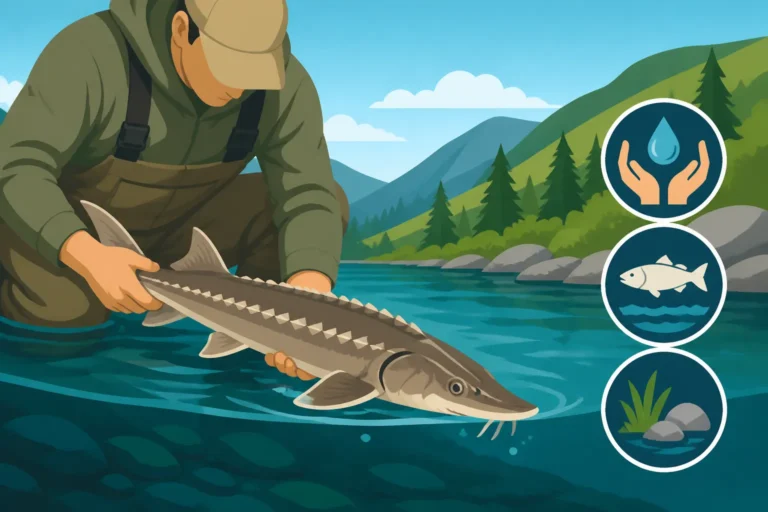
- Keep Fish in Water: This is perhaps the most important rule. Try your best to unhook the fish while it's still submerged. If you must lift it for a quick photo, do so gently, support its body, and minimize its time out of water to mere seconds. Their gills and internal organs can be damaged by gravity and air exposure.
- Use Barbless Hooks: Pinching down the barb on your hooks (even on lures) makes hook removal much easier and causes less damage to the fish's mouth. Many anglers modify store-bought hooks with a pair of pliers.
- Gentle Handling: Avoid squeezing the fish, especially around its belly or gills. Wet your hands before touching the fish to protect its protective slime coat, which is its first defense against disease.
- Proper Hook Removal: Use forceps or pliers to quickly and carefully remove the hook. If the hook is deeply swallowed (which is rare with cutthroat and proper technique), cut the line as close to the hook as possible rather than trying to rip it out. The fish has a better chance of survival this way.
- Revive If Necessary: If a fish seems lethargic after being released, gently hold it upright in the current, facing upstream, until it can swim away on its own. It's ready when it actively tries to swim out of your hand.
Minimizing Impact on Fragile Ecosystems
Your presence in the backcountry has an impact, however small. Strive to leave no trace.
- Stay on Trails: Where established trails exist, use them. Avoid trampling fragile stream-side vegetation.
- Pack It In, Pack It Out: Everything you bring into the backcountry must come out with you, including all trash, fishing line, and food scraps. Leave the area cleaner than you found it.
- Proper Waste Disposal: If you must relieve yourself, do so at least 200 feet from water sources and dig a small cathole to bury human waste. Pack out all toilet paper.
- Prevent Invasive Species Spread: Clean your waders, boots, and gear thoroughly between different watersheds. Inspect for mud, seeds, and aquatic organisms. This prevents the spread of diseases (like whirling disease) and invasive species that can devastate native fish populations.
- Respect Wildlife: Observe wildlife from a distance and never feed animals. Store food properly to prevent attracting bears and other animals.
Remember, fishing Idaho's mountain streams is a privilege. By following these ethical guidelines and respecting the wild spaces, we can help ensure that future generations can enjoy the thrill of catching a beautiful, wild cutthroat trout in its natural home. Always consult the latest Idaho Fishing Regulations Explained before heading out, as rules can change and vary by specific water.
Comparing Cutthroat Fly and Lure Options
Having the right tool for the job makes all the difference, especially when these high-country cutthroat can be particular. Here's a quick comparison of some effective fly and lure types.
| Fly/Lure Type | Best Use Case | Ideal Conditions | Key Advantages | Considerations |
|---|---|---|---|---|
| Dry Flies | Surface feeding fish, visible hatches, late summer | Clear, moderate flows, active fish | Exciting visual strikes, easy to detect bites | Less effective in deep or turbulent water |
| Nymphs | Subsurface feeding fish, any time of day | Any water condition, especially deep | Consistent productivity, imitates common food | Requires strike indicator, harder to detect subtle bites |
| Streamers | Aggressive fish, larger cutthroat, off-color water | High water, larger pools | Can attract bigger fish, covers water quickly | Can be harder to cast, less subtle |
| Inline Spinners | General prospecting, fast water, spin fishing | Any water condition, good current | Easy to cast, highly visible, retrieve motion | Can twist line, less natural presentation |
| Micro Jigs | Deep pockets, slower water, precise targeting | Clear to slightly murky water | Versatile, can be tipped with bait, good action | Can be prone to snags, requires careful retrieve |
Whether you're casting a perfectly presented dry fly or systematically working a spinner through a deep pool, the joy of fishing for cutthroat in Idaho's mountain streams is truly unparalleled. It's not just about the catch; it's about the entire experience—the hike in, the pristine surroundings, and the connection with a truly wild fish.
Disclaimer
Fishing conditions and regulations in Idaho can change frequently. Always consult the most current Idaho Fish and Game regulations and local advisories before planning and embarking on any fishing trip. Safety in the backcountry is paramount; inform others of your plans and be prepared for changing weather and unexpected emergencies.